Yehuda Kaploun confirmed by Senate as Trump’s antisemitism envoy
The Miami businessman and Chabad follower won confirmation on a party-line vote despite Democratic objections
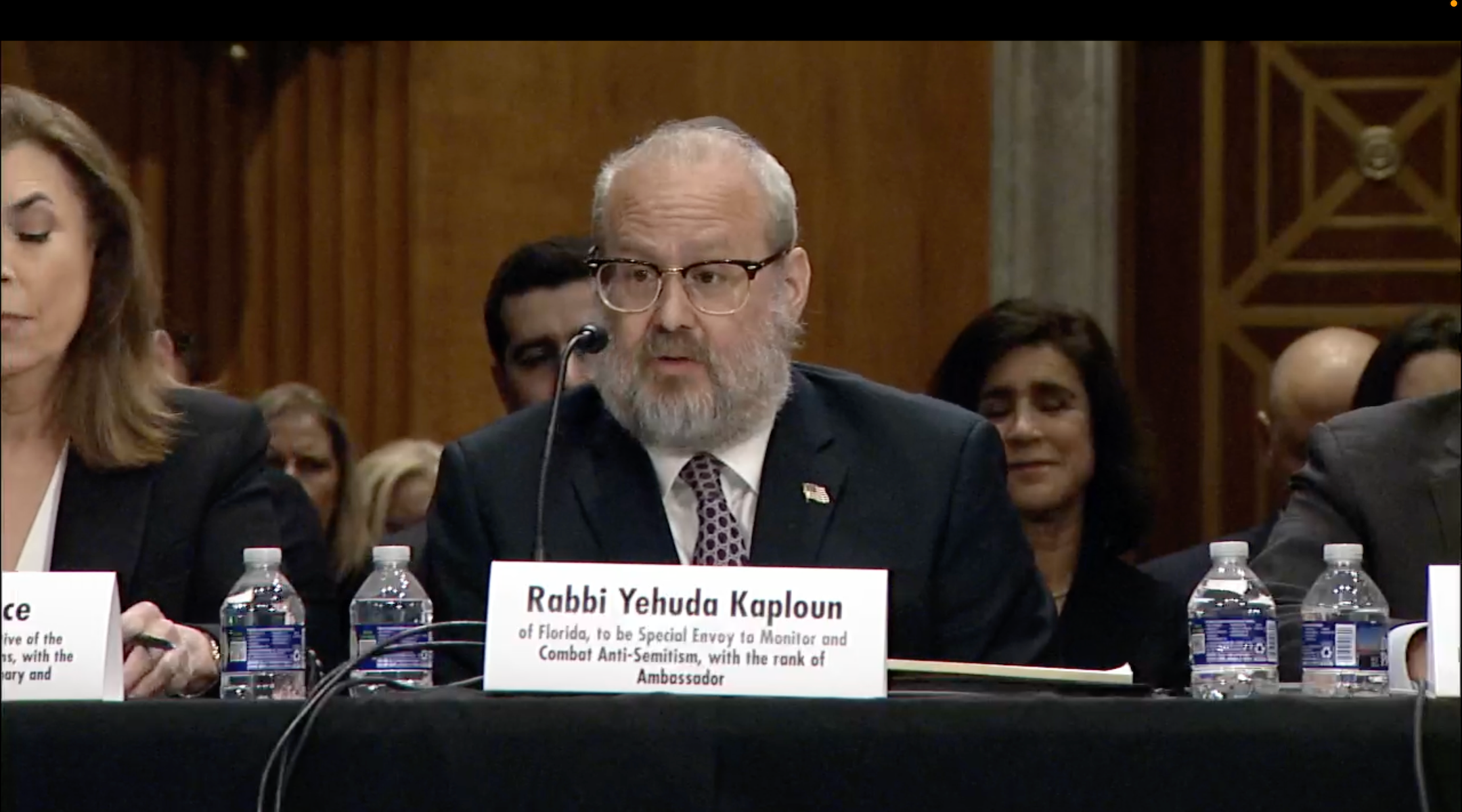
Rabbi Yehuda Kaploun testifies during his Senate confirmation hearing for the role of Special Envoy to Monitor and Combat Antisemitism, Nov. 19, 2025, in Washington, D.C. Screenshot of Senate confirmation hearing

By Asaf Elia-Shalev December 19, 2025
(JTA) — Rabbi Yehuda Kaploun was confirmed by the U.S. Senate on Thursday as the next special envoy to monitor and combat antisemitism, an ambassador-level role at the State Department aimed at coordinating U.S. efforts to confront antisemitism globally.
His confirmation fills a post that had been vacant in a period marked by spikes in antisemitic incidents both in the United States and abroad.
Kaploun, a follower of the Chabad Hasidic movement, a Miami businessman and a 2024 Trump campaign surrogate, was confirmed as part of a broader package of nominations after the Senate agreed to bring the slate to the floor for debate and a vote. His confirmation came on a 53-43 vote split strictly along party lines, with Republicans voting yes and Democrats voting no.
Jewish organizations largely welcomed Kaploun’s confirmation.
The World Jewish Congress praised President Donald Trump’s choice, saying it ensures leadership to confront antisemitism at a time of rising threats to Jewish communities worldwide and that Kaploun “has already been working hard, engaging directly with dozens of special envoys and national coordinators from around the world.”
The Conference of Presidents of Major American Jewish Organizations, the Anti-Defamation League and the Republican Jewish Coalition offered congratulations, calling the appointment timely and necessary given increasing antisemitic rhetoric and violence.
Kaploun testified in November that education and bipartisan engagement are central to combating Jew-hatred, a theme he reiterated in interviews and hearings leading up to his confirmation.
Kaploun was confirmed despite Democratic opposition, with critics arguing that his past statements and political activity reflected an overtly partisan approach and raised concerns about his ability to serve credibly in a role that has traditionally sought bipartisan trust.