At a former driving school, Kehillat Harlem plants roots for Jewish life uptown
Kehillat Harlem, a non-denominational ‘shul community,’ is building Jewish infrastructure in a neighborhood where it once thrived
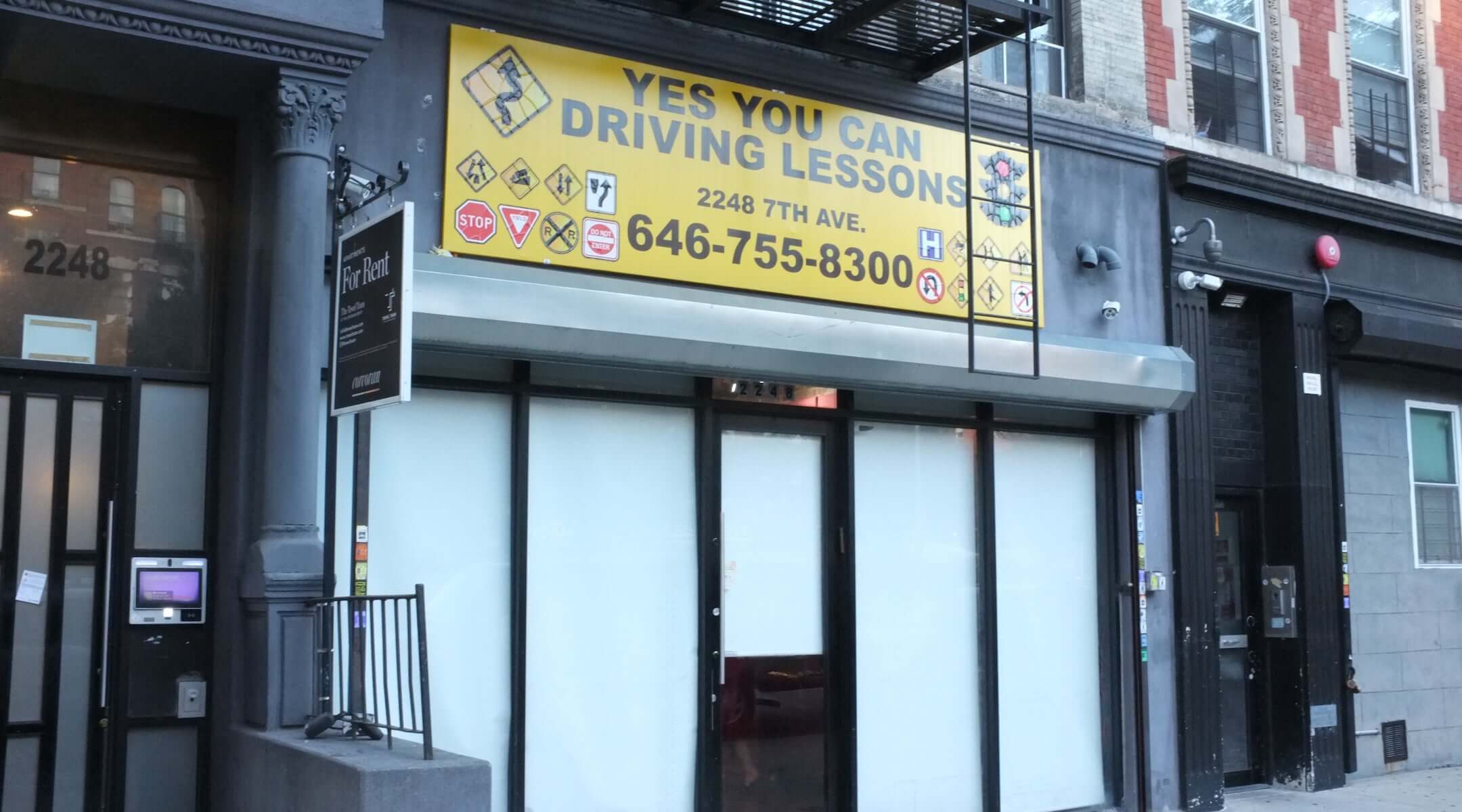
The facade of the Kehillat Harlem storefront location on Adam Clayton Powell Boulevard. Photo by Jewish Telegraphic Agency
(New York Jewish Week) — The “Yes You Can” driving school is no more, but the sign that still hangs over its former storefront in Central Harlem is something of an apt message for the new tenant — a fledgling synagogue that aims to demonstrate the vitality of Jewish life in the neighborhood.
Kehillat Harlem, a non-denominational “shul community,” moved into the Adam Clayton Powell storefront last year after seven years in transit. Since its founding, it has held services in a basement, a local cafe and even outdoors.
Now, Kehillat Harlem is using the space for what its founding rabbi, Kyle Savitch, says is the only option for weekly Shabbat services in the neighborhood, even as a host of new initiatives aim to serve Harlem’s growing Jewish population.
“We’re the only synagogue in Central Harlem that’s meeting every Friday, every Saturday, let alone having meals and everything else, so I definitely think we’re serving a need there,” Savitch said. “For folks who are looking to move or looking to join a new community, sometimes what they want to know is that there is consistency in Jewish life, and so I think we’re able to provide that.”
But Kehillat Harlem isn’t just striving to add a synagogue to the neighborhood. Savitch also aims to leverage the shul into a community hub or even, one day, a restaurant serving Jewish food.
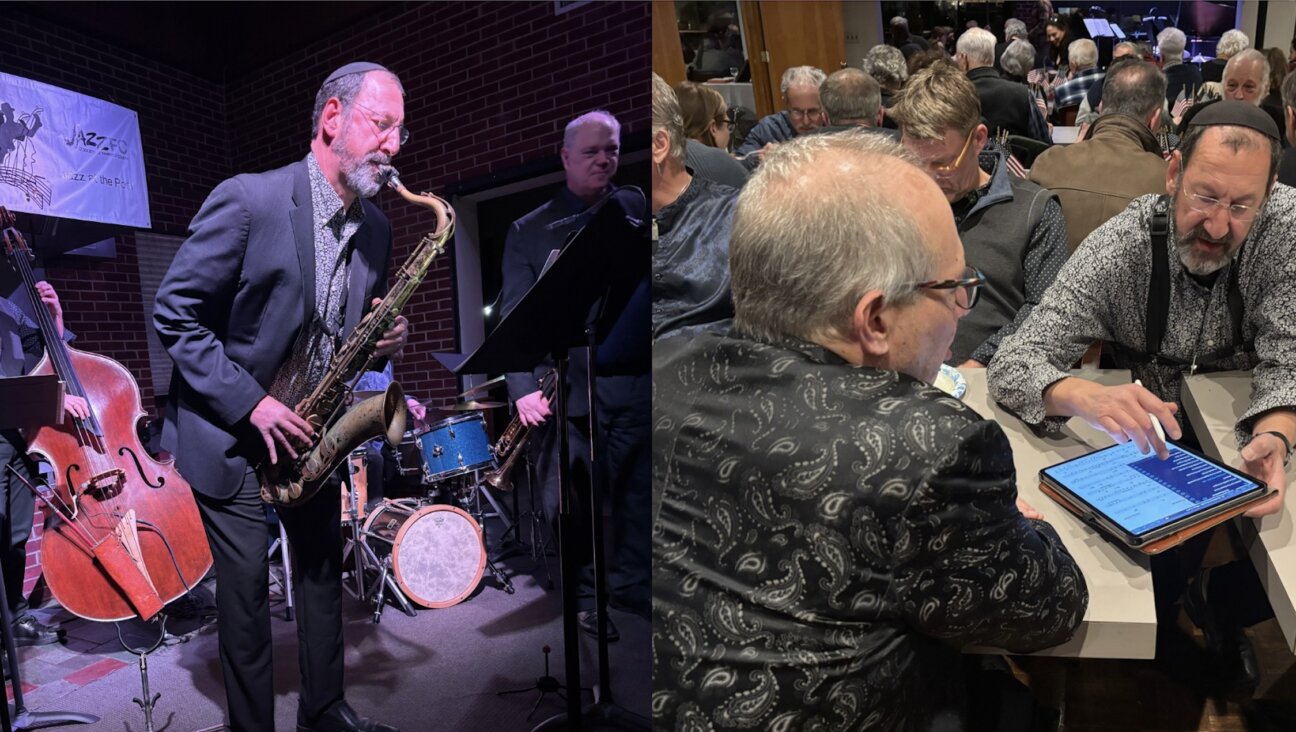
A dress rehearsal came last month on the first night of Hanukkah, when roughly 70 people filled Kehillat Harlem’s storefront space for the shul’s annual Hanukkah speakeasy. To enter the event, which included a jazz band, latkes and kosher tequila from Tekiah Spirits, partygoers used the secret password “Lehadlik ner,” the Hebrew phrase meaning “to light a candle.”
“We’re exploring how our role in the community can expand to infrastructure in terms of kosher food, in terms of space access, in terms of places to gather,” Savitch said.
Kehillat Harlem is hardly the only entity to tackle those questions in Harlem, which once had one of the largest Jewish populations in the world. Once home to roughly 175,000 Jewish residents at its peak in 1917, the neighborhood saw most of them leave as it transformed into a hub of Black culture during the Harlem Renaissance. Some of the neighborhood’s synagogues remain standing, but have been converted into churches.
Over the last 15 years, the neighborhood’s Jewish population has gone from an estimated 2,000 people to 16,000 adults and 8,000 children, according to a 2023 study by the UJA-Federation of New York.
To serve them, a branch of the young professional programming nonprofit Moishe House has opened up, as has a branch of the Upper West Side’s Marlene Meyerson JCC with its own rabbi-in-residence and monthly Shabbat service. Tzibur Harlem, an initiative founded in 2024 by Rabbi Dimitry Ekshtut and Erica Frankel, offers programming including occasional Shabbat services; it recently played a role in getting a Hanukkah menorah added to a local Christmas display.
But when it comes to regular prayer services, the only option until Kehillat Harlem opened was the Old Broadway Synagogue, an Orthodox congregation founded in 1911 that serves families in West Harlem and Morningside Heights.
Many observant Jews in the neighborhood were looking for something different, said Savitch, who was ordained at Yeshivat Chovevei Torah, a liberal Orthodox seminary, in 2021.
Kehillat Harlem, he said, “came out of the need for a Jewish community in the neighborhood, which was inclusive and welcoming to everyone who walked in the door. Our community is very diverse. There’s folks who are observant, there’s folks who aren’t observant, there’s queer folks, there’s folks in interfaith relationships, and there wasn’t really a place in the neighborhood for all those people to go and feel comfortable.”
Arielle Flax, a 32-year-old Jewish Harlem resident and co-president of Kehillat Harlem, described the shul’s ethos as “socially progressive but halachically traditional,” meaning that she seeks to follow Jewish law.
While Kehillat Harlem has a mechitza, the gender partition that separates men and women in Orthodox synagogues, it also has a third section for genderfluid or nonbinary participants. Unlike at most Orthodox synagogues, where reading from the Torah is restricted to men, people of all genders are invited to read from the Torah.
“We want to be as inclusive as possible, while still keeping that bar for those who do want to fulfill the more stricter obligations for Judaism,” said Flax. “We try to empower people of all genders, all backgrounds, to participate, to feel like they are contributing and involved and not just spectating.”
Before Flax joined Kehillat Harlem in 2017 for its inaugural Shabbat, she had hesitated to move to the neighborhood because of its sparse Jewish infrastructure, but the presence of the fledgling congregation had helped tip her decision.
“I immediately felt like I had a place to go as soon as I moved up to New York, which is great, but before we moved up we were a little concerned,” said Flax.
Since then, Flax said she had seen the neighborhood’s Jewish population grow.
“I think by having Kehillat Harlem and other organizations in the area, I think more Jewish people are kind of coming out and getting involved in Jewish life in Harlem,” she said. “I think that’s a really beautiful thing.”
Laura Lara, a 50-year-old Argentinian native who moved to Rego Park, Queens, in 2022, said that she had struggled to connect to a Jewish community in the city until attending Kehillat Harlem’s Purim party last year.
“Being an emigre from another country and another language, finding the right place was a little bit hard for me at the beginning,” said Lara. “Finally, I found a place, and I went to a celebration of Purim in Harlem, and I found the diversity, everyone has a voice, everyone has a place, and that is what I like.”
After making the “schlep” to services and community events at Kehillat Harlem over the past year, Lara said that she and her husband are considering making the move to Harlem.
“I am also thinking of moving to the area,” said Lara. “I feel like I live in a bubble in my neighborhood, my community and the values and the place is far away from my home.”
In August, Kehillat Harlem marked a milestone — and another journey from Queens to Harlem — by dedicating a Torah that had been rescued during the Holocaust from Germany in 1940 and donated by the former Bayside Jewish Center.
“By bringing this Torah into Kehillat Harlem and returning it to use, we’re literally carrying it into the next generation,” Savitch said at the dedication ceremony. “We’re weaving together its survival through the Holocaust, its history in Queens and its future here in the neighborhood of Harlem, so we’re marking not just the dedication of this Torah, but the renewal of Jewish life in Harlem.”
Savitch said his dream is for Kehillat Harlem to become a one-stop shop for services, classes and communal gatherings and kosher food in Harlem.
Doing so could help hack the high cost of real estate in New York City. In neighborhoods with dense Jewish infrastructure, small synagogues have begun sharing space with Jewish organizations, but that’s not as much of an option in Harlem.
“The dream is really to have a fully multi-purpose space, especially as costs are going up and synagogues are having a hard time paying rent, and restaurants are closing left and right, especially kosher restaurants,” said Savitch.
While other parts of the city boast dozens of Jewish and kosher restaurants, Harlem has fewer options for its Jewish neighbors, including Silvana, a restaurant that serves Israeli cuisine, and Tzion Cafe, a kosher and vegan Ethiopian-Israeli restaurant.
To fill the gap in kosher offerings, Savitch transformed Kehillat Harlem into a makeshift restaurant in 2024 for Passover, and hosted a weekly program called “Shtiebel Sundays” last year where kosher pastries and coffee were for sale.
While Savitch said that Shtiebel Sundays hadn’t garnered revenue for the shul, he said it was “successful as a community-building model.”
“That’s also part of what we’re doing,” he said. “In a community that can’t necessarily yet support a fully functioning kosher cafe, restaurant, whatever it is, we’re providing that as a nonprofit.”