Shower, shelter, swipe: Israel’s ‘startup nation’ meets Iran war with a wave of apps
Israelis are downloading apps to calculate the risk of showering — and to look for love in bomb shelters
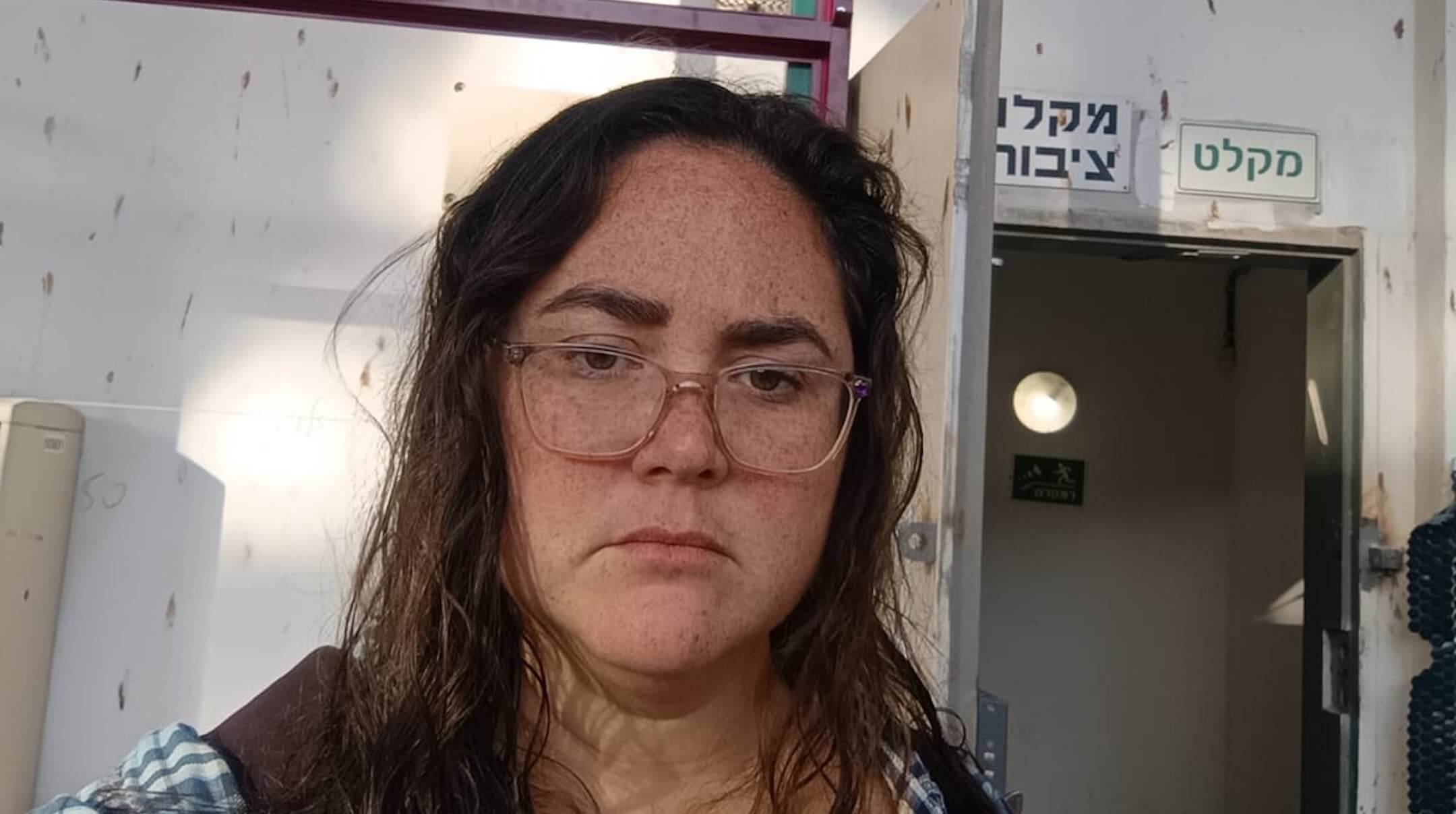
Martine Berkowitz took a selfie after heading to a public shelter when a rocket alarm sounded shortly after she got out of the shower in Israel, on March 4. Courtesy of Martine Berkowitz
(JTA) — TEL AVIV — Smartphones have become as essential as shelters for Israelis riding out Iran’s missile attacks, with internet traffic up 25% since the war began on Saturday. From the screaming alerts of the military’s official app that, as one comedian put it, sound like a “baby dragon giving birth,” to bomb-shelter Tinder to multiple apps that tell you when it’s safe to shower, the startup nation is trying to digitize the panic into something more manageable.
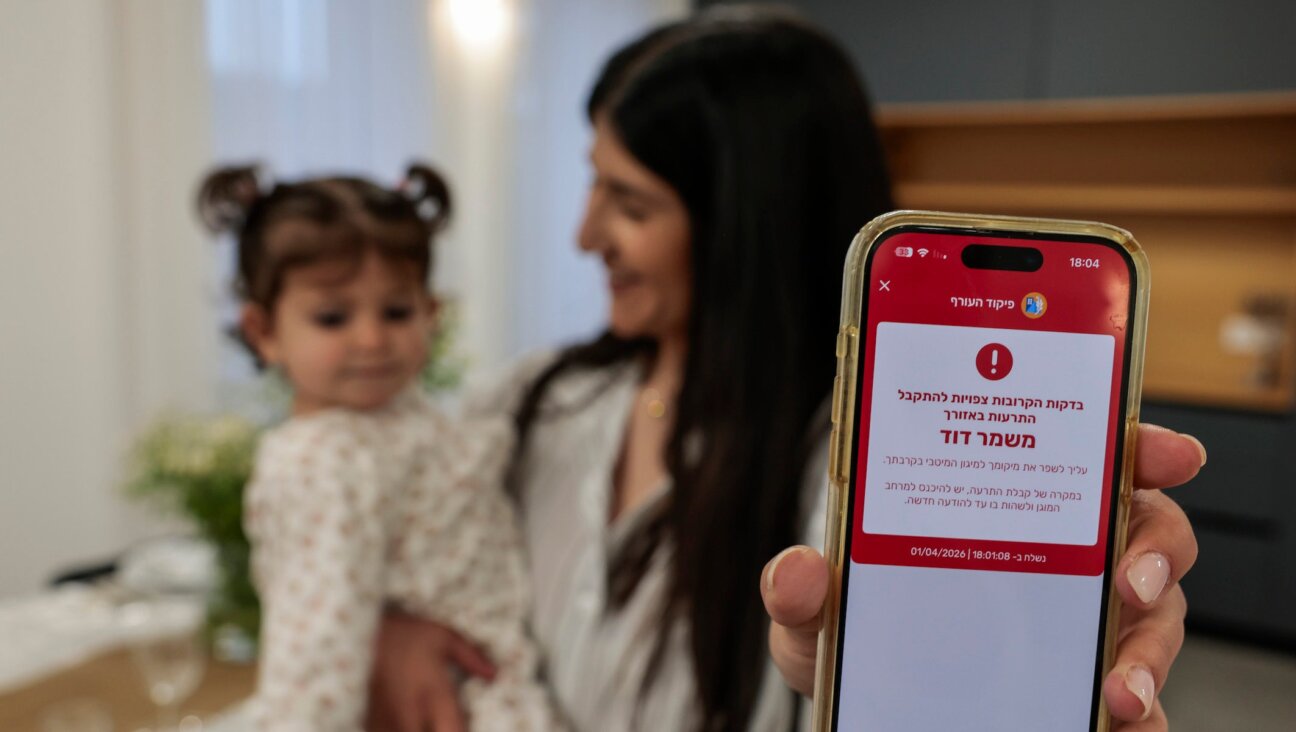
At the serious end of the wartime app stack is Home Front Command, the Israeli army’s app available in Hebrew, Arabic, Russian and English. It uses GPS to figure out where you are and only pings you when your area is at risk, with separate alerts for rockets, missiles and terror incidents. In this war, Iran’s long-range fire has come with an extra layer of notice, a warning-before-the-warning that can buy people a few more minutes. The shorter-range threats from Hezbollah, which joined the fray on Tuesday, do not come with that same courtesy.
Bomb Shelter Locator turns shelter-seeking into a map exercise, listing around 20,000 official sites, offering offline city maps and walking routes, and estimating the time it will take to reach the nearest protected space.
For anyone who cannot sprint, Purple Vest tries to close the gap. People with disabilities or older residents can register in advance and request help during alerts, with volunteers using the app to locate them and assist with shelter access or urgent supplies.
For others, shelters are turning into accidental social spaces where people can meet-cute on a mattress. The Hooked app, originally built for speed-dating at events, now doubles as a bomb-shelter icebreaker. Shelter-goers post a QR code at the entrance, and singles who scan it can see who else in the same bunker has the same relationship status. US Ambassador Mike Huckabee — who has not been single since high school — shared it on X alongside the caption: “Someday they will tell their kids ‘we met on a dating app in a shelter while dodging ballastic [sic] missiles.’”
But for some, even showering has become its own risk calculation. Martine Berkowitz was one of many who vented after her attempts to scrub up were interrupted by missiles no less than five times on the second day of the war.
For software developer Ben Greenberg, a father of teenagers, Berkowitz’s complaint was familiar, so he built an app called Best Shower Time that spits out a percentage risk score on whether a shower is likely to be interrupted by an alert.
Posts about it spread on social media and what began as a tool for his family is now drawing about 5,000 visitors a day. Greenberg, a California native who immigrated to Israel from New York in 2018, insists it’s “not a joke app.”
“Sirens are just the ultimate example of lack of control in one’s life,” he said, describing the app as a way to “restore some level of control and predictability … in a time when that feels most vulnerable and most taken away from us.”
The app uses real-time alert data from the Home Front Command, and the score is based on four inputs: how long it has been since the last alert, the average gap between alerts over a six-hour window, whether the frequency is trending up or down, and the total alert count over the past 24 hours. Those are weighted into a single score that appears when you open the app.
Users can then set their own parameters, including how long a shower typically takes and how much buffer time they want afterward to dry off and reach shelter.
And for those who have a penchant for extended bathroom breaks, Greenberg added a separate option that relies on the same logic.
It’s not the only app homing on issues of basic cleanliness to emerge this week. Another app, Can I Shower Now?, has developed a following of its own.
Berkowitz said she was “grateful” for apps to help her navigate the question of whether to jump in the shower. After checking and seeing a 13% chance of a missile alert on Wednesday afternoon, she decided to risk it.
“I took a full 20-minute hot shower and washed my hair. It was lovely. And the next warning only came when I was finished and getting dressed,” she said.
Greenberg is piloting a new app, called Best Walking Time, based on the same principle and prompted by his wife, who regularly walks around the neighborhood during work calls but has been afraid to stray from home lest a missile head their way.
This is a moment of great uncertainty. Here’s what you can do about it.
We hope you appreciated this article. Before you go, we’d like to ask you to please support the Forward’s independent Jewish news this Passover. All donations are being matched by the Forward Board - up to $100,000.
This is a moment of great uncertainty for the news media, for the Jewish people, and for our sacred democracy. It is a time of confusion and declining trust in public institutions. An era in which we need humans to report facts, conduct investigations that hold power to account, tell stories that matter and share honest discourse on all that divides us.
With no paywall or subscriptions, the Forward is entirely supported by readers like you. Every dollar you give this Passover is invested in the future of the Forward — and telling the American Jewish story fully and fairly.
The Forward doesn’t rely on funding from institutions like governments or your local Jewish federation. There are thousands of readers like you who give us $18 or $36 or $100 each month or year.
Support our mission to tell the Jewish story fully and fairly.