New York Faces a Knish Crisis

Graphic by Angelie Zaslavsky
Bad news for fried knish lovers: New York is in the midst of a shortage.
Gabila’s, the country’s largest producer of fried knishes (which according to its website has sold over a billion doughy pockets), has had to suspend production of its “Coney Island Squares” until at least the end of November. The reason: a small fire that broke out in the company’s Long Island factory on September 24.
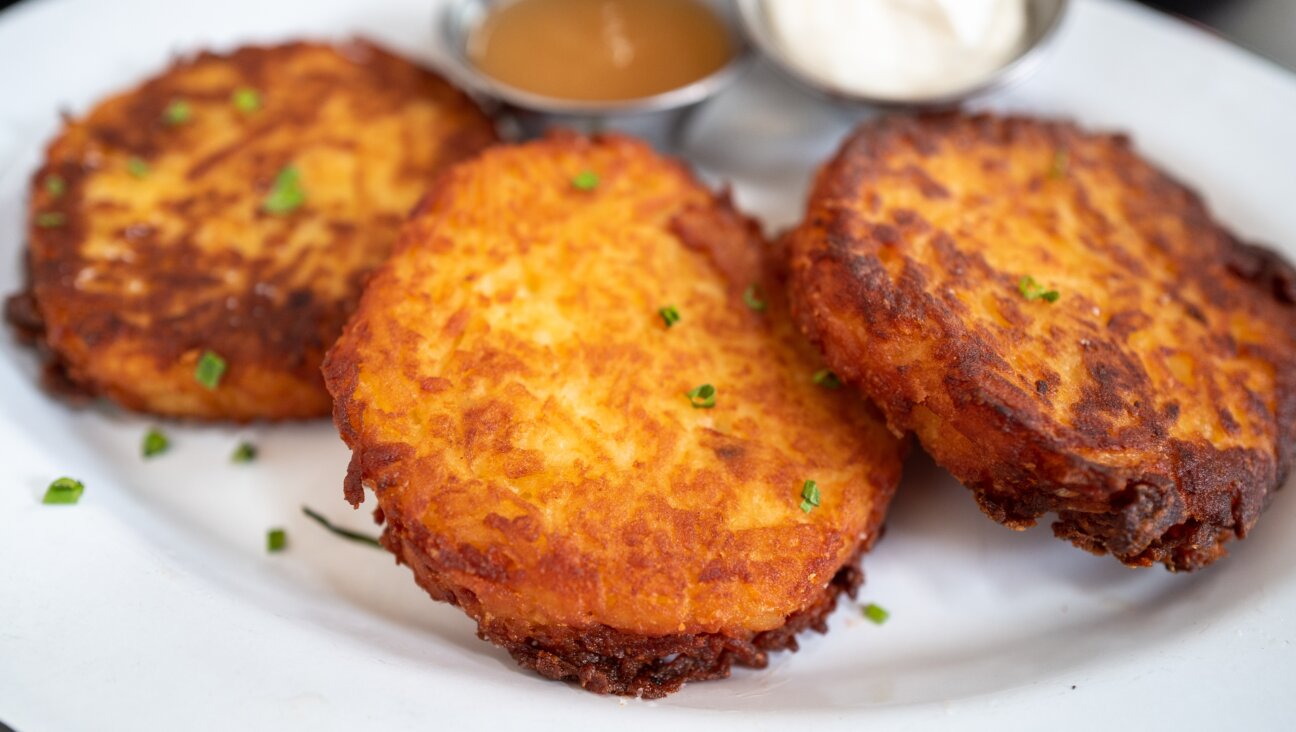
Gabila’s supplies many of the city’s delis and hot dog carts with their fried knishes (which can best be described as mashed potatoes wrapped in fried dough, and which go incredibly well with mustard alongside a deli sandwich). Delis from Katz’s on the Lower East Side to Essen New York Deli in Midwood are out of them.
“Believe me, if I could give you a square knish, I’d give you a square knish. I just can’t right now,” Katz’s fifth-generation owner Jake Dell told CBS News.
Katz’s normally sells 1,500 of these knishes a week (for $3.75 each), according to CBS.
So what does this mean for those of us craving knishes? For the next month you’ll either have to go with the round, baked variety (which sell for 50 cents more at Katz’s) — which are often homemade at delis and restaurants — or try to go over a month without knishes. Hey, your waistline might thank you.
If you’d like to make your own, check out a cooking video from The Forverts.
This is a moment of great uncertainty. Here’s what you can do about it.
We hope you appreciated this article. Before you go, we’d like to ask you to please support the Forward’s independent Jewish news this Passover. All donations are being matched by the Forward Board - up to $100,000.
This is a moment of great uncertainty for the news media, for the Jewish people, and for our sacred democracy. It is a time of confusion and declining trust in public institutions. An era in which we need humans to report facts, conduct investigations that hold power to account, tell stories that matter and share honest discourse on all that divides us.
With no paywall or subscriptions, the Forward is entirely supported by readers like you. Every dollar you give this Passover is invested in the future of the Forward — and telling the American Jewish story fully and fairly.
The Forward doesn’t rely on funding from institutions like governments or your local Jewish federation. There are thousands of readers like you who give us $18 or $36 or $100 each month or year.

Support our mission to tell the Jewish story fully and fairly.