VIDEO: In honor of Petula Clark’s 90th birthday — a hilarious Yiddish take on the song ‘Downtown’
The clever lyrics in this clip, subtitled in English, were written by the bestselling author of ‘Born to Kvetch,’ Michael Wex
Graphic by Angelie Zaslavsky

By Rukhl Schaechter December 14, 2022
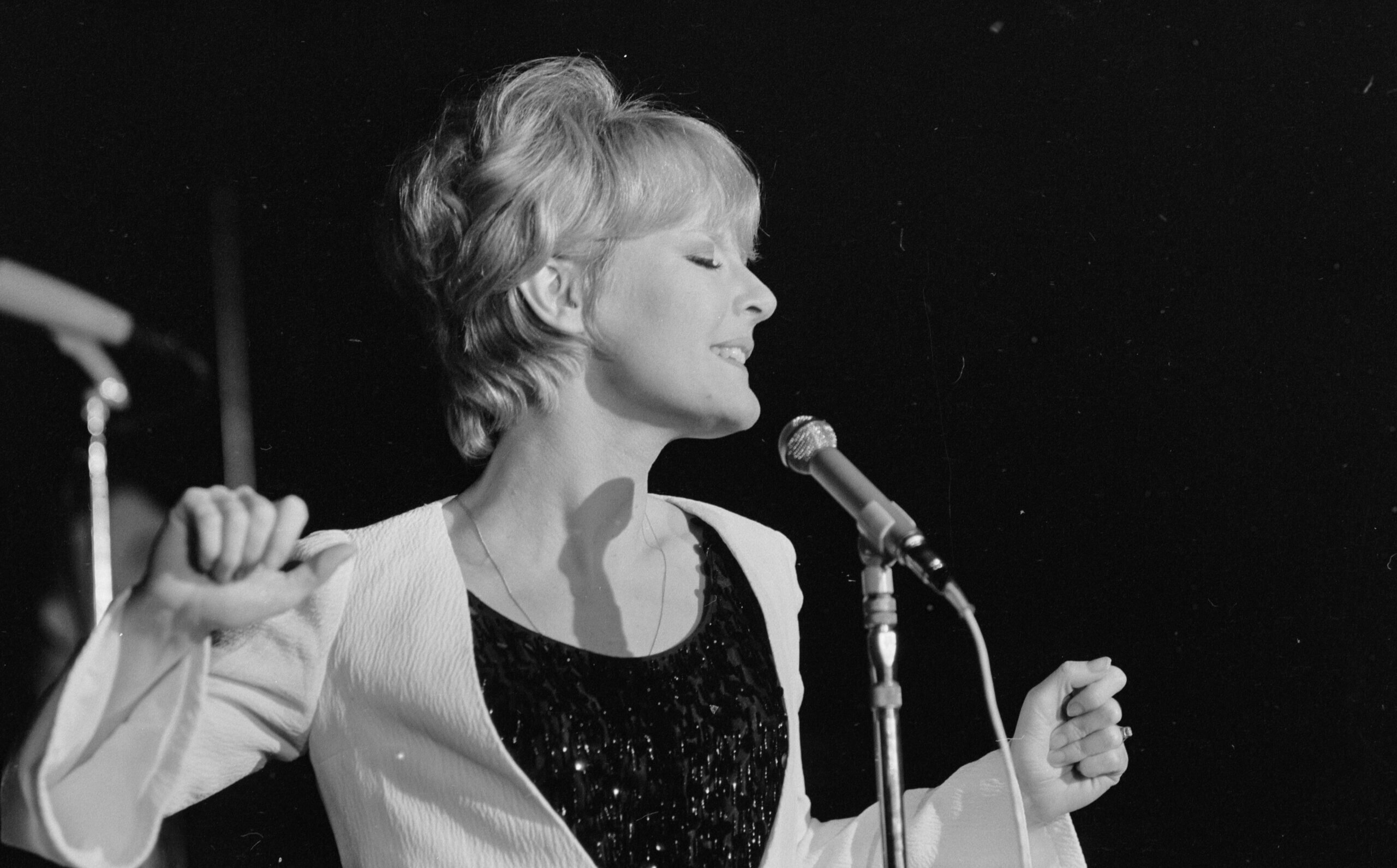
Last month, Petula Clark, the British singer and actress best known for her 1964 smash hit recording of the song “Downtown,” turned 90.
The song, which was written and produced by Tony Hatch, immediately reached No. 1 on the Billboard Hot 100, earning Clark a Grammy that year for best rock ’n’ roll recording (beating the Beatles, by the way). Since then, the song has been covered by Dolly Parton, Emma Bunton and others.
Hatch said he was inspired to write the song in autumn 1964 during his first visit to New York City. “I’d heard about all the great songwriters working in the Brill Building in New York, so I took a trip over to find out how they did it,” he said in a 2016 interview with The Guardian.
“I stayed near Central Park and, late one night, walked from Broadway to Times Square. I was amazed that everything was still open. Although I was there on my own, I didn’t feel alone.”
As a tribute to Clark, whose career has spanned more than seven decades, Canadian singer-songwriter Geoff Berner turned to his friend and compatriot, the bestselling author of “Born to Kvetch,” Michael Wex, to translate “Downtown” into Yiddish. He did.
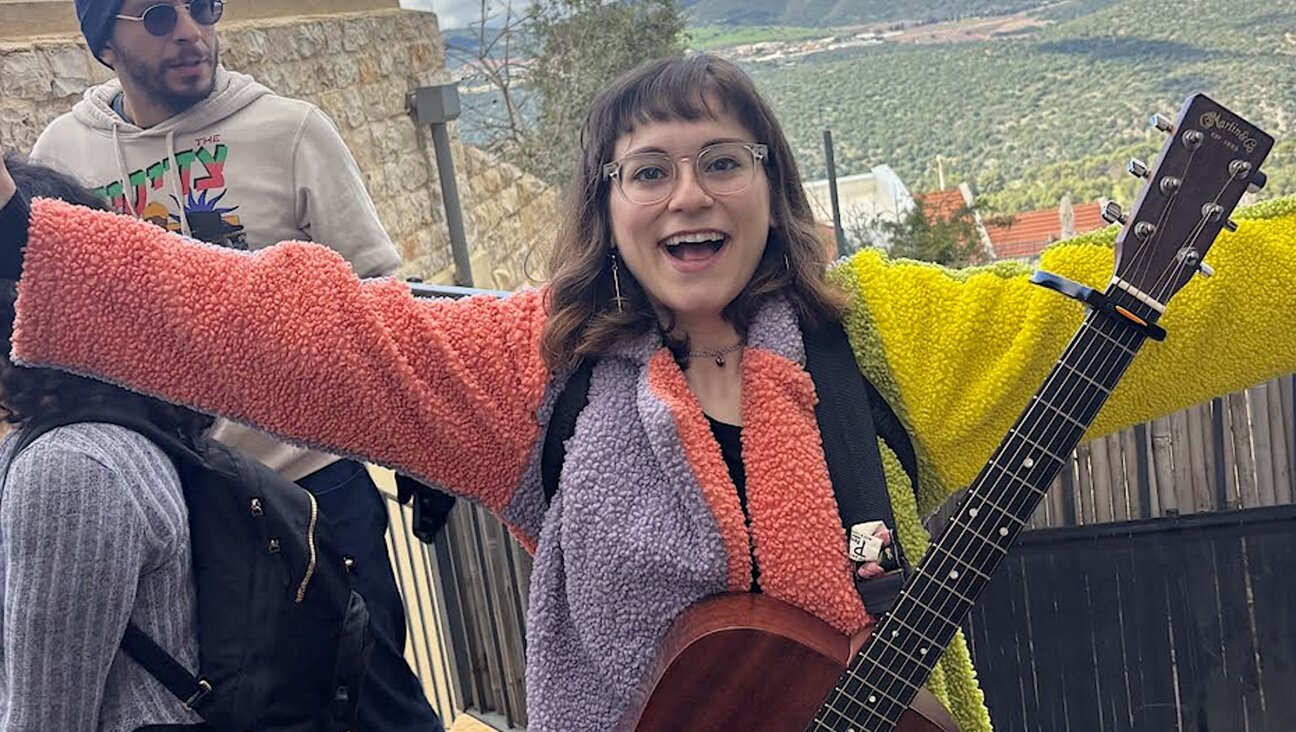
Now the duo has posted a YouTube clip of Berner singing the Yiddish version, accompanying himself on the accordion. Berner, who’s been studying Yiddish with Wex for the past three years, added the English subtitles. The combination of Wex’s delightfully idiomatic Yiddish lyrics, Berner’s deadpan performance and the endearingly old-fashioned sounds of the accordion provide Jewish humor at its finest.
Who else but Wex, for example, could come up with a line rhyming “bossa nova” with the Polish city of Czenstochowa – and make it sound really funny, yet perfectly normal?
Petula Clark, who was born in Ewell, England, in 1932, began singing in British concert halls at the age of 11 and performed for the troops during World War II on BBC radio. She was a child star in a series of British films from the end of the war to the early 1950s and also recorded popular songs in French, German, Italian and Spanish. After marrying Frenchman Claude Wolffe in 1961, she moved to Paris where she began recording mostly in French.
In 1964 Hatch flew to Paris to show her some songs he hoped she’d record with him, but she was unimpressed until he sat down at the piano and began playing a couple of bars of the new, incomplete song he was composing. “Reluctantly, I played her the tune of my New York inspiration and slipped in the word ‘Downtown’ in the appropriate places,” he said in a 2010 interview with the Hollywood magazine Daeida. “That’s the one I want to record,” she said. The rest is music history.
Wex told the Forward that he’s always been a Petula Clark fan, especially the mid-’60s hits she had with Tony Hatch and the French-language songs she did before that. “I lived for many years in the same apartment building as the classical pianist Glenn Gould, whose admiration for Petula and Tony Hatch seemed boundless, making ‘Downtown’ — so to speak — the building theme song,” Wex said.
Berner and Wex haven’t sent Clark the link to their yidishe version of “Downtown,” but Wex thinks she’d appreciate the tribute.
This is a moment of great uncertainty. Here’s what you can do about it.
We hope you appreciated this article. Before you go, we’d like to ask you to please support the Forward’s independent Jewish news this Passover. All donations are being matched by the Forward Board - up to $100,000.
This is a moment of great uncertainty for the news media, for the Jewish people, and for our sacred democracy. It is a time of confusion and declining trust in public institutions. An era in which we need humans to report facts, conduct investigations that hold power to account, tell stories that matter and share honest discourse on all that divides us.
With no paywall or subscriptions, the Forward is entirely supported by readers like you. Every dollar you give this Passover is invested in the future of the Forward — and telling the American Jewish story fully and fairly.
The Forward doesn’t rely on funding from institutions like governments or your local Jewish federation. There are thousands of readers like you who give us $18 or $36 or $100 each month or year.
Support our mission to tell the Jewish story fully and fairly.