What rabbinic wisdom taught me in the wake of the BAFTA scandal
When someone makes a mistake, our rabbis teach that we must hold them accountable in a way that is healing — not harmful
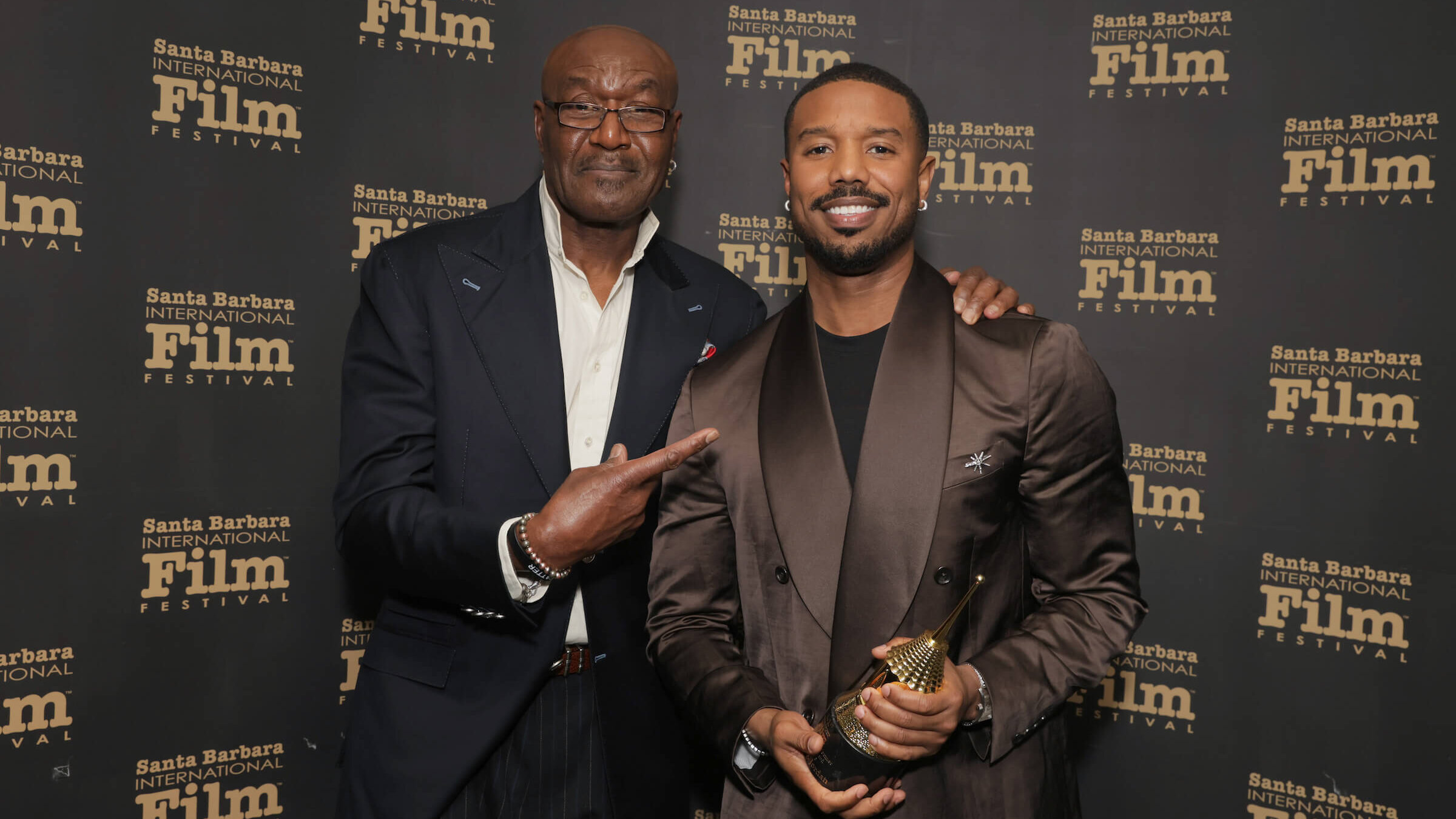
Delroy Lindo and Michael B. Jordan. Photo by Photo by Rebecca Sapp/Getty Images for Santa Barbara International Film Festival

By Olivia Haynie February 27, 2026
When I woke up Monday, the first message I saw was from a friend asking if I’d seen the “Sinners Tourette’s thing from the BAFTAs.” The “Sinners Tourette’s thing” took place Sunday night, when John Davidson, the subject of the BAFTA-nominated film I Swear, about living with Tourette’s, shouted the N-word while Black Sinners actors Michael B. Jordan and Delroy Lindo presented an award.
This sparked thoughtful online conversations about racism and understanding coprolalia, a form of Tourette’s that presents as involuntarily uttering obscenities. It also led to criticism of BAFTA and the BBC for not intervening after the reportedly slur was thrown at other attendees earlier and for censoring a pro-Palestine statement but not the N-word (a BBC spokesperson said the statement was cut for time and has now censored the slur on the BBC iPlayer video of the BAFTAs).
Of course, productive dialogue online was overshadowed by vitriolic racism and ableism attempting to villanize both parties involved.
As I read about the controversy, I was reminded of ona’at devarim, a Talmudic prohibition against verbally harming someone else, through purposefully shaming them, spreading gossip or giving bad advice.
The embarrassment here, to me, appears twofold. Shaming Davidson could have further embarrassed him. But Jordan and Lindo had already been publicly embarrassed, and that needed to be rectified.
When is publicly calling out behavior useful — such as establishing boundaries around slurs — and when is it vengeful? And how much does intent versus impact matter?
I reached out to several rabbis to learn how Jewish values could help me understand this situation — and how to think about accountability when a billion people can see your mistakes in a matter of seconds.
Rabbi Shais Rishon, known by his pen name MaNishtana, leads the congregation Ohel Eidot CHeMDaT’’A, a D.C. synagogue for African American and Caribbean Jews. In our conversation, he noted that many people were embracing racism or ableism, when they should be acknowledging the situation’s nuances.
“There’s a lot of little parts here and in these kinds of conversations. I always say it’s important to move into them with three sort of goal posts in mind,” said Rishon. “The first is that multiple things can be true at the same time. Second is multiple things can be wrong at the same time. And the third is explaining how to make this work so it doesn’t absolve from accountability or agency.”
Rabbi Lauren Tuchman, who focuses on disability access and inclusion in the Jewish world, emphasized making sure accountability is not overlooked.
“Sometimes I actually worry that the standards are not applied appropriately when harm happens when a disabled person causes the harm,” said Tuchman, who is a fully blind person. “You don’t want a situation where any kind of apology is like meeting the needs of the offender and not at all meeting the needs of those who are harmed.”
Even so, everyone’s unique situation must be accounted for. Both Tuchman and Rishon believed Davidson should apologize to Jordan and Lindo, but cautioned against mistaking Davidson owning what he did as him admitting to having done it on purpose.
“Nothing can be universalized here and everything is so case-specific, especially when that offensive speech is actually not in this person’s control,” said Tuchman.
Tuchman noted that everyone is entitled to their feelings when met with offensive language, even if it’s unintentional, something she has dealt with a lot. Sometimes she decides “They didn’t mean it, I’m just gonna try to let it go.” But, she said, “you make that choice for yourself and your own integrity.”
“I think that there are ways in which we need to be able to allow for us to feel what we feel, and then to make wise choices about how we act,” she added.

It doesn’t seem to me that what Davidson needs and what Jordan and Lindo need have to be in conflict with one another. Rishon pointed to tochecha, the obligation in Leviticus to reprimand and correct improper behavior in a way that betters the community.
“It’s not supposed to be done in sort of that embarrassing way,” said Rishon. “It’s not about spectacle. It’s about transformation.”
Next, Tuchman said, we must embrace the value of teshuva: correcting our mistakes by realigning with our morals in our actions and deeds.
“The Rambam talks about needing to acknowledge the wrongdoing [and] really take responsibility,” Tuchman said. “And then engage in restitution in whatever way that makes sense.”
“This is somebody with a personal challenge, and maybe there’s a personal conversation and apology to happen,” Rishon said. “There’s no need for us to excoriate him because he has no control.”
Rishon suggested scrutiny should be focused on the BBC and BAFTA, for their “ lack of attentiveness, their lack of fastidiousness, [and] their lack of sensitivity.”
As I spoke to Rishon and Tuchman, I couldn’t help but think that what Judaism asks of us feels more difficult when social media demands its users have instant and loud reactions to anything and everything. In another world, those involved could sort it out privately, and heal in their own time. But when an incident can be shared across the world in minutes, the apology becomes a public matter. And if you don’t do what the internet demands of you immediately, you’re automatically villanized.
From Rishon and Tuchman, I gathered that instead of focusing on who is right and who is wrong, we should take a breath and ask what we need to move forward in community. It’s embarrassing to be called a slur on television; it’s embarrassing to utter that slur when you can’t control it. But it’s happened. How can we respond as people who want to be better than we were before?
I still wouldn’t say I have all the answers for this situation or whatever the next attempt at public shaming may be. But I feel a lot more confident knowing I can turn to the advice of the rabbinic sages — and not just someone on X.
This is a moment of great uncertainty. Here’s what you can do about it.
We hope you appreciated this article. Before you go, we’d like to ask you to please support the Forward’s independent Jewish news this Passover. All donations are being matched by the Forward Board - up to $100,000.
This is a moment of great uncertainty for the news media, for the Jewish people, and for our sacred democracy. It is a time of confusion and declining trust in public institutions. An era in which we need humans to report facts, conduct investigations that hold power to account, tell stories that matter and share honest discourse on all that divides us.
With no paywall or subscriptions, the Forward is entirely supported by readers like you. Every dollar you give this Passover is invested in the future of the Forward — and telling the American Jewish story fully and fairly.
The Forward doesn’t rely on funding from institutions like governments or your local Jewish federation. There are thousands of readers like you who give us $18 or $36 or $100 each month or year.
Support our mission to tell the Jewish story fully and fairly.