We need to talk about New Jersey’s Jewish master of literature. No, not that one
Philip Roth and Judy Blume are both giants of American Jewish literature — so why do we put them in different classes?

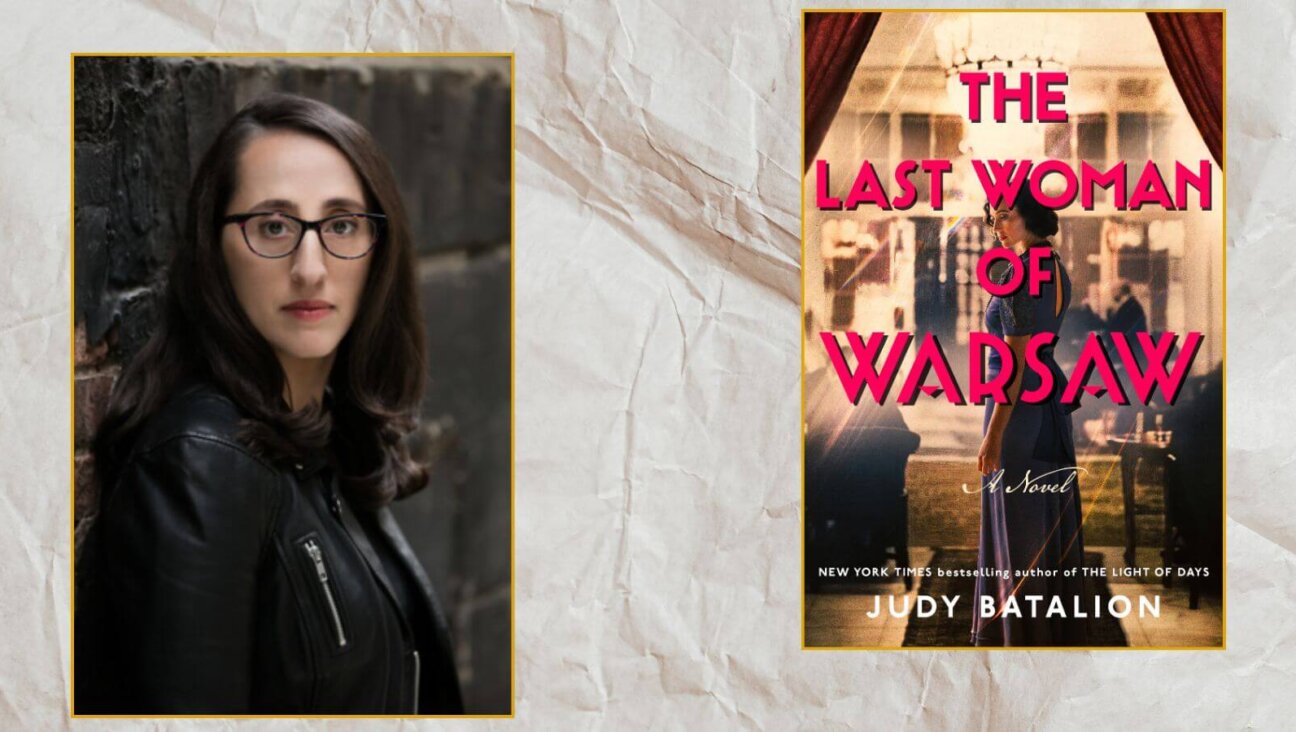
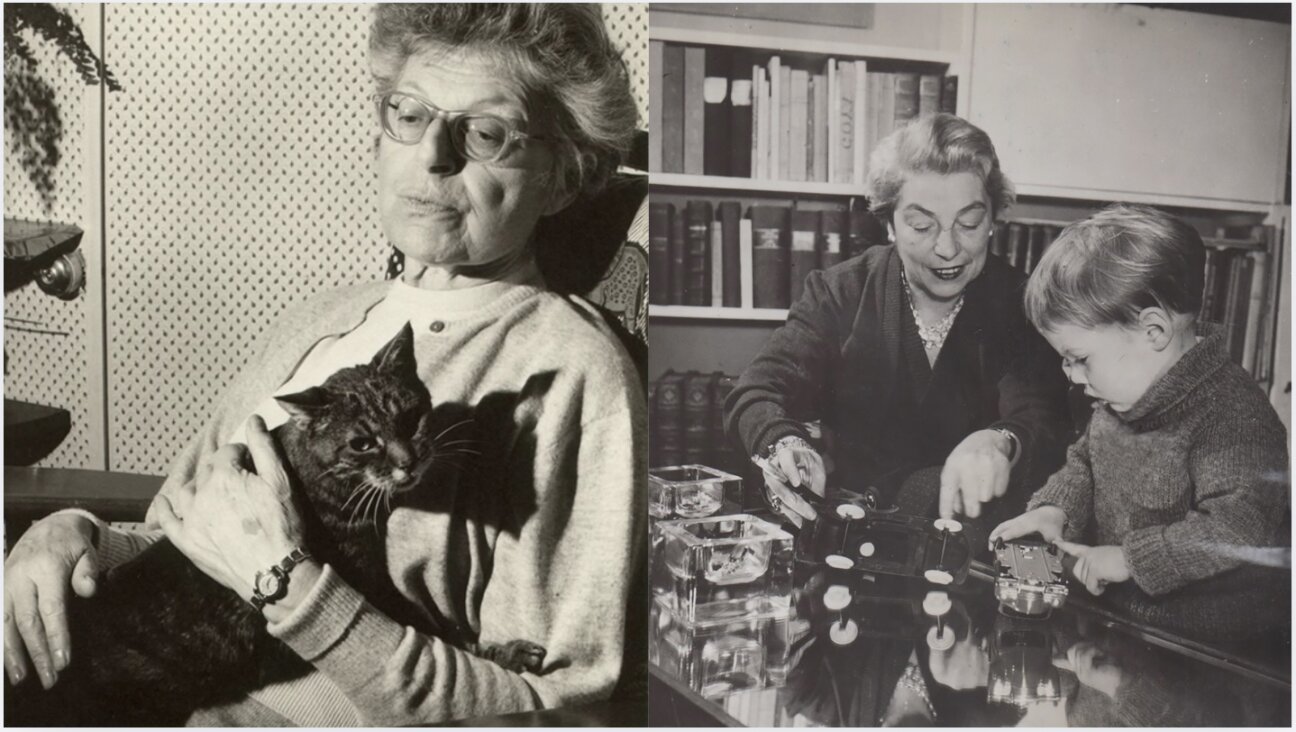
Two great American Jewish writers from New Jersey. Photo by Karjean Levine/Getty Images/Douglas Elbinger/Getty Images

By Talya Zax March 20, 2026
Philip Roth and Judy Blume were born five years apart in the 1930s. Both grew up in New Jersey, in the crucible of Jewish American suburban assimilation. Both were haunted by the Holocaust, news of which trickled stateside just as they were nearing adulthood. And both are literary icons.
But they’re icons of different kinds.
We see Roth as a giant of American Jewish literature, and Blume as a giant of American children’s literature. Within that distinction is a kind of tacit hierarchy. Roth was perceived as a writer for serious adults with serious concerns; Blume, as a writer for girls with girlish concerns. When Roth wrote about diaphragms (see Goodbye, Columbus) it was a bracing examination of shifting sexual mores at an inflection point in American culture. When Blume did, in Forever, it was sex education with a narrative twist.
I’ve been reading Mark Oppenheimer’s new biography Judy Blume: A Life, and thinking a lot about that hierarchy. I’ve read and loved a decent amount of Philip Roth, and a lot of Judy Blume. (I’ve written about both of them for this publication.) But I have a stronger relationship with her work than with his. One measure of a great novel is the dimensionality with which a reader experiences it. Do you see the characters as you read, smell their surroundings, hear their music? With Blume, my answer is always “yes.” With Roth, it’s “sometimes.”
So why have I, like many others, tended to think of Roth as an Important Writer, and Blume as merely an important writer to me?
This is a classic conundrum when it comes to children’s literature. As Alison Lurie wrote in her Pulitzer Prize-winning novel Foreign Affairs — which I am, by coincidence, also reading right now — children’s literature is the “stepdaughter grudgingly tolerated” in any English department. We must read extensively to grow up well, but there is a sense that anyone who stays overly attached to the things they read in those early years has somehow gone developmentally awry.
The book that has most influenced me is almost certainly Anne of Green Gables by L.M. Montgomery, but for much of my adult life, I would never have named it if a stranger asked me about my favorite novel. Not just because doing so would have seemed like a bit of a faux pas — what if that stranger thought I was childish, rather than merely open to the joys of childlike wonder? — but because it felt private. Like the part of me that loves that red-headed orphan beyond measure was too personal to share.
Roth and Blume both made careers out of writing about things that felt too personal to share. Both were taboo breakers, who experienced the vicious backlash that can accompany such transgression.
But Blume broke taboos in what might be seen as safer ways. Roth engaged with the unspeakable; she attacked the impolite. By being open about the stranger parts of girlhood — the bleeding, the sexual experimentation, the friendships that collapse in ways neither party really understands — her work made it feel a little safer to be a girl. The intimate things could now be intimate, but shared.
A tragic literary paradox is that women writers often need to win male readers to be taken seriously. Once they’re known as a writer who women like, the spectre of “chick lit” attaches itself to their work, a phenomenon that predates the development of that label by centuries. Aphra Behn, one of the first professional women writers, broke boundaries in the 17th century only to be dismissed by the 18th as a lightweight who was too open about sex. I once spent a six hour drive from Chicago to St. Louis fighting with my progressive-minded college boyfriend about his reluctance to read Jane Austen. The fight wasn’t really about him; Persuasion was never going to be quite his style. It was about my sense that the things I liked lost respect in some vaguely defined public eye because people like me liked them.
On a certain literary level, it’s strange to argue that Judy Blume should be considered as great an American Jewish literary master as Philip Roth. Her sentences are simpler. So are her themes. Her approach to great American issues, like race, can be hamhanded. (To be fair, Roth’s could, too.)
But on another level, I think it’s not just reasonable but right to define great literature in part by its impact. Books are meant to deepen our connection to the world. They are meant to brighten our experience of life. They are meant to help us understand ourselves and our neighbors. Few American authors have done either of those things more powerfully, or for more people, than Judy Blume.
The release of Oppenheimer’s book has been clouded by the mystery of why Blume fell out with the author after reviewing his first draft. As a reader, I understand: Nothing is more enticing than a mystery. But I find it, frankly, sad that the first in-depth accounting of how Blume came to be a writer of such impact has been clouded by the desire for an accounting of what mysterious rifts opened between her and her biographer.
By 1964, Oppenheimer writes, Blume’s “specific milieu of suburban Jewish middle-class ease was nationally recognizable,” thanks to Roth’s work. When Blume had not yet started to write, Roth had produced a “shorthand for a kind of tacky, nouveau riche suburban Jewish experience.”
But he had done so for only a select portion of that populace: the young man on the come-up, the wealthy, bored girl trying to throw off her parents’ values without breaking herself off from their comfortable lifestyle.
The unspoken others in that vision — the basically good mothers, the mostly obedient daughters — needed their own chance to be recognizable, too. They were just as interesting, only, perhaps, in quieter ways. The literature of American Jewish life isn’t just more complete because Blume gave them voices. It’s better, too.
This is a moment of great uncertainty. Here’s what you can do about it.
We hope you appreciated this article. Before you go, we’d like to ask you to please support the Forward’s independent Jewish news this Passover. All donations are being matched by the Forward Board - up to $100,000.
This is a moment of great uncertainty for the news media, for the Jewish people, and for our sacred democracy. It is a time of confusion and declining trust in public institutions. An era in which we need humans to report facts, conduct investigations that hold power to account, tell stories that matter and share honest discourse on all that divides us.
With no paywall or subscriptions, the Forward is entirely supported by readers like you. Every dollar you give this Passover is invested in the future of the Forward — and telling the American Jewish story fully and fairly.
The Forward doesn’t rely on funding from institutions like governments or your local Jewish federation. There are thousands of readers like you who give us $18 or $36 or $100 each month or year.

Support our mission to tell the Jewish story fully and fairly.