Francesca Segal

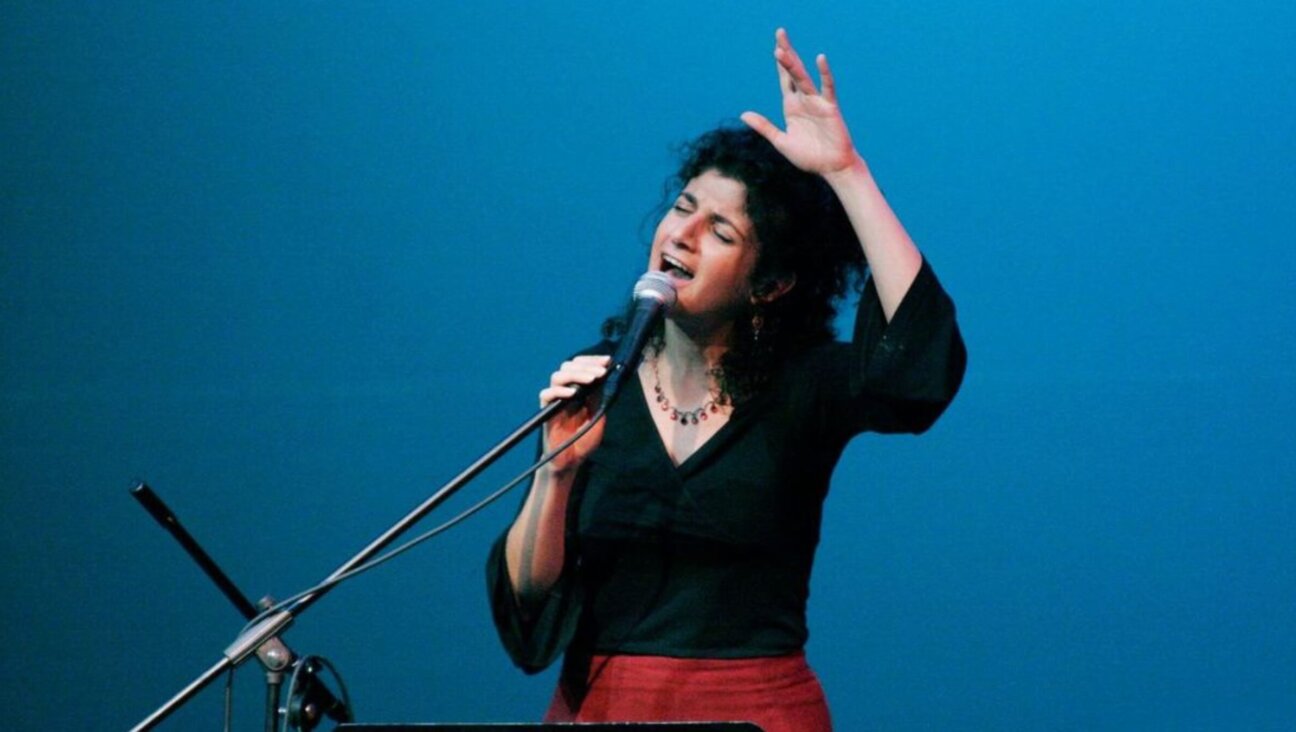
Image by ABC/donna svennevik
This has been quite a year for debut novelist Francesca Segal, the 33-year-old author of “The Innocents.” Her book won the National Jewish Book Award for fiction, the Sami Rohr Prize for Jewish Literature, the 2013 Harold U. Ribalow prize, and was longlisted for the 2013 Women’s Prize for Fiction. The novel reimagines Edith Wharton’s classic New York novel, “The Age of Innocence,” setting it in London’s Temple Fortune Jewish community where Segal has lived for much of her life.
“Reading a novel set in 1870s haute New York society, I felt such an unexpected, urgent, vivid sense of recognition that I could no longer imagine writing another word until I had written this,” the Oxford-educated Segal wrote earlier this year. “The trappings were different but the social concerns, the pressures, the closeness and longevity of friendships, the judgment, the parochialism and the paramount importance of What Everybody Thinks — it was just the same.”
In writing “The Innocents,” Segal has performed the neat trick of combining the appeal of popular fiction with the demands of a serious literary novel — demonstrating a talent that was the hallmark of her father, the late Erich Segal, who taught Greek and Latin literature but also penned the classic 1970 weep-fest, “Love Story,” and the screenplay to the Beatles’ psychedelic animated film, “Yellow Submarine.” Next up for Segal — a television adaptation of “The Innocents,” produced by Carnival Films, perhaps best known for “Downton Abbey.”
This is a moment of great uncertainty. Here’s what you can do about it.
We hope you appreciated this article. Before you go, we’d like to ask you to please support the Forward’s independent Jewish news this Passover. All donations are being matched by the Forward Board - up to $100,000.
This is a moment of great uncertainty for the news media, for the Jewish people, and for our sacred democracy. It is a time of confusion and declining trust in public institutions. An era in which we need humans to report facts, conduct investigations that hold power to account, tell stories that matter and share honest discourse on all that divides us.
With no paywall or subscriptions, the Forward is entirely supported by readers like you. Every dollar you give this Passover is invested in the future of the Forward — and telling the American Jewish story fully and fairly.
The Forward doesn’t rely on funding from institutions like governments or your local Jewish federation. There are thousands of readers like you who give us $18 or $36 or $100 each month or year.
Support our mission to tell the Jewish story fully and fairly.