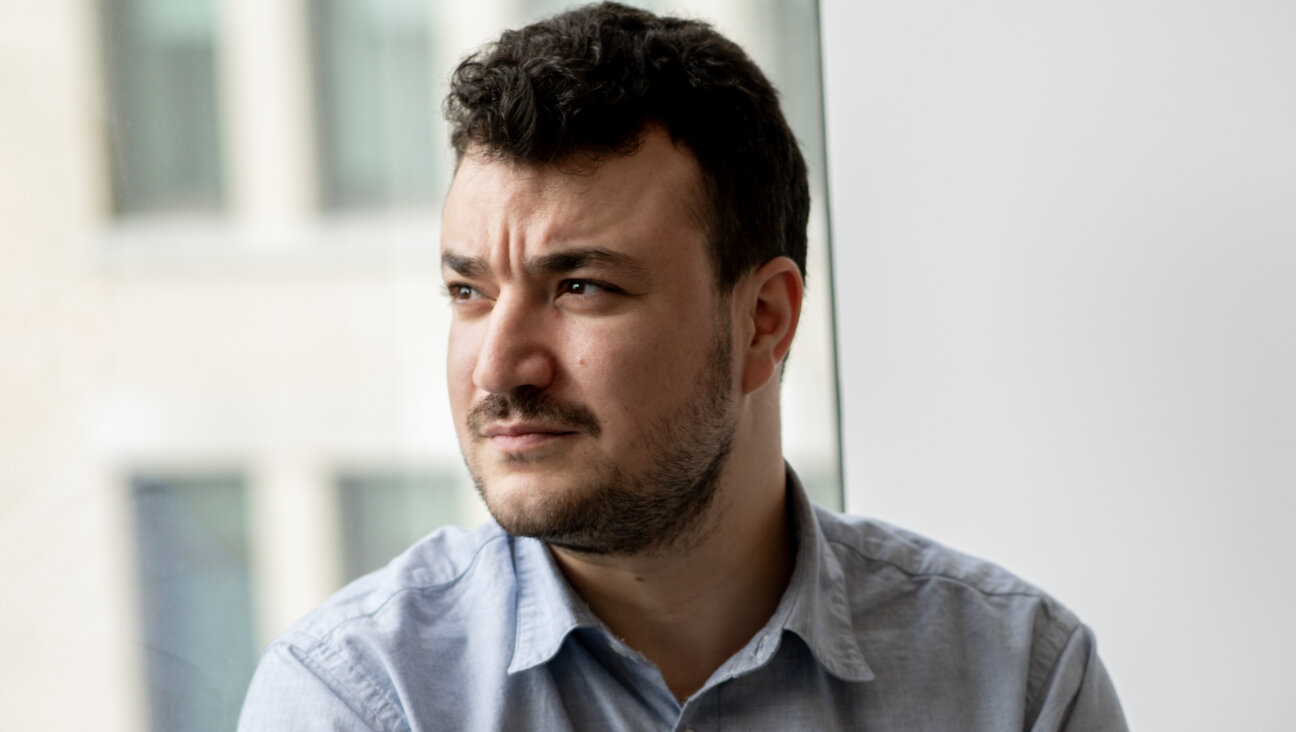
Ilene Safyan

Image by Courtesy of Ilene Safyan
Music coordinator Congregation Havurah Shalom Portland, Oregon
Age: 62
Nominated by: Herself
Song: “P’tach Lanu Sha’ar,” from Yom Kippur Liturgy, music by Ilene Safyan
Jewish music — whether the origins are Eastern European, Israeli, Sephardic or American — has always resonated deeply within me. These melodies express yearning, hope, laugher and life. When I moved to Portland, I joined a congregation that was hungry to learn Jewish music, and I had the knowledge to teach. One year, the congregation was without a cantor for the High Holidays. I was asked to learn to chant the Kol Nidre. That first year, after the first repetition, the entire congregation joined in, singing with me. That began both a congregational tradition and a personal journey that has continued for the past 30 years. Jewish music is connection. It’s the expression of the hearts and collective hopes of our people over the generations. The best way for us to join together, for us to express our hopes and fears and all that we hold dear, is through music. People want to sing, to be touched. That seems to be the fastest pathway to the heart. — Ilene Safyan
INFLUENCES: Chava Alberstein, Arik Einstein, Achinoam Nini, Joni Mitchell, Dudu Fisher, Debbie Friedman, Eva Cassidy — these are probably at the top of the list of singers whose voices speak (and sing) to me. For me, just as important as the “who” is the “what.” I listen and think of these questions: Does the melody reflect the intention of the prayer? Does the voice reflect what is being sung? And the accessibility — can people join in?
This is a moment of great uncertainty. Here’s what you can do about it.
We hope you appreciated this article. Before you go, we’d like to ask you to please support the Forward’s independent Jewish news this Passover. All donations are being matched by the Forward Board - up to $100,000.
This is a moment of great uncertainty for the news media, for the Jewish people, and for our sacred democracy. It is a time of confusion and declining trust in public institutions. An era in which we need humans to report facts, conduct investigations that hold power to account, tell stories that matter and share honest discourse on all that divides us.
With no paywall or subscriptions, the Forward is entirely supported by readers like you. Every dollar you give this Passover is invested in the future of the Forward — and telling the American Jewish story fully and fairly.
The Forward doesn’t rely on funding from institutions like governments or your local Jewish federation. There are thousands of readers like you who give us $18 or $36 or $100 each month or year.

Support our mission to tell the Jewish story fully and fairly.