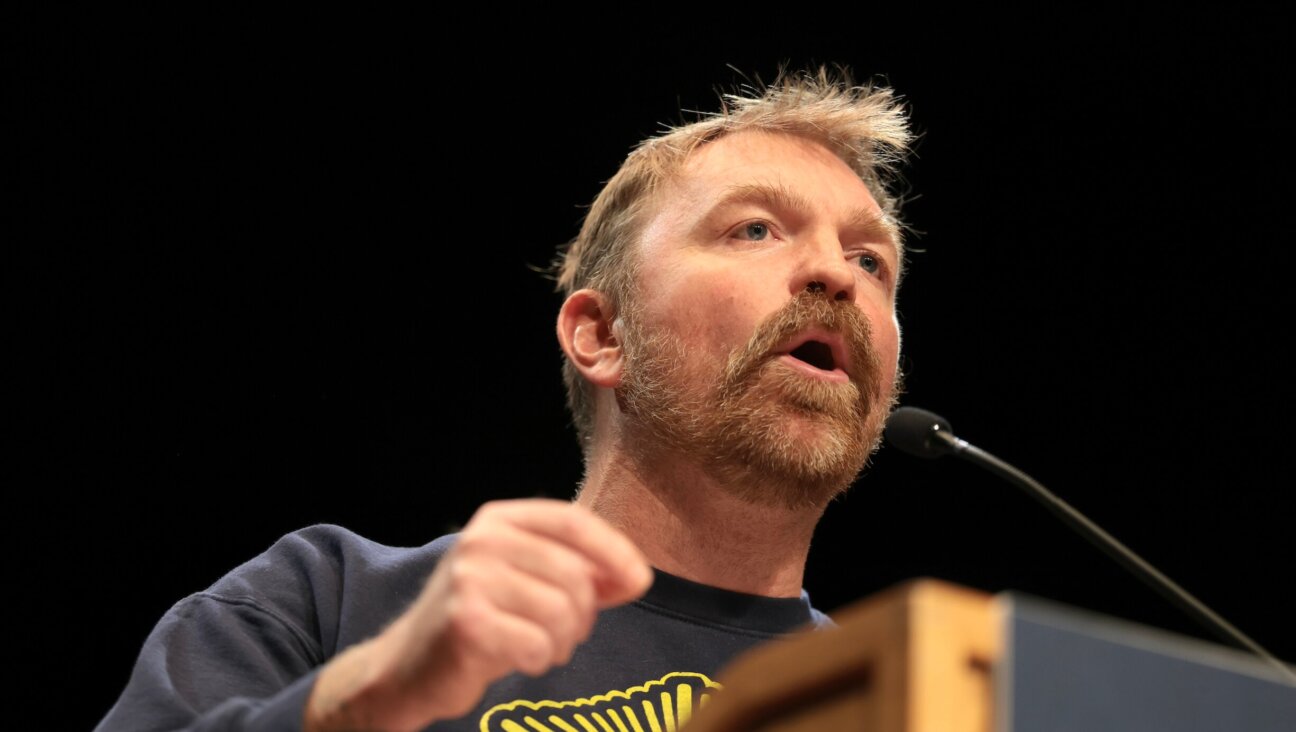
Michael Rosbash
Graphic by Angelie Zaslavsky
It’s Time To Honor The Scientist Who Explained Our Body’s Clock
Michael Rosbash’s Nobel Prize in physiology or medicine — for discovering the genetic mechanisms of the circadian rhythm, the body’s biological clock — was the crowning achievement of a lifetime of research and mentoring.
Rosbash arrived at Brandeis University in 1974; he has never taught anywhere else. Upon his arrival he quickly became friends with Jeffrey Hall, with whom he shared the prize 43 years later. Rosbash says they bonded over a love of tobacco, alcohol and basketball. He also ingratiated himself into the Brandeis faculty by being outgoing, helpful and always quick with a joke — often at his own expense.
In 1982, the pair began researching the genetics of the circadian rhythm in fruit flies. Eventually they discovered that a certain gene controls how different bodily processes act during the night and day. That discovery has had a radical effect on medicine, plant science and environmental science.
Rosbash’s colleagues say that success has never gone to his head. He continues to help with daily departmental administration, to share his lab’s funding with other Brandeis researchers and to mentor students.
At a press conference celebrating the prize, Rosbash, 73, responded to one student’s request for advice.
“It’s the same advice I give my kids: Find your star, find something you love and go for it,” Rosbash said. “You’ve got to go for what you love, and not look back 30 years, 40 years later and say, ‘I never tried.’ You got to try.”
I’m personally matching all gifts to the Forward, up to $36,000. Can I match your gift now?

Hello, fellow Forward reader! I’m Joel Brown, a Forward reader and supporter for more than 15 years, and currently the chair of the board of directors.
I’m an avid Forward reader because it ticks so many of my essential boxes: excellent journalism, Jewish focus and diverse viewpoints. In today’s political climate, what I most appreciate is the Forward’s independence — made possible by the generosity of its membership.
The Forward is committed to bringing you unbiased, nuanced Jewish news. From my position as board chair, I see an exciting future as we expand our position as the definitive independent voice of contemporary American Judaism.
— Joel Brown, Forward board chair
Support our mission to tell the Jewish story fully and fairly.