Reform Jews say they’ve created their first New York City burial society
50 volunteers will follow the intricate Jewish laws governing the preparation of a Jewish body for burial
Graphic by Angelie Zaslavsky

By Stewart Ain March 8, 2023
Four Jewish groups say they are the first in New York City to establish a chevra kadisha, or burial society, associated with the Reform movement.
The society, which will perform rituals embraced by those who typically follow Jewish law more stringently, was formed by Plaza Jewish Community Chapel in Manhattan, Temple Shaaray Tefila in Manhattan, Congregation Beth Elohim in Brooklyn and seminary students at Hebrew Union College – Jewish Institute of Religion in Manhattan.
“I look at this as such a beautiful connection between the more progressive communities and the traditional rituals that are observed by the Orthodox community,” said Stephanie Garry, Plaza’s executive vice president of communal partnerships. She said the groups have been talking about the project for years.
Although there are only a handful of Reform chevra kadishas nationally, Garry said she hopes the New Yorkers’ efforts will inspire others within and beyond the Reform movement. Recently, she said, a Conservative congregation in Westchester County, New York, asked Plaza for guidance in creating their own burial society.
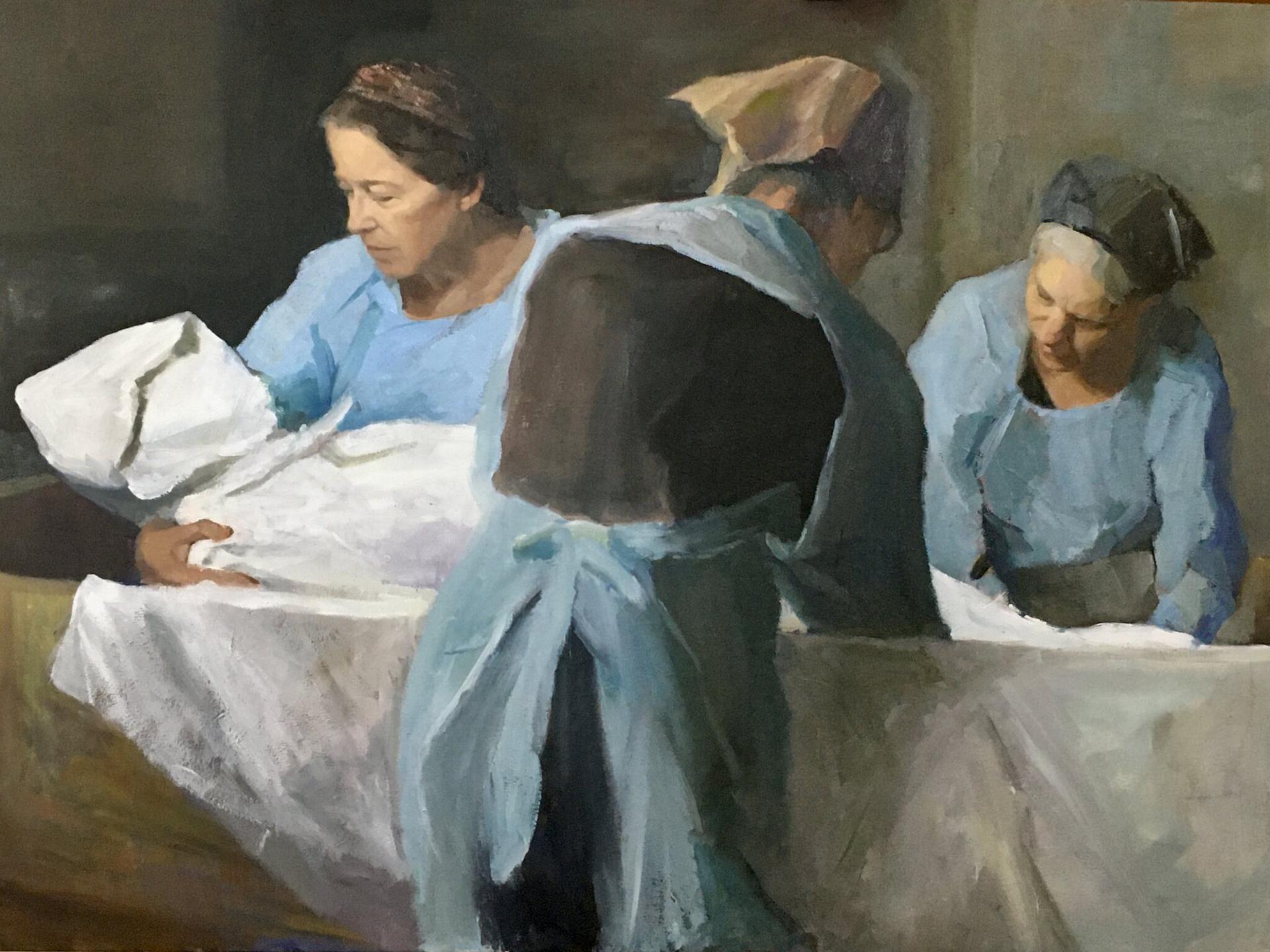
The society has signed up 50 volunteers from the two congregations and the seminary. They completed training last month on tahara — washing of the body and dressing it in a traditional plain white garment — and shemira — watching over the body — until burial. Jewish law prohibits the living from leaving a Jewish corpse unattended before burial.
“Together, we are learning and embracing this most sacred mitzvah of caring for the dead,” said Rabbi Rachel Timoner of Congregation Beth Elohim. “At the same time, we have been developing our own rituals to be mindful and respectful of the multiplicity of gender identities.”
Traditionally, Jewish men care for Jewish male corpses, and Jewish women care for female corpses.
“It is with awe and respect that our chevra kadisha will take on this Jewish act of what the rabbis of tradition call chesed shel emet, of ultimate kindness,” said Rabbi Joel Mosbacher of Temple Shaaray Tefila. Those who volunteer to serve the dead, “do so knowing that the person they are tending to will never be able to thank them.”
Why I became the Forward’s editor-in-chief
You are surely a friend of the Forward if you’re reading this. And so it’s with excitement and awe — of all that the Forward is, was, and will be — that I introduce myself to you as the Forward’s newest editor-in-chief.
And what a time to step into the leadership of this storied Jewish institution! For 129 years, the Forward has shaped and told the American Jewish story. I’m stepping in at an intense time for Jews the world over. We urgently need the Forward’s courageous, unflinching journalism — not only as a source of reliable information, but to provide inspiration, healing and hope.
 , editor-in-chief
Support our mission to tell the Jewish story fully and fairly.