Student Magazine’s Funding Cut
An intercollegiate Jewish student magazine says its funding was cut by an arm of the UJA-Federation of New York over articles critical of Israel.
The publication, New Voices, had secured a three-year, $100,000 grant from the Solelim Fund, an organization under the auspices of the federation that advises donors. Under the terms of the grant, Solelim supplied $30,000 last year and had the option of putting up $40,000 this year and $30,000 next year. The magazine is published by the Jewish Student Press Service, a small New York-based nonprofit with an annual budget of around $180,000.
According to staff at the magazine, Solelim decided to provide only $10,000 this year — on the condition that New Voices run free advertisements from two pro-Israel advocacy groups: The David Project and StandWithUs. No decision has been announced for next year’s funding.
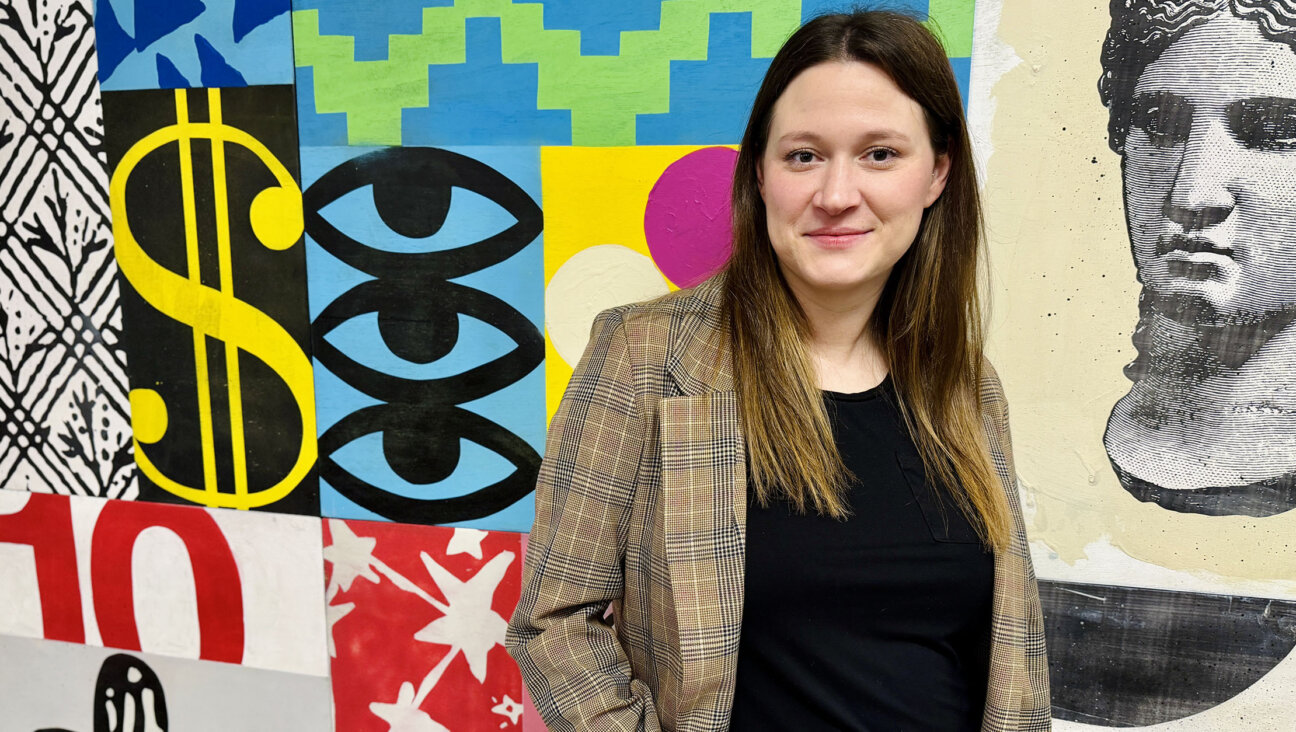
The magazine’s editor, Ilana Sichel, said she believed that displeasure with the coverage of Israel in New Voices was the reason for the reduction. “The translation, as far as we understand it is: We publish articles that present Israel as a real political entity with real problems,” Sichel wrote in an e-mail. “And that doesn’t serve the advocacy agenda.”
The cover of last May’s issue of New Voices, which is published five times a year with about 9,000 copies of each issue sent to 500 college campuses, showed protestors holding signs that read “Know Thine Enemy Learn Arabic,” and “Birthright? Birthwrong!” The issue featured an article about Birthright Unplugged, a tour of the West Bank and Israel that challenges the authenticity of the popular Birthright Israel trips and bills itself as an opportunity for participants to “meet Palestinians and learn about daily life under occupation.” In the October issue that just went to press, a student editorial titled “Our Hearts May Be in Israel, But…” encourages organizations to deemphasize Israel issues in favor of issues facing Jews in the United States.
In a phone conversation, a representative of Solelim confirmed that it had reduced the grant to New Voices, but did not respond to follow-up inquiries asking for more details.
“UJA-Federation has granted millions of dollars on numerous initiatives to reach out to Jewish college students through both traditional and non-traditional means,” a UJA-Federation spokesperson told the Forward. Since the 2003-2004 school year, the spokesperson said, the federation granted a total of $175,500 to New Voices.
The magazine used the first installment of the federation grant to, for the first time, hire a staff publisher, Sarah Braunstein. Braunstein joined Sichel and executive director Benjamin Murane as the press service’s only full-time employees. Two weeks ago, following the reduction in grant money, Murane was laid off.
Simon Amiel, director of Hillel’s Jewish Campus Service Corps, was one of many advocates for New Voices who wrote letters encouraging Solelim to continue funding the magazine. “It doesn’t feel like it’s an institutional publication,” he said. “It feels like it’s students talking to other students.”
Amiel explained that young Jews often see criticizing Israel’s policies as expressions of their Judaism, which can rub institutional leaders the wrong way. “We’re seeing it more and more as this generation of Jews express themselves differently than even I express myself Jewishly,” Amiel said.
This is a moment of great uncertainty. Here’s what you can do about it.
We hope you appreciated this article. Before you go, we’d like to ask you to please support the Forward’s independent Jewish news this Passover.
This is a moment of great uncertainty for the news media, for the Jewish people, and for our sacred democracy. It is a time of confusion and declining trust in public institutions. An era in which we need humans to report facts, conduct investigations that hold power to account, tell stories that matter and share honest discourse on all that divides us.
With no paywall or subscriptions, the Forward is entirely supported by readers like you. Every dollar you give this Passover is invested in the future of the Forward — and telling the American Jewish story fully and fairly.
The Forward doesn’t rely on funding from institutions like governments or your local Jewish federation. There are thousands of readers like you who give us $18 or $36 or $100 each month or year.
Support our mission to tell the Jewish story fully and fairly.