What is Elbit Systems, and why did LA synagogue protesters target it?
The Israeli company’s military work and its growing US footprint have made it a focal point for activists nationwide
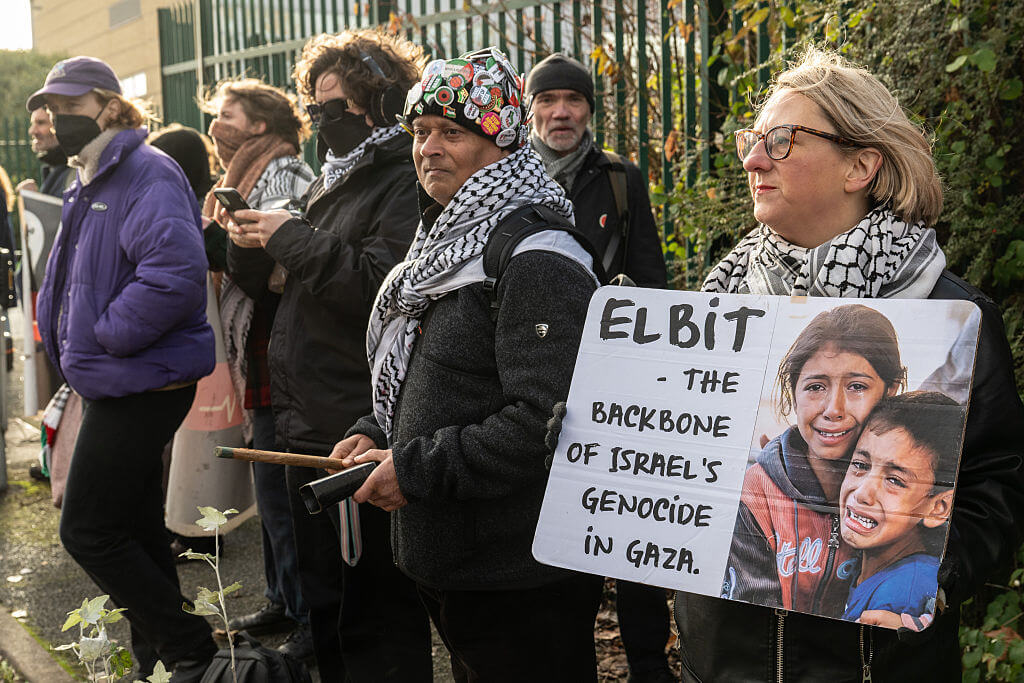
Supporters protest outside the trial of six activists arrested for a break-in at an Elbit Systems site in Bristol, England in August 2024, when they allegedly destroyed quadcopter drones they believed were destined for use against Palestinians in Gaza. Photo by Guy Smallman/Getty Images
By Benyamin Cohen December 4, 2025
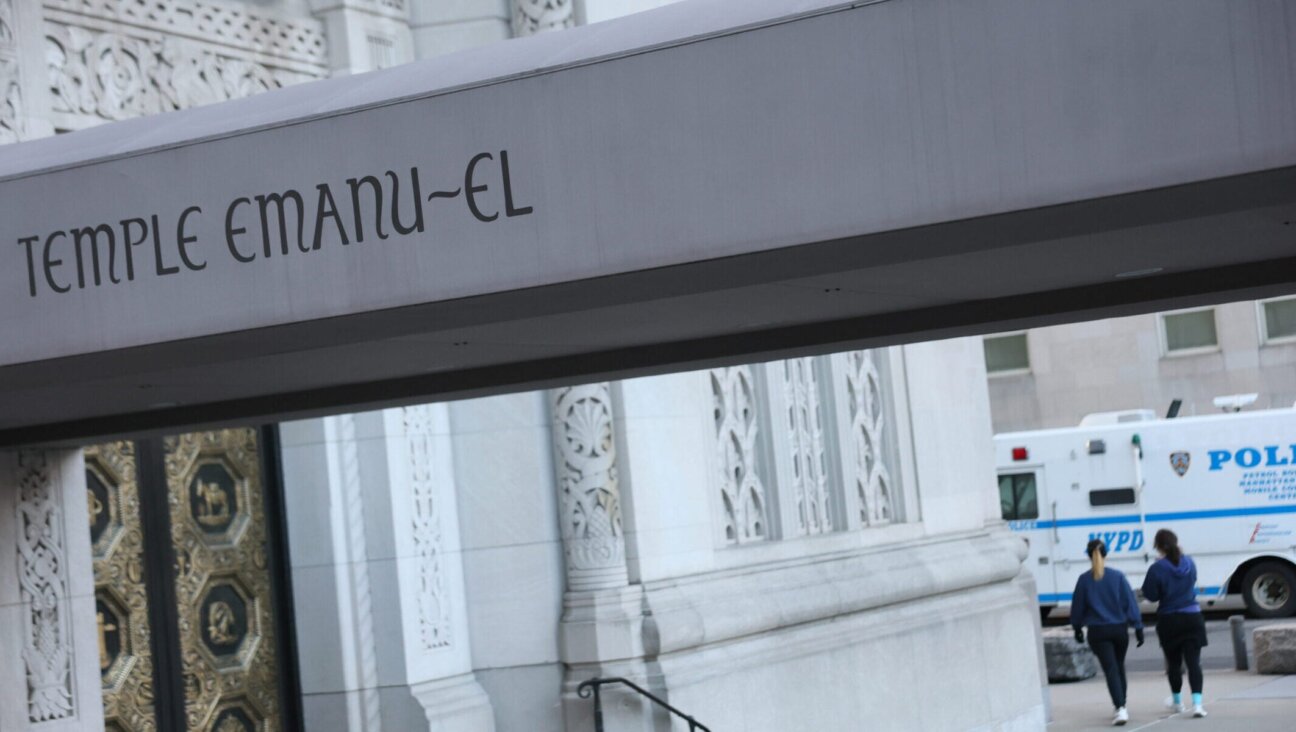
A protest outside Wilshire Boulevard Temple — one of Los Angeles’ oldest synagogues — ended with two arrests Wednesday after demonstrators confronted attendees at an event featuring a speaker from Elbit Systems, the Israeli defense firm whose technology is widely used by Israel’s military and, in some cases, by U.S. law enforcement and border security agencies.
Videos posted online showed protesters gathering outside the synagogue’s Audrey Irmas Pavilion, unfurling banners that read “Elbit out of Los Angeles” and “Genociders not welcome.” They handed out flyers accusing the company of supplying “weapons and technology that Israel uses against Palestinian civilians” and that Immigration and Customs Enforcement uses in the U.S.
The reaction was swift. “This behavior is abhorrent and has no place in Los Angeles,” Mayor Karen Bass said. The Jewish Federation of Greater Los Angeles called the demonstration “antisemitism and hate disguised as dissent,” while ADL California said, “Blocking or invading a house of worship is not legitimate protest. It’s intimidation.”
The confrontation underscored the growing attention on Elbit Systems — and the tensions that surround it.
What is Elbit Systems?
Elbit Systems is Israel’s largest privately run defense contractor. Founded in 1966, it has evolved into a multinational firm that manufactures drones, surveillance systems, border security towers, targeting equipment, and other military electronics used by Israel and a number of foreign governments.
The company has roughly 20,000 employees — most based in Israel — with offices around the globe. Its U.S. subsidiary operates facilities across the country and has long supplied equipment to American defense and homeland security agencies.
Elbit did not respond to a request for an interview.
Why does Elbit draw protests?
Two main issues animate opposition: Elbit’s role in Israeli military operations and its work for U.S. law enforcement.
Flyers at Wednesday’s demonstration accused the company of producing technology “used against Palestinian civilians.” Protest organizers argue that Elbit’s equipment enables Israeli operations in Gaza and the West Bank.
The Palestinian Youth Movement, one of the groups involved in the synagogue protest in Koreatown, wrote on Instagram: “We KNOW that these technologies are created on the targeting and killing of Palestinians in Gaza and the West Bank, and will do the same to vulnerable communities in Ktown.”
Protest literature also claimed Elbit provides surveillance tools used by ICE and Customs and Border Protection. The company has received contracts to build border surveillance towers and related systems along parts of the U.S.-Mexico border. It is also on a list of potential contractors for the Pentagon’s Golden Dome missile defense program, a project inspired by Israel’s Iron Dome.
US Elbit facilities are protest sites
Based in Fort Worth, Texas, Elbit Systems of America employs around 3,200 people across 10 states. Several of their U.S. facilities have been the sites of protests.
Merrimack, New Hampshire: An Elbit plant was targeted by pro-Palestinian activists, some of whom climbed onto the roof, deployed smoke devices, spray-painted equipment, smashed windows, and locked building entrances. Among those arrested in the November 2023 incident was a former Disney Channel actress.
Cambridge, Massachusetts: There were repeated protests at this facility beginning in October 2023, five days after the Hamas attack that started the war in Gaza. The office eventually closed down in August 2024.
Ladson, South Carolina: There have been weekly protests at Elbit’s Charleston-area facility since October 2024, with criticism over tax incentives granted to the company. Demonstrators have questioned whether public funds should support a defense industry site.
Protests are not just in the US
Since the onset of the Israel-Hamas war, several Elbit facilities in the United Kingdom have been targeted by pro-Palestinian activists — including six who are currently on trial over a 2024 break-in at an Elbit site in Bristol. One is accused of striking a police officer with a sledgehammer. The Bristol facility unexpectedly closed down in September.
In Britain, the government is defending its decision to ban Palestine Action — a group that has repeatedly targeted Elbit facilities — under anti-terror laws. The ban makes membership or public support for the group a criminal offense punishable by up to 14 years in prison.
Last month, activists in six countries — Austria, France, Germany, Spain, Taiwan and the U.K. — simultaneously defaced the offices of Allianz, a global insurer that allegedly underwrites Elbit Systems.
Why did the LA protest take place at a synagogue?
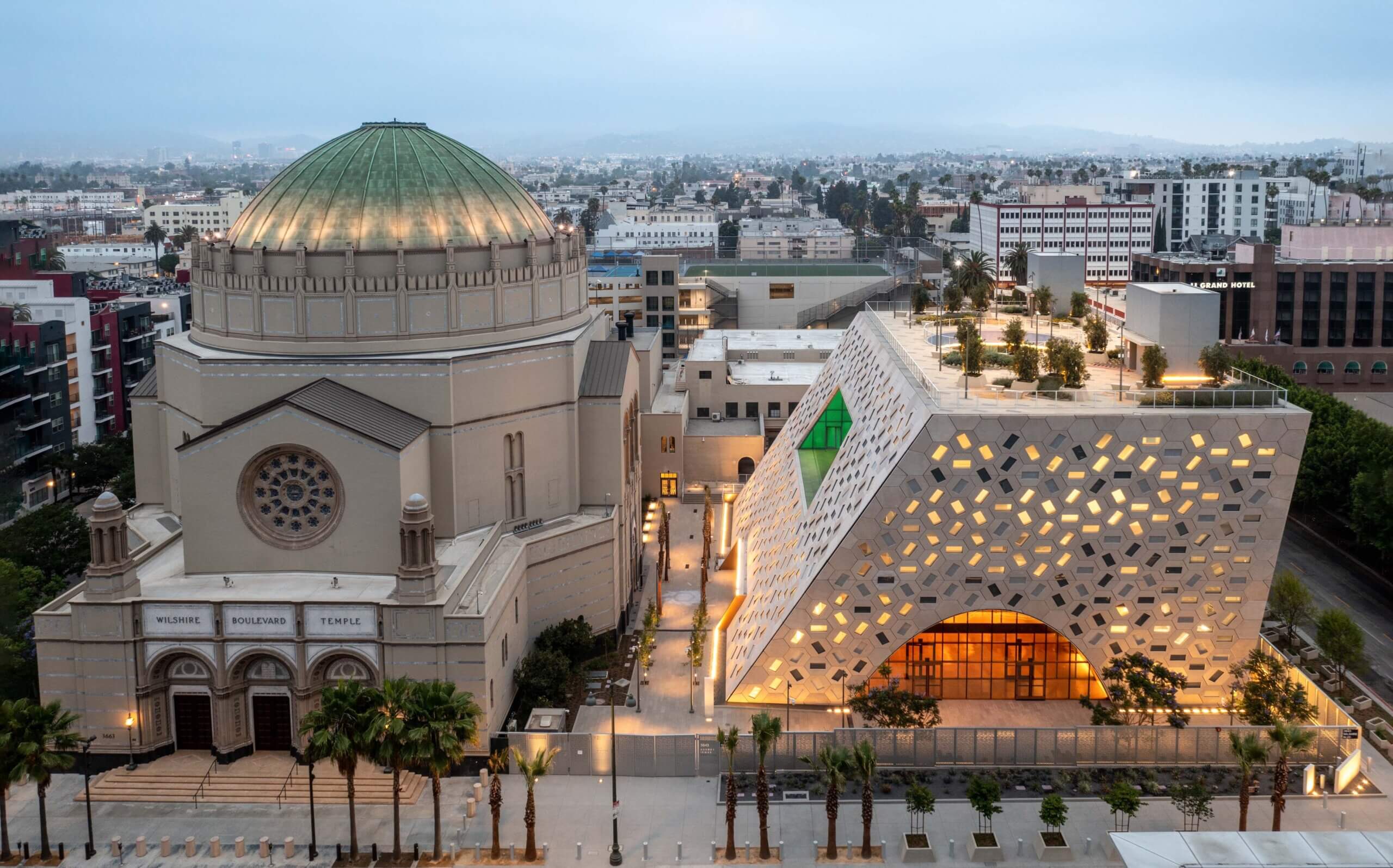
Wednesday’s talk — titled “Innovating Safety, Empowering Communities” — outside Wilshire Boulevard Temple was co-hosted by the Israeli Consulate General of Los Angeles and included speakers from Elbit, the Israeli police, and the local Jewish federation.
Activist groups, including Koreatown for Palestine, the Palestinian Youth Movement, and People’s City Council Los Angeles, urged supporters to contact the synagogue and arrive early to picket the event.
Jewish leaders argued that demonstrating outside a house of worship crossed a line. Protest organizers framed the action around the event itself and Elbit’s participation in it.
What happens next?
Jewish institutions say they face heightened security concerns when Israel-related events take place in their buildings. Last month, protesters demonstrated at Manhattan’s Park East Synagogue, which was hosting a program on immigration to Israel, including West Bank settlements, which are considered illegal under international law.
Mayor-elect Zohran Mamdani faced criticism from parts of the Jewish community after he said, through a spokesperson, that “sacred spaces should not be used to promote activities in violation of international law.” Dozens of Jewish groups plan a solidarity rally Thursday night outside Park East.
On Wednesday, a group of New York lawmakers proposed banning protests within 25 feet of houses of worship — the latest indication of how rapidly the debate over safety, speech and protest is shifting.
Louis Keene contributed to this article.