Everything Jewish that happened at the Oscars: A ‘Marty Supreme’ shutout, an onstage ‘free Palestine’ and more
The Forward culture team breaks down everything Jewish in the Academy Awards
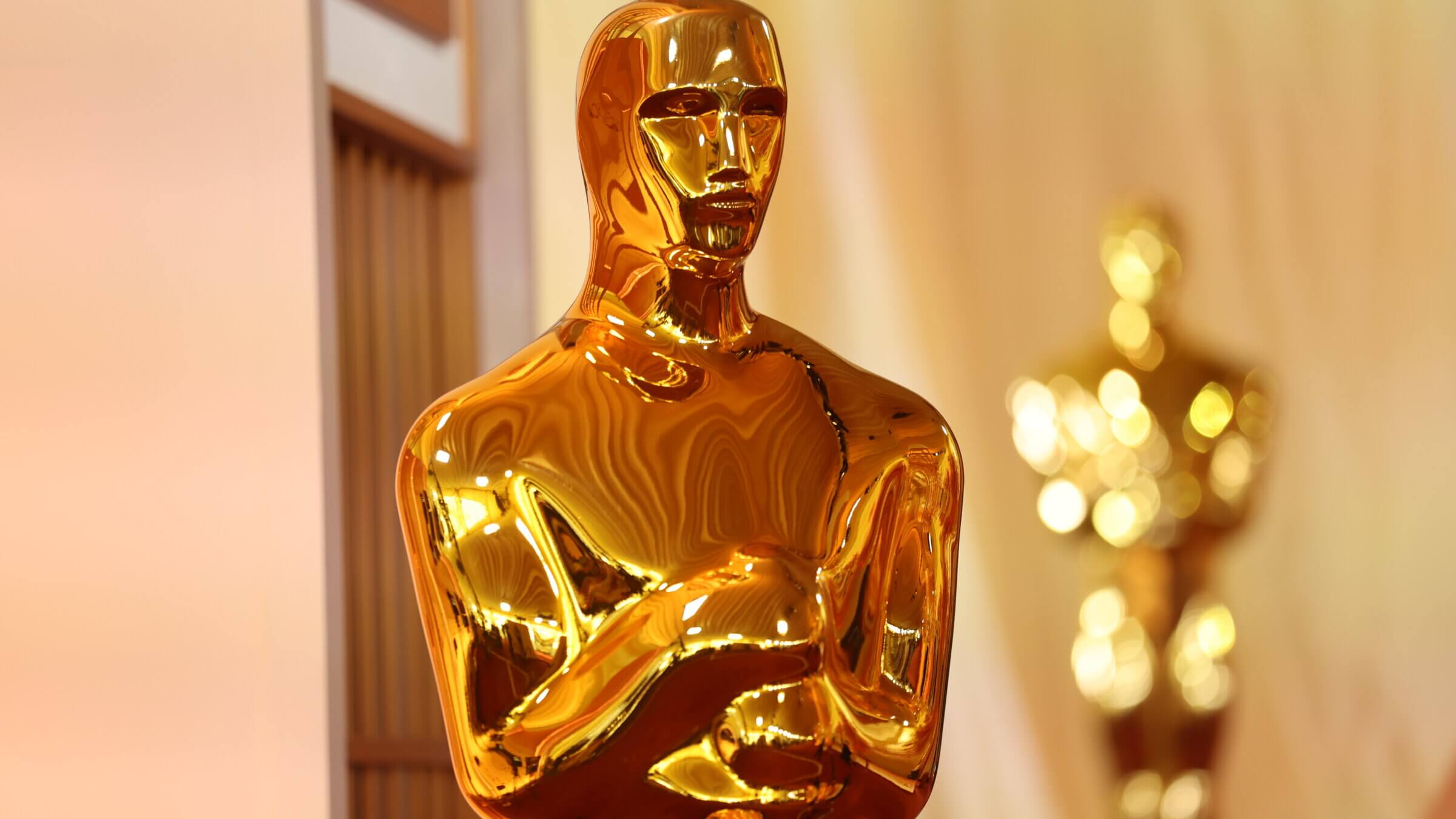
The 2026 Academy Awards has a number of Jewish films in contention. Photo by Getty Images



By Mira Fox, Talya Zax, PJ Grisar and Olivia HaynieMarch 15, 2026
At last year’s Academy Awards, Anora — a frenetic, somewhat ambiguously Jewish look at a Jewish enclave of New York, took home best picture, original screenplay, director and actress for its Jewish lead Mikey Madison. This year, we have a film that feels, in some ways, quite parallel, while cranking the Yiddishkeit to 11: Josh Safdie’s breathless picaresque Marty Supreme, set on the Lower East Side, is up for best picture and its star, Timothée Chalamet, is a favorite for best actor.
There’s also Blue Moon, Richard Linklater’s portrait of Jewish lyricist Lorenz Hart’s breakup with composer Richard Rodgers (Ethan Hawke is up for best actor). And One Battle After Another, a campy and absurdist satire about the infiltration of white supremacists in the U.S. government, is poised to have a massive night, with the blockbuster Sinners serving as its main competition.
That all goes to say that it’s another great year for Jewish stories at the Oscars, with some really compelling fodder for discussion about the place that Jews occupy today in arts and media. What stories are we telling and how are they received?
Here, as ever, the Forward culture team is here to break it all down for you, live as it unfolds. Of course, we cover Jewish movies all year. But at the Academy Awards, we get to see how the rest of the world feels about these movies. We will be updating this story with our thoughts throughout the ceremony.
Mira: Traditionally, to start the night, we all say what we’re wearing and eating. I did a bunch of cooking for the week so I have vegetarian avgolemono soup and Alison Roman’s fennel salad. (I’m obsessed with this salad.) I am proudly wearing hard pants.
Olivia: Brown sweater and jeans; no food but aggressively chewing mint gum. I will later be drinking some of the seltzer I got from Brooklyn’s Seltzer Fest today.
PJ: I am reheating some chicken from last night. Wearing a blue sweater with a little toggle and jeans. How many of Stellan Skarsgård’s large adult sons are here? In other l’dor v’dor news, Bill Pullman just mentioned how they filmed the Spaceballs sequel with his son Lewis.
Talya: I believe I’m wearing the exact same sweater I donned for this event last year — where’s my award for consistency? And, as always, sweatpants; I cannot comprehend suffering through this event in jeans.
Discussion of Israeli-Palestinian protests on the red carpet
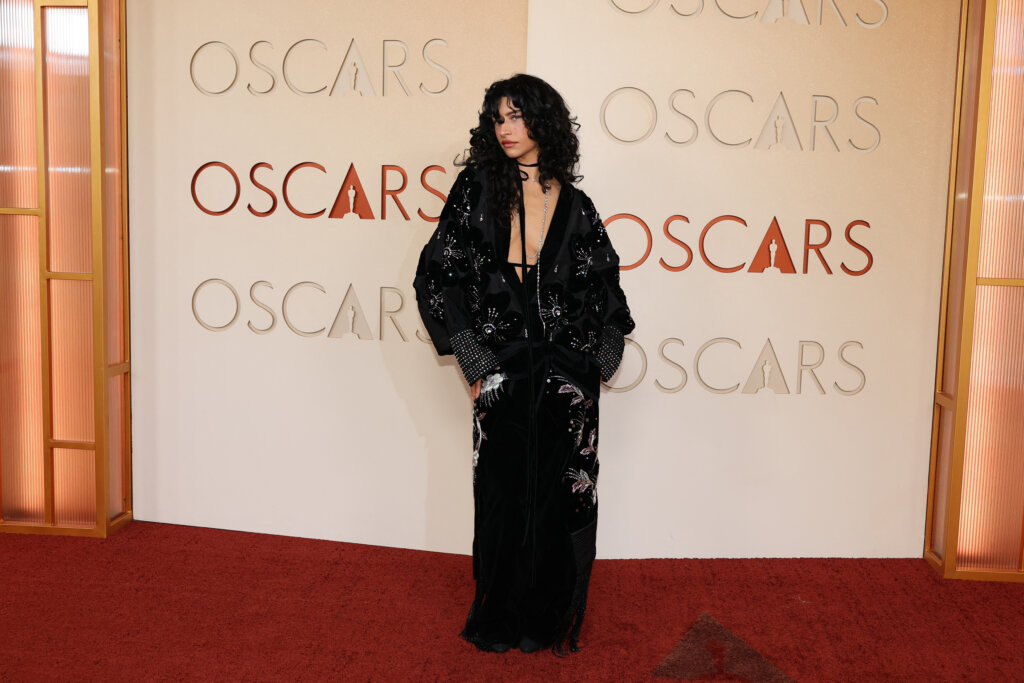
Mira: Love a toggle. Speaking of outfits, anyone have thoughts on Odessa A’zion’s spangled red carpet set? She is one of the only people who styles herself on the red carpet, which I do respect.
Olivia: A’Zion’s outfit kind of looks like she forgot to tie whatever was supposed to be holding it up. I don’t think it looks bad, just like it’s falling down.
PJ: It wouldn’t look out of place hanging from the window of a VW van with shag carpet and some Tibetan prayer flags.
Mira: Of note, the past several years have seen protesters approaching people on their way into the ceremony, and a lot of pins on the red carpet taking a stance on the Israel-Hamas war, largely pro-Palestinian ones. We’re seeing less of that this year — though not none. Javier Bardem posted a photo of him wearing a pin reading “no to the war” in Spanish, along with another pin featuring Handala, a cartoon boy considered a symbol of Palestinians. The team of The Voice of Hind Rajab, nominated for best foreign film, are also wearing red pins with a white dove.
PJ: Those have replaced the red hand ArtistsforCeasefire pins, which some said recalled the bloody palms of Palestinians who killed IDF soldiers in 2000.
Olivia: A reporter for ABC in a pre-recorded segment asked executive producers and showrunners for the ceremony Raj Kapoor and Katy Mullan if anything would get bleeped, such as mentions of Trump, Israel and Palestine. Recently, the BBC removed director Akinola Davies Jr’s call for a “Free Palestine” from their BAFTA stream. Kapoor asserted that the night’s production team supports free speech, but we’ll see what transpires over the course of the night.
Digs at Timothée Chalamet to start the night
Mira: Good dig at Timothée Chalamet’s recent ballet/opera comments from host Conan O’Brien. He was good-natured; jazz, he said, was jealous to be left out. O’Brien also got a dig in at Ted Sarandos, the head of Netflix, joking it was his first ever time in a theater — a timely joke about the threats posed to Hollywood and, really, all media by the giant mergers threatening to create a monopoly combining major players such as CBS, CNN and Warner Brothers under Paramount-Skydance. They say Jews run the media, but really, it’s the corporations.
PJ: Conan also paid tribute to the polyglot, international efforts of filmmaking. A bit like the Tower of Babel — but a good thing. I’m thrilled for best supporting actress winner Amy Madigan, but her best Oscar moment will always be icing out Elia Kazan when he won his lifetime achievement award.
Olivia: A brief break from Timmy jokes to give out the award for best animated short. Although not necessarily a Jewish film, winner The Girl Who Cried Pearls features a kind Jewish merchant reciting a piece of religious folklore that Eve’s tears turned into pearls. The hyper-realistic stop-animation style was well-deserving of the award — and its rags-to-riches story does have a bit of a Jewish-immigrant’s American dream vibe to it.
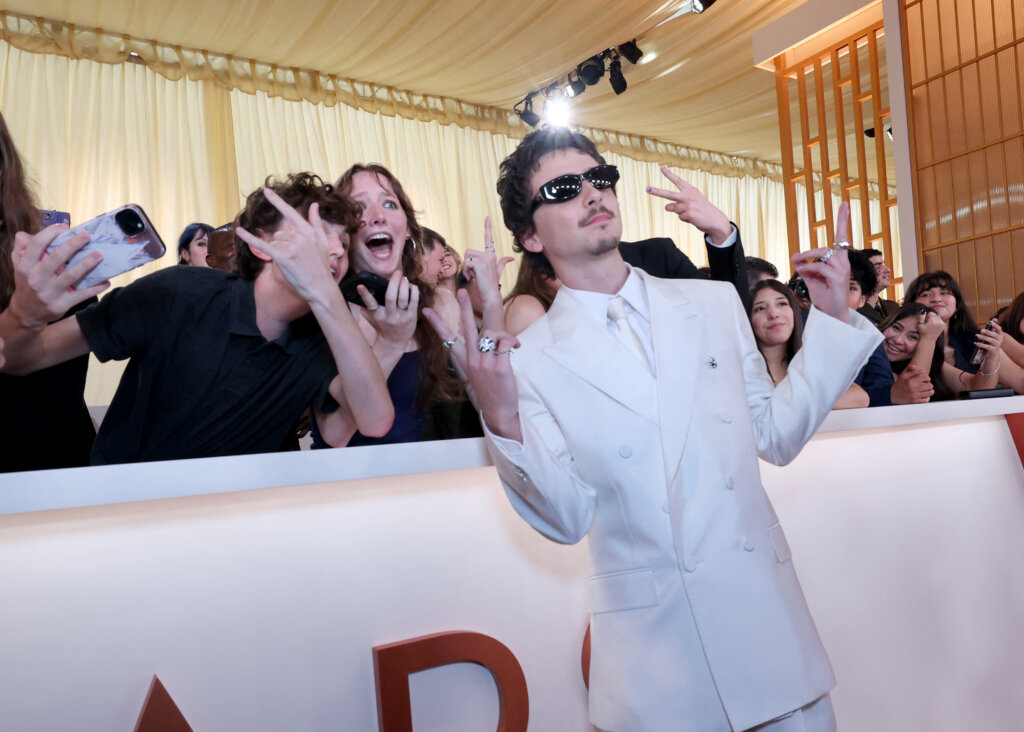
Mira: We just saw a clip of Marty Supreme, in which Chalamet wears a slimy thin mustache. It fits the character, but the camera panned over to the real-time Chalamet who has for some reason continued to wear it, along with a patchy goatee. This facial hair choice does not make one want to root for him in the very unpredictable best picture race.
PJ: There go my hopes for him playing Menachem Schneerson — if he can’t grow the beard organically, I’ll never believe the performance.
Olivia: The Marty Supreme teaser was followed by O’Brien paying credit to the Oscars’ live orchestra — maybe pointed timing, given Chalamet’s recent comments about classical art forms. Then the director did a drumroll on a silicone butt with ping-pong paddles, recalling the scene in the film.
Big sweeties, a best supporting actor and a snub for the Israeli-Palestinian short film
Talya: I’d like to propose a new category: biggest sweetie at the ceremony. Wagner Moura’s presentation as part of the inaugural best casting category has won my vote!
Mira: For me, Jacob Elordi should win for the thrilled hugs he gave his makeup team from Frankenstein. One must imagine they bonded really deeply during what they said were the 400 (!) hours he spent in that chair getting turned into the monster.
PJ: Kumail Nanjiani just suggested abridged versions of classic films, including Schindler’s Post-it, which obviously reminds me of that controversial Robert Kraft-funded Super Bowl ad.
Talya: Best live action short film is quite a political category this year, as Olivia wrote — one of the nominees, Butcher’s Stain, engaged really deeply with the Israel-Hamas war.
Mira: And we have a tie! Which no one, including the team behind The Singers, who won the first award, knew could happen. But the Two Strangers Exchanging Saliva team said this has happened three times before. I wonder if they Googled that during The Singers‘ acceptance speech.
PJ: I haven’t seen The Singers, but I’m pretty sure I went to temple with them.
Talya: The war film didn’t win — which is a good reminder that so far this ceremony has been markedly apolitical. Not surprising for the Academy, but sorta surprising in a year like this one. But the makers of Two Strangers Exchanging Saliva are doing their best to change things, shouting out how many people of international backgrounds helped make the film. And, also, making fun of Chalamet for those comments about opera and ballet
Mira: I was sure Butcher’s Stain would be one of the winners, and the tie would demonstrate the split within the arts between those who feel that good art is political, and those who feel that good art should float above. Perhaps it also simply didn’t deserve the win — I didn’t see all of the nominees, so I can’t say for sure — but there may be some fatigue about the Israel-Hamas war in the voting body.
PJ: Best supporting actor winner Sean Penn missing this — presumably to meet a drug lord or rescue a businessman from a South American prison — is insanely on brand.
Robert Reiner, Diane Keaton get bittersweet remembrances
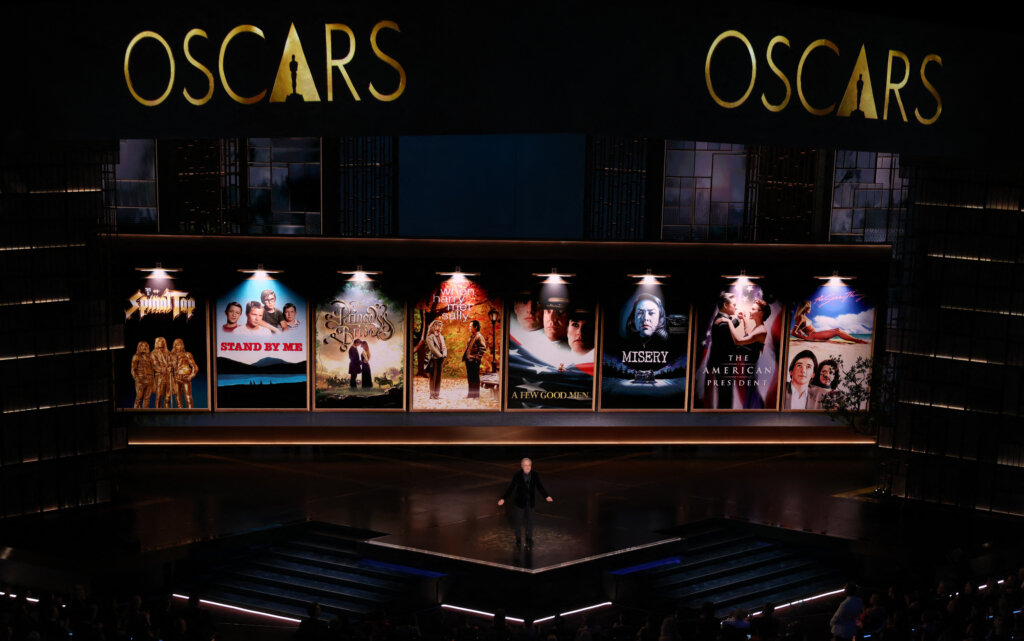
Talya: O’Brien delivers a fake Casablanca clip making fun of studios’ tendency to demand that movies awkwardly reiterate essential information. It also manages to point to an awkward truth: People increasingly don’t really remember much about World War II or the Holocaust! Sterling K. Brown asking for clarification that World War II was “the Hitler one, right?” was painful — and also a little funny.
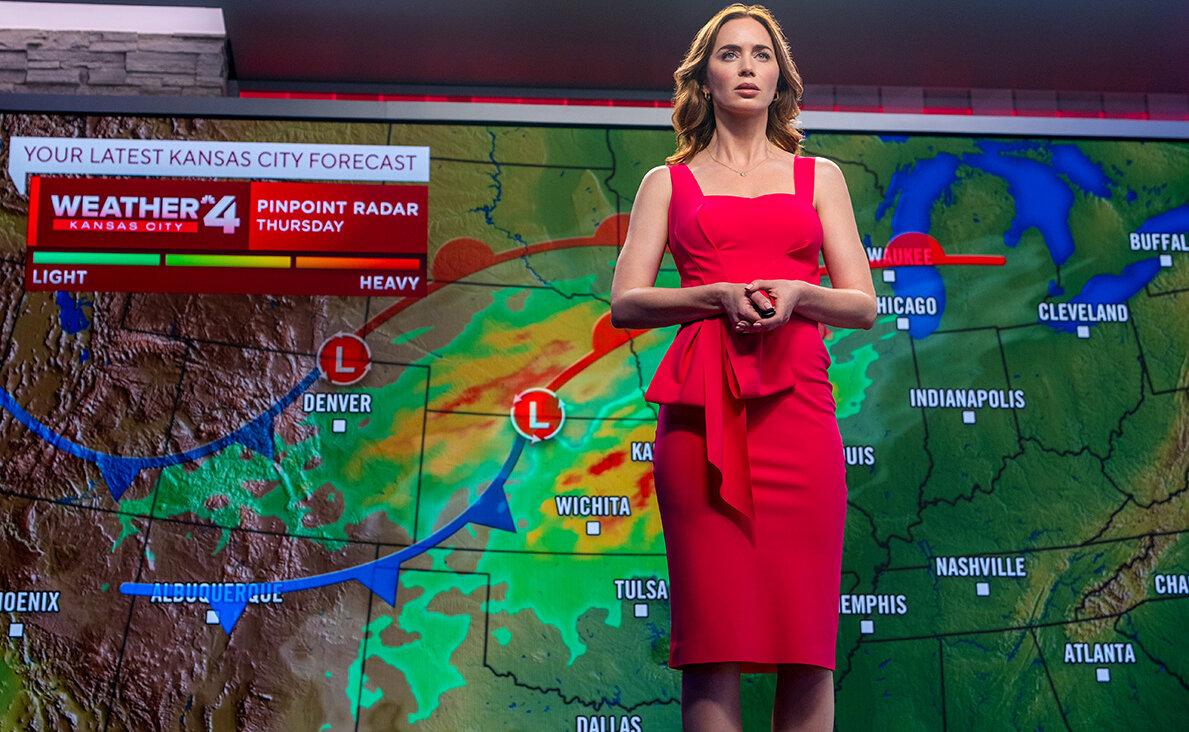
PJ: It is my hope that the upcoming movie about the man who forecasted the weather on D-Day spurs a renaissance of interest in the war from all those Gen Z meteorology heads. Moving into the commemoration segment, the tribute to Rob Reiner from Billy Crystal is gutting, but also a very good capsule filmography that emphasizes just how many classics he produced — all in about a decade.
Talya: It’s also delivered with a smile, and earns a deserved number of laughs, which feels right for Reiner’s legacy.
PJ: Importantly, this is also a tribute to Michele Reiner, and their work for marriage equality. I cried when all of his collaborators came out. What a loss.
Talya: Playwright Tom Stoppard — something of a legendary script doctor for Hollywood and writer of Shakespeare in Love — earns a spot in the rest of the memorial segment. So does documentarian Frederick Wiseman and songwriter Alan Bergman.
Olivia: They also paid tribute to Udo Kier, whose last role was as a Jewish Holocaust survivor pretending to be a Nazi fugitive hiding in Brazil in the film The Secret Agent. That movie is up for best picture and best international feature tonight.
Mira: We’re also getting a lengthy tribute to Diane Keaton from Rachel McAdams. Woody Allen’s issues aside, I will always see Keaton in my mind’s eye in Annie Hall, in which she could not have been more perfect. She will forever be a foundational part of American Jewish culture thanks to that film — even though, of course, she very specifically was not Jewish, in real life or in the film.
Talya: Barbra Streisand arriving to pay tribute to Robert Redford has me tearing up before she even starts talking. Their pairing in The Way We Were is one of the most magnetic in film history, and the film itself is an essential exploration of tensions around Jewish politics and assimilation in the U.S.
PJ: Streisand made a point that the McCarthyism in the film — including loyalty oaths — has some troubling echoes today.
Mira: Babs — as she said Redford called her despite her protestations — said the actors bonded over their love of Modigliani, a favorite artist of mine as well. I don’t recall ever the in memoriam section ever feeling like quite as much of a gut punch. Maybe I’m just getting older and remembering these actors better, but what awful losses we had this year.
Finally, with the documentary awards, things get political
Olivia: I’m not mad about the production design win for the Frankenstein team, but the winner in my heart is Jack Fisk, who brought the original Forverts truck to the set of Marty Supreme.
PJ: Just seeing Oona Chaplin in mocap dots for Avatar: Fire and Ash, I’m reminded that it is the year 2026, and Charlie Chaplin’s grandchild, who is not yet 40, is in an Oscar-nominated film.
Mira: Big burn from Jimmy Kimmel, presenting the award for best documentary short film. Making a documentary in a country that does not allow free speech is dangerous, he said, seeming to reference Iran. Then, he said he meant CBS, perhaps a reference to some very publicly canceled segments since Bari Weiss took over. A secondary dig landed on Melania, the first lady’s heavily controlled movie from Amazon.
Talya: Most political speech of the night from the makers of Mr. Nobody Against Putin, winner of best documentary feature, drawing an implicit but clear comparison between Vladimir Putin’s takeover of Russia and the political situation in the United States today.
PJ: “In the name of our future, in the name of our children, stop all these wars now,” said the documentary’s subject, Pavel “Pasha” Talankin. A powerful message somewhat undercut by an electric guitar instrumental of Seal’s “Kiss from a Rose” that cued in right after.
Maya Rudolph, Marilyn Monroe and our first ‘free Palestine’
Olivia: Bringing out the Bridesmaids cast to announce best score and achievement in sound feels like a bit of a tonal shift. But I’m excited to see my favorite Black Jew, Maya Rudolph, whom I will absolutely be seeing in her Broadway debut in Oh Mary! in a few weeks.
PJ: We have an ad for a Marilyn Monroe exhibit at the Academy Museum with rare artifacts that belonged to the iconic actress — but will it feature her siddur?
PJ: It behooves me to mention, given that Passover is right around the corner, that before co-writing “Golden,” Mark Sonnenblick wrote a number called “Dayenu” for Alex Edelman’s socially-distanced Seder back in 2020. That’s one way to get your kids into the holiday spirit.
Talya: It would be pretty easy to adapt actual “Dayenu” to be sung to the tune of “Golden.” Anyway, Javier Bardem just said “no to war, and free Palestine” while presenting the award for international feature film. Not bleeped, as the producers promised.
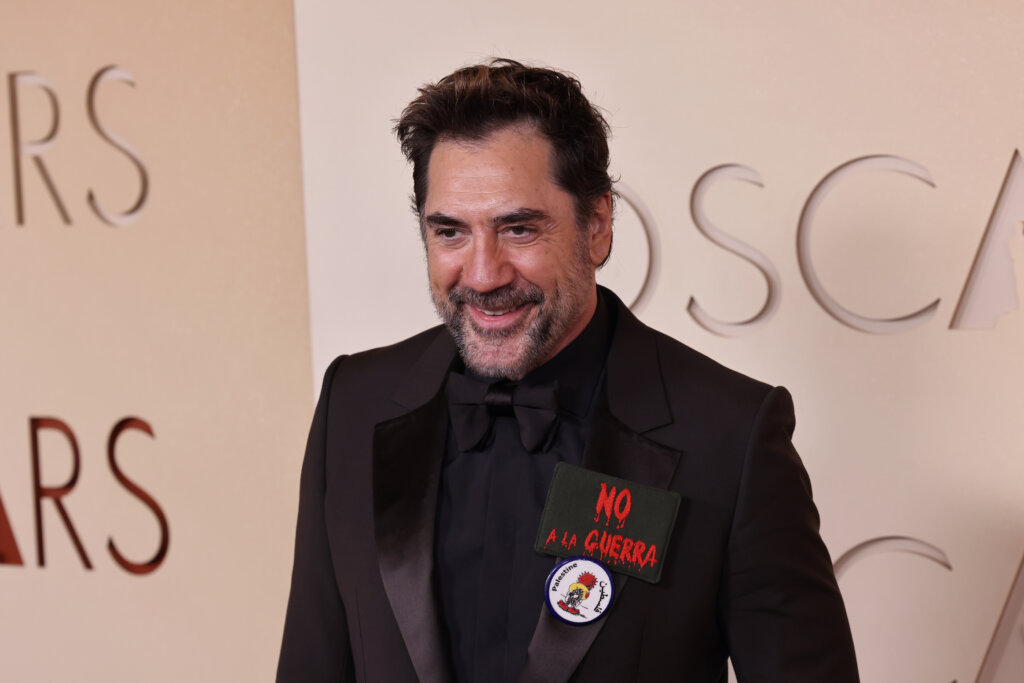
PJ: Given the moment — and the last two ceremonies, which addressed the war quite directly in a couple of speeches — the mention of Israel and Palestine doesn’t feel like the lightning rod it used to be. I anticipate it will not affect Javier Bardem’s career — indeed, he has been vocal for over two years and it hasn’t seemed to slow him down.
Mira: The Voice of Hind Rajab, about the Red Crescent in Gaza working — and ultimately failing — to save a young girl killed in the Israeli bombardment, was nominated in this category, but ultimately did not take the win, despite winning several other awards.
Olivia: This solidifies it: all three films about the Israel-Hamas war that were nominated tonight will go home empty-handed. But director Joachim Trier, whose film Sentimental Value took home the award, used the moment to speak in defense of children killed in global conflicts.
A shutout for Marty Supreme, and final reactions
Mira: Paul Thomas Anderson takes home best director for One Battle After Another. To me, this was a great film for two reasons. One, it managed to be quite direct, so it was workable for those shattered attention spans O’Brien riffed on earlier. Second, because it was so campy, it managed to deliver some sharp messages about the dangers of white nationalism and the new forms that Nazism can take without feeling too didactic.
PJ: Perhaps his most accessible and least discursive film. Adrien Brody is doing bits. Reminds me of when he brought out a rasta wig to introduce Sean Paul on SNL.
Talya: Michael B. Jordan wins best actor. Pour one out for Chalamet, who spent most of the season as the presumed front-runner, but applauds Jordan with good cheer. My boyfriend points out that Jordan’s speech might involve the first mention of God this evening — can anyone confirm?
Mira: All the nominees were really incredible this year. I loved Chalamet’s performance — I totally lost sight of the actor in the role which can be hard for someone so famous — and was rooting for him, but it was so hard to pick.
PJ: Other actors who have won for playing multiple roles in one film include Lee Marvin in Cat Ballou, and a few that are kinda a technicality: Joanne Woodward in The Three Faces of Eve and Frederic March in Doctor Jekyll and Mr. Hyde. Woodward’s husband Paul Newman has a distinction of winning an Oscar for The Color of Money, playing the same character he originated decades earlier in The Hustler.
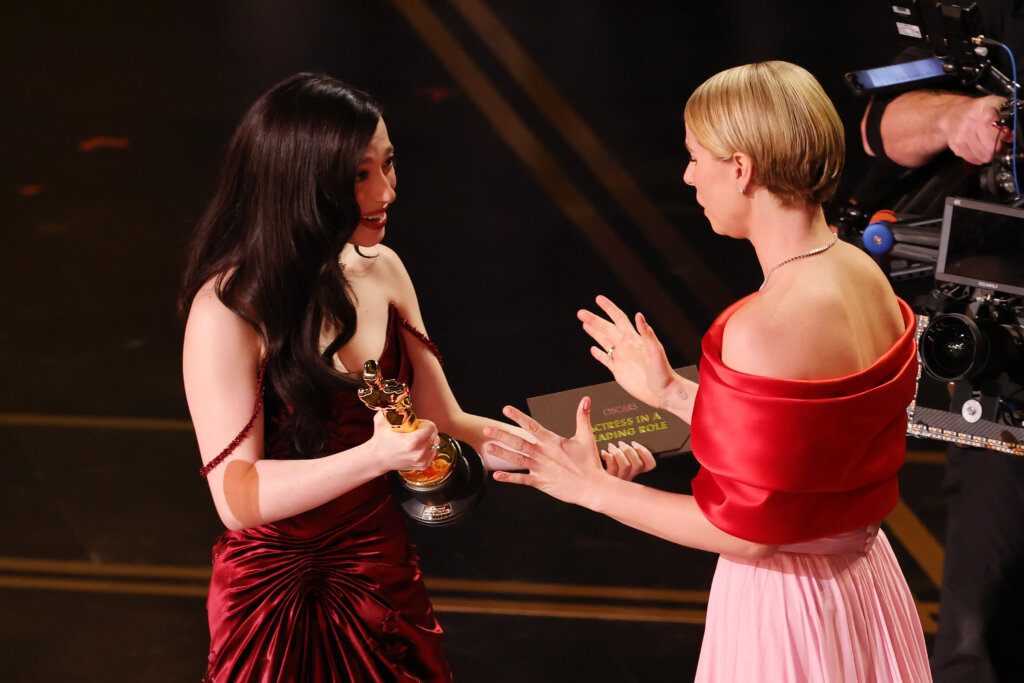
Mira: Mikey Madison who won last year for Anora, comes out to present the award for best actress. It makes me think of Anora’s many wins last year, as it’s beginning to look like Marty Supreme will get shut out.
Both were these chaotic films that were deeply steeped in Jewish New York. Anora was set in the Russian-Jewish Brooklyn neighborhood of Brighton Beach, but somewhat glossed over that fact, so only viewers in the know noticed. Marty Supreme is much more direct aboutup front with its Jewishness, but it’s still not front and center.
Just the fact that both came so far in back-to-back years shows an interesting progression of the Jewish-American story — that we tell these stories of Jewish-Americans, without needing to point out their Judaism the way so much earlier art did. I loved both movies, but I wonder what made the academy react to them so differently.
PJ: Jesse Buckley achieved a massive feat with Hamnet: pretending to be Shakespeare’s wife, and willing the audience to buy that the character has no clue what plays are or how to behave in a theater.
Talya: A final and decisive best picture win for One Battle After Another. Genuinely lovely to see the cast and crew so delighted all together on stage. This thing is supposed to be fun, even in these dark times!
PJ: And finally we get the orchestral version of Steely Dan’s “Dirty Work” we’ve all longed for. Baruch Hashem.
Talya: Friends, Jews, Forward-ites: we have survived yet another year of blogging through this event together. What are our thoughts? I agree with Paul Thomas Anderson: Let’s have a martini.
Olivia: There were a lot of historic wins tonight — Autumn Durald Arkapaw as the first woman to win cinematography, Jessie Buckley as the first Irish winner for best actress. I was surprised by the Marty Supreme shutout, but despite the most Jewish film not getting one win, we had a lot to talk about tonight.
A bizarre gassing in a post-show scene
Okay, wondering how this post-show scene in which Conan O’Brien is made host for life, then gassed and cremated, is reading to people who haven’t seen One Battle … as is the case for someone I am watching with. As Mira wrote, the gassing scene in One Battle After Another is meant to be a satirical dig at neo-Nazis but it plays really awkwardly as an ending to the night.
Mira: Yes. I thought the satire of One Battle made — spoiler alert — gassing and cremating Sean Penn work as a kind of darkly comedic commentary. But repeating it for Conan O’Brien makes me worry about how lightly we are taking what is obvious Holocaust imagery. I’m OK with using it in a joke, as long as the joke has a point or is making a point. This was…not.
PJ: I didn’t really receive the gassing as Holocaust imagery even in the film, so this didn’t bug me.
Talya: I was sorta shocked. It was too casual with a mode of death that is explicitly associated with the Holocaust, and we’re in an era in which casual jokes about these matters have taken on a threatening amount of political power.
PJ: It just struck me as an extension of the kind of self-deprecating gag Conan has been leaning into since he took over Late Night, which is that he is inept and no one wants him. (He stepped into a noose in the cold open to the first episode.) But I get where you are all coming from.
PJ: A coda: It turns out Sean Penn is in Ukraine. This tracks, as he previously threatened to smelt his Oscars unless the Academy gave Zelenskyy airtime.
Talya: Well, goodnight, I guess?
Olivia: Goodnight. And congratulations to everyone who won their ballots at home.
Mira: Goodnight! May we all go to sleep without “Golden” stuck in our heads.

Hello, fellow Forward reader! I’m Joel Brown, a Forward reader and supporter for more than 15 years, and currently the chair of the board of directors.
I’m an avid Forward reader because it ticks so many of my essential boxes: excellent journalism, Jewish focus and diverse viewpoints. In today’s political climate, what I most appreciate is the Forward’s independence — made possible by the generosity of its membership.
The Forward is committed to bringing you unbiased, nuanced Jewish news. From my position as board chair, I see an exciting future as we expand our position as the definitive independent voice of contemporary American Judaism.
That’s why I’m paying it Forward, by matching $36,000 of reader gifts. It’s an investment in the Forward’s newsroom, to continue telling the American Jewish story with truth and independence.
— Joel Brown, Forward board chair
Support our mission to tell the Jewish story fully and fairly.