For Bob Dylan’s 85th birthday, an 85-minute playlist
A journey through Dylan’s voluminous discography, highlighting songs that are as idiosyncratic and iconoclastic as the man himself
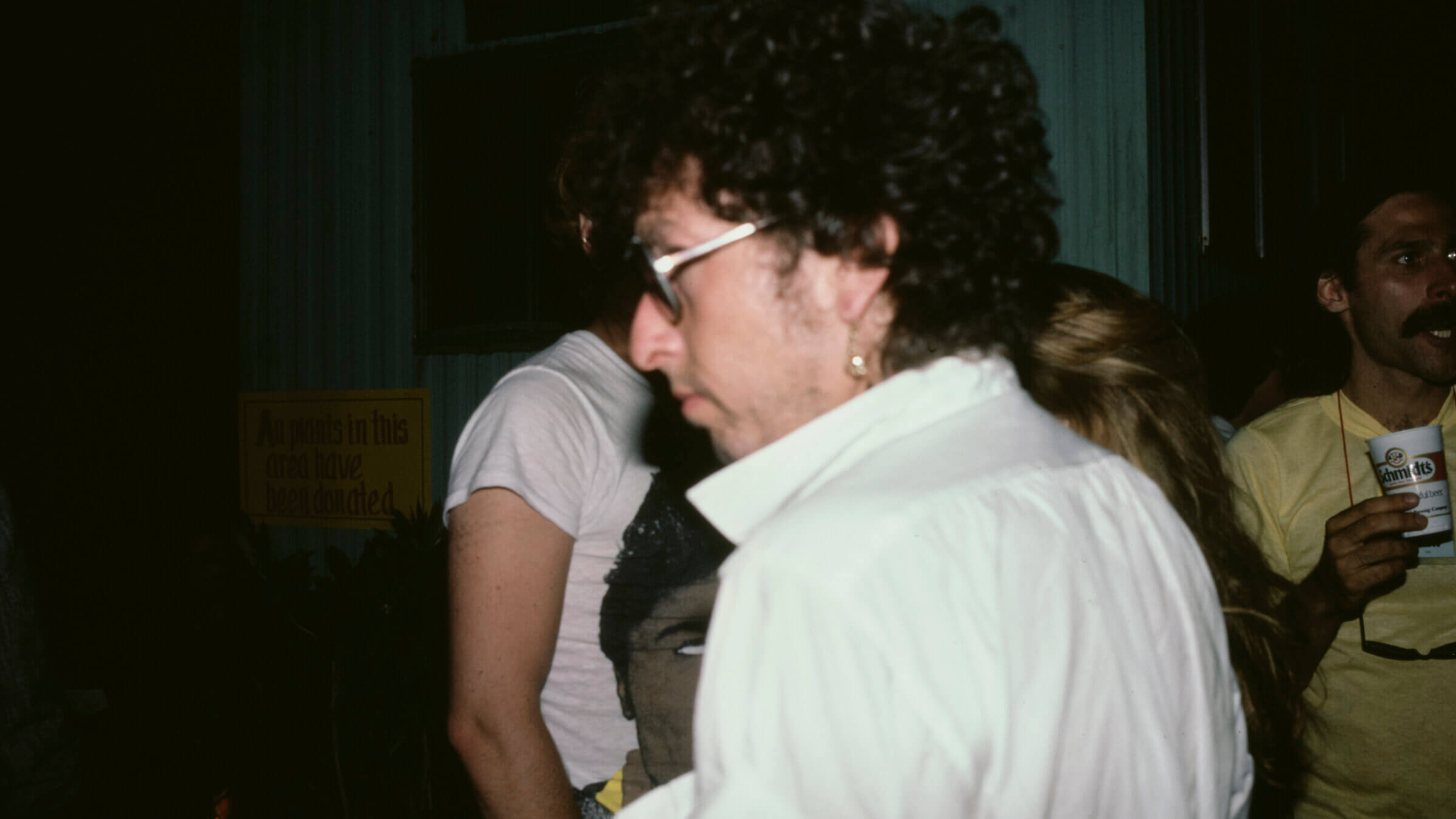
For Bob Dylan’s 85th birthday, a photo from 1985. Photo by Vinnie Zuffante/Getty Images
Nobel Prize-winning song-poet Bob Dylan turns 85 on Sunday, May 24. In order to celebrate the august occasion, we have put together an 85-minute playlist featuring one minute of music for every year Dylan has been alive. This playlist isn’t meant to summarize or stand in for Dylan’s overall body of work, which numbers well over 600 songs, nor is it intended to suggest that these are his best songs. Rather, this is a journey through Dylan’s vast songbook, purposely avoiding the tried-and-true in favor of highlighting almost two dozen lesser-known but wholly worthy gems. If you’d like to listen along, here’s a Spotify playlist of my choices.
Happy 85th birthday, Bob Dylan!
Talkin’ Hava Negeilah Blues (1962)
One of the first original songs Bob Dylan wrote and performed in his early coffeehouse days, “Talkin’ Hava Negeilah Blues” gives the lie to the notion that Dylan consciously tried to hide his Jewish background by changing his name (from Zimmerman to Dylan) and making up stories about his past (e.g., that he traveled with the circus). If there was any truth to that, then why did he kick off his career with a riff on that most recognizably Jewish of songs?
Mixed-Up Confusion (1962)
Recorded in the fall of 1962, this rockabilly single recontextualizes (or gives the lie to) the common but false narrative (perpetuated in the film A Complete Unknown) that Bob Dylan “went electric” on his 1965 album, Bringing It All Back Home, and in subsequent concerts the following summer and fall. In fact, Dylan was a rock ‘n’ roller dating back to high school, where the quote appearing beneath his photo in his class yearbook read, “To join Little Richard.” On “Mixed-Up Confusion,” he was already stretching his rock ‘n’ roll muscles several years before the notorious 1965 Newport Folk Festival where he performed with an electric band, much to the horror of the moldy figs of folk music.
4th Time Around (1966)
As early as 1964, the Beatles’ John Lennon began to show signs of having been influenced by Bob Dylan’s songwriting on numbers such as “I’m a Loser” (1964) and “You’ve Got to Hide Your Love Away” (1965), in which Lennon goes so far as to imitate Dylan’s nasal rasp. Bob Dylan was hip to this trend, and after the Beatles released the Dylanesque “Norwegian Wood,” Dylan responded in song with “4th Time Around,” whose melody strongly echoes that of “Norwegian Wood.” Dylan scholar Sean Wilentz wrote in Bob Dylan in America that “4th Time Around” sounds “like Bob Dylan impersonating John Lennon impersonating Bob Dylan.”
Blind Willie McTell (1983)
Unaccountably left off the 1983 album Infidels for which it was originally intended, “Blind Willie McTell” is one of Bob Dylan’s American epics, as it invokes New Orleans, East Texas, bootleg whiskey, plantations, “the ghost of slavery ships,” an unnamed war, and “power and greed and corruptible seed.” Be sure to play it on the 4th of July.
I Want You (1966)
Only Bob Dylan could write such a surrealistic narrative — replete with a guilty undertaker who sighs, a lonesome organ grinder who cries, a drunken politician who weeps, and a child in a Chinese suit — in the form of a bouncy, three-minute pop song that indeed made it into the Top 20 in 1966, when it was released on his greatest (double) album, Blonde on Blonde.
We Better Talk This Over (1978)
“We Better Talk This Over” is one of several numbers on Bob Dylan’s 1978 album Street-Legal that seem to want to bring closure to what Dylan began revealing about his crumbling marriage on 1975’s Blood on the Tracks. Whereas Dylan portrayed himself in pain and bereft on Blood, on this oft-overlooked propulsive number he is ready to put the past behind him and move forward. “The vows that we kept are now broken and swept / ’Neath the bed where we slept,” he sings, somewhat resignedly. Dylan also seemingly reveals an internal spiritual struggle when he sings, “I’m exiled, you can’t convert me,” just a little over a year before he announces to the world his so-called born-again experience on 1979’s Slow Train Coming.
Most of the Time (1989)
An acute, heart-piercing, devastating post-breakup song, featuring an unreliable narrator denying he still hurts but betrayed by his over-the-top insistence that he has gotten over her, in a song featuring a slow emotional and sonic build.
Day of the Locusts (1970)
Poor Bob Dylan. It turns out that the day in 1970 on which he received an honorary degree from Princeton University turned out to be one of the worst days of his life, judging from this song. Nature, a Biblical plague, and David Crosby (in an unnamed cameo, playing the man standing next to Dylan whose “head was exploding”) all conspired against the college dropout to make him fear he might not have gotten “out of there alive.” He could have just transferred to Wesleyan and everything would have been fine.
Everything Is Broken (1989)
In the aggressive, blues-rocking “Everything Is Broken” Bob Dylan recounts the Kabbalistic creation story about the klippot, the broken vessels of divine energy that were left behind everywhere and which point to our ultimate task as humans — to repair the brokenness permeating creation through acts of inherent goodness, otherwise known as mitzvot, in an oft-misunderstood process called tikkun olam. All this in a three-minute song blending New Orleans swamp-rock and classic Chicago blues.
You’re a Big Girl Now (1975)
Another of Bob Dylan’s post-breakup songs of desperation, this from Blood on the Tracks, a recording often referred to as Dylan’s “divorce album.” In “You’re a Big Girl Now,” Dylan drops all anger and defenses in favor of raw emotion: “I’m going out of my mind / With a pain that stops and starts / Like a corkscrew to my heart / Ever since we’ve been apart.”
Positively 4th Street (1965)
Featuring one of the greatest opening lines of all time: “You’ve got a lot of nerve to say you are my friend.” It’s all downhill from there, my friend.
The Groom’s Still Waiting at the Altar (1981)
“The Groom’s Still Waiting at the Altar” is a blistering, urgent missive, with reports of phones out of order and the killing of nuns and soldiers (evocative of American military involvement in Latin America at the time the song was written). Nevertheless, each verse ends with the title refrain, “The groom’s still waiting at the altar,” which I hear as a statement retracting his declaration of conversion.
Can You Please Crawl Out Your Window? (1965)
In September 1965, Dylan nearly hit the top of the pop charts when “Like a Rolling Stone” went to #2; it was kept from the top spot by the Beatles’ “Help!” But Dylan didn’t give up in his quest for the chart-topping hit that had so far evaded him. Songs he recorded and released in coming months that bore musical similarities to “Like a Rolling Stone” included “Positively Fourth Street,” “One of Must Know (Sooner or Later),” and “Can You Please Crawl Out Your Window,” the only studio track recorded with the Hawks — later to become the Band. The single presents the backup group at its fiercest. And Dylan quotes himself when he sings “You’ve got a lot of nerve to say you are my friend,” a line from “Positively 4th Street.”
Going, Going, Gone (1974)
From 1974’s Planet Waves, the only studio album Bob Dylan recorded with the Band, “Going, Going, Gone” stands out on the album for its moody, unsettled nature (surrounded as it is by songs of domestic bliss and naked nostalgia). Robbie Robertson’s evocative electric guitar leads pepper the ballad, saying as much with their clipped notes and anguished tone as Dylan does with lyrics like “I’m closin’ the book / On the pages and the text / And I don’t really care / What happens next.”
Series of Dreams (1989)
An outtake from 1989’s Oh Mercy, this is one of Dylan’s big statement songs that unaccountably got left on the cutting room floor, until demand grew so strong from those who had heard it via bootleg recordings that Dylan’s record company assented to the inclusion of the track on The Bootleg Series Volumes 1–3 (Rare & Unreleased) 1961–1991. Dylan could be alluding to the Shoah when he describes his dreams:
In one, numbers were burning
In another, I witnessed a crime
In one, I was running, and in another
All I seemed to be doing was climb.
One More Cup of Coffee (1976)
This hypnotic if unassuming number off the early-1976 album Desire, featuring Dylan’s only authentic cantorial singing and aided and abetted by Scarlet Rivera’s klezmer-via-Gypsy violin, a relentless minor key, and Emmylou Harris’ harmonies is an overlooked gem. As the song says, its “heart is like an ocean, mysterious and dark.”
Dignity (1989)
Like “Series of Dreams,” the song “Dignity” was an outtake from the Oh Mercy sessions that was first released on Bob Dylan’s Greatest Hits Volume 3 in 1994. And like “Series of Dreams,” this song also seems to refer to the Shoah, when the narrator — bereft at the astounding loss of dignity — refers to “a crowded room full of covered-up mirrors,” as in a Jewish house of mourning, and “steps goin’ down into tattoo land.”
Dark Eyes (1985)
To many, the 1985 album Empire Burlesque introduced one of the low points in Bob Dylan’s recording career, including the two follow-up albums Knocked Out Loaded (1986) and Down in the Groove (1988). Empire Burlesque was a desperate attempt by producer Arthur Baker to update Dylan’s sound to blend in more with the mid-1980s dance music aesthetic. But Baker knew that the album needed a dynamite closer, and he suggested that Dylan write an old-style, solo acoustic ballad. In a fit of inspiration, Dylan stayed up all night and came up with this stunner: sharp, intimate, personal, where the singer looks around himself at a chaotic world from which he is totally alienated — “I feel nothing for their game where beauty goes unrecognized / All I feel is heat and flame and all I see are dark eyes.”
Heart of Mine (1981)
“Heart of Mine” stands out on the 1981 Shot of Love album as a raucous, joyful bit of R&B music (which flavors most of the album). But it’s a Bob Dylan song, so it has that subversive touch. The narrator addresses the song to his own heart — “Don’t let her see / Don’t let her see that you need her / Don’t put yourself over the line / Heart of mine” — and warns it that only trouble lies ahead if this is the path he (his heart) decides to pursue. The recording’s impressive instrumental lineup — all of whom are in the Rock and Roll Hall of Fame — includes Ringo Starr on drums, Ronnie Wood on guitar, and Donald “Duck” Dunn on bass, meaning Dylan was backed on this track by a Beatle, a Rolling Stone, and a member of the Stax house band, also known as the M.G.’s, as in Booker T. and the M.G.’s. Not too shabby.
Congratulations (1988)
This is a bit of a cheat stuck into this list to demonstrate that as much as he has always been a solo artist and an iconoclast, Bob Dylan has also always longed for the companionship — musical and otherwise — of a steady band. He came close to achieving this with the Hawks (later the Band) from the mid-1960s through the mid-1970s, and allegedly asked Jerry Garcia in the late-1980s if he could join the Grateful Dead (which was essentially a Dylan tribute band). But it wasn’t until George Harrison persuaded his friend and sometime songwriting partner to join him — along with Tom Petty, Roy Orbison, and Jeff Lynne — in an “anonymous supergroup” called the Traveling Wilburys in 1988, that Dylan took the plunge and subsumed himself into a collective. In most cases, as with “Congratulations,” you could easily tell one lead singer from the other, and in general that person wrote the song. We’re turning this one — an over-the-top expression of post-breakup bitterness (the first line is “Congratulations for breaking my heart”) — back on Dylan on the occasion of his birthday.
My Back Pages (1964)
Along with “It’s All Over Now (Baby Blue),” the song “My Back Pages” is often heard as a transitional statement: out with the old Dylan, in with the new, if you will. Included on the 1964 album, Another Side of Bob Dylan, which eschewed topical protest for more personal and poetic concerns, “My Back Pages” found the 23-year-old singer-songwriter looking back just a few years at his more serious self and judging him thusly: “Ah, but I was so much older then / I’m younger than that now.” A 1967 version of the song by the Byrds made it into the Top 30 and inspired the all-star version of the song rendered at the Bob Dylan 30th Anniversary Concert Celebration in 1992, which featured George Harrison, Eric Clapton, Tom Petty, Neil Young, and Roger McGuinn trading verses alongside Dylan.
I’m personally matching all gifts to the Forward, up to $36,000. Can I match your gift now?

Hello, fellow Forward reader! I’m Joel Brown, a Forward reader and supporter for more than 15 years, and currently the chair of the board of directors.
I’m an avid Forward reader because it ticks so many of my essential boxes: excellent journalism, Jewish focus and diverse viewpoints. In today’s political climate, what I most appreciate is the Forward’s independence — made possible by the generosity of its membership.
The Forward is committed to bringing you unbiased, nuanced Jewish news. From my position as board chair, I see an exciting future as we expand our position as the definitive independent voice of contemporary American Judaism.
That’s why I’m paying it Forward, by matching $36,000 of reader gifts. It’s an investment in the Forward’s newsroom, to continue telling the American Jewish story with truth and independence.
— Joel Brown, Forward board chair
Support our mission to tell the Jewish story fully and fairly.