Outrage over Nicholas Kristof’s op-ed on sexual assault of Palestinians is missing the point
Sexual violence on Oct. 7 deserves the world’s acknowledgment — so do these allegations
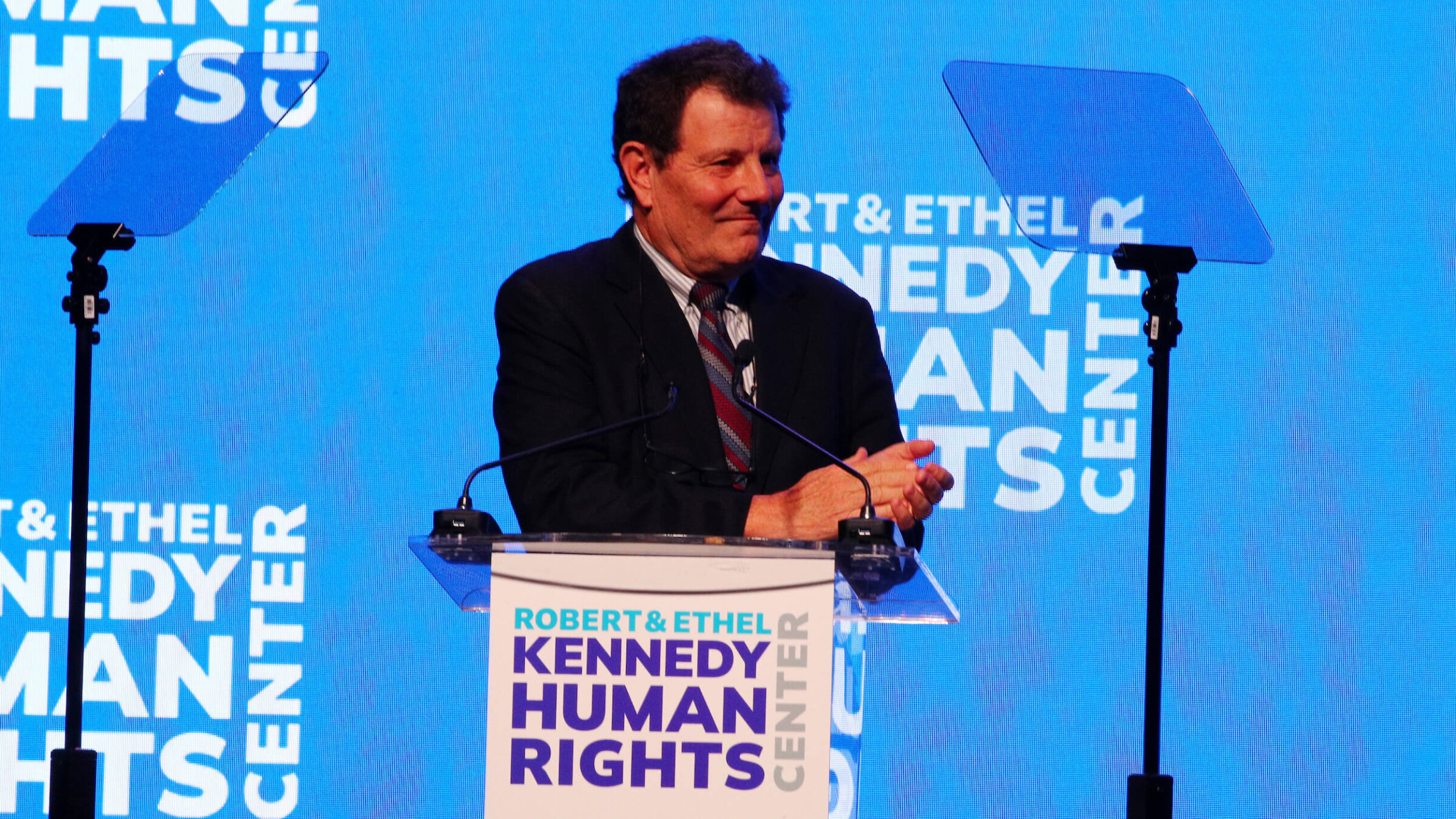
Nicholas Kristof speaks onstage during the Robert F. Kennedy Human Rights’ 2025 Ripple of Hope Gala on Dec. 9, 2025 in New York City. Photo by Astrid Stawiarz/Getty Images for RFK Ripple Of Hope

Contributing Columnist Emily Tamkin May 14, 2026
Sexual violence is wrong, and carefully researched reports of sexual violence should be taken seriously, regardless of the nationality of the reported perpetrators.
There should be no reason for me to write that obvious sentence. This week has given me two: the backlash against a Nicholas Kristof New York Times essay alleging widespread sexual abuse against Palestinian prisoners in Israeli detention, and the release of a new report on sexual crimes committed by Hamas as part of the Oct. 7, 2023 attack.
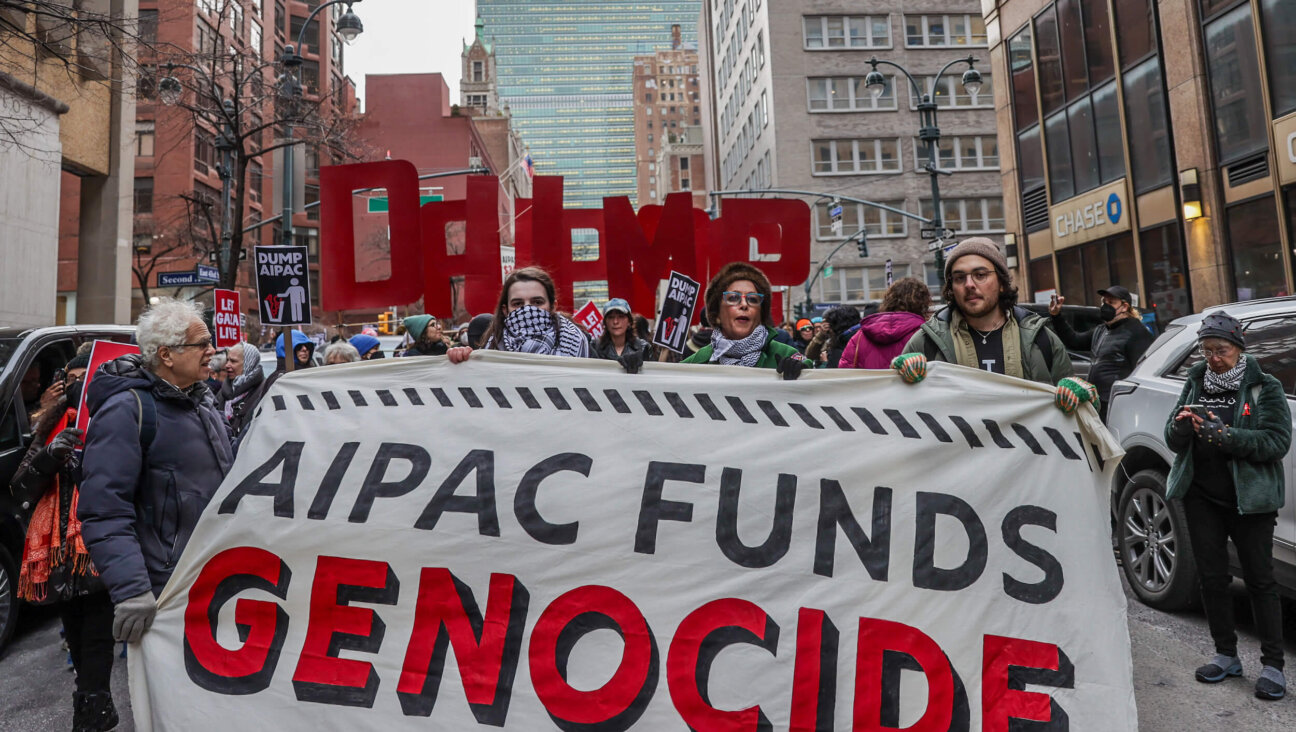
The response to both was painfully predictable. Kristof’s reporting was denounced by many pro-Israel commentators. Some Jewish and Zionist groups organized a protest outside the Times building for Thursday. Israel is now planning to sue the Times, calling Kristof’s piece a collection of “hideous and distorted lies.”
On social media, some pro-Palestinian voices were quick to dismiss the Oct. 7 report, insisting it was unverified.
What both of these discourses are missing: We are not talking about a team sport. A report about sexual violence is not — or should not be — treated as a football flag or card, inspiring outrage at the referees if it goes against the side you root for. To see sexual violence in terms of sides at all is grotesque.
Sexual violence is a desecration and a violation. To say you take it seriously but rush to dismiss the idea that a country or people you support could have carried it out is to not take it seriously at all. The idea that it’s necessary or desirable to show support for a cause by refusing to believe that someone associated with that cause could have carried out sexual violence is its own kind of violation.
Kristof’s piece is long and upsetting. It is difficult to read. “In wrenching interviews, Palestinians have recounted to me a pattern of widespread Israeli sexual violence against men, women and even children — by soldiers, settlers, interrogators in the Shin Bet internal security agency and, above all, prison guards,” Kristof wrote. Among the allegations he includes: charges of canine rape, which some observers have called into question and which some have claimed discredit the entire piece.
(Kristof is far from the first to report that sexual violence is widespread within the Israeli justice system; a report earlier this year from the progressive Israeli group B’Tselem, for example, included similar findings. And Kristof is clear that he is not alleging that Israeli leaders order rape, but rather that sexual violence within the Israeli detention system is routine.)
Also difficult to read were the immediate denunciations of the story issued by people like Deborah Lipstadt — once former President Joe Biden’s antisemitism envoy — who have fervently decried the lack of international sympathy for victims and survivors of reported sexual violence carried out by Hamas on Oct. 7.
Kristof anticipated those reactions, noting in the piece that, whatever one’s views on the Middle East, we should be able to condemn rape. “Supporters of Israel made that point after the brutal sexual assaults against Israeli women during the Hamas-led attack on Israel on Oct. 7, 2023,” he wrote.
Where is that moral clarity now?
Some critics said that the piece only ran to overshadow the release of a new report on Hamas’s sexual violence by the Civil Commission on Oct. 7th Crimes By Hamas Against Women and Children. To claim as much is to look at coverage of sexual violence through a cynical lens, one in which the question is not “who was hurt and how can these grievous wrongs be righted?” but rather “who benefits?” (The Times in fact covered the Civil Commission report in an in-depth article.)
Others, like the Israeli foreign ministry, responded by accusing the Times of engaging in a new blood libel — the antisemitic allegation that Jews use non-Jewish blood for rituals. That charge has largely responded to the canine rape allegation, but been employed to attempt to broadly discredit the range of Kristof’s reporting. To attempt to discount all the allegations the piece uncovers with this term is, effectively, to refuse to take seriously any charges of sexual violence so long as the reported perpetrator is Jewish.
That is not to say we should automatically assume that all reports of sexual violence are accurate; only that neither should we assume they are inaccurate based on the identity of the alleged wrongdoers.
A similar kind of out-of-hand dismissal from certain pro-Palestinian camps greeted the release of the Civil Commission’s report, which found that sexual violence by Hamas was “systematic,” “widespread” and “integral to” the assault on Oct. 7. The report’s lead author, Cochav Elkayam-Levy, said the goal was to make sure that what happened could not be “denied, erased, or forgotten.”
But a quick social media search shows that some who are more sympathetic to Palestinians than Israelis are doing exactly that. I saw many voices instinctively insisting that the report was not verified, in much the same way that pro-Israel posters automatically questioned Kristof’s writing.
It is one thing to draw a distinction between the two reports — to say, for example, that one describes a horrific past event while the other reports on an ongoing practice — but another to insist that sexual violence did not happen.
(To those who insist that the Civil Commission cannot be trusted because it is Israeli, consider that when, in 2024, International Criminal Court Prosecutor Karim Khan applied for arrest warrants against the leadership of Hamas, he said that he had reason to believe that they had responsibility for rape and other acts of sexual violence. And the United Nations Special Representative similarly found “reasonable grounds to believe that sexual violence occurred during the attacks of 7 October 2023 in multiple locations, including rape and gang rape.”)
What are we doing — not only to victims and survivors, but also to ourselves — when we automatically believe that yes, this side carries out sexual violence, but no, that side doesn’t?
I would argue that — besides the obvious and tangible risk of denying heinous crimes — when you say that your side could not have carried out these horrific acts, you are not just denying the reported victims their humanity. You risk robbing yourself of your own humanity, too.
I know that there are some who feel that to take allegations against those they support seriously is to abandon their nation, their family and their identity. But this kind of reflexive denial actually weakens identity, rather than strengthens it. It suggests that the thing we’re clinging to is not robust enough to survive accountability.
To love Jews does not mean you have to pretend that Jews are incapable of behaving in ways that are wrong or violent. We know that that’s not true. I have no doubt that, in response to this column, I may be accused, as I sometimes am, of hating Jews. But what kind of love demands that you refuse the possibility of wrongdoing?
When we say we’re against sexual violence, we should mean it across the board — no matter the identity of the reported victims and alleged perpetrators. We should mean it regardless of whatever loyalty we may feel to groups we cherish being a part of. We aren’t lessening our commitment to our identities by doing so. We are just insisting that our identities incorporate our full humanity.
Did you know that only 2% of Forward readers donate to support our nonprofit newsroom? That 2% make it possible for millions to read the Forward without a paywall or subscription — removing any barriers to the full and fair Jewish story.
But while the Forward is free to read, it isn’t free to produce. Big stories — like deep dives into the antisemitism data, political scoops or reporting trips to college campuses — take months of research and fact-checking. All while we keep you informed of what you need to know each day.
— Rachel Fishman Feddersen, Forward Publisher & CEO
Support our mission to tell the Jewish story fully and fairly.