Argentine official who investigated death of AMIA prosecutor charged with covering up evidence
The death of Alberto Nisman, who was investigating the 1994 bombing on a Buenos Aires Jewish center, has roiled Argentine politics for a decade
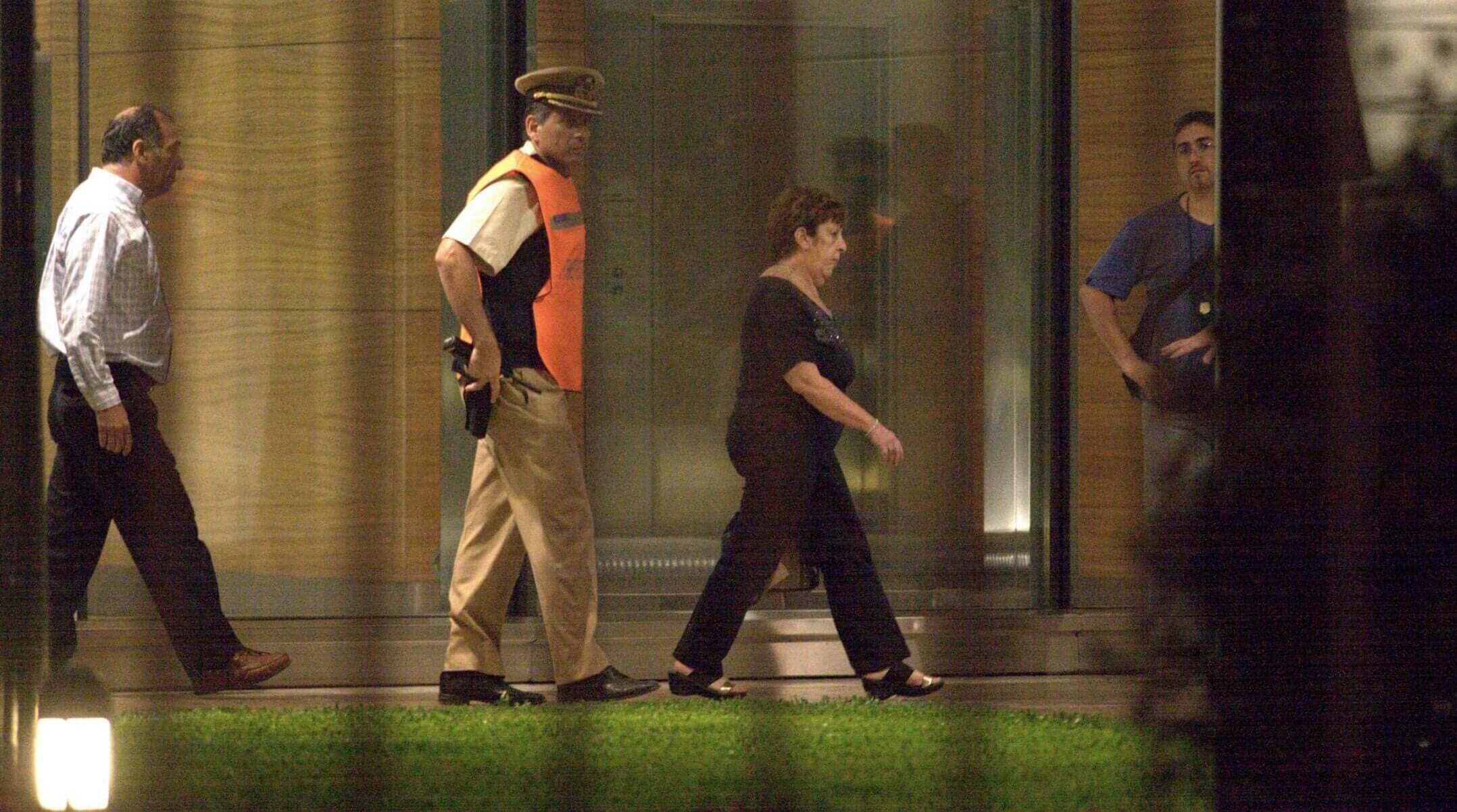
Argentine prosecutor Viviana Fein arrives at the apartment where prosecutor Alberto Nisman was found dead, in Buenos Aires, Jan 19, 2015. (Mario Sayes/AFP via Getty Images)
(JTA) — The former prosecutor who led the investigation into a mysterious 2015 death that unnerved Argentina’s Jewish community has been charged with concealing evidence in the case.
Viviana Fein was indicted on May 12 on charges of “aggravated concealment” over her handling of the investigation into the death of Alberto Nisman, a special prosecutor appointed to investigate the 1994 bombing of the AMIA Jewish community center in Buenos Aires that killed 85 people.
On Jan. 18, 2015, Nisman was found dead in his Buenos Aires apartment with a bullet hole above his right ear, having been shot at point-blank range. His body was discovered hours before he was scheduled to present evidence before Argentinian lawmakers accusing then-President Cristina Fernández de Kirchner and other senior officials of allegedly covering up Iran’s role in the AMIA attack.
At the time, Fein declared Nisman’s death a suicide, but in May 2016 she slightly amended her view saying that he may have been forced to kill himself. Then, in 2017, forensic investigators issued a report stating that Nisman was assassinated. Jewish institutions have also maintained that he was murdered.
Under the Argentine Penal Code, a person charged with aggravated concealment must not have actively participated in the original crime but joined in the aftermath, and Judge Julián Ercolini ruled that Fein allegedly failed to properly preserve the crime scene at Nisman’s apartment.
According to court filings, dozens of people entered and exited the apartment without proper controls, potentially contaminating evidence and compromising the investigation.
The controversy surrounding the handling of the original crime scene has persisted for years. Judicial investigations and expert reports described the apartment as chaotic in the hours after Nisman’s death, with allegations that evidence may have been mishandled or destroyed.
Fein, who could face up to three years in prison if found guilty, has denied any wrongdoing. A week prior to her indictment, her attorney, Lucio Simonetti demanded the charges be dropped, stating that in the case of a cover up, “There must necessarily be a connection between the perpetrator of the underlying crime and the person covering it up, since it is absurd to assume that someone would cover up for a complete stranger.”
He added that the ruling “says nothing about any prior relationship existing between my client and the individuals who allegedly took part in the supposed murder of Natalio Alberto Nisman.’”
The prosecution comes as Argentina’s government takes a newly aggressive stance against Iran and Hezbollah, which are widely understood to have planned the bombing. Since Javier Milei, a conservative supporter of Israel, was elected in 2023, the country has officially declared Iran and Hezbollah responsible for the AMIA attack and another attack two years earlier on the Israeli embassy; designated Iran’s Revolutionary Guard a terrorist organization; and decided to pursue a trial in absentia for suspects implicated in the case.
I’m personally matching all gifts to the Forward, up to $36,000. Can I match your gift now?

Hello, fellow Forward reader! I’m Joel Brown, a Forward reader and supporter for more than 15 years, and currently the chair of the board of directors.
I’m an avid Forward reader because it ticks so many of my essential boxes: excellent journalism, Jewish focus and diverse viewpoints. In today’s political climate, what I most appreciate is the Forward’s independence — made possible by the generosity of its membership.
The Forward is committed to bringing you unbiased, nuanced Jewish news. From my position as board chair, I see an exciting future as we expand our position as the definitive independent voice of contemporary American Judaism.
— Joel Brown, Forward board chair
Support our mission to tell the Jewish story fully and fairly.