It’s time for Jews who love Israel to give up on Zionism
There’s a better ideology on which to build the safe, equitable future the region needs
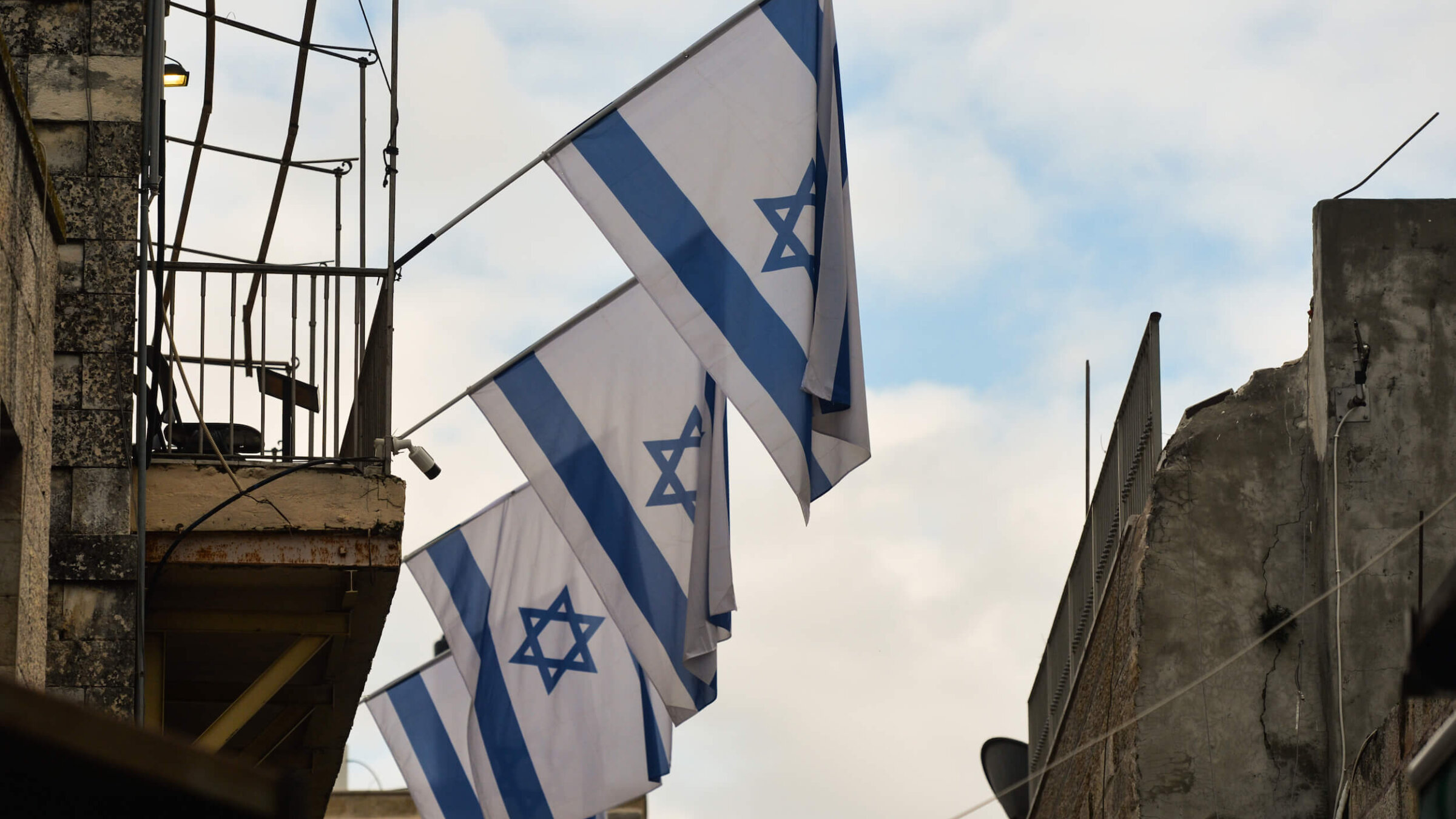
Israeli flags in Jerusalem. Photo by Artur Widak/NurPhoto
Why have I, a longstanding democratic Zionist who lived in Israel for five years and loves the country passionately, abandoned my belief in a democratic Jewish state?
My short response is that I did not abandon democratic Zionism. Democratic Zionism abandoned me.
More than two-and-half years after Hamas slaughtered close to 1,200 people in the Oct. 7, 2023 attack, after Israel’s subsequent destruction of Gaza, growing numbers of liberal Zionist American Jews like me have reached a crossroads. Cognitive dissonance over Israel has left us feeling homeless and bereft.
In our horror at the indiscriminate killing of civilian Palestinians, we are alienated from the mainstream American Zionist echo-chamber, dominated by the likes of the Anti-Defamation League and AIPAC, which rejects almost all criticism of Israel as antisemitic. Yet we also cannot make common cause with stridently anti-Zionist groups like Jewish Voice for Peace, which demonize Israel and Israelis, with no distinctions, as the enemy.
Fortunately, there is a little known but compelling third way, known as post-Zionism.
Post-Zionism focuses on supporting efforts to build a shared society in which all the people residing between the Jordan River and the Mediterranean Sea — Israelis and Palestinians alike — can live side by side in peace and security. It sees the structure of this shared society as less important than ending the mentality of “us against them” that has animated both Jewish and Palestinian national movements for more than a century. Such counter-productive ideologies must give way now to a true sharing of the Holy Land, in which the rights of all people are cherished and protected.
A return to principles
Israel’s 1948 Declaration of Independence contains a promise: the new country would “ensure complete equality of social and political rights to all its inhabitants irrespective of religion, race or sex.”
Yet successive Israeli governments led by both left and right-wing Zionist parties have, in the decades since the 1967 Six-Day War, sabotaged the dream of a democratic Jewish state by deliberately building Jewish settlements in the occupied Palestinian territories. By prioritizing settlements over peace, Israel has worked to ensure that there will be no Palestinian state alongside a democratic Jewish Israel, but instead an apartheid Jewish state ruling over millions of Palestinians without rights.
That means in short, the only morally acceptable form of Zionism has been effectively taken off the table by Israel itself.
Instead, a return to post-Zionism — which emerged in the 1980s, and went into abeyance with the collapse of the Oslo peace process — is called for. Difficult debates over definitions of Zionism aren’t changing anything. To ensure that Israel survives and inspires generations of diaspora Jews to come, a new way forward is needed.
A common land
Roughly equivalent numbers of Israeli Jews and Palestinian Arabs live between the river and the sea. The path down which they are presently hurtling leads directly to mutually assured destruction, and must be abandoned.
The present Israeli course of action — oppressing and seeking to again disperse our Palestinian neighbors in the name of Jewish security — has led to a state of perpetual if unofficial war, which places the security and well-being of Israelis and diaspora Jews at ever-graver risk. The strategy of Palestinians and their supporters around the world — holding out some vague hope that Israel will somehow cease to exist — is similarly dysfunctional.
Post-Zionism, in contrast to both current strategies, advocates acceptance between Israeli Jews and Palestinians, and a shared embrace of our common land.
In adopting a post-Zionist perspective, I’ve found a route out of paralysis. And I think it could provide an avenue for Jews like me — who feel alienated from what Israel has become but retain deep ties to it — to contribute to building a shared Israel-Palestine. That coexistence could look like one state, two states, or my personal favorite possibility, an Israeli-Palestinian confederation with two states bonded together by a European Union-like structure. Post-Zionism also allows its adherents to maintain our abiding love for and spiritual connection to the land of Israel; as opposed to anti-Zionist Jews’outright rejection of “next year in Jerusalem.”
Ideological change comes slowly. Substituting the vision of a safe home for Jews in the Middle East for that of an explicitly Jewish state will take time. Right now, the key post-Zionist priority looks much like that of left-Zionism: convincing the Israeli public that Prime Minister Benjamin Netanyahu’s expansionist agenda of Jewish-supremacism is morally and politically unsustainable, and to bring about the beginnings of change by ousting his coalition in upcoming elections.
On the domestic front, post-Zionist American Jews must work together to strengthen ties with interfaith allies, including the Muslim community, to combat antisemitism and Islamophobia, and to defend democracy and pluralism. We cannot work for a truly democratic Middle East without a truly democratic government of our own.
Embracing post-Zionism does not mean refusing to work together with Zionists who also want freedom, safety and self-determination for Israelis and Palestinians alike. But it means thinking about the course of history that brought us to this point differently. I and so many post-Zionists have come to understand that the ideology of Zionism, while representing genuine liberation for Jews, had within it a fatal flaw: forcing the structure of a Jewish state on a land that was only partly Jewish. The idea that this could somehow have worked out was, from the beginning, a form of self-delusion.
Right now, post-Zionists and left-Zionists are working together fruitfully in collaboration with Palestinians in a variety of movements and NGOs dedicated to peace and reconciliation, including through increasingly prominent groups like Standing Together.
We must continue to open our minds to a broader range of better futures for the Middle East. Every civilian in Israel, Gaza and the West Bank deserves peace, security, justice and equal rights. That possibility may feel far off, but to paraphrase Theodore Herzl himself, if we will it, it is no dream.
Walter Ruby, formerly a Forward correspondent in Moscow, is co-author with Sabeeha Rehman of We Refuse to Be Enemies: How Muslims and Jews Can Make Peace, One Friendship at a Time.
I’m personally matching all gifts to the Forward, up to $36,000. Can I match your gift now?

Hello, fellow Forward reader! I’m Joel Brown, a Forward reader and supporter for more than 15 years, and currently the chair of the board of directors.
I’m an avid Forward reader because it ticks so many of my essential boxes: excellent journalism, Jewish focus and diverse viewpoints. In today’s political climate, what I most appreciate is the Forward’s independence — made possible by the generosity of its membership.
The Forward is committed to bringing you unbiased, nuanced Jewish news. From my position as board chair, I see an exciting future as we expand our position as the definitive independent voice of contemporary American Judaism.
— Joel Brown, Forward board chair
Support our mission to tell the Jewish story fully and fairly.