National Council of Jewish Women ejects LA chapter, other affiliates cut ties amid historic reboot
Local leaders seeking autonomy for social justice programs cut ties as parent group consolidates
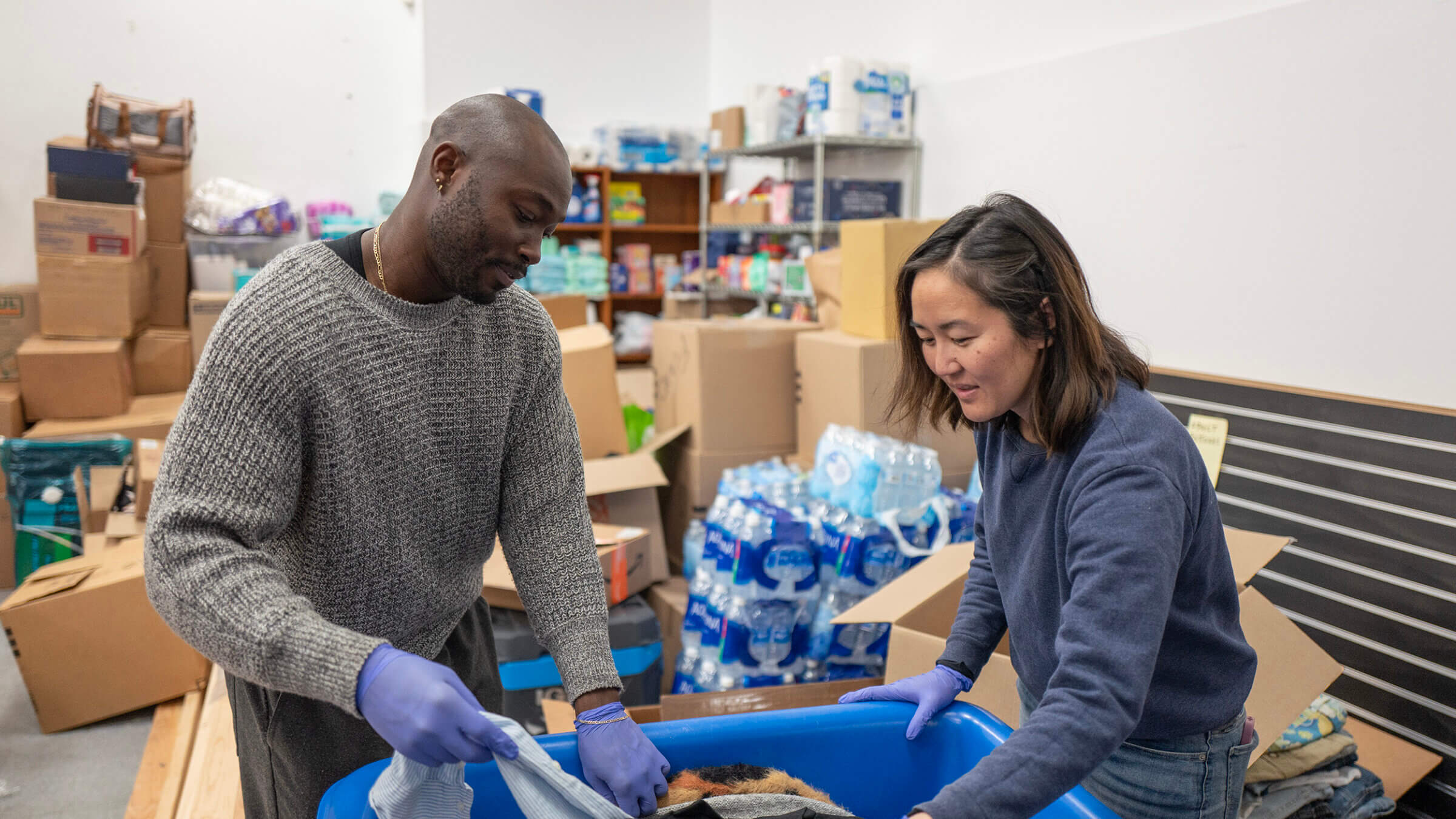
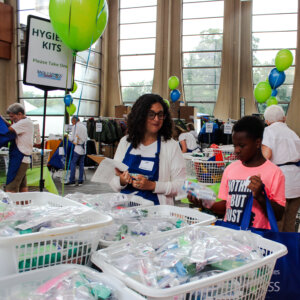
National Council of Jewish Women Los Angeles thrift shop volunteers sort donated goods. Local chapters of NCJW vary in focus, size and approach. Courtesy of NCJW|LA

By Louis Keene June 2, 2026
When wildfires blazed through Los Angeles last year, displacing tens of thousands of people, the local National Council of Jewish Women affiliate was well positioned to help. The national nonprofit’s LA chapter already ran donation drop-off sites across the city — its iconic thrift shops — and employed staff that knew how to sort the flood of donated items.
And after NCJW-LA chief executive Marjorie Gilberg sent an appeal to her members, colleagues at chapters in other cities also shared the letter with their own constituents. Hundreds of thousands of dollars soon poured in from outside of LA, and Gilberg’s nonprofit — which has focused on economic justice for decades — ultimately distributed more than $1 million in cash relief, donated goods and store vouchers to fire-affected families.
“It felt like a huge hug,” Gilberg said. “There was support coming from all these directions, from these women across the country to pull for LA. I was like, ‘Oh, this is what a network is for.’”
But last month, the chapter’s parent organization, the National Council of Jewish Women, cut ties with the LA group.
Citing a “strained” relationship, NCJW president Laura Monn Ginsburg informed Gilberg’s board May 8 that the national organization was terminating its affiliation with the LA chapter, whose $23 million annual budget is three times national’s size. NCJW gave the chapter 90 days to rebrand.
“Despite our good-faith efforts to preserve the affiliation,” Monn Ginsburg wrote, “the Board of Directors of NCJW, Inc., has concluded that continued affiliation with the LA section is no longer tenable.”
The collaborative response to the LA fires reflected one of the strengths that has made the National Council of Jewish Women a leading American social justice nonprofit movement for more than a century. The grassroots Jewish movement started out by seeding local sections and only established a national umbrella in the mid-20th century. As the parent group lobbied on progressive issues, dozens of local sections pursued that mission at the grassroots level in ways that served their local communities, working mostly independent of each other and collaborating when opportunities arose.
But that freedom for local chapters to choose their own priorities is now history. The Washington, D.C.-based parent organization, citing scores of section closures over the last two decades, is transitioning to a regional model focused more on political advocacy than community service. The national shakeup, which began in earnest last July, has already resulted in two sections closing and the decision by three more — in Arizona and Essex County, New Jersey, as well as LA — to break away from the national council. The movement’s six largest remaining chapters — as well as roughly 20 others in the network — may soon follow suit.
National leadership says the restructuring was necessary to prevent further closures, free local chapters from the burden of administration and allow the national organization to expand into places not currently served by the local model. And the group is betting that a tighter, advocacy-focused national agenda will effect greater political change locally and launch the Jewish women’s movement into the future.
“We want folks to take action that is more strategic, that is more thought through, to ensure that they are going to be more successful,” said Ellen Buchman, NCJW’s vice president of engagement and leadership. “We will never question whether the right people to do that is our grassroots — it always will be. The difference is how they will do it.”
But the uncertainty in the network points to a massive identity change for the legacy nonprofit, and to some, a tragic one. Leaders of some sections said moving away from community service work would not only abdicate a local responsibility, but also subtract a powerful Jewish presence from the front lines of American social justice during a time of rising antisemitism.
“We are a Jewish organization that has shown up in progressive places, we’ve shown up in women’s health, all these important issues across the country,” Gilberg said. “And they’re just tearing it down with no sense. It’s the worst possible time to be doing this to this kind of organization.”
A proud grassroots history
The story of NCJW reads like a progressive history of the United States — and in some ways, it is. The organization was founded in 1893 by women who had been invited to the participate in the Chicago World’s Fair, only to discover that the role others had intended for them was as hostesses pouring coffee. The organization originally focused on Jewish religious education for women and children, but quickly branched out to social welfare issues. Today, many of the movement’s 250,000 subscribers — the national group calls them advocates — are the children or grandchildren of lifetime members.
On virtually any American social concern you can think of since then — education, criminal justice reform, civil rights, abortion rights — NCJW, backed by the voices of hundreds of thousands of Jewish women, has been at the forefront of political advocacy.
On virtually any American progressive domestic cause you can think of today, there’s a National Council section pursuing it at the local level. And maybe only one; it’s often said in the NCJW network that if you know one section, you know — well, one section. Their efforts are wide-ranging and specialized: The Pittsburgh section operates a daycare center for children whose parents are required in court; Essex organizes an annual fair for low-income families to pick up free school supplies; Arizona runs a sexual assault trauma recovery center. The sections frequently partner with other local nonprofits, too — sometimes the only Jewish presence in those progressive spaces.
At its peak, the nonprofit had hundreds of sections — one veteran estimated as many as 200 in the post-Roe era. The national organization counted more than 125 in the early 2000s. But Jewish civic life across the country has since contracted, and younger members have grown scarce. There is no local chapter in the Washington metro area today — there were once five — or in Boston, or in the Pacific Northwest.
The 44 sections that remain today — that number does not include the three disaffiliating — range in size. Some have full staffs, thousands of members and budgets in the millions; others are fully volunteer-led, with a five-figure budget and a membership in the dozens.
They have enjoyed a symbiotic, mostly hands-off relationship with the national body. The nationally recognized legacy of NCJW helps the local chapters fundraise, and most sections are registered as 501(c)3 organizations under the national nonprofit’s group tax exemption. The sections pay dues according to their budget, and do the grassroots community work that bolster the national body’s credibility. They unite on certain national initiatives like Repro Shabbat, an annual abortion rights-themed Shabbat program held in 2,000 local communities, Buchman said.
“The organization does tremendous advocacy work nationally, so it does help us locally when we are doing our own advocacy work,” said Andrea Rakitta Mintz, the Essex chapter’s president. “But we are the ones who want to do the hands-on volunteering.”
A new national direction
Still, according to Buchman, the national vice president, the old system was unsustainable. “The antiquated 100-plus-year old system was not going to be able to continue if it was not going to be updated,” she said. For the national organization, it didn’t matter if the Los Angeles and Essex chapters were thriving if 10 or 20 other chapters were spiraling into dissolution.
And while the diversity of the sections was “wonderful,” Buchman said, it was also “something that we’re trying to reel in, so that through consistent advocacy as an organization we can have a greater impact, and be more of a household name.”
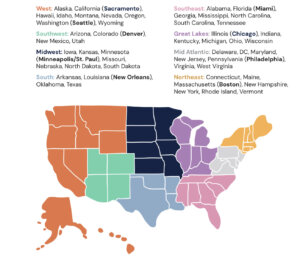
After bringing in a consulting firm to survey thousands of NCJW stakeholders, the national group formalized a new strategic plan, known as NCJW Forward, that replaced the sections with a regional staffing model. The plan established four core advocacy areas — reproductive rights, gender pay equity, family economic security, and combating antisemitism and hate — and included an increased focus on doing advocacy in Israel. Community service is mentioned once in the 31-page document, whose stated vision is to “transform advocacy into impact, leadership
into power, and urgency into long-term change.” (Monn Ginsburg, the NCJW president, said in a statement that NCJW’s vision for the future is “not advocacy instead of service, but a stronger integration of both.”)
When it presented the formal plan to its sections in July 2025, NCJW offered them a choice: Integrate with the national organization — that is, turn over assets and donor lists and agree to the new structure — or disaffiliate. It gave sections until December 2027 to decide. Two of them, located in Greater Houston and Sarasota, closed in the next six months.
Buchman acknowledged the integration model would have staffing implications for both the national organization — which expects to hire up to 15 people over the next three years — and its affiliates. Some section staff will likely be let go upon integration with the national group, she said, and others may be kept on a case-by-case basis. Each section’s board of directors, meanwhile, would go from managing its affairs to serving as an advisory committee.
For some smaller sections, integration made sense. NCJW Miami, for example, already focused on reproductive justice advocacy, and it was fully board-run, with no staff. Integration meant surrendering independence, said Jessica Silver, a board member of the section, but it also came with additional national resources.
“We really don’t feel like we were giving up very much,” Silver said. “We can still really do everything that we want to do locally, and now we just have more of a partner in National in doing that work.”
The six additional sections integrating — whose budgets range from $30,000 to $200,000, according to Buchman — are Louisville, Minnesota, Colorado, Long Beach (California), Chicago North Shore, Kendall (Florida) and Utah.
Buchman said the three integrating sections with executive directors would be phasing them out. But NCJW Louisville’s executive director, Sarah Harlan, said the national organization had been flexible during the integration process, allowing her and her office administrator — the section’s only two employees — to stay on as contract staff.
Other volunteer-led sections, however, warned that integration would undermine decades of community work, if not squander it.
NCJW Arizona’s board president, Civia Tamarkin, said that though her section did not employ staff, merging was never an option. On a technical level, she said, her organization needed autonomy and local nonprofit status to advocate on state issues, serve on government advisory committees and partner with other Arizona-based nonprofits.
But she also did not trust NCJW staff for her region — which would be based in Denver, according to the strategic plan — to oversee Ruth Place, the trauma recovery center her section founded three years ago for survivors of sexual assault.
“It’s our Field of Dreams,” Tamarkin said. “We don’t want to lose that or turn it over to any other entity.”
The organization plans to rename itself the Jewish Women’s Action Alliance Arizona.
For larger sections, an uncertain future
When NCJW presented its sections in July 2025 with the option to integrate or break off, it offered a third route to the seven chapters whose budgets exceeded $750,000 — a new kind of affiliation. Affiliating sections would be required to commit to NCJW’s core issues; follow rules about how to allocate funds; and adopt the national group’s standards around Zionism, which include supporting a two-state solution.
The seven sections replied in September 2025 with a joint letter from their lawyers, Gilberg said, rejecting the proposal and outlining their concerns. She said the national organization has still not sent a letter in response. Buchman says the organization did respond, asking to meet in person rather than conduct a negotiation in writing.
Seven months later, without any changes to the affiliation proposal, Essex announced it was rebranding as Tovah, a decision that went into effect Monday.
Rakitta Mintz, the Essex president, felt the same way about her chapter’s signature programs as Tamarkin did about Ruth Place. The section’s Center For Women, which provides free career coaching to women re-entering the workforce, has helped 40 people get new jobs just this year. An annual fair where low-income families “shop” for free school supplies was another Essex hallmark she didn’t want threatened.
Neither of those efforts fits explicitly into the national organization’s four core advocacy issues. So while Rakitta Mintz was weighing the chapter’s options before cutting ties, she said she never saw the affiliation option as a real possibility.
“We did not want to lose our autonomy,” she said, “and we didn’t want to lose the ability to do our local hands-on volunteer work.”
The other five major sections — New York, Cleveland, Pittsburgh, Michigan and St. Louis — entered mediation with the national organization, which pertained to possible changes to the organization’s bylaws. (A sixth section, Dallas, was offered affiliation later, and did not participate in the mediation.)
Buchman said those talks went well.
“We also feel strongly that we will come back to the table to make more progress,” she added. “We haven’t yet figured out when that will be, but we had not talked for months, and we have now, and that’s a sign of true progress.”
LA’s banishment stunned many in the network, including leaders of the other sections that had joined it in mediation. But it did not blindside Gilberg, who had been preparing for the possibility LA would be going independent by securing the section’s own IRS tax determination letter.
According to Buchman, the national vice president, the LA section’s work simply did not align with the NCJW vision.
“To us, the LA section does a beautiful job focusing solely on financial independence and economic security, and that’s never been what our organization has chosen to do,” Buchman said. “Certainly, I would be remiss if I didn’t tell you that economic justice is part of our work to improve the lives of women, children, and families, but our priority issues are broader than that.”
Gilberg pointed to numerous places in NCJW Forward that seemed to highlight economic justice work, including on its page about family economic security, though its policy ambitions do not include cash assistance, which features in several ongoing NCJW LA programs.
“In their current policy priorities, there’s paid family leave, which is specifically an economic justice issue,” Gilberg said. “That’s one of their big four things.”
Buchman said 10 more sections were likely to integrate and estimated eight to 10 others were “on the fence.” She did not say which chapters fell in each category.
Those numbers, combined with the five departures and five in mediation, left about a dozen sections unaccounted for. Buchman, who joined NCJW two years ago with more than 30 years of nonprofit experience, said she didn’t know where those chapters stood.
But she didn’t regard disaffiliation or closure as a subtraction for the national group, and she wished the breakaway sections well.
“It frees us up to meet our goals, which is to expand,” Buchman said. “There are cities that have advocates but no sections. Or legislative opportunities but no advocacy. Where we have donors but no fundraising.” She added that it was possible she’d send fundraisers into cities where disaffiliated sections continued to operate.
To some NCJW veterans, though, the breakup felt like a slow-motion collapse for an organization that once spoke for hundreds of thousands of Jewish women.
“A lot of people have a very nostalgic feeling for NCJW,” said Tamarkin, the Arizona section head. “They may be third-generation, fourth-generation and are very sad to see the federation broken up.
“On the other hand,” she continued, “times change, organizations change, and in such a competitive economic climate for nonprofits, every organization has to do what they are advised is the best route forward.”
Correction: A previous version of this article incorrectly stated that Philadelphia does not have an NCJW chapter. That sentence has been changed.
Did you know that only 2% of Forward readers donate to support our nonprofit newsroom? That 2% make it possible for millions to read the Forward without a paywall or subscription — removing any barriers to the full and fair Jewish story.
But while the Forward is free to read, it isn’t free to produce. Big stories — like deep dives into the antisemitism data, political scoops or reporting trips to college campuses — take months of research and fact-checking. All while we keep you informed of what you need to know each day.
— Rachel Fishman Feddersen, Forward Publisher & CEO
Support our mission to tell the Jewish story fully and fairly.