The Iran war ended terribly for the US, and even worse for Israel
The Iranian regime is the only party leaving this conflict in a strong position
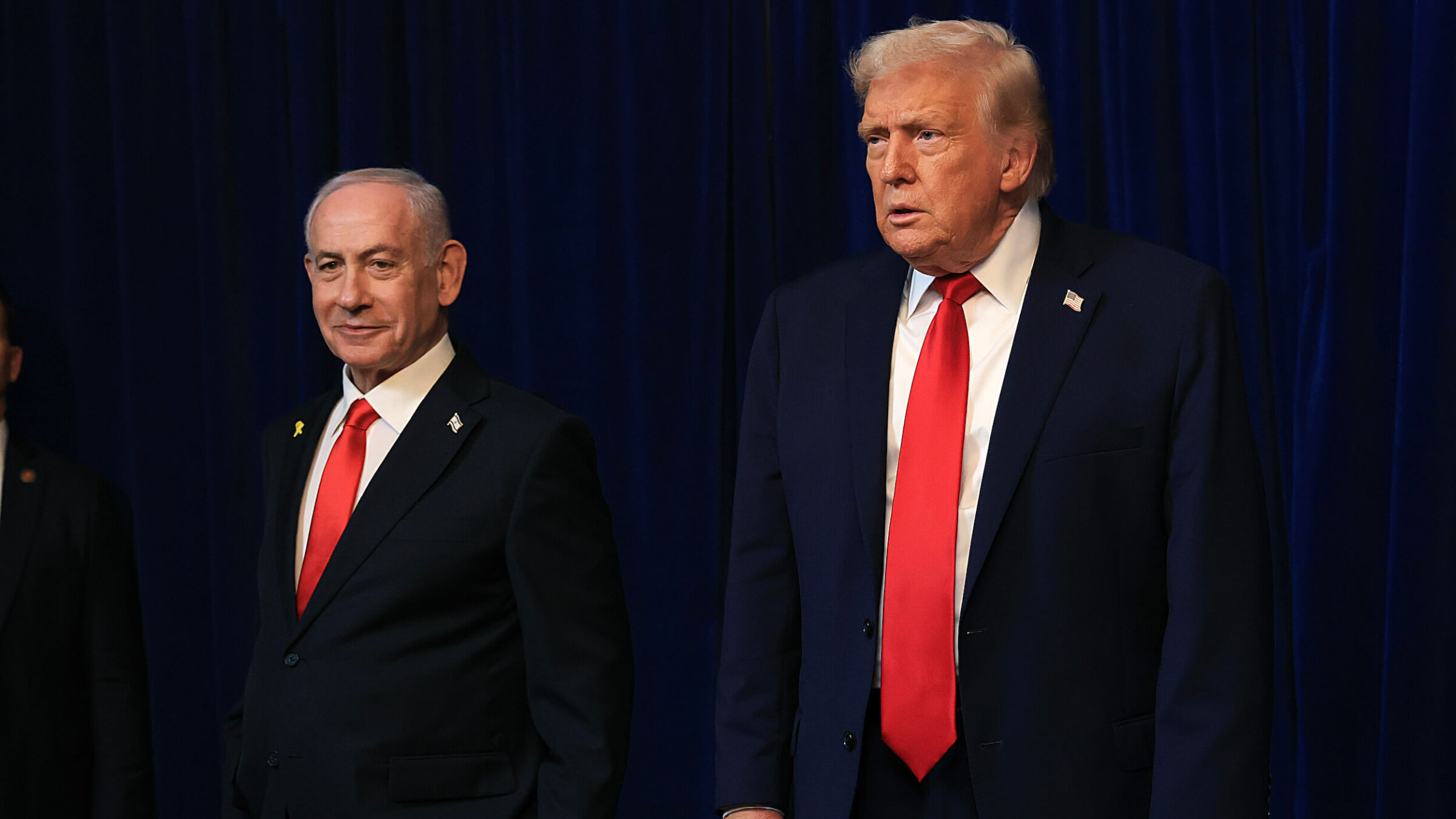
President Donald Trump and Israeli Prime Minister Benjamin Netanyahu at Mar-a-Lago on Dec. 29, 2025. Photo by Joe Raedle/Getty Images

Columnist Dan Perry June 15, 2026
A war that began with immense ambition has ended with profound setbacks for both the United States and Israel.
With an emerging U.S.-Iran peace agreement, what initially appeared to be a historic demonstration of military dominance evolved into a vivid illustration of the limits of both Israeli and American power. The conflict also exposed profound failures in strategic competence within that alliance. Washington and Jerusalem planned effectively for the initial decapitation strikes, but were unprepared for the economic and geopolitical consequences that followed.
The result is a war that may ultimately strengthen the Iranian regime politically, despite the damage it suffered militarily; has weakened international perceptions of American military might; and has diminished both Israel’s own strategic circumstances and its most important alliance.
The opening phase of the war appeared spectacularly successful. Israeli intelligence and airpower decapitated large portions of Iran’s military and security leadership with astonishing speed, including by assassinating Supreme Leader Ali Khamenei. Key military infrastructure suffered major damage, and for a brief moment, it seemed plausible that the Iranian regime might genuinely face collapse or surrender on terms dictated by Washington and Jerusalem.
That perception proved short-lived.
Iran shifted the battlefield away from conventional military confrontation and toward economic coercion. Its closure of the Strait of Hormuz exposed the extraordinary vulnerability of the global economy to relatively inexpensive forms of pressure. Energy markets panicked almost immediately. Governments across Europe, Asia, and the Gulf pushed urgently for de-escalation.
The central strategic reality became impossible to ignore: the U.S.could not tolerate sustained economic disruption, and the Iranian regime has a strong stomach for suffering. The overwhelming military superiority of the U.S. and Israel effectively ceased to matter.
That asymmetry changed the balance of the conflict. And the resulting agreement appears to preserve much of Iran’s architecture of mischief, which the regime’s many critics had hoped to see dismantled.
Iran’s ballistic missile capabilities have been harmed but can be rebuilt; long-term reductions to that firepower are reportedly not on the table in a planned 60-day negotiation. The regime’s regional proxy network — including Hezbollah, the Houthis, Iraqi militias, Hamas, and Islamic Jihad — survives, even though Hezbollah and Hamas have been battered.
And as Israel is not a party to the ceasefire, it cannot advocate for more stringent terms on this front.
The regime itself remains firmly in power and may receive enormous sanctions relief and renewed economic access. Demands for democratic reforms seem to have been set aside, as has any kind of punishment for the regime’s massacre of thousands — and by some reports tens of thousands — of domestic protestors in January.
The latter aspect is especially galling given that President Donald Trump was driven to intervene because of the January massacre, after he promised Iranians that “help is on its way.” Upon launching the war, he declared that it would enable Iranians to “take your country back.”
Ironically, Trump in his first term pulled out of former President Barack Obama’s 2015 nuclear deal over objections that it provided funds for the regime while allowing it to run riot. Now, he is settling for an effective reconstitution of that deal — except one with substantially less American leverage.
The implications extend far beyond Iran itself. The war demonstrated that Tehran can generate immediate global economic panic through relatively cheap tools and can leverage that panic into diplomatic concessions. Before the war, fears about Iran’s ability to blackmail the world economy remained somewhat theoretical. After the war, those fears became a demonstrated geopolitical reality.
There is little evidence that either the American or Israeli governments understood in advance the degree to which the global economy had become vulnerable to this form of coercion. This, even though the blocking of the Strait of Hormuz was completely predictable and indeed expected by every strategist I’ve spoken to for decades.
This outcome may be most devastating for the Iranian people themselves. Many Iranians who despise the regime interpreted the opening phase of the conflict as evidence that the dictatorship might finally face genuine collapse. Instead, the regime not only survived but also regained leverage. The machinery of repression remains intact.
But this result is damaging for every party to this war aside from the Iranian regime.
The war has transformed perceptions of American power. For decades, the U.S. has anchored a global system built on the assumption that Washington could manage regional crises with some strategy in mind. That strategy wasn’t always brilliant, but it was rarely clueless. With the Hormuz confrontation, the world watched the U.S. confront a regional adversary with vastly inferior capabilities and fail to control events.
For Israel, the alliance Prime Minister Benjamin Netanyahu has spent years cultivating with the American right and with Trump personally has become dangerously fragile. As pressure mounted to stabilize energy markets and prevent wider regional escalation, Trump increasingly presented himself not as a partner coordinating with Israel but as a superior authority managing Israeli actions. He repeatedly framed Israeli military action as dependent on his approval. He cursed Netanyahu in public. He presented Israel as a vassal doing his bidding — something no U.S. president has previously done.
This will destabilize Israel, where much of the governing right previously viewed Trump as a uniquely reliable ally who would support Israeli military objectives without hesitation or conditions.
Previous American presidents pressured Israel privately while still preserving the outward presentation of a relationship between sovereign allies. Trump discarded much of that convention. The new perception weakens Israel’s deterrence dramatically. Plus, with bipartisan support for Israel in Washington even more completely collapsed than after the deleterious war in Gaza, and relations with much of Europe — Israel’s top trading partner — similarly deteriorated, Israel finds itself at a new peak of dangerous international isolation.
This strategic shipwreck bears no resemblance to the sweeping regional transformation that supporters of the war — myself included — initially envisioned. I assumed, partly because of the first days’ successes, that Trump and Netanyahu had a plan. This is not a mistake serious people are likely to make again.

Hello, fellow Forward reader! I’m Joel Brown, a Forward reader and supporter for more than 15 years, and currently the chair of the board of directors.
I’m an avid Forward reader because it ticks so many of my essential boxes: excellent journalism, Jewish focus and diverse viewpoints. In today’s political climate, what I most appreciate is the Forward’s independence — made possible by the generosity of its membership.
The Forward is committed to bringing you unbiased, nuanced Jewish news. From my position as board chair, I see an exciting future as we expand our position as the definitive independent voice of contemporary American Judaism.
That’s why I’m paying it Forward, by matching $36,000 of reader gifts. It’s an investment in the Forward’s newsroom, to continue telling the American Jewish story with truth and independence.
— Joel Brown, Forward board chair
Support our mission to tell the Jewish story fully and fairly.