A ‘deficit of courage’ killed the free press in Germany. Will American journalists find the courage to thwart Trump?
In the saga of ’60 Minutes.’ troubling parallels with media submission to Adolf Hitler’s authoritarianism
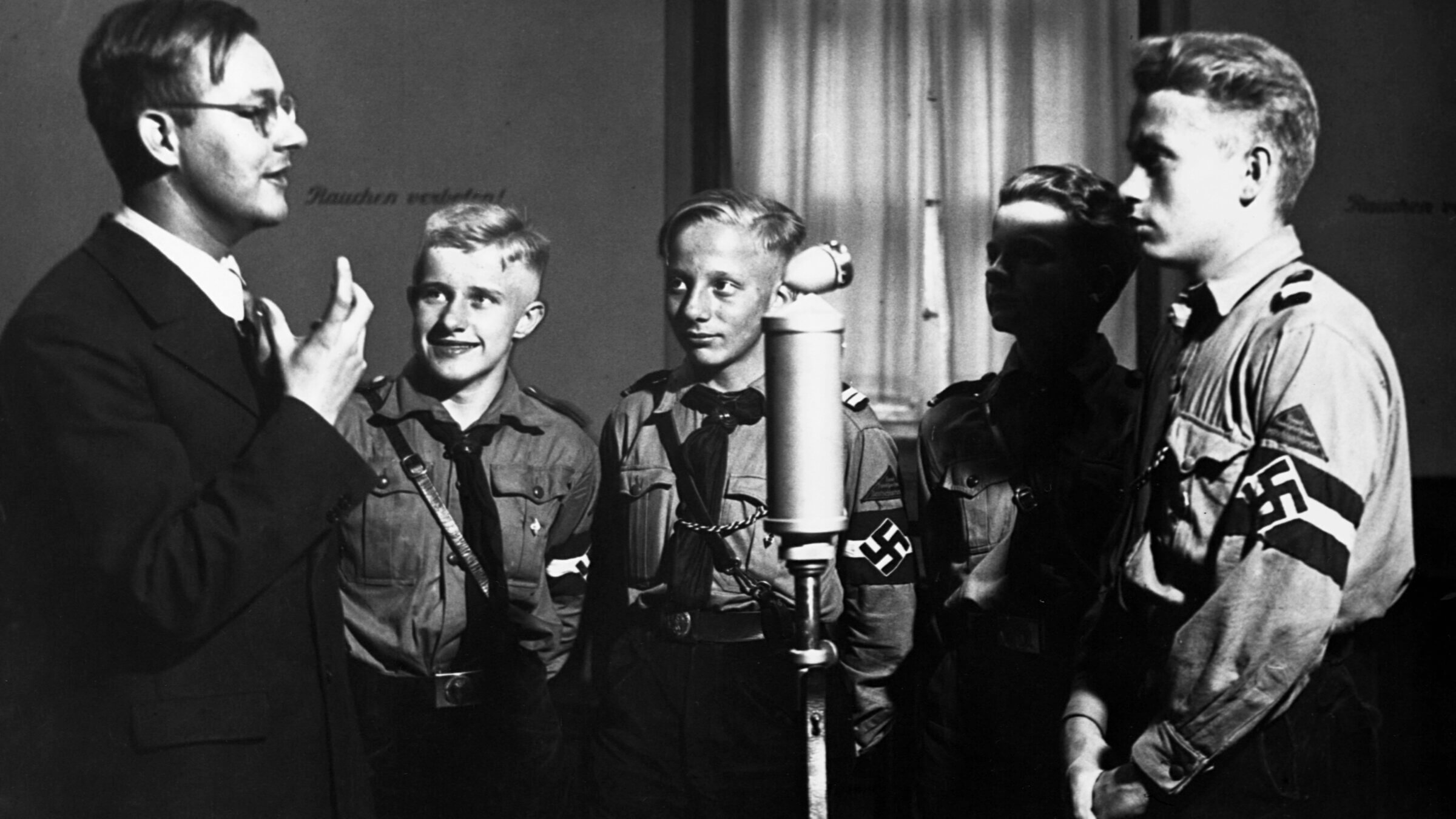
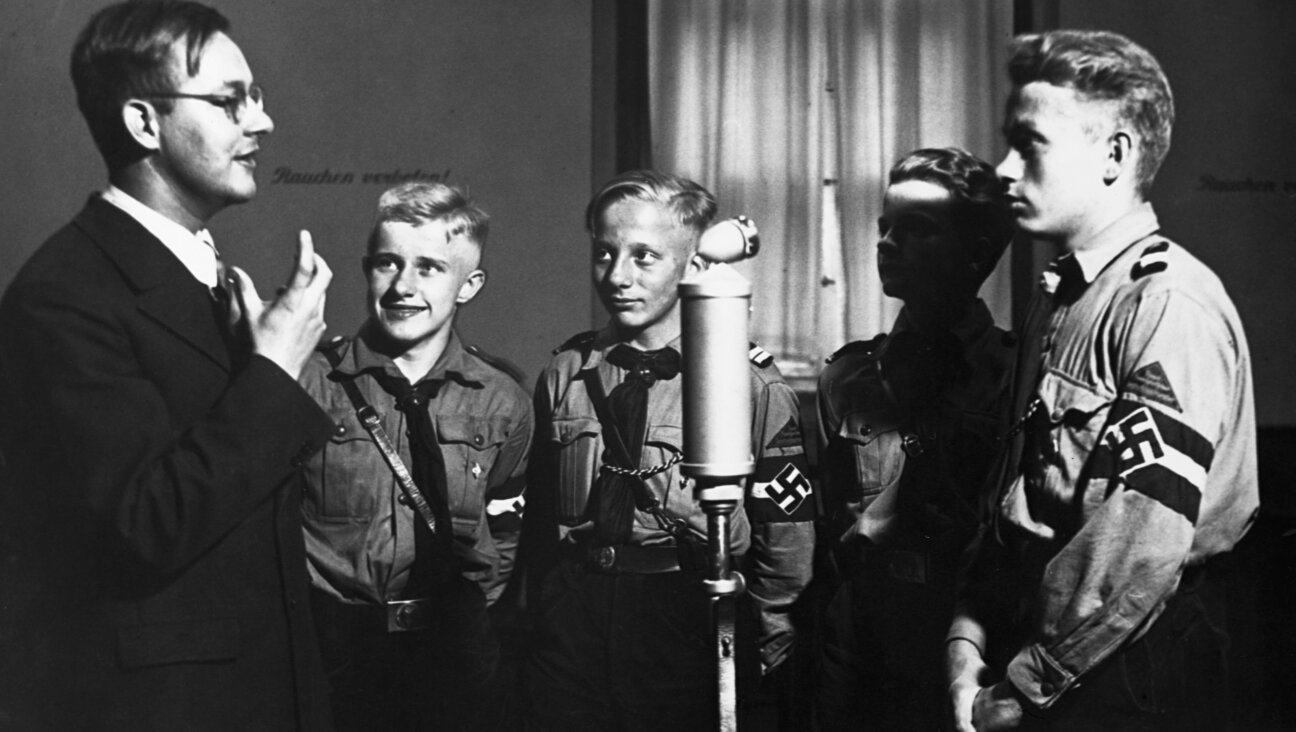
Hitler Youth make a broadcast to German Youth. Photo by CORBIS/Corbis via Getty Images

Terrence Petty June 12, 2026
Paul Reusch was managing director of a major German industrial conglomerate known as GHH, whose holdings included Bavaria’s largest newspaper, the Münchner Neueste Nachrichten.
After two meetings with Adolf Hitler early in 1932, Reusch signed an agreement that the Munich broadsheet would refrain from “all unwarranted and personal attacks against Hitler and individual National Socialist leaders.”
One year later, Hitler lackeys were calling the shots in the newsroom, Jewish journalists had been forced out, and the newspaper was spewing hate propaganda.
The Third Reich brutally smashed free speech. Nearly a century later, it’s America’s Fourth Estate that is getting battered — by Donald Trump’s drive to muzzle his critics by exploiting the greed and hunger for power of corporate media executives.
Scott Pelley’s firing and the turmoil at CBS News are the freshest manifestations of this threat. But it’s been going on since the start of Trump’s second term — witness the craven settlements by ABC News and CBS News of frivolous lawsuits brought by Trump last year, his favored treatment of MAGA-aligned outlets, and his dehumanization of actual journalists.
“The news executives are acting as though, (if) we just placate Donald Trump we’ll get through this,” veteran TV journalist Jim Acosta said the other day in an interview on MS Now. “We have a deficit of courage and honor in this country right now and we need to get back to it.”
It was a deficit of courage that killed the free press in Weimar Germany. And like Paul Reusch, German media baron Alfred Hugenberg is a case study in corporate submission to authoritarianism.
Hugenberg was a steel executive, ultra-nationalist politician, and owner of some 50 provincial newspapers, of the Telegraph-Union wire service, as well as Ufa, the Third Reich’s largest producer of movies and newsreels. The Great Depression hollowed out Germany’s newspaper market, allowing Hugenberg to use his considerable capital to buy distressed papers and blanket the market with articles calling for an end to democracy.
Hitler’s Nazis and Hugenberg’s German National Peoples’ Party joined forces in 1931 in the Harzburg Front, an attempt to topple Chancellor Heinrich Brüning. Although the alliance ultimately unraveled, it brought huge financial contributions to the Nazis from German industrialists.
After Hitler came to power he struck rapidly to muzzle any dissent, either shutting down newspapers or taking them over to serve as cogs in the Nazis’ propaganda apparatus.
As America nears its 250th birthday, media turmoil is playing into the hands of Donald Trump’s authoritarian ambitions.
Trump’s obsession with silencing truth-writing journalists kicked into overdrive early in his second term, with his banning of The Associated Press, my former employer, from the Oval Office and from Air Force One, the Trump administration dictating who gets to be in the White House press pool, and giving preferential treatment to journalists who ask softball questions or can be relied on to make fawning statements about Trump’s grandiose ideas, as Trump’s personal insults toward journalists — mainly women — pile up in number and in viciousness.
What’s been happening at CBS News and Scott Pelley’s firing are warning signs of moves by Trump to take control of news media and suppress criticism of him. The drama started last summer with CBS’ parent company — Paramount — agreeing to pay Trump $16 million to settle a toothless lawsuit over the editing of a 60 Minutes interview with Kamala Harris. And then came approval by the FCC — led by Trump loyalist Brendan Carr — of Paramount’s merger with Skydance Media. No quid pro quo here!
David Ellison, the CEO of Paramount Skydance, hired Bari Weiss to lead CBS News. After firing a half-dozen top people at 60 Minutes, Weiss was accused by Pelley of “murdering” the vaunted TV news program and doing Trump’s bidding.
“My impression at the time was that she was putting a thumb on the scale on behalf of the administration. Constantly looking out for the views of the president,” Pelley said in an interview with The New York Times published this past Sunday.
Weiss and CBS News have denied Pelley’s allegations.
There’s more turmoil on the horizon — and more reason to fear the Trump administration will seek to deepen its influence on news operations.
This past February, Paramount Skydance and Warner Bros. Discovery signed an agreement for Paramount to acquire WBD for $110.9 billion, and WBD shareholders approved the merger. Whether the deal goes through is up to regulators. The Trump administration is eager to see Ellison, the son of Oracle CEO and Trump buddy Larry Ellison, calling the shots for CNN. Defense Secretary Pete Hegseth said a few months ago: “The sooner David Ellison takes over that network, the better.”
Ellison has said “editorial independence will absolutely be maintained” at CNN. But the purges at 60 Minutes are hardly reassuring. Jim Acosta maintains that the media conglomerate resulting from the merger of Paramount Skydance and Warner Bros. Discovery “will essentially act like a state media organization in support of Donald Trump.”
There are calls among journalists to show more support for each other, and to stand up to Trump when he personally attacks them. The optics at this year’s White House Correspondents Dinner weren’t great, with journalists giving a warm welcome to a man who regularly calls them “stupid,” “fake news,” “horrible,” “terrible,” among other insults. I wonder how they would have responded had a gunman not interrupted the proceedings and Trump gave a scathing speech about the assembled members of the Fourth Estate.
Acosta and other journalists are urging their colleagues — as well as news executives — to show more backbone.
“They (the Trump administration) are trying to put together a state-dominated media system in this country. And it has to be stopped,” Acosta said.
“There are a lot of journalists who can do something about it, and a lot of corporate executives who can do something about it. “
Acosta is not wrong.
Journalists working in the Third Reich were a mixed bag of Nazi fanatics, sycophants, opportunists, and career professionals who may have felt queasy about collaborating with the Nazis but kept quiet about it.
Resistance could have fatal consequences. Fritz Gerlich, editor of the Munich-based newspaper Der gerade Weg (The Straight Path), was murdered at Dachau. Erwein von Aretin, political editor at the Münchner Neueste Nachrichten, was also hauled off to Dachau, but survived. Editors and reporters at the Münchener Post, a pro-democracy newspaper owned by the Social Democrats, were rounded up, jailed, and after their release ostracized and forced to live in penury, a story I tell in my book Enemy of The People: The Munich Post and The Journalists Who Opposed Hitler.
German journalists never put up any serious resistance to Hitler’s suppression of the free press at least partly because most of the populace had turned against democracy.
American journalists are in a different situation, one far less perilous than that of their German colleagues. They might lose access to administration officials by standing up to Trump, perhaps forfeit their seat at press conferences to MAGA media, be banished from Air Force One, suffer juvenile insults from Trump, or anger their corporate bosses.
But today’s journalists need to ask themselves this: Isn’t standing up for democracy worth more than a seat in the briefing room?
While interviewing Trump on Meet The Press this past Sunday, Kristen Welker showed how it should be done, persisting in holding Trump to account. When Welker challenged Trump’s claims of election rigging by Democrats, he exploded.
“We’re like a Third World country,” he yelled at Welker. “Your elections are crooked. And you’re crooked, and Meet the Press is crooked, and so is ABC and CBS and CNN.” Red-faced, Trump stood up and stormed out

Hello, fellow Forward reader! I’m Joel Brown, a Forward reader and supporter for more than 15 years, and currently the chair of the board of directors.
I’m an avid Forward reader because it ticks so many of my essential boxes: excellent journalism, Jewish focus and diverse viewpoints. In today’s political climate, what I most appreciate is the Forward’s independence — made possible by the generosity of its membership.
The Forward is committed to bringing you unbiased, nuanced Jewish news. From my position as board chair, I see an exciting future as we expand our position as the definitive independent voice of contemporary American Judaism.
That’s why I’m paying it Forward, by matching $36,000 of reader gifts. It’s an investment in the Forward’s newsroom, to continue telling the American Jewish story with truth and independence.
— Joel Brown, Forward board chair
Support our mission to tell the Jewish story fully and fairly.