‘I’m fragmented, and a surviving remnant’: The story of Westerbork prisoner 8331
Jack Boas was devastated by the Holocaust, even if he can’t remember any of it
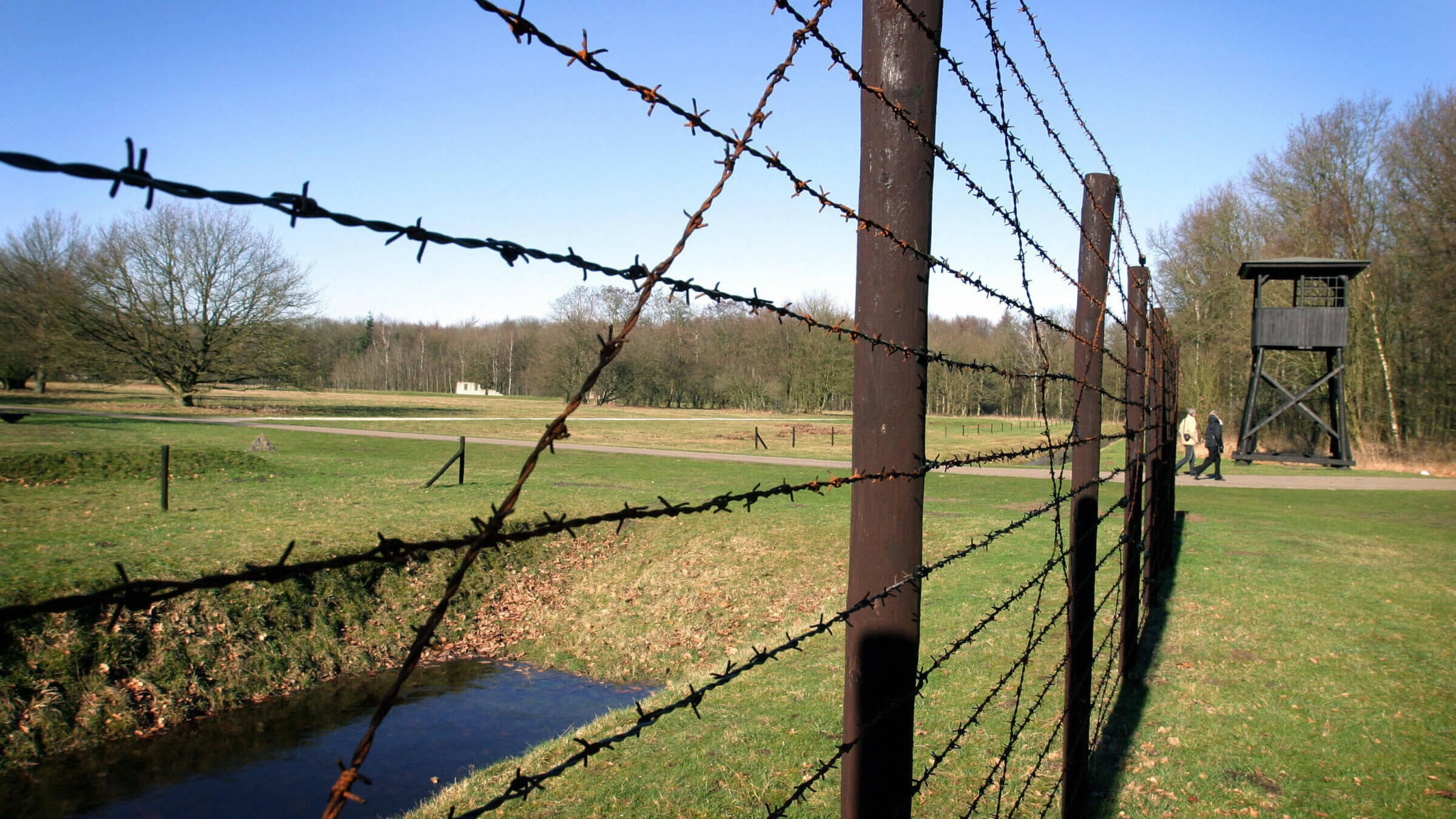
The Dutch World War II Nazi transit camp in Westerbork. Some 102,000 Dutch Jews transited at Westerbork before being deported to the Auschwitz death camp in Poland. Photo by Getty Images
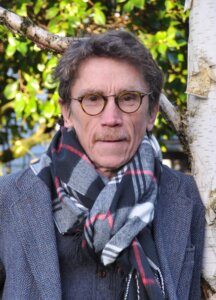
By Terrence Petty April 20, 2026
As prisoner 8331 at the Nazis’ Westerbork transit camp in Holland, Jacob Boas must have witnessed the sorrow and fear of hundreds if not thousands of fellow inmates before they were loaded onto cattle cars and sent to die at Auschwitz.
But he has no memory of it. Jacob Boas, a Dutch Jew, was born in the camp on Nov. 1, 1943, and was captive there until he, his parents and older brother along with 876 other prisoners were liberated by Canadian troops 18 months after Jacob was born.
There’s nothing that Jacob, or Jack, as he calls himself now, remembers of those 18 months.
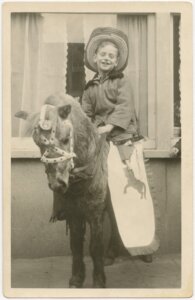
“My earliest conscious memory is in postwar Amsterdam. I must’ve been around 2 or so because I was stuck in a high chair, the coal stove started smoking, and my mother came rushing in from the kitchen for the rescue,” Jack told me.
Each week during the war, a train of cattle cars delivered Westerbork prisoners, including Jack’s grandparents and other relatives, to die at Auschwitz or Sobibor. A total of 102,000 Dutch Jews were killed in the Holocaust, and many of them came through Westerbork, including Anne Frank.
Jack, his brother and their parents beat the odds through sheer luck: a camp commandant at Westerbork who had a policy of not immediately deporting mothers in late pregnancy, and a father with tailoring skills.
“The fact of being born in the transit camp has struck deep, impenetrable roots within me, coupled with a seemingly unslakable need to know,” Jack wrote in a book published two years ago, Until Further Notice … Theresienstadt On My Mind.
As a historian and author of six books, four of which deal with the Holocaust, Jack has spent his adult life trying to satisfy that need. He has also taught university courses on the Holocaust and writes magazine pieces.
I met Jack at a second-hand bookstore in Portland, Ore., where we both live. He works there every Monday as a volunteer. Jack is a self-effacing man, the kind who listens more than he talks. He’s not apt to come right out and tell you that he is a victim of the Holocaust. Jack’s story has come to me in segments, as we discovered we had a common obsession — German history. And the more we talk, the more intriguing his story becomes.
A false sense of security
Jack and I were having coffee at a Portland cafe when he showed me a photograph of a 1944 registration card from Camp Westerbork. It bears the names of his family: parents Barend and Anna, Jacob and his brother Marcus.
“Wife’s pregnancy exemption canceled because the child was born on Nov. 1, 1943,” states the typewritten card.
The camp commandant, Jack explained, had a policy regarding pregnant women that might seem merciful, but was not. Women in their third trimester were exempted from deportation until six weeks after giving birth, along with their husbands and children. This was part of a larger camp charade. Living conditions at Westerbork were not as bad as other camps. There were soccer matches, chess tournaments and concerts, and inmates wore their civilian clothes instead of concentration camp pajamas, so that prisoners would have a false sense of security before they were sent east.
The trimester “exemption” was one of two cards that had been protecting the Boas family. The other was Barend’s skills as a tailor. After their arrival at Westerbork, Barend was put to work in the camp’s tailor workshop, and later at the Nazis’ headquarters in The Hague.
In 1944, the family learned they were going to be sent to Theresienstadt concentration camp in occupied Czechoslovakia, which — although the Nazis presented it as a model camp — served as a feeder camp to Auschwitz. But they never got to Theresienstadt. Canadian troops liberated Camp Westerbork on April 12, 1945.
The family began putting their lives back together in Amsterdam. Barend started a tailor shop. Anna was a seamstress. They moved to Montreal in 1957 because they had no living relatives left in the Netherlands and because of two events portending war: the Suez Canal crisis and the Soviet invasion of Hungary.
Jack got a BA in history and political science at McGill University in Montreal, married a McGill student and followed her to the University of California, Riverside, where he earned his PhD in European history. His dissertation was about German Jews living under Hitler from 1933–39. Research for his dissertation led to his first book: Boulevard des Misères: The Story of Transit Camp Westerbork.
Jack’s parents didn’t talk much about Westerbork. This was not unusual for Holocaust survivors. They just wanted to get on with their lives. But Jack loved tracing the lives of people in the past, including his relatives. It became the mission that shaped his life.
Survivor syndrome
As I was having coffee with Jack, he talked about his eight-year struggle to get financial compensation as a Holocaust survivor from Dutch authorities. Jack filled out the application in February 1979, and later sent a separate document pertaining to his physical and mental health.
Compensation requests were processed by Dutch authorities under a victims’ benefit act known by its Dutch initials, WUV. A WUV representative went to Jack’s San Francisco apartment to question him, which was followed by interviews by a psychiatrist hired by WUV administrators.
Reports written from these conversations said Jack suffered from “major identity issues,” struggled with depression, implied he was lazy and irresponsible, and noted that his marriage had failed. But the WUV psychiatrist said he was unable to “relate his (Jack’s) symptoms or his cognitive or identity issues directly with his family experience or with his wartime experience.” One report made the ludicrous assertion that approving Jack’s application for compensation would place “a heavy burden on the Dutch budget.”
So Jack’s application was rejected.
The WUV-hired psychiatrist was not a specialist in the problems of Holocaust survivors. Jack hired one who was, who concluded that Jack showed symptoms of “survivor syndrome,” which he listed as “repeated feelings of persecution, long-term depression, problems with authority, intense anxiety, displaced rage and aggression and obsession with the Holocaust.” Another psychiatrist engaged by Jack said Jack was suffering from “significant repercussions the camp experience had on him and his family.”
Jack’s application for compensation was finally approved in 1984.
It is important to note here that many thousands of Nazi survivors had to wait decades for compensation, partly due to racist or antisemitic attitudes as well as Cold War politics — including forced laborers, German military deserters, Sinti and Roma, and relatives of people murdered because they had disabilities. Even many Jewish survivors encountered long delays, especially those who fled early, lived in hiding, or lacked the documents postwar officials insisted on.
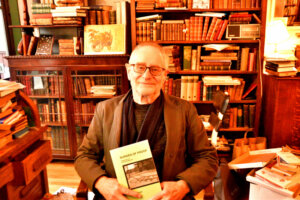
I went to a talk Jack gave on his latest book, Burden of Proof: Fragments of a Surviving Remnant. “Burden of proof” refers to the ordeal he went through for compensation. The second part of the title refers to himself. “I’m fragmented, and a surviving remnant,” he told his listeners.
Jack’s audience was mesmerized as he told of his lifelong pursuit to understand his identity in the context of the Holocaust — his research trips to Holland, an invitation by the German government to attend the commemoration of a victims’ memorial, his adventures as an extra in a Dutch docudrama about Bergen-Belsen. He is neither maudlin nor angry when he tells these stories. And he frequently jokes about his experiences.
So this is who prisoner 8331 has become: a surviving remnant who is piecing together a life from fragments, and who reminds us that even fractured memory can be an act of defiance.
Did you know that only 2% of Forward readers donate to support our nonprofit newsroom? That 2% make it possible for millions to read the Forward without a paywall or subscription — removing any barriers to the full and fair Jewish story.
But while the Forward is free to read, it isn’t free to produce. Big stories — like deep dives into the antisemitism data, political scoops or reporting trips to college campuses — take months of research and fact-checking. All while we keep you informed of what you need to know each day.
— Rachel Fishman Feddersen, Forward Publisher & CEO
Support our mission to tell the Jewish story fully and fairly.