‘I didn’t want to let go of her; I loved her to death’
In Massachusetts, mourners gathered to say a final farewell to trauma therapist Lisa Fliegel
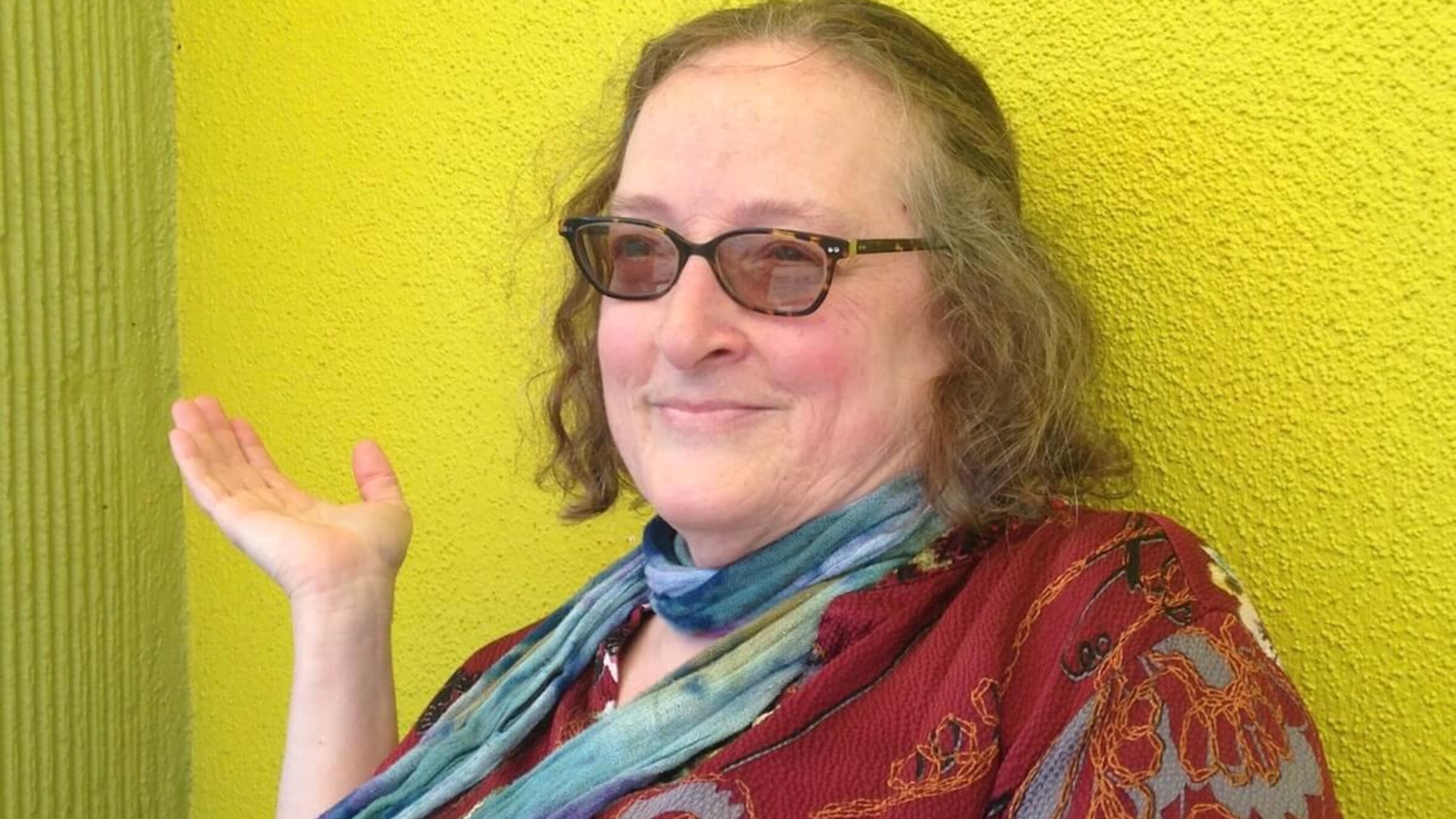
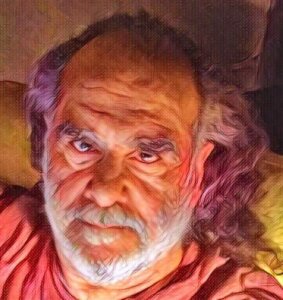
Lisa Fliegel’s work as a trauma therapist includes stints counseling the victims of the Boston Marathon bombing, combatants in Northern Ireland and most recently, the Jews massacred in Israel on Oct. 7. Courtesy of Hank Rosenfeld
By Jon Kalish May 29, 2026
They buried Lisa Fliegel this week. Vital organs were not included because the 65 year-old trauma therapist had decided that her final act of tikun olam was to donate them and keep several people alive. For Fliegel, a dual citizen of the U.S. and Israel, tikun olam was a lifelong mission. And so, now in Florida a man breathes with Fliegel’s lungs. Fliegel’s liver is keeping a woman in California alive. The two kidneys went to two different states. Fliegel even donated her tissue, an act that has the potential of healing more than 75 others.
That is all the eulogy you need for Lisa Fliegel but two rabbis, her childhood friends, stood in the rain at a Massachusetts cemetery and choked back tears. Dozens of mourners walked in and sat beneath a canopy just before the rain started falling.
Fliegel’s work as a trauma therapist included stints counseling the victims of the Boston Marathon bombing, combatants in Northern Ireland and most recently, the survivors of the massacre in Israel on Oct. 7.
“How could one person be such a blessing to so many people in so many places at so many different times?” Rabbi Elana Kanter of the New Shul in Scottsdale, AZ asked the mourners.
Kanter and Fliegel attended the Solomon Schechter day school in Newton, MA together. Rabbi Kanter recalled how when Fliegel was in third grade, she mediated a dispute between a couple of her classmates by getting them to sign a treaty pledging not to fight any more. Laughter broke the sobs of a drizzly afternoon.
Kanter’s brother Raphael, rabbi emeritus at Tifereth Israel Congregation in New Bedford, MA, said it was possible that Fliegel was one of the lamed vavniks, the 36 righteous individuals that, according to the Talmud, exist in every generation and sustain the world. Do we, then, have a new tzadik in our midst? It was, Kanter said, the first time in all his years as a rabbi that he ever suggested someone was worthy of the designation.
A deep connection to Israel
Fliegel bought a plane ticket to Israel three hours after news of the Hamas attack broke. She went at the urging of old friends in the Zionist youth movement Hashomer Hatzair. Fliegel arrived on Oct. 22 in Eilat where she was embedded with evacuees from the kibbutzim and small towns in the Gaza Envelope. She teamed up with two Israeli social workers in a hotel occupied by residents of the Nir Oz kibbutz.
Her clinical supervisor during the months she spent in Eilat was David Senesh, an expat Israeli psychotherapist based in Berlin. He happens to be the nephew of Hannah Senesh, the Jewish heroine who was captured, tortured and executed trying to rescue Jews in Nazi-occupied Hungary. Senesh called Fliegel’s work in the aftermath of Oct. 7 “committed and courageous.”

“Her ability to extend herself as a person and therapist to the full range of human experience, beyond formal political and cultural divides, taught me how to maintain helpful relations amidst havoc and confusion,” he wrote.
Fliegel had a long and deep connection to Israel. She left her home in Massachusetts at the age of 17 to make aliyah. After serving in the Israeli Defense Force, she spent 20 years living at Kibbutz Ketura in southern Israel.
Lisa Fliegel was a Zionist and a defender of Palestinian rights. Her rachmonis for the Palestinians seems to have stemmed from what she once described as her own “boatload of trauma.” Fliegel lost her mother when she was just 12 and her older sister Dina, a social worker and union activist, succumbed to leukemia. Social work was the family business. Both of Fliegel’s parents were social workers. Her mother had a major impact on welfare reform in Massachusetts. Her father helped people uprooted by urban renewal projects. Their labors now ceased, three social workers and a trauma therapist rest together in the B’nai Abraham Cemetery in Beverly, MA.
The mourners were not all Jews. Two of Fliegel’s former colleagues from the Louis D. Brown Peace Institute were there. The center serves families impacted by murder and other traumas. Demaris Ortiz worked with Fliegel for four years, sometimes spending a year or two with her on a single case, advocating for the survivors of homicide victims.
“Lisa uplifted us. She taught me so much,” Ortiz told me over the phone before breaking into tears. “She became my family. She didn’t judge people. She adopted people.”
‘Things will be better’
Hank Rosenfeld did not make it to the funeral. The Santa Monica-based author met Fliegel 30-plus years ago in the Catskills. They’ve been on again and off again over the years but Rosenfeld said she was his bashert. He had been helping Fliegel with her memoir Bulletproof Therapist for several years. Fliegel flew to California to work with him on a first-person account of her run-ins with the Hilltop Youth, the group of extremist West Bank settlers who have carried out killings, arson, vandalism and theft of livestock in Palestinian villages.
Fliegel arrived in San Diego last week to stay with Rosenfeld at his mother’s house there. They spent about four hours together before she collapsed in the bedroom. At the hospital tests revealed she had suffered a brain hemorrhage. A neurologist, Rosenfeld told me, was in tears. Fliegel was kept alive until recipients for her organs could be found.
On Sunday, Lisa Fliegel was wheeled past medical personnel holding candles on her way to an operating room where organs would be removed. The walk of honor, as its known, had a soundtrack: Hank Rosenfeld played a recording of David Broza accompanied by a children’s choir singing “Things Will Be Better.” Then he recited a brief Leonard Cohen poem that had fallen out of Fliegel’s notebook.
“I held her hand. I didn’t want to let go of her,” said Rosenfeld. “I loved her to death.”
Did you know that only 2% of Forward readers donate to support our nonprofit newsroom? That 2% make it possible for millions to read the Forward without a paywall or subscription — removing any barriers to the full and fair Jewish story.
But while the Forward is free to read, it isn’t free to produce. Big stories — like deep dives into the antisemitism data, political scoops or reporting trips to college campuses — take months of research and fact-checking. All while we keep you informed of what you need to know each day.
— Rachel Fishman Feddersen, Forward Publisher & CEO
Support our mission to tell the Jewish story fully and fairly.