Whether it’s viral dot cakes or Love Shack Fancy skirts, Chloe Hechter wants you to know that “Jewish-American Princesses did it first”
Hechter, who currently boasts 186,000 Tiktok followers, makes skits attempting to reclaim an outdated stereotype

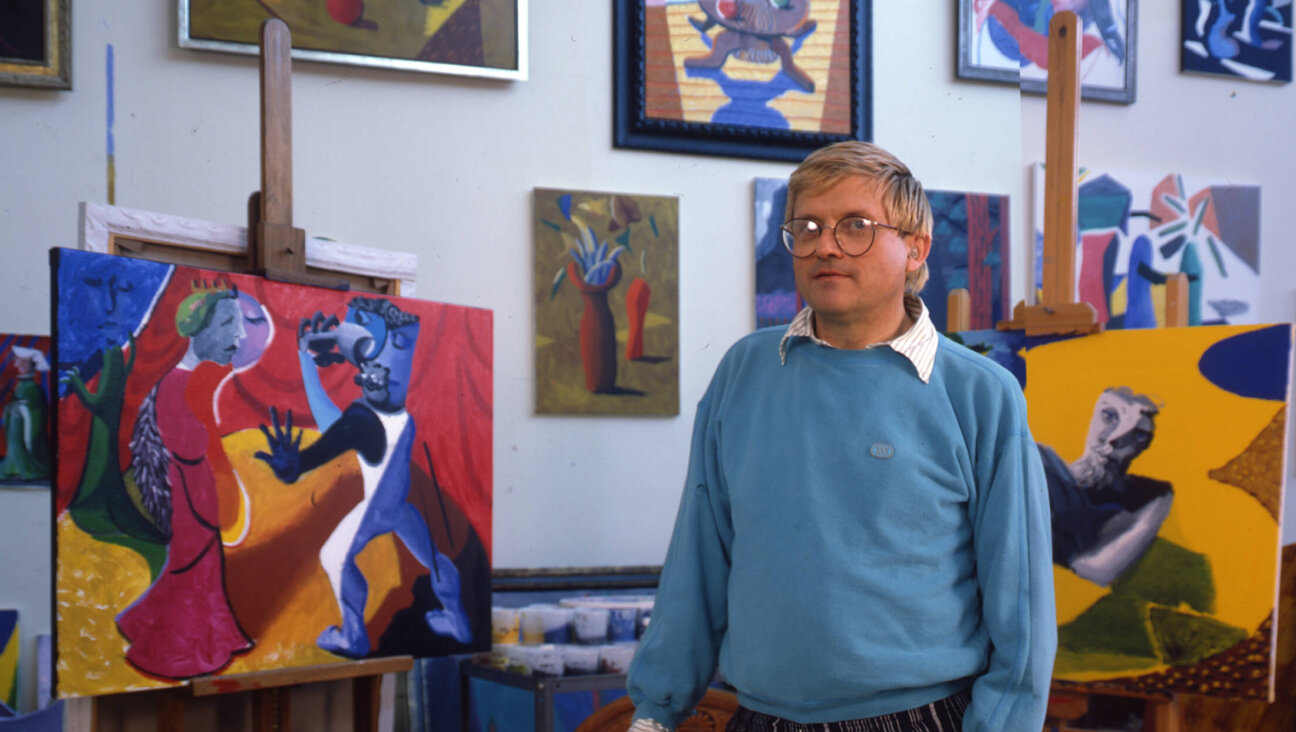
Chloe Hechter, a Jewish influencer with over 186,000 TikTok followers Courtesy of Chloe Hechter
On the Upper East Side of Manhattan, Butterfield Market currently boasts hour-long lines for the viral “dot cakes,” which are entirely covered by tiny sprinkles. For influencer Chloe Hechter, however, these cakes are nothing new — she saw them at every college bed party, birthday and Bat Mitzvah she ever went to.
“Jewish-American Princesses did it first,” she claimed in a recent Tiktok.
Hechter, who is 25, regularly receives thousands of likes on her content which is centered around relatable modern Jewish experiences: summer relationships at Jewish summer camp, drama within Jewish sororities, coming home from college for Passover seder. She’s described her mission as reclaiming the “Jewish-American Princess” stereotype, which often brings to mind a girl who is spoiled, materialistic and boy-obsessed. Hechter hopes to present a different narrative.
“Jewish American Princess means a headstrong, confident Jewish woman who knows what she’s worth,” Hechter wrote in a February Substack post. “A girl who knows her place in the world as a woman and as a Jew, and who isn’t afraid to be exactly who she is in those spaces.”
The modern-day stereotype of a “Jewish-American Princess” is known for a dress code of sweat sets from Free City or Aviator Nation, Roller Rabbit pajamas and ruffly skirts from Love Shack Fancy. Before that, as Jamie Lauren Keiles discussed in a 2018 Vox article, the “JAP” uniform included Juicy tracksuits in the 2000s, Calvin Klein jeans in the ‘80s and cashmere sweaters in the ‘50s. But, as the ‘princess’ moniker suggests, these looks have always come at a price (Free City sweatpants currently retail for $168).
Keiles explains that JAPs’ historic reputation for dependence on “daddy’s money” stems from Jewish men in the 1950s, still seen by many as nouveau riche, who sought someone to blame. The Jewish-American Princess was encapsulated, Keiles writes, in Goodbye, Columbus’ Brenda Patimkin, who, though educated and beautiful, is also characterized as vain, demanding and uncompromising. It is this kind of portrayal that Hechter hopes to challenge. Though she acknowledges her own privileged background, she also argues that privilege doesn’t necessarily mean out-of-touch.
Hechter’s upbringing was “a gift I’ve been given,” she said. Although she didn’t discuss her background in detail, Hechter expressed her admiration for her parents, who run their own businesses and worked hard to make sure that she grew up in comfort. As opposed to the stereotypical Jewish-American princess, searching for a wealthy husband to provide for her, Hechter said that she uses her background as motivation to be self-sufficient — and as inspiration for her content.
Hechter started out as a child actor, and later went to high school at LaGuardia, the famed performing arts school in New York. At heart, though, she says she was also a writer. Even from a young age, she told me, she would write down funny or ridiculous situations she observed. For a Reform Jewish girl going to New York City private school, there was a lot of material — particularly during B’nei Mitzvah season.
“I’d be like ‘why am I in a party bus to a country club?,’” she joked.
For Hechter, Jewish experiences like these — along with her summers at sleepaway camp — were primarily cultural as opposed to religious. She observed the major holidays, but didn’t go to services regularly; she found the teachings of the Torah interesting but didn’t follow them to the letter.
After she graduated from Syracuse, Hechter began posting skits, which eventually began to go viral. Her first big video, currently at over 660,000 likes, was themed around getting ready for a camp social. In an interview with her college newspaper, she joked that she “would’ve put on makeup” if she had anticipated the video’s success.
Inspired that social media could be her calling, Hechter initially pushed herself to post five times a day, a pace that now seems inconceivable to her. It paid off, though; Hechter currently boasts over 186,000 followers on TikTok and 79,000 on Instagram.
In her videos, Hechter is dedicated to representing a version of her Jewish experience that is rarely shown on screen. Most Jewish characters in film, she says, tend to follow a limited set of archetypes: they’re deeply religious, there’s a depressing undertone or, like Shoshanna Shapiro from Girls, their religion isn’t discussed. When a funny, secular Jew appears on screen, he’s almost always a man.
“I love Adam Sandler and Larry David as much as the next girl, but I wish growing up that I had a cool, fun Jewish girl to look up to,” Hechter said.
Hechter explained that many of her skits draw from experiences she observed on the outskirts; as she tells it, she went to camp but wasn’t the mean girl, she attended lavish Bat Mitzvahs but didn’t have a party of her own, she was in a Jewish sorority but wasn’t super involved. Still, her characters are immediately recognizable.
“People either are experiencing these things firsthand and are like ‘oh my god, this is so me,’” she said. “Or they see it and they make fun of it, like ‘oh my god, this is so my daughter. Oh my god, this is so the people in my sorority.’”
Hannah Wiener, a high school senior from Oceanside, Long Island, is a longtime fan of Hechter. For Hanukkah one year, her sister gifted her a personalized Cameo video in which Hechter talked about their similarities and common interests.
Wiener said that she loves Hechter’s content because she finds it relatable. There are a lot of influencers who make similar videos about Jewish life, but Wiener feels like they make fun of it, rather than treat it “as a normal event like Chloe does.” For Wiener, who went to sleepaway camp herself, Hechter’s camp videos are her favorite. She said that she finds them “to be so funny and also just so heartwarming.”
Middle and high schoolers make up a large proportion of Hechter’s audience — she told me that summer “camp girls”, like Wiener, are her biggest fans. Hechter believes her younger self would have been one of them.
“I genuinely think I would have been my own favorite creator,” she said.

Hello, fellow Forward reader! I’m Joel Brown, a Forward reader and supporter for more than 15 years, and currently the chair of the board of directors.
I’m an avid Forward reader because it ticks so many of my essential boxes: excellent journalism, Jewish focus and diverse viewpoints. In today’s political climate, what I most appreciate is the Forward’s independence — made possible by the generosity of its membership.
The Forward is committed to bringing you unbiased, nuanced Jewish news. From my position as board chair, I see an exciting future as we expand our position as the definitive independent voice of contemporary American Judaism.
That’s why I’m paying it Forward, by matching $36,000 of reader gifts. It’s an investment in the Forward’s newsroom, to continue telling the American Jewish story with truth and independence.
— Joel Brown, Forward board chair
Support our mission to tell the Jewish story fully and fairly.