‘Dirty Dancing’ be damned. A new musical shows another side of the Borscht Belt
Pamela Gray’s ‘A Walk on the Moon’ brings the bungalow colonies to life
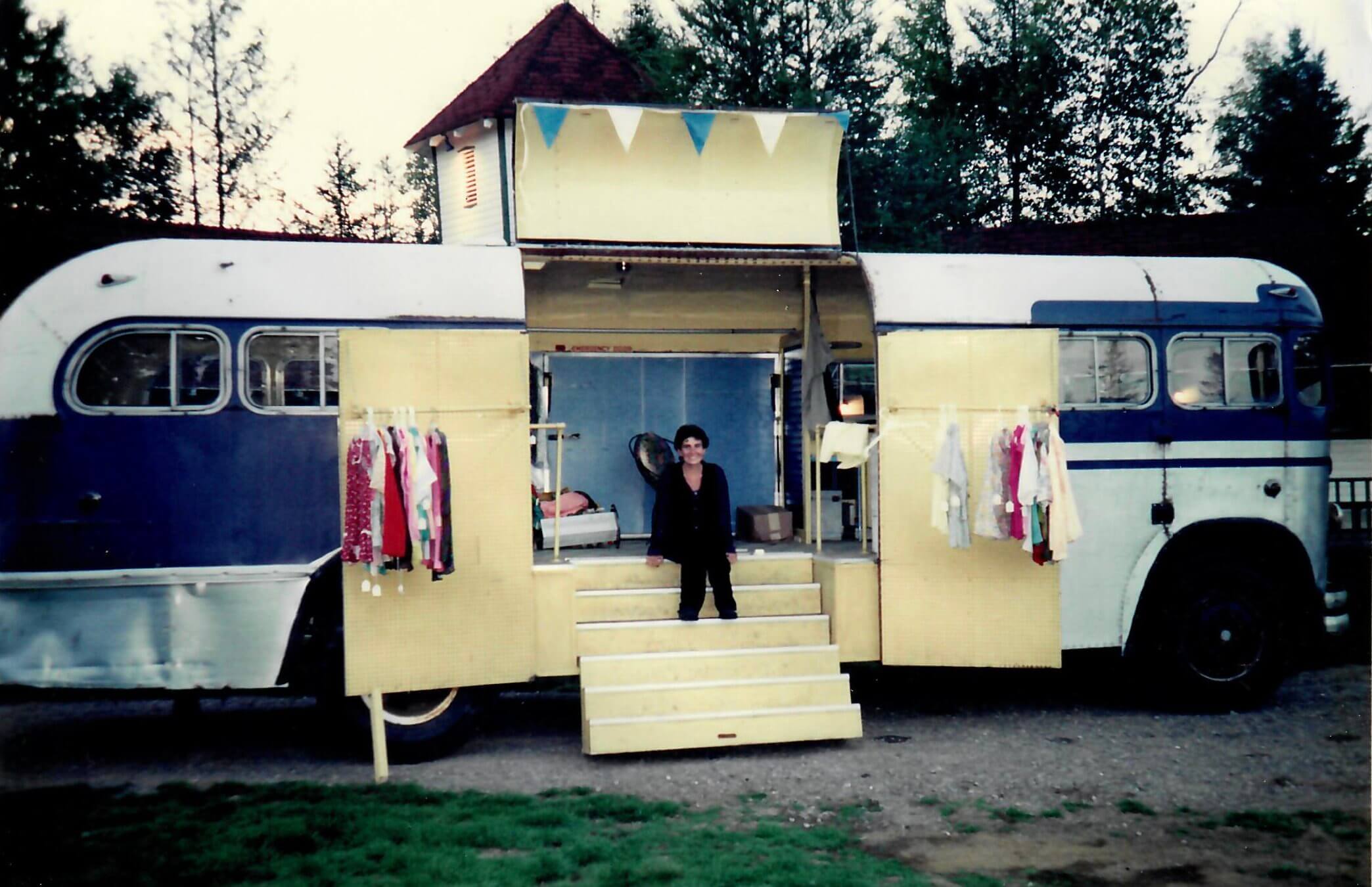
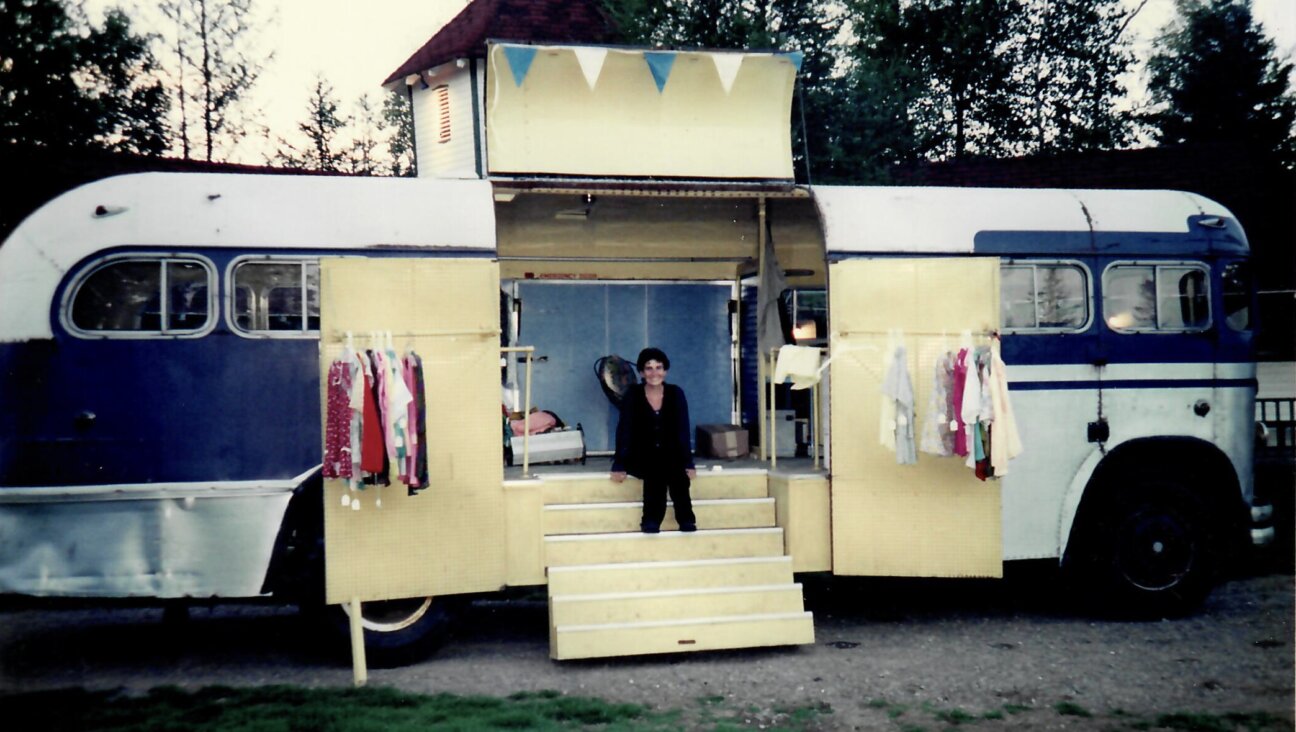
Pamela Gray in the Blouse Man’s van on the set of A Walk on the Moon in 1997. Courtesy of Pamela Gray

By PJ Grisar June 11, 2026
When the Woodstock Music and Art Fair defined a generation, Pamela Gray was on the outside looking in — literally.
She was 13 and summering at Dr. Locker’s Bungalow Colony in Mountaindale, New York. She remembers sitting by the pool with her little brother while the moms and bubbies played mahjong and glimpsing some long hair or fringe through the chainlink: hippies headed to Yasgur’s Farm.
“Looking back now, it’s like I literally was on the wrong side of history,” Gray said.
That moment was stamped in her memory for years, along with her attachment to the bungalow colony, where she got her first taste of nature away from the Flatlands in Brooklyn. Since around the time Dirty Dancing came out in 1987, she had struggled to explain to people the working-class version of the Borscht Belt she grew up with, a far cry from the resorts favored by dentists and lawyers.
In the early 1990s, Gray was in film school at UCLA and interning in the writers room on Star Trek: The Next Generation when she endeavored to capture the disappeared world of her youth in a screenplay. She recalled thinking, “I want to be the first person to set a movie in a bungalow colony.’”
I met Gray, a high school friend of my father’s, at a cafe steps away from where her Off-Broadway musical A Walk on the Moon, based on her 1999 film, is in rehearsals. She wore a cat-themed Catskills t-shirt and a Nova Festival dog tag.
She told me she’d seen a documentary about the colonies — narrated by an Attenbourighian Brit, with the same nature doc detachment — and glimpsed one in South Fallsberg in Enemies: A Love Story, but knew she wanted a more substantial tribute.
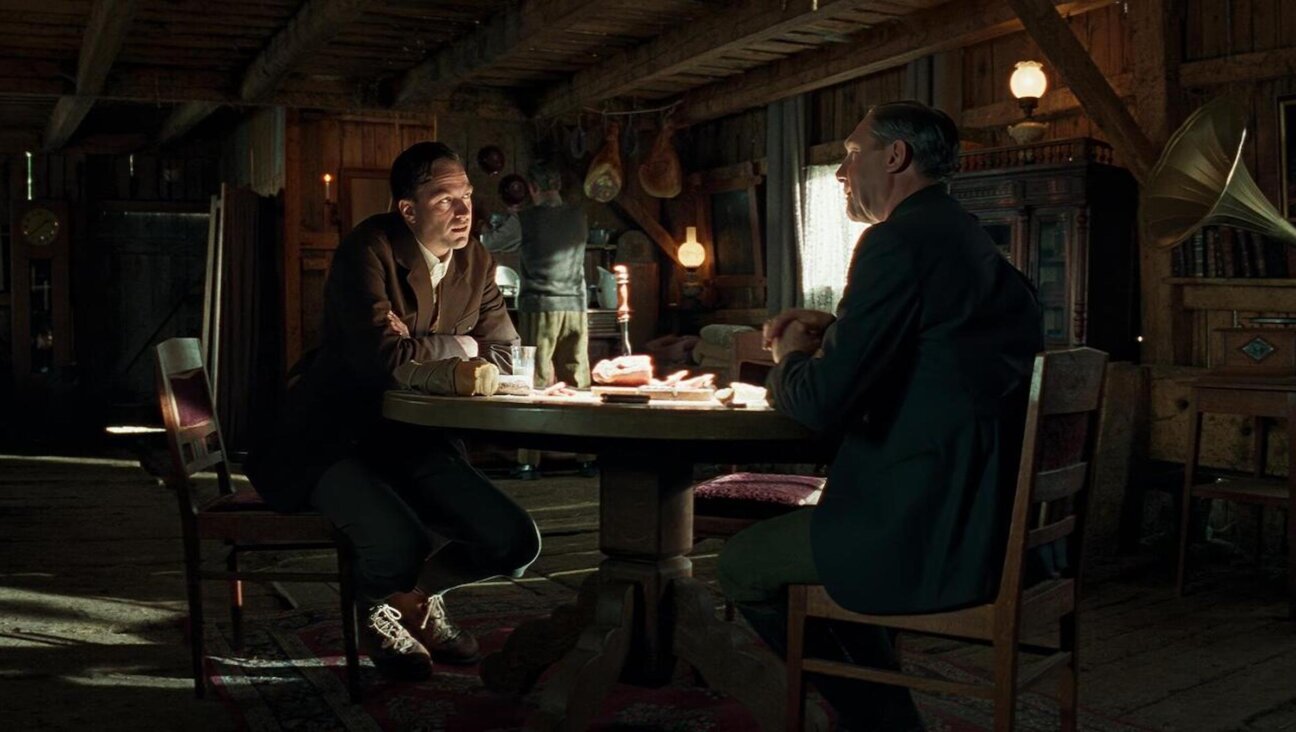
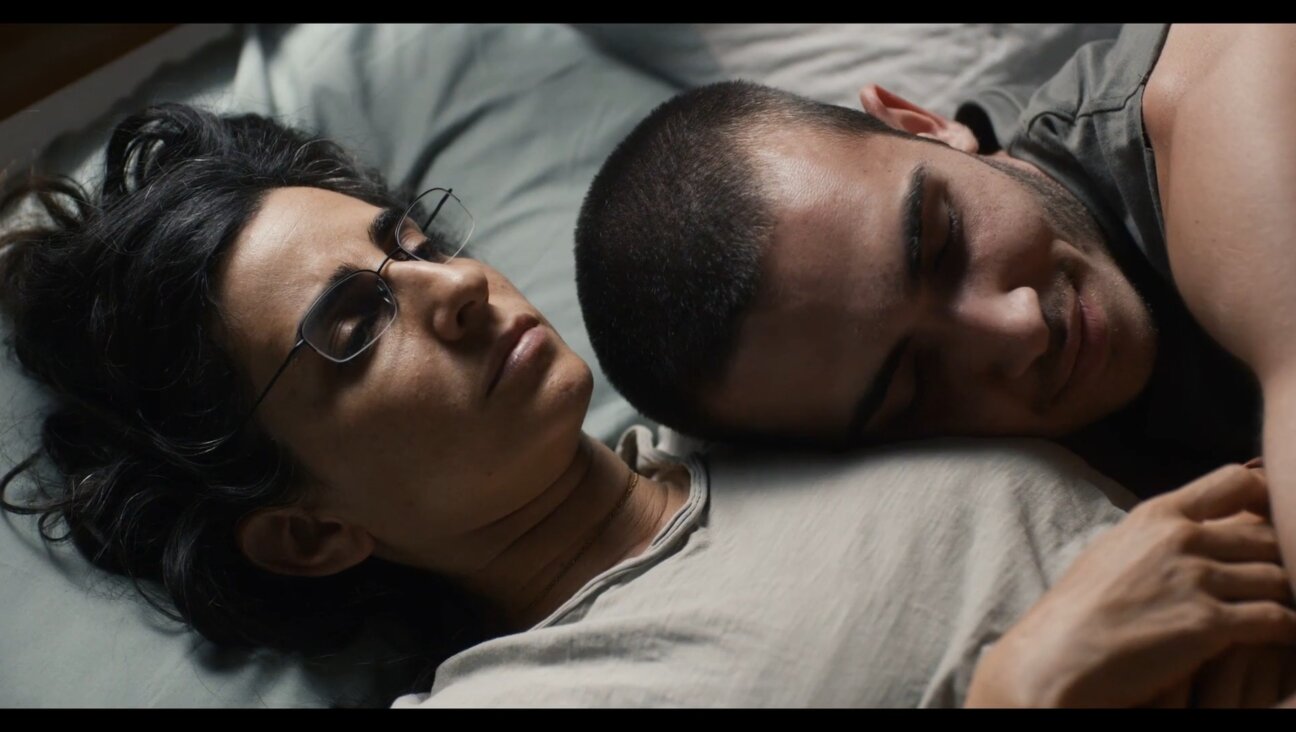
The script, with a working title of The Blouse Man, became A Walk on the Moon, directed by Tony Goldwyn and starring Diane Lane as frustrated young housewife Pearl Kantrowitz, Liev Schreiber as her TV repairman husband, Viggo Mortenson as Pearl’s goyische hippie lover and a 15-year-old Anna Paquin as Pearl’s teenage daughter. It features a pivotal Woodstock sequence, and a glimpse of naked hippies trespassing at the bungalow’s lake.
Gray said there was resistance to the material when the script was being shopped around. She was told films centering women lost money. Some asked if it had to be Jews in the Catskills in the 1960s. For the musical, she’s amped up some of the Jewishness both in casting and content.
Directed by Sheryl Kaller and starring Talia Suskaauer and Max Chernin, the show has been in the works for over a decade, and had a previous run with a different score at the George Street Playhouse in New Brunswick. It’s set to open in a climate Gray thinks is in need of Jewish stories. Not a Holocaust story, not a story of antisemitism (though some of that has been added) but one about a family, and, importantly, one without much money.
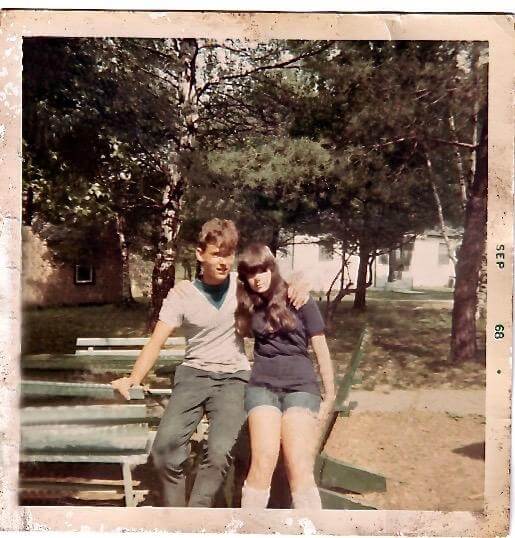
Gray was first approached to sell the rights to her film for a musical adaptation in the 2010s. A librettist and songwriter prepared a presentation to convince her, but she decided she wanted to take the project on herself. She had, in a sense, written musicals before.
Technically, Gray, whose other films include Music of the Heart starring Meryl Streep in a singular non-horror outing by director Wes Craven and the legal drama Conviction (also with Goldwyn and starring Hilary Swank), began her life in the theater in middle school.
She wrote The Girl from A.C.N.E. — a parody of The Girl from U.N.C.L.E. — for her hygiene class in sixth grade and later, while editor of the yearbook at James Madison High School, penned A Log Day’s Journey into Night an evident sendup of Eugene O’Neill.
Her first brush with an audience hearing her words came when she worked on Sing!, a student-run musical competition for outer borough high schools, which was a stealth incubator of talents like Paul Simon, Neil Sedaka and, at James Madison, where Gray and my dad are alumni, Carole King and Gerry Goffin.
Gray and my dad, Mark a retired optometrist who also writes screenplays, wrote parody lyrics, and probably fought a fair bit as script co-chairs. Gray remembers one year’s production, themed around clothing throughout history, had her kitted out in a French Revolutionary outfit and smacking my dad in the face while he was dressed like Napoleon.
Sing!, had a Borscht Belt Bungalow quality to it. When director Michael Greif was discussing the musical with Gray several years ago, they bonded over Sing!, which he directed at Abraham Lincoln High School on Ocean Parkway.
Music was central to Gray’s film, with needledrops from the Grateful Dead, Jefferson Airplane and Janis Joplin and Big Brother and the Holding Company’s cover of Gershwin’s “Summertime.” The ending has Pearl and her husband, Marty (Schreiber), transition from Dean Martin’s version of “When You’re Smiling” to trying their best to groove to Jimi Hendrix’s “Purple Haze.” (Gray said it was supposed to be “Light My Fire,” but Ray Manzarek wanted too much money.)
The musical’s new score by AnnMarie Milazzo, a vocal designer and arranger for shows like Spring Awakening and Next to Normal, captures the trapped-in-amber quality of the bungalows, with inspiration from the 1950s in the scenes with adults and, in a sequence with Pearl’s teenage daughter Alison and her summertime beau, a protest song.
“We’re living in a time right now where musicians and music artists are speaking out and talking about politics and talking about women’s rights and talking about antisemitism,” said Kaller, the director, whose parents took her to Catskills hotels as part of their temple bowling league. The show, she says, is “reminding audiences that in 1969, we were doing the same thing.”
A love letter to her parents’ generation and her own coming of age, Gray says the project may be even more personal in this iteration. Scenic and video designer Tal Yarden has incorporated Gray’s home movies into his projections. Also new to the musical is a moment when Alison learns the history of the Catskills, where Jews weren’t always welcome.
Gray said the addition came with “Trump 2,” a reference to his second term, that could also serve as an allusion to the film’s 1999 premiere, where the future president was in attendance.
“I still remembered the exact moment,” Gray said. She was on the aisle, and across from her was my father, their friend Karen and, next to Karen, Donald Trump and a blonde woman who was his date.
“The first thing he did was he ripped all the reserved signs off,” Gray recalled. “When your dad went to go to the bathroom, Trump put his leg up, and he had to climb over him. Is that your dad’s story?”
Not exactly. My dad now maintains that he was going to the lobby to tell Gray’s parents their seats were taken. It’s only when I said this that Gray remembers who the seats were reserved for. She then called Trump a certain Yiddish epithet, meaning pig.
(The White House did not immediately respond to a request for comment regarding Trump’s presence or actions at the premiere, his enjoyment of the film or any plans to see the musical.)
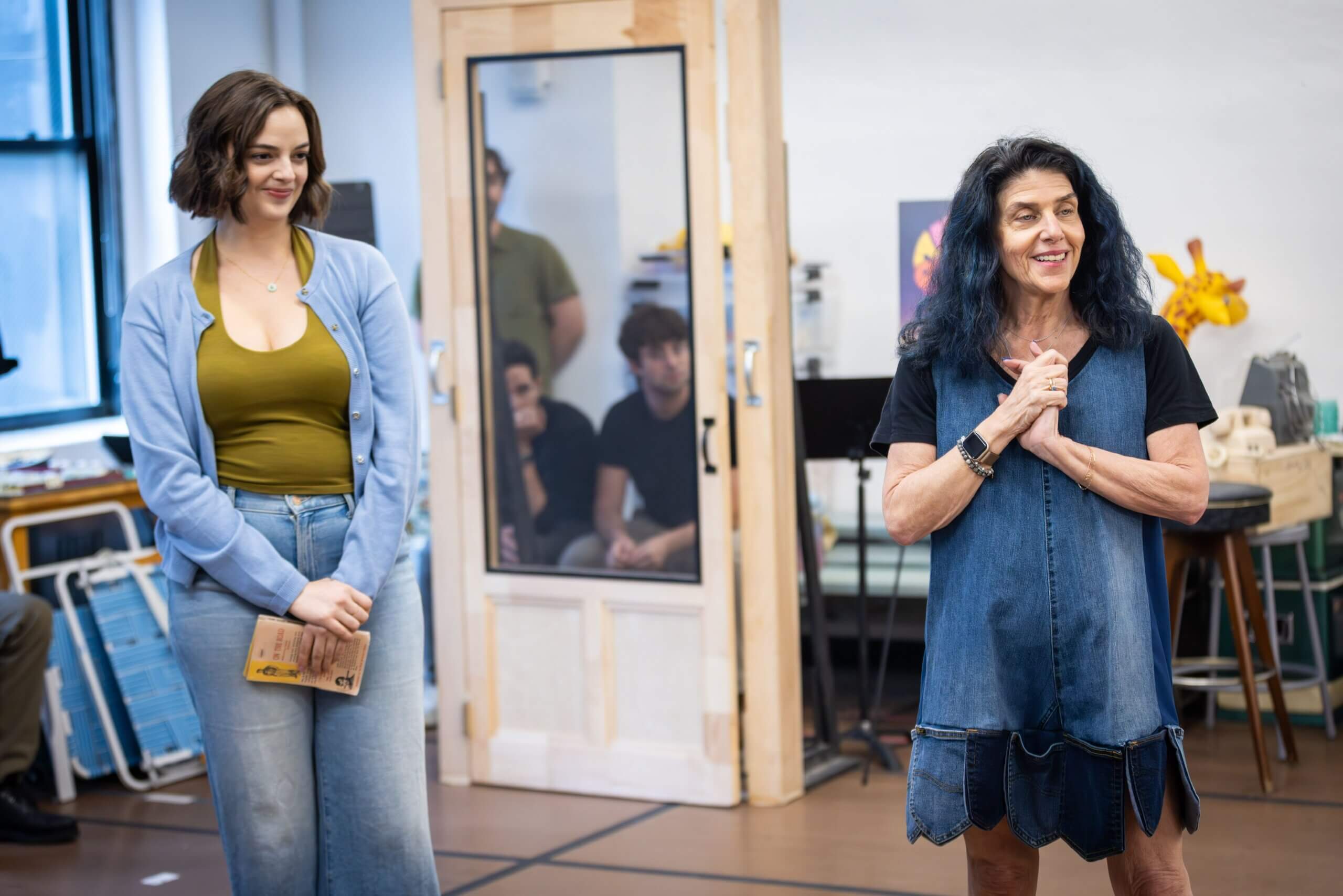
Though a presidential encore is unlikely, members from Gray’s extended shtetl of Brooklyn are coming, along with a group of children who met at a bungalow colony for Holocaust survivors. (In other Jewish geography, the show’s casting director, Merri Sugarman, has known Kaller since they were around 2 — her parents were also in the bowling league.)
When Gray first wrote a treatment for the musical version of her film, she couldn’t help thinking of the first musical she ever saw: Fiddler on the Roof. It too had a forgotten Jewish milieu, with a self-contained community, an aura of nostalgia and an outside world pressing for change.
“It had to have influenced me, and I’m proud of that influence,” Gray said.
At this point I told her when my father and I saw the Yiddish Fiddler on the Roof, Charles Kushner, Trump’s mechutan, sat in front of us. What are the odds?

Hello, fellow Forward reader! I’m Joel Brown, a Forward reader and supporter for more than 15 years, and currently the chair of the board of directors.
I’m an avid Forward reader because it ticks so many of my essential boxes: excellent journalism, Jewish focus and diverse viewpoints. In today’s political climate, what I most appreciate is the Forward’s independence — made possible by the generosity of its membership.
The Forward is committed to bringing you unbiased, nuanced Jewish news. From my position as board chair, I see an exciting future as we expand our position as the definitive independent voice of contemporary American Judaism.
That’s why I’m paying it Forward, by matching $36,000 of reader gifts. It’s an investment in the Forward’s newsroom, to continue telling the American Jewish story with truth and independence.
— Joel Brown, Forward board chair
Support our mission to tell the Jewish story fully and fairly.