When a Jewish language is lost, we lose more than just words
In ‘Always Carry Salt,’ Samantha Ellis races against time to try to save her Judeo-Iraqi Arabic language and culture
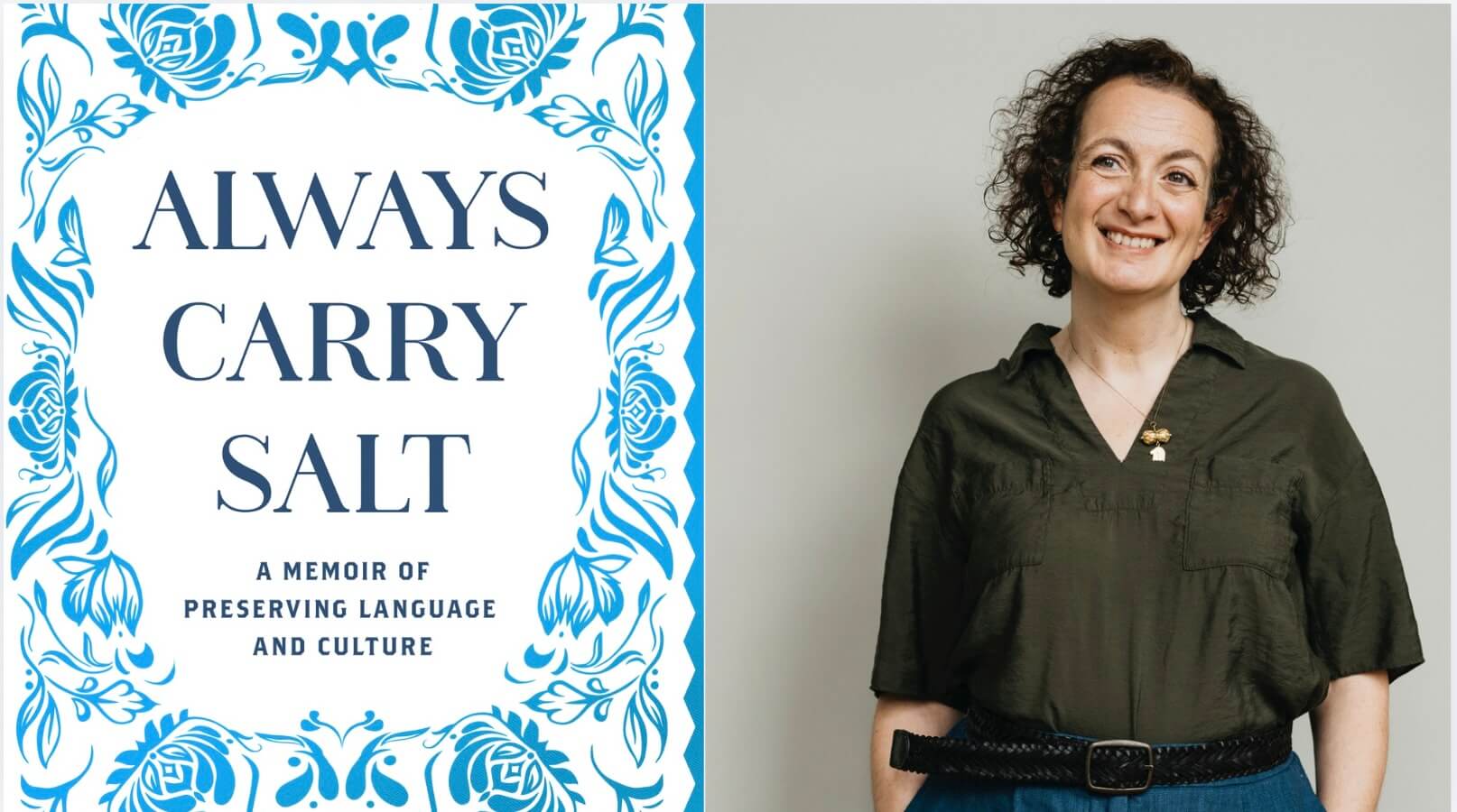
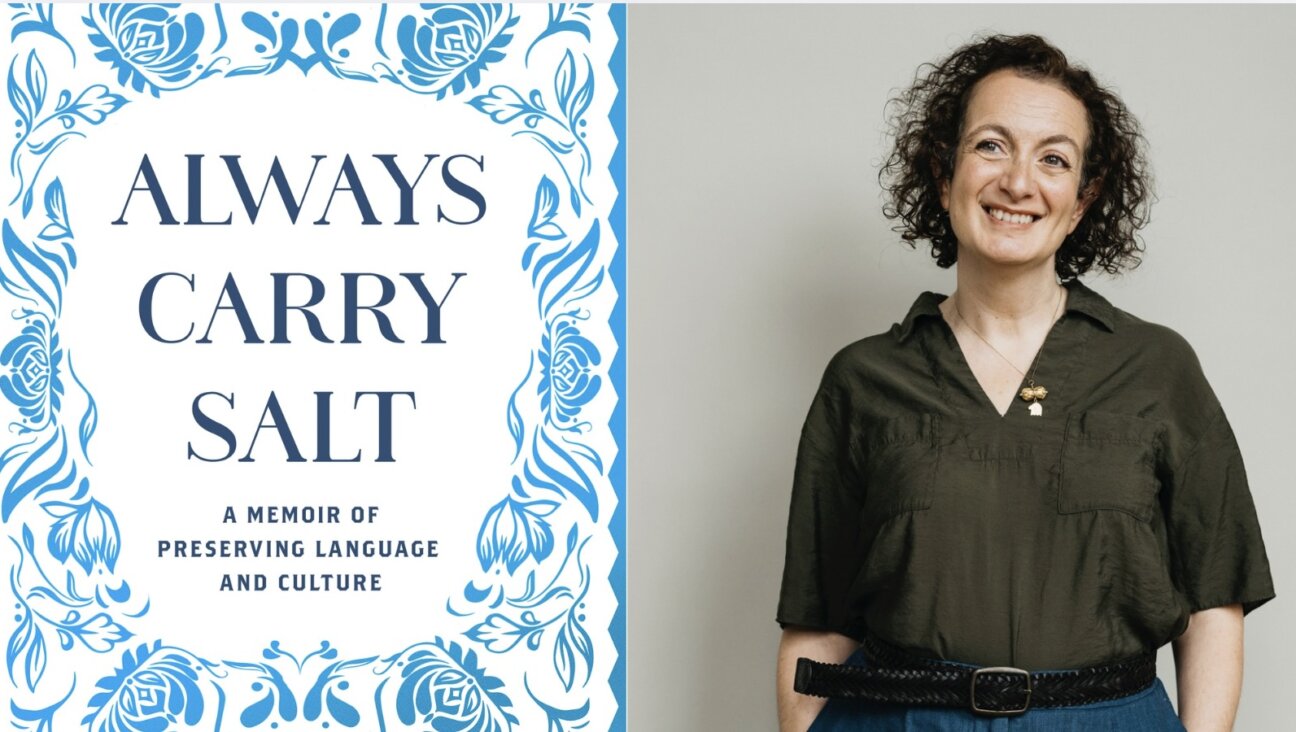
Samantha Ellis’ ‘Always Carry Salt’ is constructed of memories, stories and ‘silent traces.’ Photo by Pegasus Books/Jules Rogers
By Aviya Kushner June 11, 2026
Always Carry Salt
By Samantha Ellis
Pegasus Books, 288 pages, $29
This charming and important memoir starts with two mothers in a cold London playground talking about where to send their young children to school. One mother says she would like her son to go to a French nursery so he could grow up with two languages, just like her. But then this playground moment takes a surprising turn.
“Why not send him to a nursery in your language?” one mother asks.
“I can’t,” author Samantha Ellis responds. “My language is dead.”
Ellis grew up speaking Judeo-Iraqi Arabic. Her mother tongue isn’t exactly dead, but it is dying, like many Jewish languages that are not Hebrew or Yiddish, and like many of the beautiful Jewish languages spoken by Jews of the Arab world. The Jewish community in Iraq is one of the world’s oldest, dating back to the sixth century B.C.E., when Nebuchadnezzar conquered Judea and sent most of the population there into exile in Babylonia. In 1939, Baghdad was at least one-third Jewish. As of Passover 2021, there were reportedly just four elderly Jews left in Iraq.
“Ghosts walk the pages of almost every Iraqi Jewish book I have read,” Ellis writes.
Always Carry Salt is about language, food, family, and above all, a way of being. Ellis, whose other books include How to Be a Heroine and Take Courage, as well as plays like How to Date a Feminist, struggles with the fact that she is not wholly bilingual. She herself is part of why her language is dying. But then, after the birth of her son, she wants to pass Judeo-Iraqi-Arabic, and all the history and recipes it carries, onto him, and eventually, to us.
Food as a Way Into a Culture
I loved reading the many Judeo-Iraqi-Arabic idioms about the heart, like ekel kallsi, or “he ate my heart.”
Ellis often reserves the starring role for words related to food. When she wants to tell us that everything feels upside down or inside out, she says we are living eeyun al balangan, “in the days of the aubergines.”
While trying to describe a dish Iraqi Jews eat, she turns to etymology and history, and sometimes to literature. Before offering her recipe for makhboose, or date cookies, she expounds upon The Epic of Gilgamesh in which bread is said to make the wild man, Enkidu, human. She then goes on to discuss a rolling pin that can imprint your dough with a Cuneiform passage from Gilgamesh.
As you might guess, this book is not linear; it has its own rhythm and its own way of presenting a story as Ellis investigates complicated subjects like why some languages are dying, the deep roots of contemporary antisemitism, and the lasting effects of the Farhud — the massacre of Jews in Baghdad in 1941.
“Farhud” means “the breakdown of order.” It was once called a “pogrom,” but Ellis quotes her grandmother’s cousin, historian Sylvia Haim, who once asked, “Why use the Russian word, pogrom, when we have a perfectly good word of our own?”
By the time Ellis asks her grandmother, who lived through the Farhud at age 11, to describe the massacre in 1941— during which “for thirty days, Baghdad’s Jews stayed at home, terrified, listening to Rashid Ali and the mufti broadcast antisemitism. Swastikas and violence filled the streets,” permanently transforming Iraqi Jews’ sense of safety after thousands of years there— readers understand it’s not just about the loss of physical lives but also about the beginning of the diffusion of a community and an entire culture.
Ellis is the child of a father whose family fled shortly after the Farhud, when around 180 Jews were murdered, and many Jewish women were raped, along with thousands injured, and a mother whose family tried desperately to stay in Iraq, thinking it would get better. And so just in the lives of her parents, she is able to offer an important window into how Iraqi Jews were treated after the Farhud, and then, after the establishment of the State of Israel.
She explains that in the early decades of the 20th century, Zionism was seen as an Ashkenazi priority. But eventually, as various harrowing episodes make clear, it became increasingly dangerous to be Jewish in Iraq. According to a law passed in March 1950, Jews could leave, but they had to renounce their Iraqi citizenship, becoming stateless on their exit.
Then came the financial devastation. In March 1951, “when the denaturalization law was about to expire and 125,000 Jews had registered to leave, the Iraqi government met in secret and passed another law: they would seize property, money and assets from all 125,000 Jews, as well as any Jews who had already left Iraq,” Ellis writes. “The law came into force overnight, leaving many Iraqi Jews destitute and starving, relying on charity as they waited for the planes to come.” Only a few thousand Jews stayed behind in Iraq, including Ellis’s mother’s family.
While it has always been a criminal offense in Iraq to have any connection with Israel, as of 2021, having any association with Israel is punishable by death. This means it is deeply dangerous for Ellis and other Iraqi Jews to visit Iraq; she cannot even go on a heritage tour.
But despite all this history, or perhaps, because of it, Ellis is trying to hold onto words and ways of framing the world. She is also racing against time. She knows that what makes a language “endangered” is when mothers don’t teach it to children. She knows that the Jews who grew up in Baghdad are dying out. And while trying to pass along Judeo-Iraqi-Arabic to her own British-Iraqi son, she manages to pass along the story of a community to the world.
I’m personally matching all gifts to the Forward, up to $36,000. Can I match your gift now?

Hello, fellow Forward reader! I’m Joel Brown, a Forward reader and supporter for more than 15 years, and currently the chair of the board of directors.
I’m an avid Forward reader because it ticks so many of my essential boxes: excellent journalism, Jewish focus and diverse viewpoints. In today’s political climate, what I most appreciate is the Forward’s independence — made possible by the generosity of its membership.
The Forward is committed to bringing you unbiased, nuanced Jewish news. From my position as board chair, I see an exciting future as we expand our position as the definitive independent voice of contemporary American Judaism.
That’s why I’m paying it Forward, by matching $36,000 of reader gifts. It’s an investment in the Forward’s newsroom, to continue telling the American Jewish story with truth and independence.
— Joel Brown, Forward board chair
Support our mission to tell the Jewish story fully and fairly.