In ‘Something We Said,’ Richard Pryor’s daughter finds words to discuss the unspeakable
Elizabeth Pryor unpacks ‘the n-word’ as a professor, a Black-Jewish woman, and the kid of the man who transformed the word forever
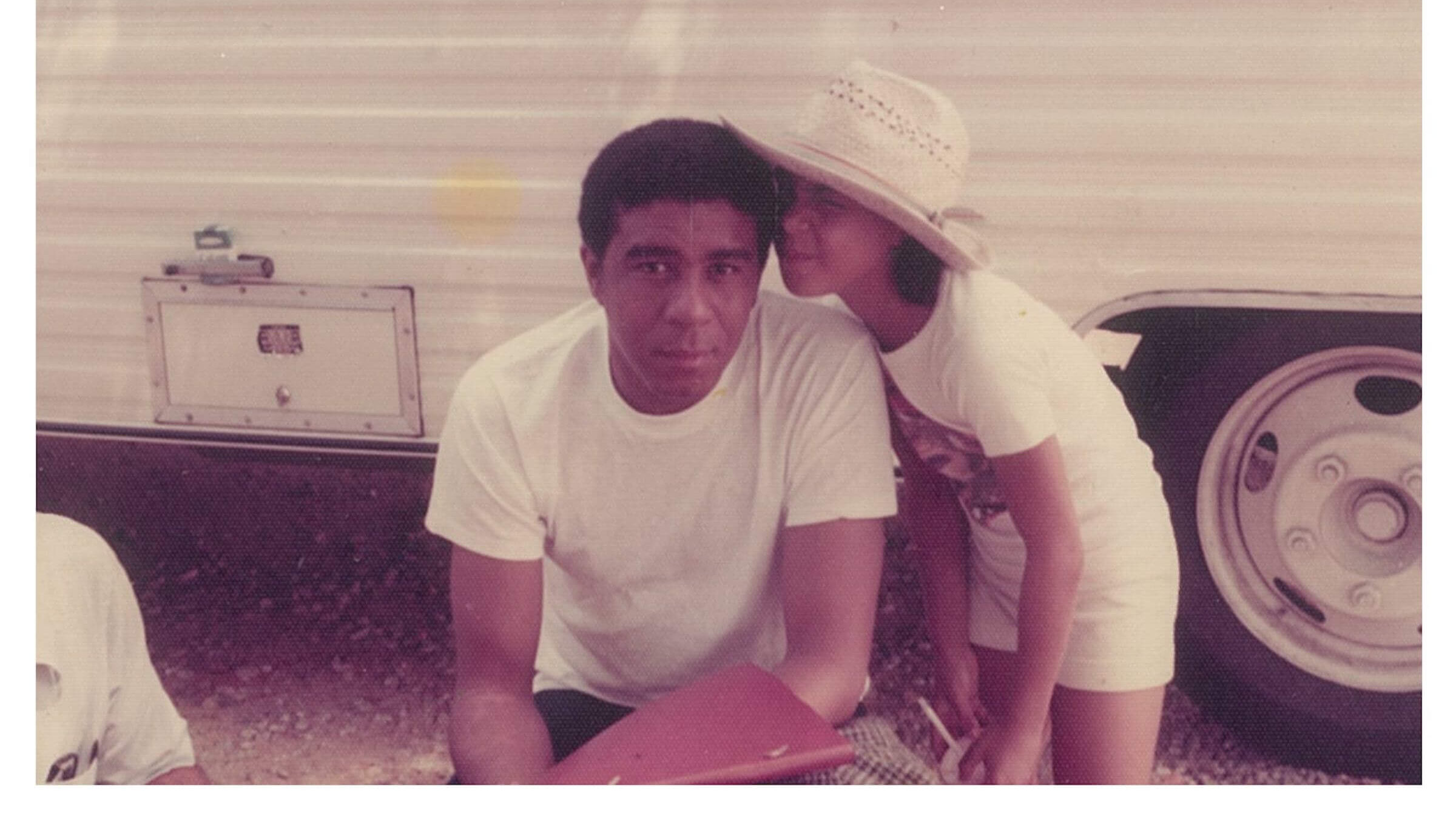
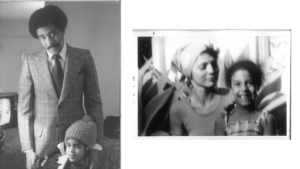
The author and her father, Richard Pryor. Courtesy of Elizabeth Stordeur Pryor
By Olivia Haynie June 5, 2026
Elizabeth Stordeur Pryor didn’t set out to write a memoir. A professor of history at Smith College with a focus on race, she had published an article on the etymology of the n-word in 2016 and wanted to continue her work in a book. But as she began to explore the word’s history in America, it became clear there would be no way to tackle the issue without writing about her father Richard Pryor.
“Why I make the connection between me and my father isn’t simply because he was famous, but because he put the n-word on the pop culture map,” Pryor told me in an interview, adding that he specifically used “the Black version of the n-word in a subversive way in his comedy — and then a decade later disavowed it.”
Richard Pryor was one of the first Black comedians to use the n-word on stage and he did so boldly, in a way no Black performer really had. He embraced it as a way to assert his identity and as a way to mock white racism. He used it to connect him to his Black audience who could understand the jokes he made about racial trauma in America in a way non-Black audiences couldn’t. The n-word, Pryor writes, was a staple in many of her father’s jokes, was featured in the title of two of his most famous comedy albums, and became his “comedic trademark.” But after he traveled to Kenya in the 1980s, Richard Pryor had a revelation about race and stopped using it.
In her new book Something We Said, Pryor, the daughter of the legendary comedian and actor and his first serious white (and Jewish) girlfriend Maxine, skillfully traces her relationship with her father as she was growing up, her relationship to the n-word as a professor of Black history, and the story of the n-word in America. It starts in the 2010s, when a white student said the n-word in one of Pryor’s classes, then rewinds to the beginning of her relationship with her father, who she met for the first time when she was six years old in 1974. The book toggles between the timelines over the course of its 265 pages. Interspersed are what Pryor labels “Interludes,” which track the history of the n-word from the American slave trade to the modern day.
The history of the n-word is far more complex than most people know — and, Pryor reveals, so was her father. He had both a tender and tough side, he could be closed off and also incredibly giving. Although he often presented himself with an impenetrable confidence and swagger, he could never stand up to his domineering grandmother, who he saw pimp out his mom.
The book challenges people’s knee-jerk reactions to the word and discusses the duality of its significance, how it is a word with a hate-filled past that has also been a signal of solidarity. And its reclamation by Black Americans isn’t a new phenomenon. Pryor traces it all the way back to the era of American slavery, including in a work song about a Black folk hero.
Pryor noted that there’s a tendency to “blame artists like my father and of course, hip hop” for the popularity of the n-word among African-Americans today, but pointed to its politically subversive nature as the source of its endurance in the Black community.
Pryor said she hopes the book will help people “understand that the n-word isn’t just part of a national trauma, like a relic of our past as a nation” but that “it causes these really intimate wounds and becomes a really personal trauma that’s worth exploring and talking about.”
Writing something that is simultaneously deeply personal and intricately historical is not an easy feat — although Pryor’s time jumps feel effortless.
“Many of the things that happened to me were sort of locked in a little memory bubble,” Pryor said. “And I had only interacted with them as that 11 year old, as that 16 year old, as that 22 year old, and had not interacted with them again, as a mother and a wife and a professor, et cetera, as an adult.”
This digging provoked a lot of personal reflection. In one story in Something We Said, Pryor recounts being the only Black girl at a friend’s bat mitzvah in the 80s. Trying to impress a boy and remembering how her father’s use of the n-word made people laugh, Pryor gave her friends permission to call her the n-word, a decision she quickly regretted.
“I had to do a lot of digging about, like, why did I do that? Like, why did I invite that even though I hated that word?”
This story captures the often inexplicable nature of navigating the complexity of race and belonging in America, something that can be complicated for anyone but especially someone of mixed-race heritage. Pryor also had to contend with being a minority in Jewish spaces.
“My mother had me in temple in like second and third grade as soon as we moved to LA and literally nobody there could figure it out,” Pryor said. “Like it was a math problem that was unfathomable. It was pi. Like they could not figure out how I was Black and Jewish.”
While Pryor includes many jaw-dropping stories from her life and from American history, what may baffle people the most is that until the 2010s, Pryor had never watched one of her father’s films or listened to any of his comedy records all the way through (she had kind of listened to one before was when she was a little girl and she fell asleep to it). She wrote that “not knowing my father as a public figure made me feel closer to him as a private man.”
She never went out of her way to make it known that she was Richard Pryor’s daughter. In 2016, during a talk she gave at Smith on the n-word, Pryor finally went public. I asked her how it felt to now be known as his daughter.
“I think I was surprised by how much I like it,” she told me with a laugh.
“I was always proud of my father,” she said. “I just was tired of people and their forward curiosity.”
“What’s happened, in some ways by coming out as his daughter has been so the opposite of that,” Pryor said. “I’ve heard how deeply he touched so many people in a way that maybe I couldn’t hear it before, or I haven’t heard it before.”
Something We Said has given Pryor even more ways to connect with her father.
“One of the highlights for me about writing this book is the kind of healing that happened from it,” she said, noting that she felt closer to him than she “remembered feeling when he was alive.”
“When he died in 2005, I was like, ‘Wow, that’s it. That’s our story.’ And I just feel like it’s really powerful how the universe works, that that didn’t have to be our story, that our story continues.”
I’m personally matching all gifts to the Forward, up to $36,000. Can I match your gift now?

Hello, fellow Forward reader! I’m Joel Brown, a Forward reader and supporter for more than 15 years, and currently the chair of the board of directors.
I’m an avid Forward reader because it ticks so many of my essential boxes: excellent journalism, Jewish focus and diverse viewpoints. In today’s political climate, what I most appreciate is the Forward’s independence — made possible by the generosity of its membership.
The Forward is committed to bringing you unbiased, nuanced Jewish news. From my position as board chair, I see an exciting future as we expand our position as the definitive independent voice of contemporary American Judaism.
— Joel Brown, Forward board chair
Support our mission to tell the Jewish story fully and fairly.