A Hasidic wedding entertainer tries to keep up with the times — if his ego will let him
In Gidi Dar’s latest film, a struggling alcoholic strives to rebuild his career with kabbalah and blackmail

Shuli Rand plays Moishe in ‘The Wedding Entertainer (The Tale of Moishe Badhan).’ Courtesy of ZOA Films

By Olivia Haynie June 5, 2026
When Israeli director Gidi Dar made his film Ushpizin in 2004, it was one of the first pieces of Israeli media to humanize the Hasidic community for a secular audience. Now, more than 20 years later, during which he focused on his music and other film projects, he’s returned to the Hasidic world with The Wedding Entertainer (The Tale of Moishe Badhan), a humorous and heartfelt look at Hasidic wedding performers.
In an interview, Dar told me he had thought he was done with movies about Hasids. But when his friend Shuli Rand, the lead actor in Ushpizin and co-writer of Dar’s animated film Legend of Destruction, told him about badhans — professional wedding entertainers who have a history dating back to the Talmudic age — they quickly came up with a story.
“I’m always looking to connect to my heritage, to my tradition,” Dar said. “I’m not religious. I try to connect to the narrative, to the history of our storytelling.”
Moishe Striker, played by Rand, is a formerly famous badhan in Jerusalem who has been struggling to find work due to his alcoholism. When his daughter becomes set on getting married, Moishe has to find a way to raise the money for the wedding. Luckily, his wealthy childhood friend is about to marry his son to the daughter of an Israeli tea mogul.
The American-raised son is set on having flashy wedding entertainer Mehsulem Kaliker, played by comedian Elon Gold. But Moishe and his crafty kabbalah-practicing daughter find a way to get Moishe involved, hoping to reestablish his reputation, with a little help from kabbalah — and blackmail.
The story, co-developed by Dar and Rand, teeters between being a lighthearted farcical comedy and a drama about unfulfilled potential. Moishe’s ambition causes him to take comically big swings but also pushes him towards self-destruction. It’s not just the alcoholism he has to keep under control, which is hard to do in a community that celebrates almost every occasion by drinking, but his own ego.
The film fully immerses viewers in the Hasidic world — not one character is from outside of the community. The actors also speak Yiddish, which two of the actors — both ex-Hasids — knew already; Rand and his wife — who plays his wife in the movie — had to learn.
Although the tension in the film is between an Israeli and an American badhan, Dar explained that the conflict is really between old traditions and modern trends.

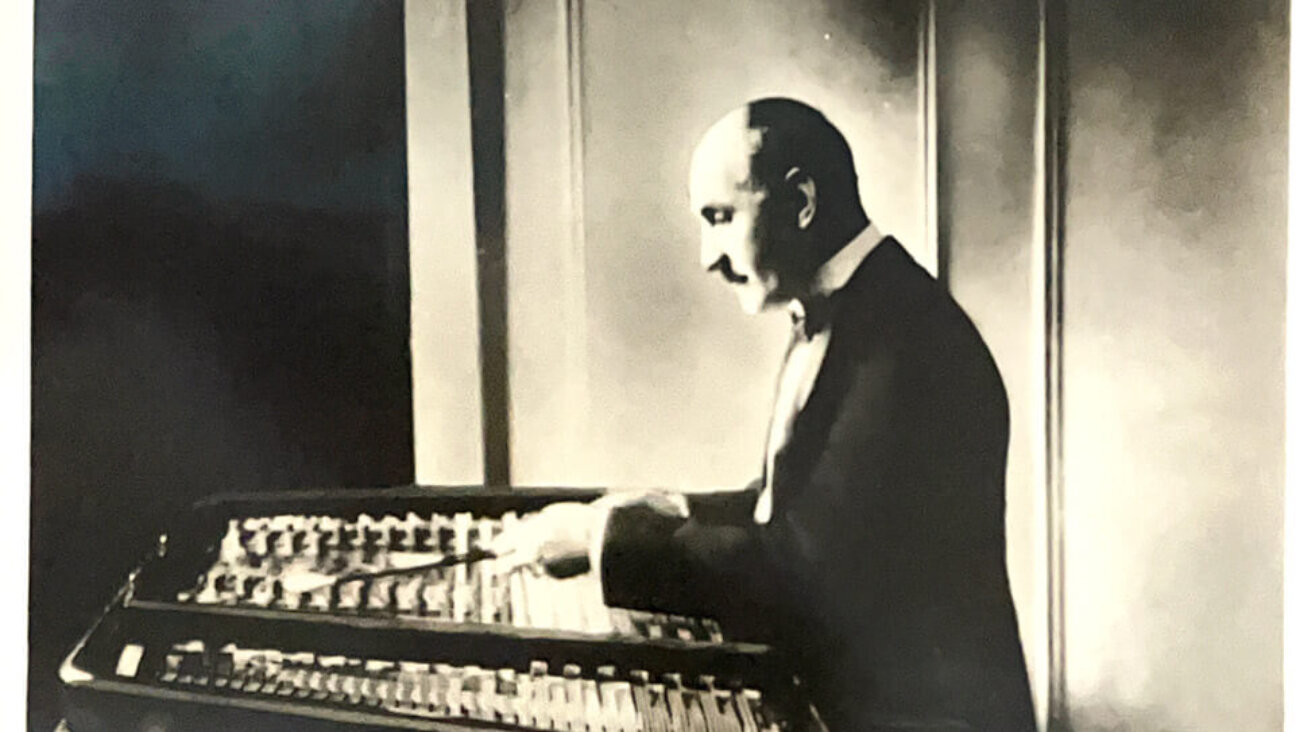
According to Dar, the badhan traditions Moishe uses originated in the shtetls of Eastern Europe in the 18th century and 19th centuries.
Meshulem doesn’t rely on old fashioned jokes and songs set to Klezmer music like Moishe does; he performs with backup singers, strobe lights, and a blaring electronic-dance music soundtrack. His style fits with that of the groom, who is first seen in Jerusalem with his tallit hanging down from under a designer hoodie.
Traditional badhans may not be flashy, but Dar believes they hold an important spot in Jewish culture.
“I think they’re in a way the origin of Jewish humor,” Dar said. “This specific humor, as we know it, is coming from this era of the diaspora, the late era of the diaspora, of the shtetls, and those who carried it were those badhans.”
Dar hopes this film, like Ushpizin, will help secular Jews connect with their Hasidic neighbors.
“The relationship between the Hasidic and the secular in Israel is very harsh,” Dar told me, but noted that cinema can create empathy. “You do identify with those people once you get in.”
Although The Wedding Entertainer depicts a culturally specific custom, Dar thinks the message is “something far more universal.”
“It deals with the limelight and with the desire for an audience for your art, as a comedian, as an actor,” Dar said. “And what are you willing to do for that? How far would you go?”
The Wedding Entertainer (The Tale of Moishe Badhan) will be screening at the Tribeca Film Festival on June 7 and June 14.

Did you know that only 2% of Forward readers donate to support our nonprofit newsroom? That 2% make it possible for millions to read the Forward without a paywall or subscription — removing any barriers to the full and fair Jewish story.
But while the Forward is free to read, it isn’t free to produce. Big stories — like deep dives into the antisemitism data, political scoops or reporting trips to college campuses — take months of research and fact-checking. All while we keep you informed of what you need to know each day.
— Rachel Fishman Feddersen, Forward Publisher & CEO
Support our mission to tell the Jewish story fully and fairly.