Eliya Smith says plot is what happens when you’re busy doing nothing
The ‘Dad Don’t Read This’ playwright on writing teenage Ohio ennui
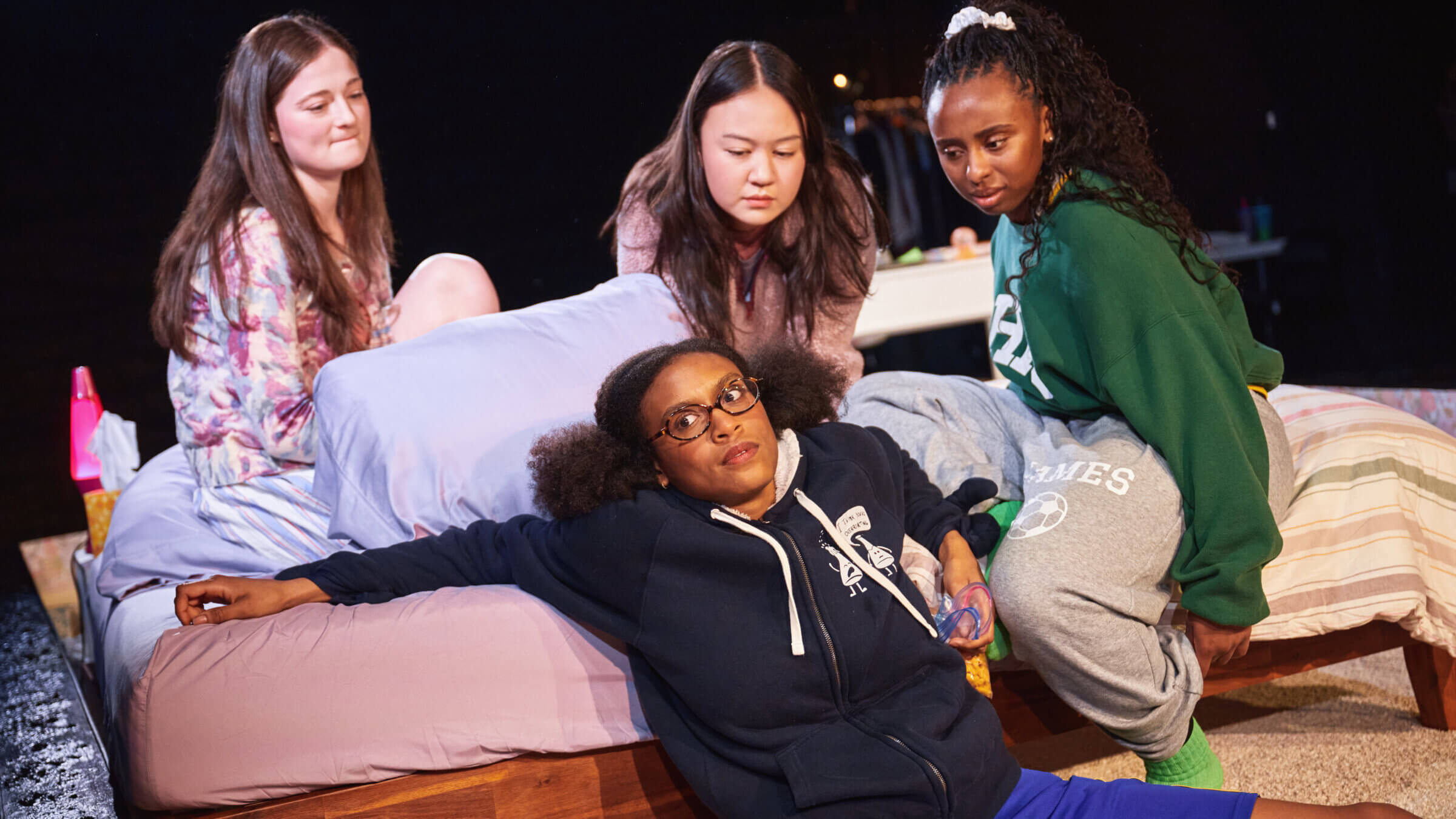
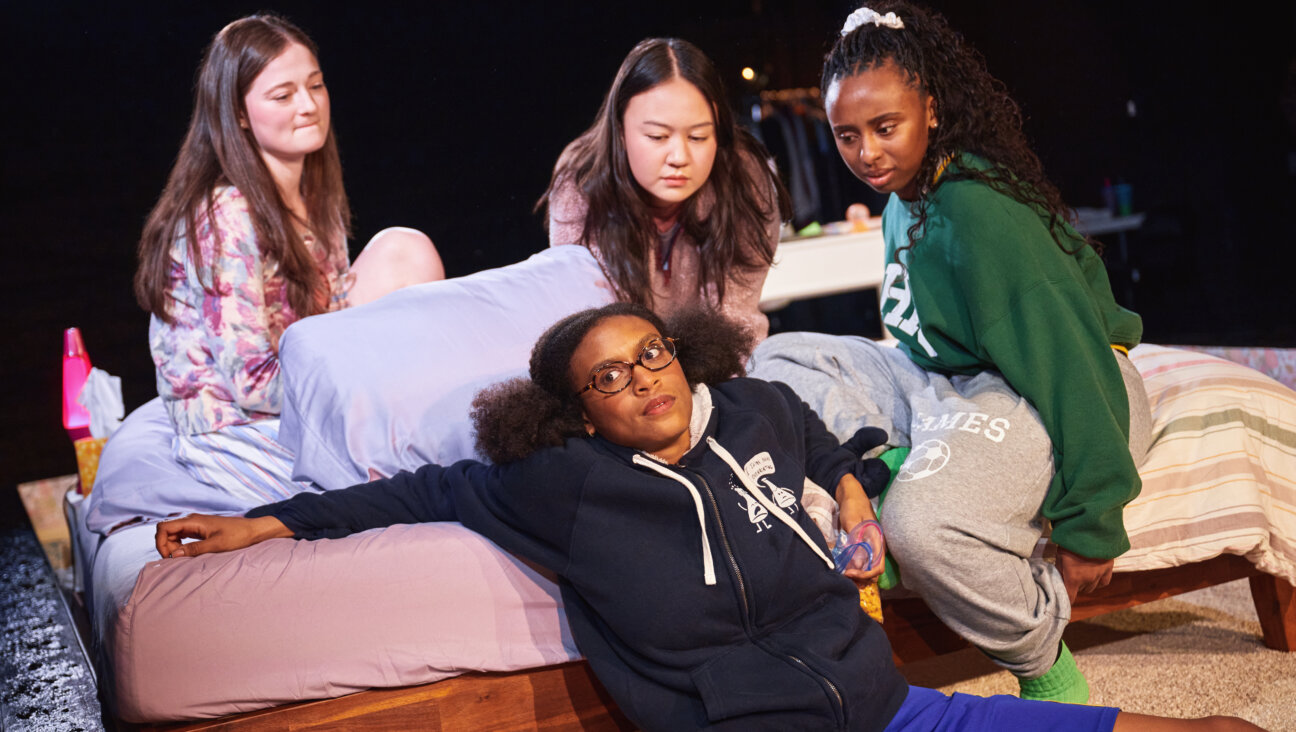
Sophie Rossman, Kayta Thomas, Amalia Yoo and Renée-Nicole Powell in Photo by Valerie Terranova
By PJ Grisar June 22, 2026
Eliya Smith’s dad has seen her play Dad Don’t Read This. He’s kvelled at its every iteration.
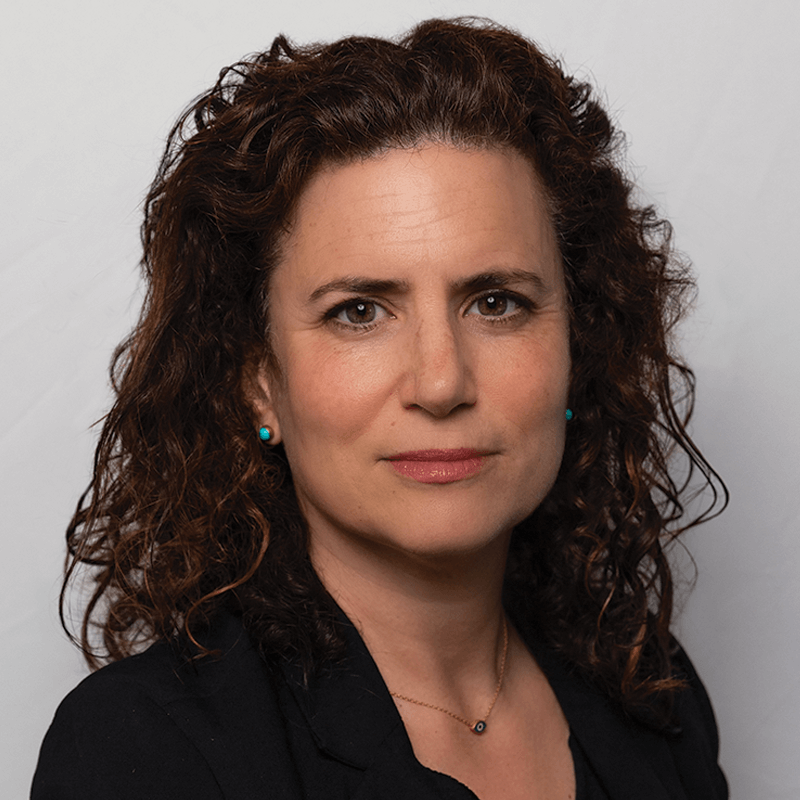
“He’s always like, ‘Are people gonna know that I’m Dad?’” Smith, 28, said on the day of the Knicks Victory Parade. The streets of the West Village, where we met for coffee, were teeming with orange and blue; she was wearing a baseball cap with some sort of bird, a heron or maybe a penguin, swallowing a fish.
“I always think it’s funny that he’s like, ‘I’m here and I have no complicated feelings.’”
Smith’s father isn’t the title character of the piece, which is about four high school friends, the computer game The Sims and the existential angst of adolescence, but technically he is. Smith started writing the show about a decade ago, during Thanksgiving break from Harvard. She needed the pages printed and emailed them to her father with the injunction as a kind of title page. (The following page read, “If you’re reading this page, it means you started to read. Stop reading.”)
The play is a work of fiction, as are all its characters. But the real-life command became a guiding principle — and the first lines — of the show.
“There is like a sort of frame of, ‘This play isn’t for you,’” said Smith, a former Forward editorial fellow who, last year made her Off-Broadway debut with the play Grief Camp. “I think the audience should reckon with the experience of watching it. Not that I’m like, ‘Fuck you for coming to my play,’ I’ll always be grateful, but I think my favorite parts of the play are when it really feels like they’re like doing the play for each other.”
Dad Don’t Read This is what Smith calls her first real, full play. Unsatisfied with her earlier attempts, she took a crack at writing what she knew: boredom and Ohio (in her mind synonymous) and the endless hours she spent in her basement chatting with friends. That and The Sims, the life simulator where players construct the world and circumstances of flailing, gibberish-spewing suburbanites.
“When I was in high school, I feel like I would sometimes play The Sims and be like, ‘If only it were this easy,’” Smith said. She had a cheat code that could defy Maslow’s Hierarchy of Needs: When a Sim had to pee, you could drag the need away. She found herself thinking, “’I wish I could do that for myself, that I could just like drag away the sadness.”
In the show, this sentiment is embodied by Mal (Amalia Yoo, hot off her turn as another high schooler in the midst of a best friend breakup in John Proctor is the Villain), who tries to manipulate her friends the way she does her pixilated people.
Smith isn’t Mal, but the character’s Ohio ennui (Smith’s from Columbus) and some of her feelings are true to her high school self. OK, Smith’s like her in one way: She, like Mal, had a cousin who gave her a Sims cheat code for unlimited money.
The connection between the world of The Sims, and the control it signifies, has a natural extension in playwriting.
“You become a playwright because you have control issues,” Smith conceded. “When I’m writing it on the page, I can manipulate the characters how I want, and then we start rehearsing it, and I lose a little more control, and then it’s like the more the play becomes its own thing.
“I think it is actually the reason I became a playwright, because I love the moment where my desire to control everything is sort of overruled,” Smith said. Still, it’s often painful for her to be present as her words are performed.
About the hat — the one with the bird — she often feels the need to wear one when she sits in the audience, not to be incognito (she’s been told it makes her more conspicuous) but to block some of her field of vision so she doesn’t have to see some patron sigh or look at their phone.
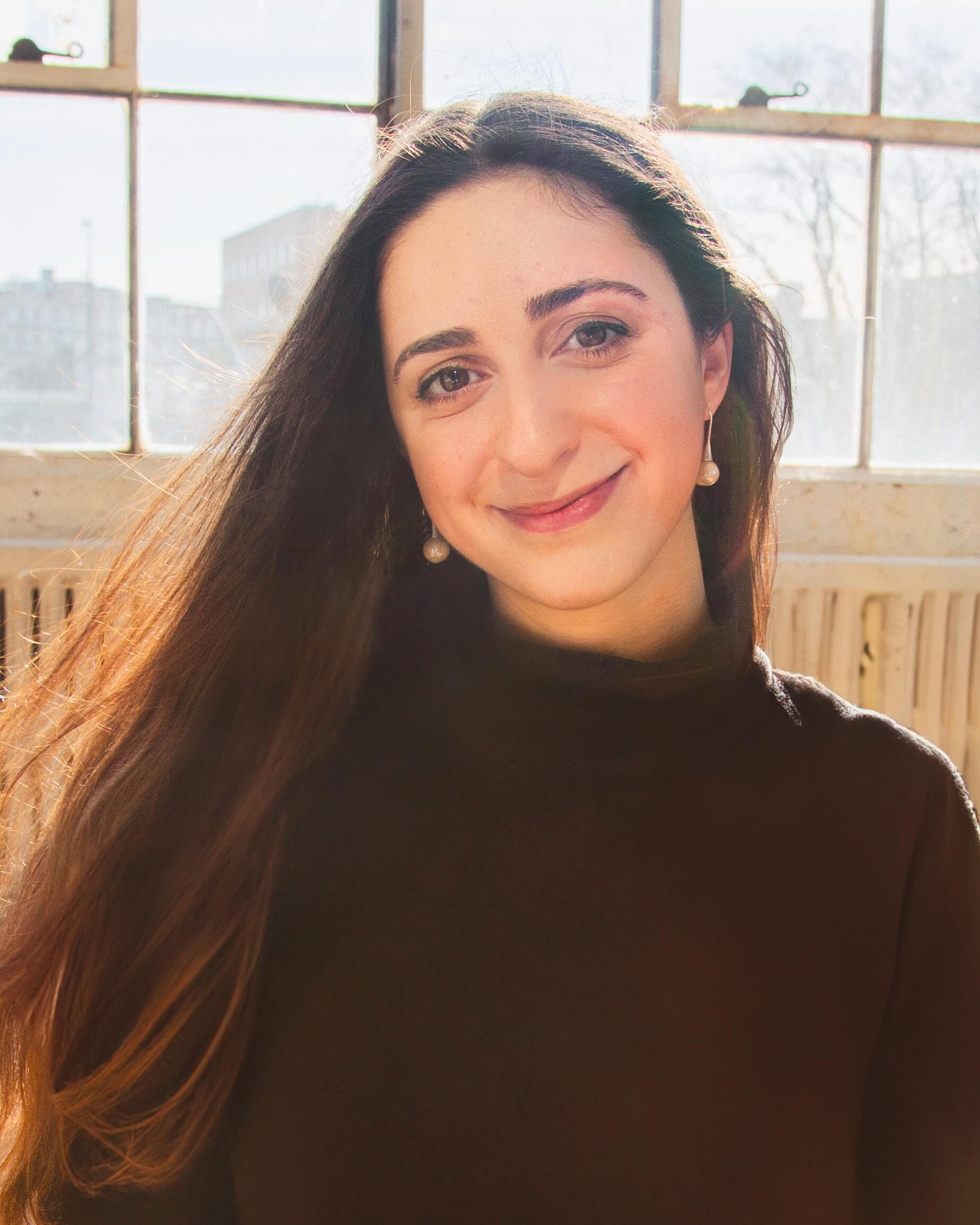
Smith and I move from the coffee shop — whose vibe she compares, no shade, to the fast fashion brand Brandy Melville — over to the Greenwich House Theatre, where Dad Don’t Read This just transferred from St. Luke’s Theatre in midtown, earning a New York Times Critic’s Pick.
We plop into swivel chairs in the dressing room and catch up. Eliya left the Forward in 2021 to go to grad school at UT Austin. She’s only really been living in New York full time for about a year, calling Park Slope home. Life in Austin, she said, felt almost like an extension of high school in Ohio. She’d drive around bored with her friends. She misses the heat.
“I feel like there’s a sort of leveling thing that happens,” she said between sips of her iced coffee. “I feel like in New York you like get off the subway and you somehow are supposed to not be sweaty from being like packed in with hundreds of other people underground, and I feel like in Texas it’s so hot that it’s just totally fine, everyone is kind of disheveled and gross, and it’s just like what the vibe is, and I feel like it’s really equalizing, like ‘We’re all like looking not our best,’ and I liked that.”
She has yet to write her Texas play — or her New York one.
“I feel like everything I write is on a five-year delay,” said Smith, whose produced plays often circle the Buckeye State. (Last season’s Grief Camp took place in Virginia, but also followed young people; another play, about Holocaust memory, was called Deadclass, Ohio and, aptly, played at the New Ohio Theatre in Manhattan.) “Until I was like 23 I was like I can only write about being 17.”
Her new projects, Two Girls, a metatheatrical work about a shock porn video, and Biography (her least autobiographical piece to date), are departures.
It’s hard to explain the exact vibe of Dad Don’t Read This. Some have likened Smith’s work to Annie Baker, who she knows from UT Austin. I propose, in moments, it approaches Chekhov at a sleepover. Smith says she would never compare herself to the Russian master, but is happy to sing his praises. Though I meant this as a compliment, it could be seen as critique: On the surface, there isn’t much of a plot.
“I often joke that I don’t like plot,” Smith said. “But that actually isn’t true. I rigorously plot all my plays, it’s just the plot is like: This character is deeply wounded because of the perceived subtext from a line about a soda, and to me, that is plot.”
She also believes Top Gun: Maverick is the best movie ever in part because of how much happens. You can tell she is sincere, while knowing this is somewhat absurd to discuss in the same breath as The Cherry Orchard.
“You can have great art like Top Gun: Maverick, that is very sort of like there’s a story and these are all the beats, and you can also have Chekhov where the plot is like a wound that you couldn’t even name.”
Ineffable feelings are the engine of Dad Don’t Read This. Mal and her friends try and fail to articulate just what is going on in their little lives, where the inconsequential is the only thing that matters.
While firmly of a generation — it’s set in 2014, the actors are a few years younger than Smith — the play has found older admirers. Helen Shaw of The New York Times ranked it one of her top shows of the season. The New Yorker’s Adam Gopnik will participate in a “Dad Affinity Night” on June 28.
The key to its connection may well be what’s absent from the stage — smart phones and social media are nowhere to be seen. It’s intentional.
“We like don’t have boredom anymore, because we have phones, and so I’ve been trying to figure out how do I put characters in a situation where they can be extremely bored and where that can be dramatically intriguing,” Smith said. “And also, like, how do I make boredom resonate with an audience that doesn’t experience boredom because we look at our phones, and I do feel like being bored in Ohio is like something that I knew so intimately.”
Onstage at the Greenwich House Theatre, boredom lives. And it’s riveting.
Did you know that only 2% of Forward readers donate to support our nonprofit newsroom? That 2% make it possible for millions to read the Forward without a paywall or subscription — removing any barriers to the full and fair Jewish story.
But while the Forward is free to read, it isn’t free to produce. Big stories — like deep dives into the antisemitism data, political scoops or reporting trips to college campuses — take months of research and fact-checking. All while we keep you informed of what you need to know each day.
— Rachel Fishman Feddersen, Forward Publisher & CEO
Support our mission to tell the Jewish story fully and fairly.