Soccer helped my family survive the Nazis. Our community has lost sight of that story’s meaning
‘Never Again’ should be applicable to all peoples
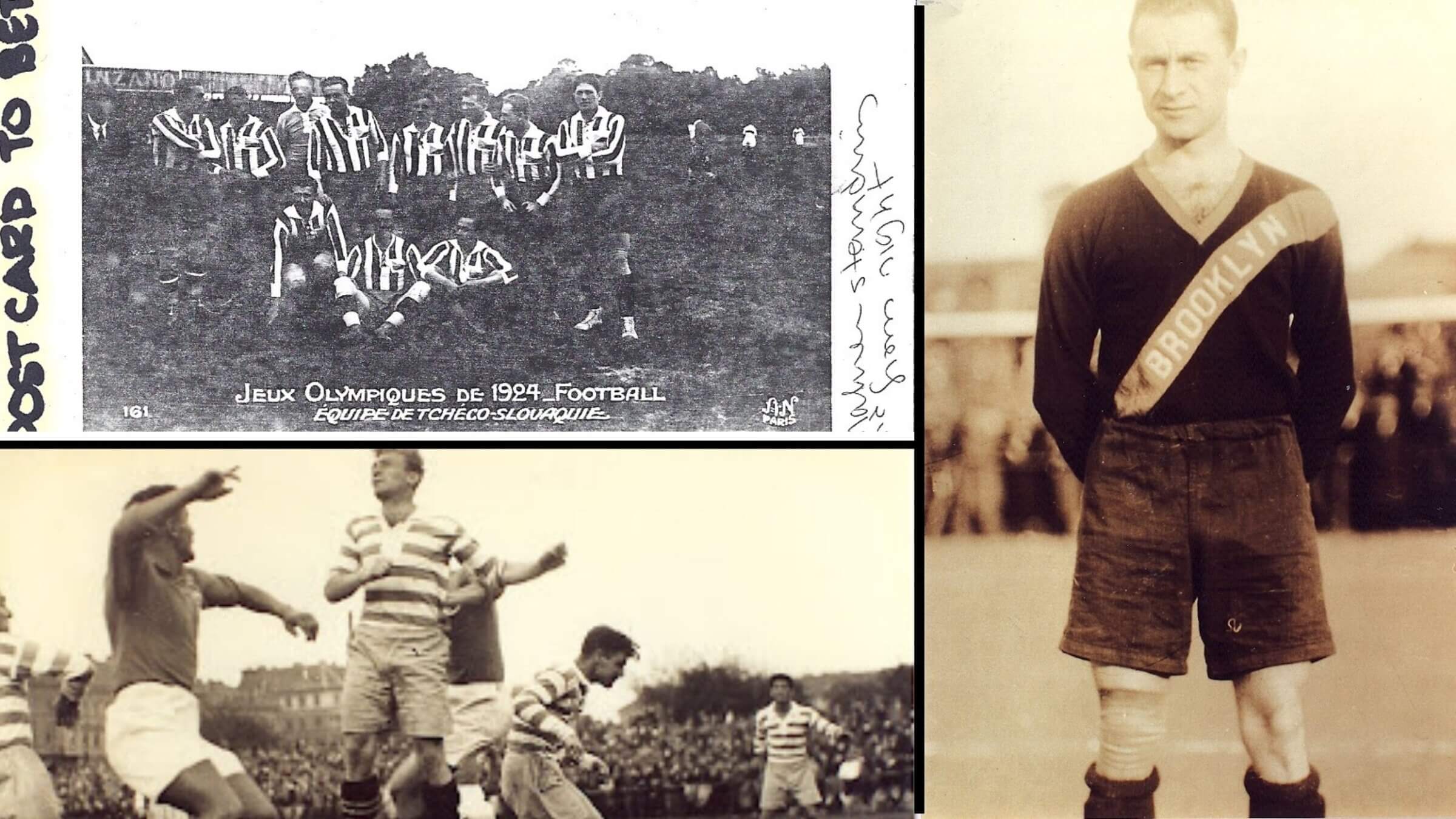
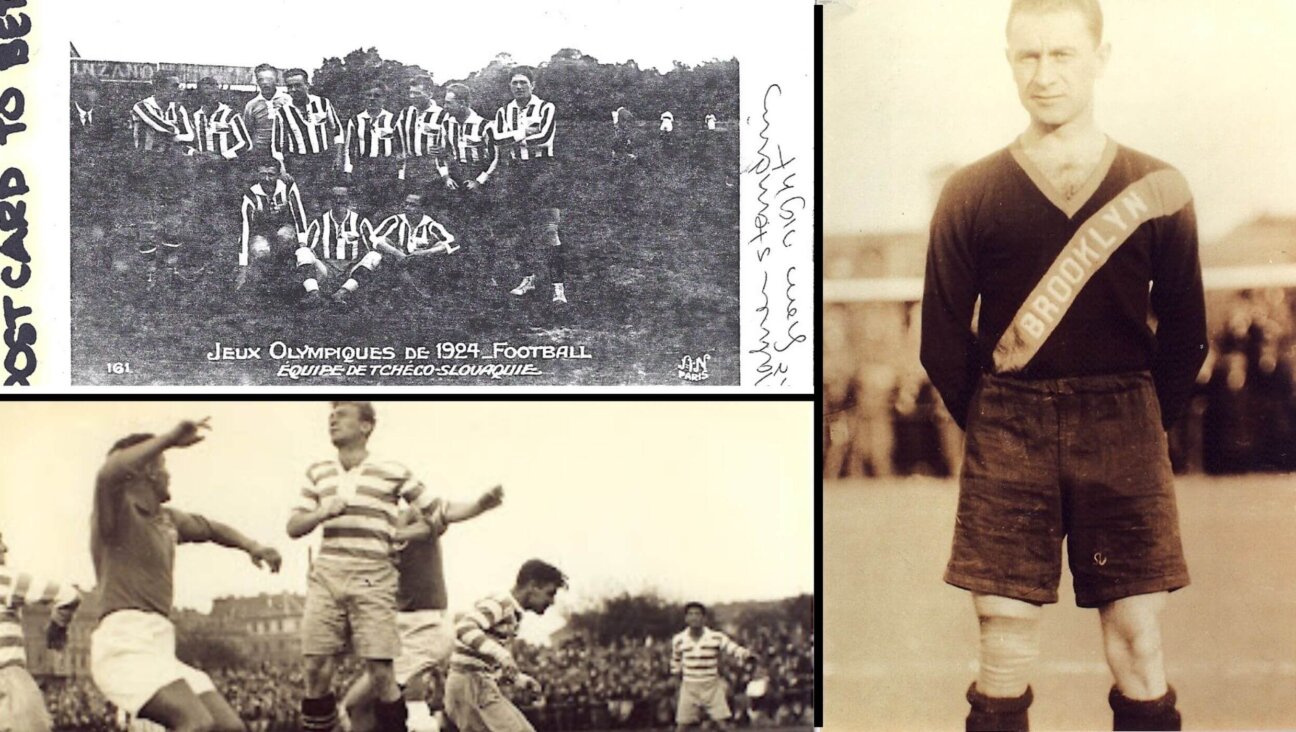
Photos of Pavel Mahrer’s soccer career. Courtesy of The Mahrer family
A new exhibit at the Holocaust Museum LA should be telling my great-grandfather’s story as part of its study of soccer, Jews and the Holocaust. But it won’t, because the museum failed to internalize the great moral lesson that my family learned from surviving the Holocaust: to never value the safety of one group over that of others.
The museum describes The Beautiful Game: The Untold Story, which opened this week, as an exploration of “the deep and often overlooked relationship between Jewish life and the global game.” It could have been curated specifically to tell my family’s story, because it was soccer that saved them from the Holocaust.
Pavel Mahrer, my great-grandfather, was a Jewish professional soccer player for Czechoslovakia. He played for teams in Teplitz and Prague, as well as at the 1924 Olympics. In the 1920s and 1930s he moved across the Atlantic to play for the Brooklyn Wanderers and for a Jewish team, New York Hakoah. His son Jerry was born during that time; eventually, the fact that Jerry held American citizenship would save much of the Mahrer family from the Holocaust.
During the Shoah, Pavel became the star player in the league at the Theresienstadt ghetto. He once wrote to his wife, as they were imprisoned separately, “tell our boys that I played soccer again and even played well and was successful.” Soccer brought him joy during those years of total despair. He avoided transport to Auschwitz — possibly because he was a famous athlete — and eventually reunited with his family in New York after the war.
The Holocaust Museum LA exhibit doesn’t tell that story, but it wanted to. My family pulled out of the exhibit because we didn’t want our story told by an institution that we think has faltered in holding true to the back half of its stated mission of inspiring “a more dignified and humane world.”
‘Never Again’ for whom?
We had already been in contact with the exhibit curators when the museum became entangled in a public relations crisis last fall over an Instagram carousel featuring a cover image of six interlocking arms of different colors with the text: “’Never Again’ can’t only mean never again for Jews.”
Further slides added: “Jews must not let the trauma of our past silence our conscience” and “To be Jewish is to remember and act.”
Finally, I thought, a Jewish institution that will stand against genocide and violence, full stop. Not just genocide and violence against Jews.
Over the past few years, I’d watched the Jewish institutions I grew up respecting make excuses for or ignore Israel’s assault on Gaza. At best, they remained silent as Israel killed innocent civilians in the name of the Jewish people. At worst, they supported Israel’s actions unreservedly.
But here was one Jewish institution that was sending the right, albeit subtle, message.
My family agreed that this was a museum that was teaching the history and lessons of the Holocaust in a way we wanted to support. We had told the museum of our interest in loaning them Pavel’s 1924 Paris Olympics jersey and photos of his soccer career for the exhibit, and grew more excited for the collaboration.
But not everyone had the same reaction to the post that we did. Comments flooded the museum’s page claiming that the phrase “Never Again” was only for Jews, and criticizing the museum for generalizing the Holocaust — as if Jews have a monopoly on being victims of genocide. I figured the museum must have been prepared for some backlash, but had decided it was worth upsetting some to show that they cared for all.
I was wrong.
The museum deleted the post, then issued an apology, calling the post “easily open to misinterpretation by some to be a political statement reflecting the ongoing situation in the Middle East.” To us, it read as if they were apologizing for giving the appearance of caring about Palestinian lives. The apology post drew outrage as well — although not in the comments section, which was disabled.
A humane world for everyone
The apology felt like cowardice to me and my family. So we asked to meet with Beth Kean, the museum’s CEO. By the time we connected with her over Zoom in October, the apology post had been deleted as well. We wanted to understand what was behind their decision to post, remove, apologize and then act like none of it ever happened.
After the meeting, we understood that the museum hadn’t expected the response to the first post; some museum staff, horrifyingly, had received death threats. But we didn’t get a good answer as to how capitulating to hateful comments and violent threats aligned with the stated mission of the museum. We were promised an updated public statement that would specifically state the museum’s humanitarian goals; but if one was ever published, I didn’t see it.
We decided that we no longer felt comfortable lending the material that told Pavel’s story to the museum. I take pride in being the descendant of Holocaust survivors, and I’m especially proud that my family has always told our story in a way that emphasizes that the safety of all peoples is and has always been intertwined. I don’t think Pavel would be proud to see his story used to help suggest in any way that Jewish lives should be valued over others.
I didn’t expect the museum to change its mind because of a thirty minute Zoom call with my family, but its willingness to, in my eyes, bend on its principles left me disheartened. If we can’t take stories of Jewish suffering and strength — like that of my family — and apply their lessons to the suffering that is occurring to this day around the world, what is the point of telling them?
I’m a soccer player myself. Every time I score a goal or make a tackle I think of how I wouldn’t be alive if it wasn’t for this beautiful game. I feel a kinship with other players, other soccer fans, because we share that love of the game. It brings us joy, it brings us hope.
I find my family’s story compelling not just because it is a story about Jews during the Holocaust, but because it is a story about survival — a story about luck, talent and both good and terrible timing. The drive to survive, and the need to ensure others’ survival, should be universal. If the message that our Jewish institutions send is that Jewish survival matters most, who is that message for? How can we expect the rest of the world to care about our safety if we don’t do anything to prove that we care about theirs?
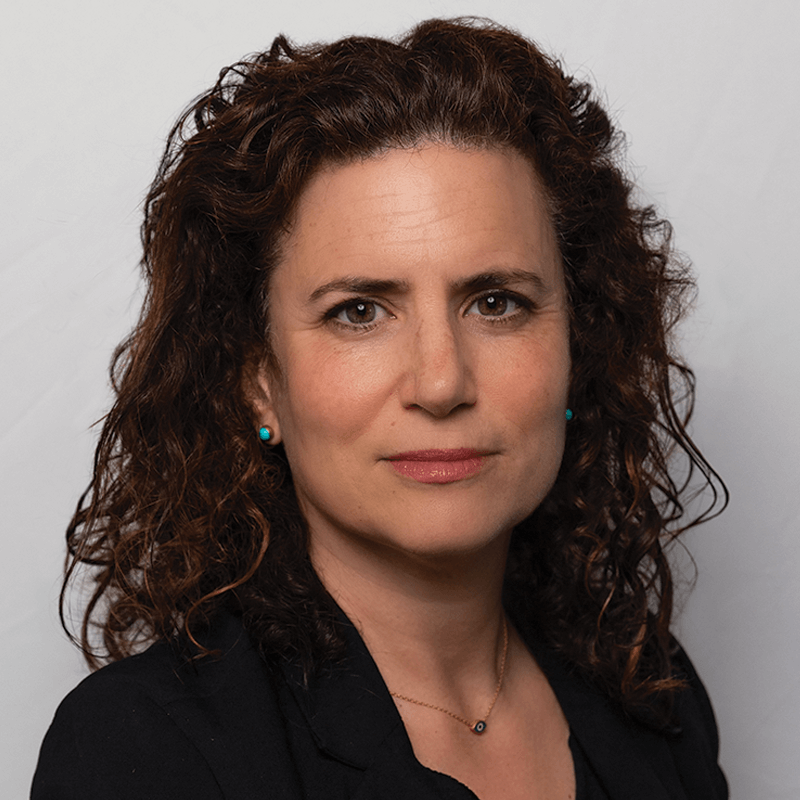
Dani Mahrer is a former Jewish educator who now works in renewable energy in Los Angeles.
Did you know that only 2% of Forward readers donate to support our nonprofit newsroom? That 2% make it possible for millions to read the Forward without a paywall or subscription — removing any barriers to the full and fair Jewish story.
But while the Forward is free to read, it isn’t free to produce. Big stories — like deep dives into the antisemitism data, political scoops or reporting trips to college campuses — take months of research and fact-checking. All while we keep you informed of what you need to know each day.
— Rachel Fishman Feddersen, Forward Publisher & CEO
Support our mission to tell the Jewish story fully and fairly.