Everyone was a fan of Clive Davis — even if they didn’t know it
I saw the legendary producer only once in an elevator — the encounter stayed with me
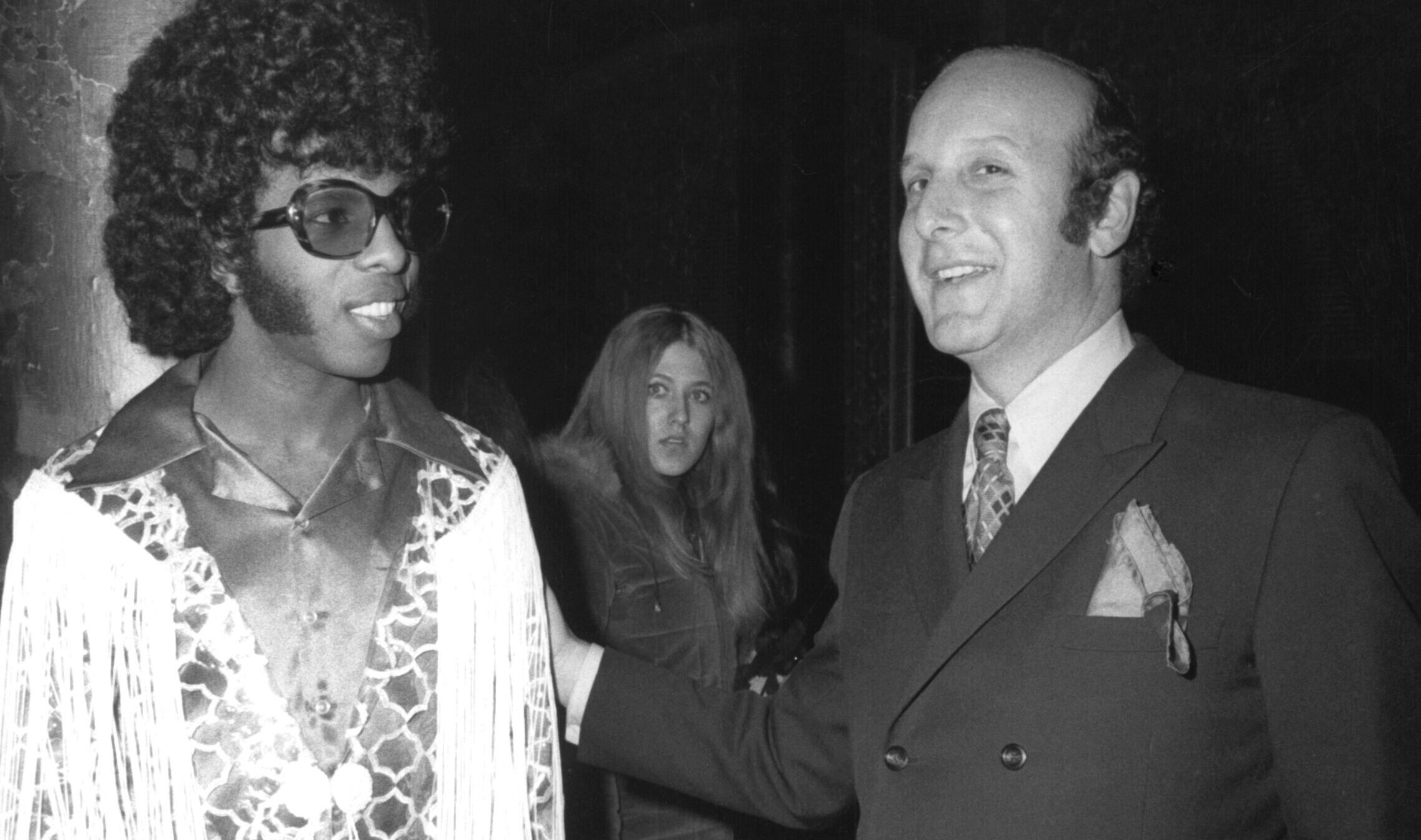
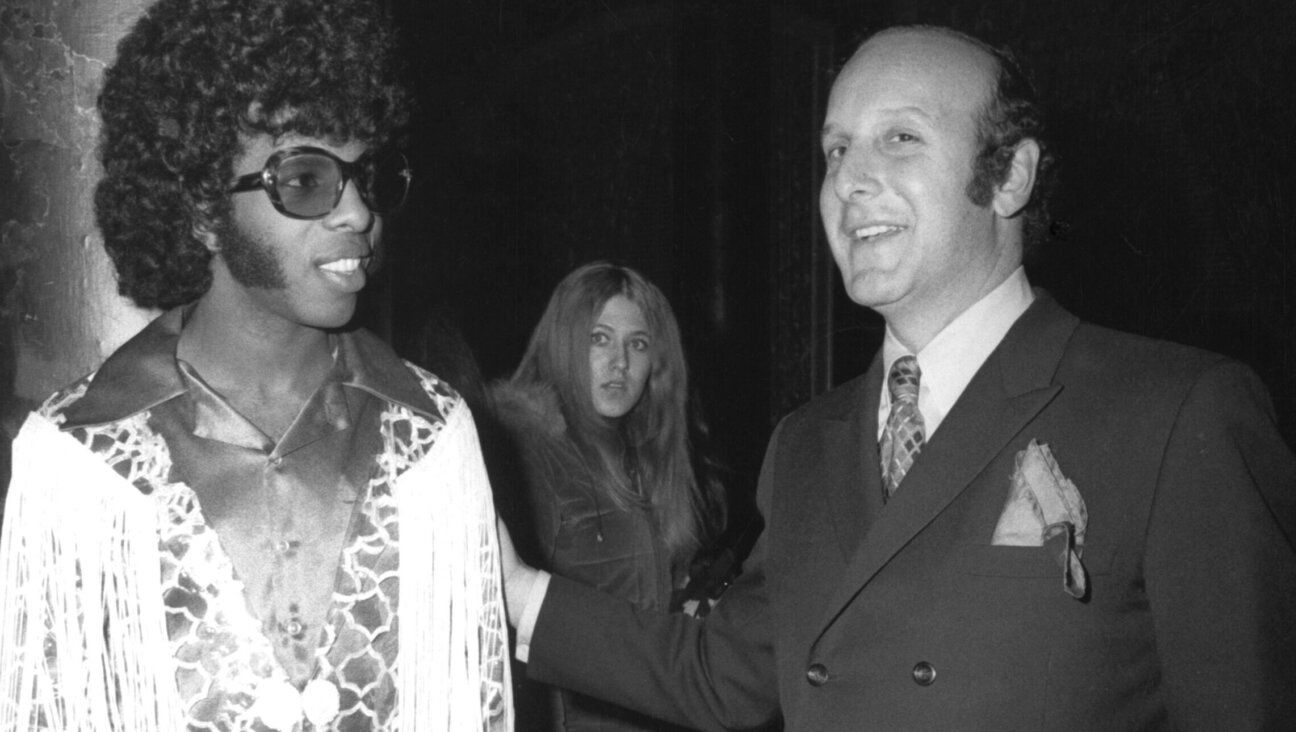
Clive Davis and Sly Stone in 1970. Photo by Don Paulsen/Michael Ochs Archives/Getty Images

By PJ Grisar June 22, 2026
Last September I spent about 30 seconds with Clive Davis in a crowded elevator.
I was in the Sony Building, having just seen a press screening of Richard Linklatter’s Blue Moon. The elevator was full of mostly young people — probably Sony employees — and some press. The doors pinged open and in stepped a man with two handlers and an adorable spaniel. I turned to a fellow journalist and whispered “That’s Clive Davis.”
Someone who knew Clive — enough to call him “Clive” — told him we’d just seen a movie about the creative breakup between lyricist Lorenz Hart and musical composer Richard Rodgers.
“Didn’t you play Janis Joplin for Richard Rodgers,” he asked Davis.
Davis replied with perfect comic timing: “Yes. He hated it.”
That anecdote tells us just how much Davis, the legendary music executive and producer who died Monday June 22 at the age of 94, changed the musical landscape.
Davis had been in the music business long enough to serve as a bridge figure between the Great American Songbook and the popular music of the latter half of the 20th Century. The artists he signed at CBS, and later Arista (he was ousted from the CBS/Columbia for allegedly using company money to finance his son’s bar mitzvah), are enduring icons even, in the case of Ms. Joplin, decades after their deaths.
But what hit me in the elevator was the feeling that not everyone there knew who he was. They did, of course, know the music: Pink Floyd, P!nk, Whitney Houston, Sly and the Family Stone, Barry Manilow, Neil Diamond, Leonard Cohen, Bruce Springsteen and Aerosmith, the very authors of “Love in an Elevator.”
It’s not overstating it to say that Davis’ influence across genres and his golden ear provided the soundtrack to American life. His own life was productive until the end.
He was in the Sony building because he was Chief Creative Officer at the company. A week before his death, the streets were thumping with a New York anthem from one of his late career discoveries: Alicia Keys.
Davis’ trajectory could be taught in Jewish Studies courses. Born in working-class Crown Heights, he — like Barba Streisand — was a graduate of Erasmus Hall High. He made good at NYU and got his law degree at Harvard.
He rose from the legal department at Columbia to become the company’s top tastemaker. Somewhere along the way he discovered Joplin — of a polar opposite disposition and background — and went from strength to strength.
Davis’ true triumph might have been just how adept he was at navigating everything the U.S. had to offer. The musicians he promoted had little in common save for his imprimatur.
In that elevator, which delivered us without much fuss to the lobby, there may have been people whose musical tastes gravitated to rock, hard funk, R&B, jam bands, easy listening, guitar instrumentals and jazz.
Whether they knew it or not, Davis shepherded something they liked into existence. His genius was in recognizing genius.

Did you know that only 2% of Forward readers donate to support our nonprofit newsroom? That 2% make it possible for millions to read the Forward without a paywall or subscription — removing any barriers to the full and fair Jewish story.
But while the Forward is free to read, it isn’t free to produce. Big stories — like deep dives into the antisemitism data, political scoops or reporting trips to college campuses — take months of research and fact-checking. All while we keep you informed of what you need to know each day.
— Rachel Fishman Feddersen, Forward Publisher & CEO
Support our mission to tell the Jewish story fully and fairly.