U.S. and Iran announce direct Lebanon track without Israel
Jerusalem vows to maintain pressure on Tehran and Hezbollah
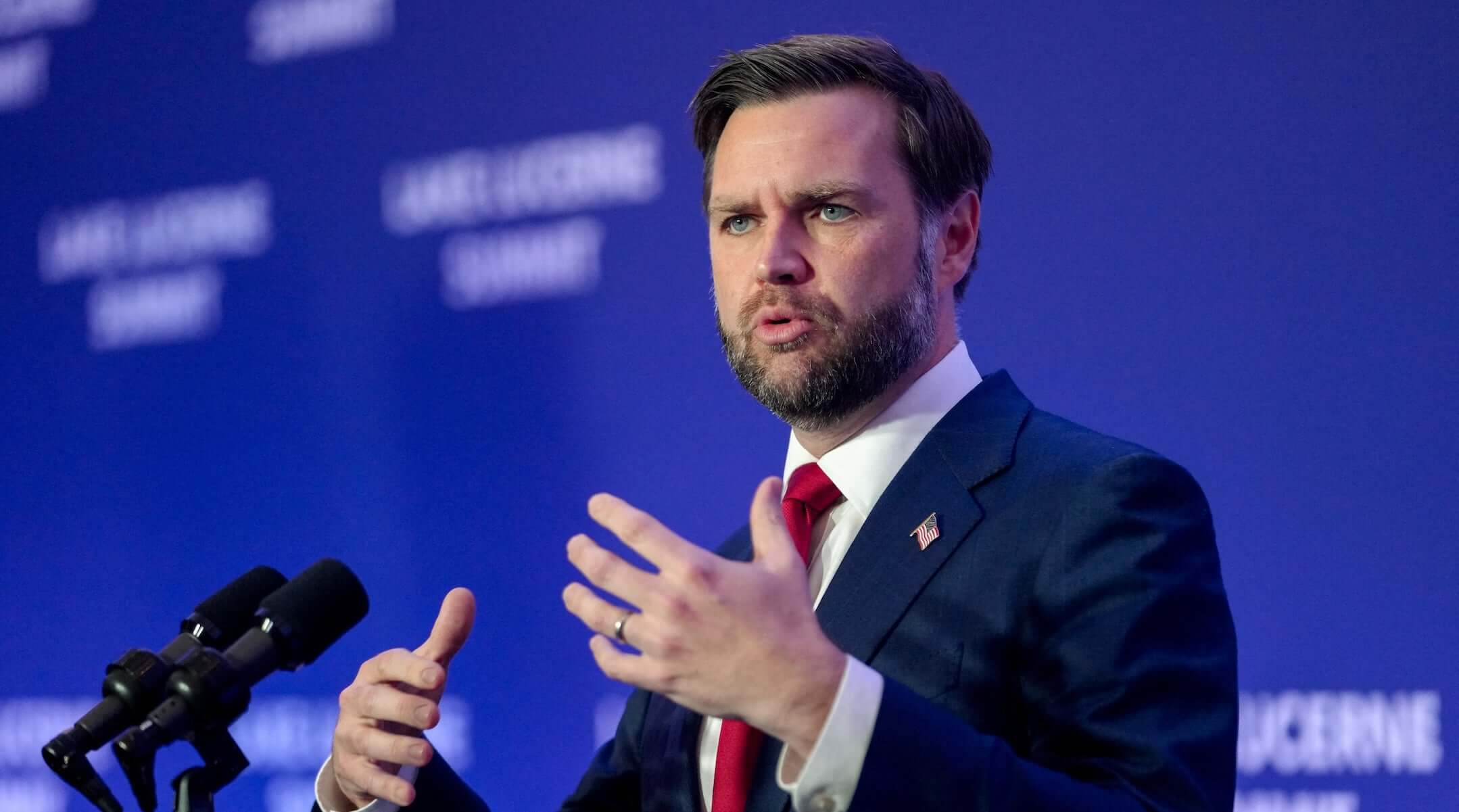
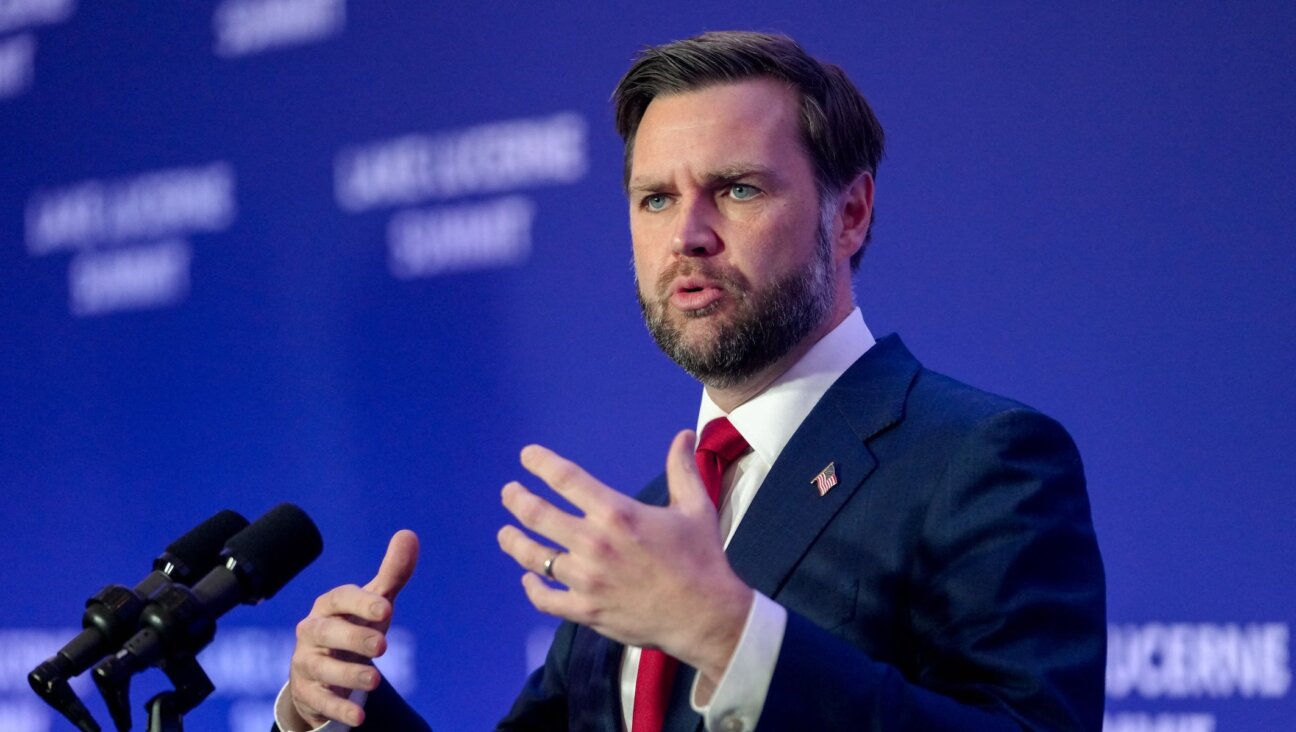
U.S. Vice President JD Vance speaks to members of the media after the U.S. and Iran held high-level talks at the Lake Lucerne Summit in Switzerland on June 22, 2026. Photo by Nathan Howard/POOL/AFP
(JTA) — Following tense high-level negotiations over the weekend, mediators in Switzerland announced Monday morning that Washington and Tehran have agreed on a 60-day roadmap toward ending the war.
The joint statement released by mediating countries Qatar and Pakistan also unveiled the creation of a Lebanon deconfliction mechanism. According to the mediators, this entails a direct U.S.-Iranian track to terminate military operations in Lebanon and includes the Lebanese government but not Israel. The mediators did not explain how that would operate or resolve the current hostilities between Israel and Hezbollah.
Throughout the weekend Jerusalem, which watched the talks and the announcement from the sidelines with concern, doubled down on its hardline stance against Iran and its proxy group Hezbollah.
Speaking to reporters in Switzerland Monday before returning to Washington, U.S. Vice President JD Vance clarified that Israel had the right to self-defense, but that “every other nation in the region has the right of self-defense” as well. The mechanism was to resolve direct violations of the ceasefire between Israel and Hezbollah, Vance explained, indicating that it augmented the ongoing diplomatic work.
“We also want to make sure that, you know, when things happen, they don’t spiral into a broader escalation,” he said, adding that “there really hasn’t been a mechanism to have those discussions until basically around 4 p.m. yesterday.” He said that the U.S. had been in constant contact with Israel on Sunday.
Prior to Vance’s statement, the Israeli government delivered its first overt criticism of the diplomatic efforts taking place at the Bürgenstock resort in Switzerland.
Addressing the Jerusalem News Syndicate Conference in Jerusalem Monday, Israeli President Issac Herzog said any negotiations to end the Israel-Lebanon conflict should be done by the two countries themselves and not “by Iranian extortion.”
He added, “Tying Iran to Lebanon not only leaves Israel exposed to constant threat; it leaves the Lebanese weak and powerless, and will prevent their president and government from moving forward.”
Herzog also noted that direct talks were already taking place between Lebanon and Israel in Washington under the auspices of the State Department. The next round of negotiations is scheduled for Tuesday, which Herzog said is designed to empower the Lebanese army to be the sole military force in its country. Hezbollah and Iran are not a party to those talks.
“The disarmament of Hezbollah must be inherent to any solution in Lebanon, and Iran cannot dictate the future of Lebanon – on these fundamental points there is full agreement between Israel and Lebanon,” Herzog stated.
He also thanked President Donald Trump for his efforts on Israel’s behalf, calling him “our closest friend and ally and leader of the free world.”
The Lebanese Presidency said Monday that President Joseph Aoun had received a phone call from US Vance, senior adviser Jared Kushner and Qatari Prime Minister Sheikh Mohammed bin Abdulrahman bin Jassim Al Thani, but did not clarify when that call occurred.
According to the Lebanese statement, the discussion focused on “consolidating the ceasefire in Lebanon, halting the Israeli military escalation, and the steps that must be taken in this regard, including the possibility of forming a cell for this purpose.”
The ongoing fighting between Israel and Hezbollah and the IDF’s presence in southern Lebanon has been a point of tension throughout the ceasefire deal between the U.S. and Iran. The shaky ceasefire has been in place since April 8 after Israel and the U.S. started the war on Iran at the end of February.
In early March, Iranian proxy Hezbollah joined in by attacking northern Israel. Jerusalem has maintained that the Lebanese front needs to stay separate and has continued to take aggressive retaliatory action against Hezbollah despite the U.S. imposing a separate ceasefire in Lebanon as well.
Meanwhile, Qatar and Pakistan said the U.S.-Iran memorandum included the establishment of a “High Level Committee” to oversee negotiations aimed at a roadmap “towards reaching a final deal within 60 days, laying the foundation for the immediate commencement of further technical talks” on Iran’s nuclear program, sanctions and dispute resolution. These were the first formal discussions as part of the new U.S.-Iran Memorandum of Understanding, with Vance representing Washington.
The vice president told reporters Monday that Sunday “was a very, very good day. We made a lot of good progress; we did exactly what we wanted to do,” including securing an agreement from Iran that inspectors from the International Atomic Inspection Agency be allowed back into Iran.
Negotiators also created a mechanism to ensure that the Straits of Hormuz remain open, Vance said, downplaying reports of disputes between the American and Iranian teams.
However, Iranian media reported that members of Tehran’s delegation briefly left the room during Vance’s remarks after learning that Trump was issuing threats against Iran following Iran’s announcement on Saturday that it planned to once again close the Strait of Hormuz.
Vance said it was true the Iranians had threatened to walk out, but in the end they stayed and negotiated until the early hours of the morning.
Trump told Fox News in a phone call on Sunday morning that he had spoken with Iran overnight and said that if the country closed the Strait, he would “blow the s— out of them.” Fox News also reported that Trump had said, “You won’t even make it back to your f—— country.”
Trump also posted on his Truth Social account on Sunday that unless Iran stops supporting Hezbollah, “We’ll hit Iran very hard again, just like we did last week, only harder!!!”
Iranian officials reportedly responded to what they termed U.S. “verbal threats,” saying that “any form of threat is considered a serious violation of the agreement.”
Iranian Foreign Minister Abbas Araghchi said Sunday the talks had delivered “major progress to end [the] Lebanon War,” and added that discussions included oil exports, sanctions relief, frozen Iranian assets and reconstruction plans.
On Sunday, however, Prime Minister Benjamin Netanyahu declared, “We will remain in the security zone in southern Lebanon for as long as it takes in order to protect the residents of the North.”
Vance on Monday said that Israel would have to withdraw, but only when it can do so safely. The Trump administration, he explained, hoped to reach a situation where both Lebanon’s territorial integrity and Israel’s security were protected, noting that Israel itself has said it doesn’t have permanent “territorial intentions” with regard to southern Lebanon.
In separate remarks at Sunday’s JNS International Policy Summit, Netanyahu said, “We have prevented Iran from carrying out a plan to annihilate us. We removed an existential danger.” He added, “We changed Israel’s security doctrine. We initiate. We attack. We surprise.”
Directly addressing the U.S.-Iran negotiations, he added, “No matter what happens in the talks, with an agreement, without an agreement, I pledge to you that Iran, as long as I am prime minister, will never have a nuclear weapon. Never.”
This article originally appeared on JTA.org.
Did you know that only 2% of Forward readers donate to support our nonprofit newsroom? That 2% make it possible for millions to read the Forward without a paywall or subscription — removing any barriers to the full and fair Jewish story.
But while the Forward is free to read, it isn’t free to produce. Big stories — like deep dives into the antisemitism data, political scoops or reporting trips to college campuses — take months of research and fact-checking. All while we keep you informed of what you need to know each day.
— Rachel Fishman Feddersen, Forward Publisher & CEO
Support our mission to tell the Jewish story fully and fairly.