My father was my hero and, when he was dying, I wrote this song for him
In music, we can find the spiritual power to say what can’t otherwise be said
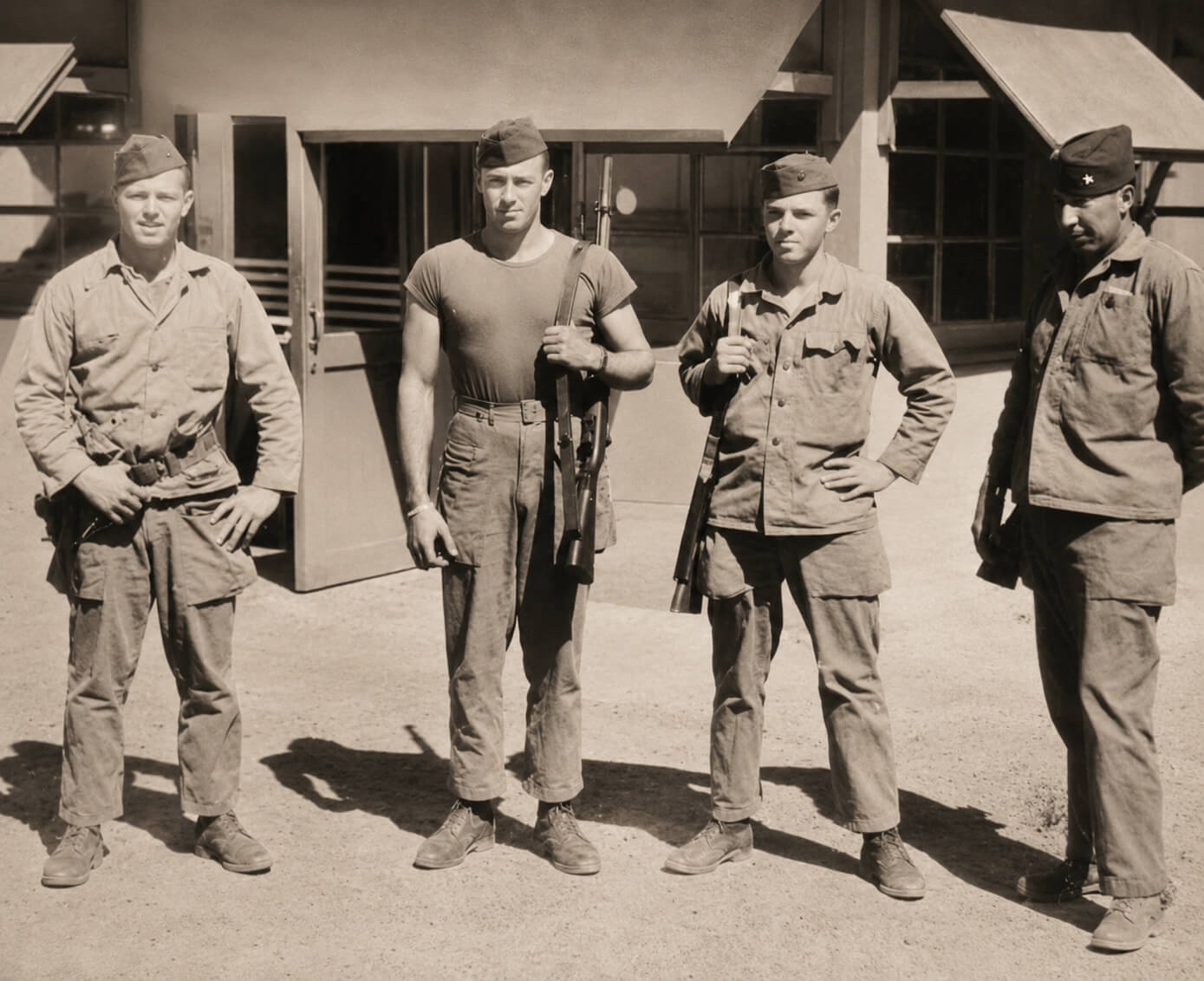
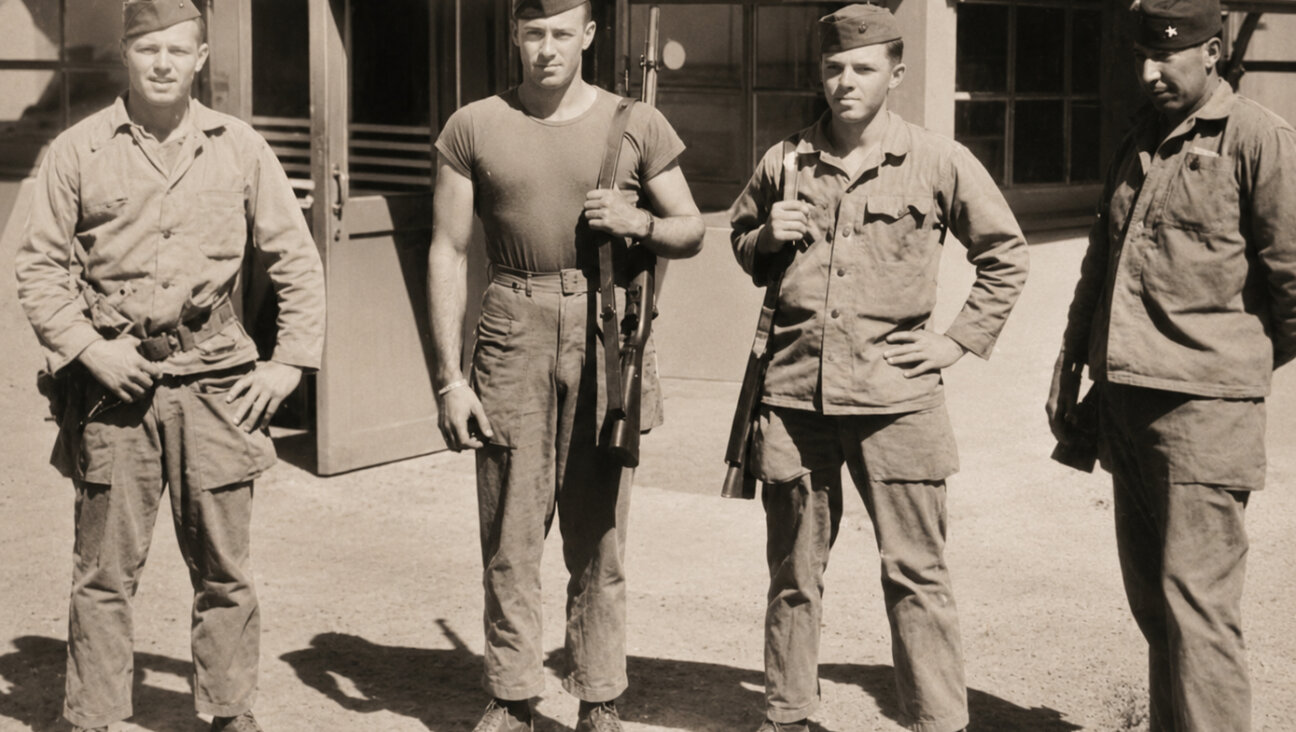
The author’s father (second from left) when he served in the Marines. Courtesy of Peter Himmelman
I was 18 when my dad discovered a lump on his neck. He’d been doing sit-ups with my mom in their bedroom.
He was 49 years old.
First, a word about my dad. It’s sad when anyone’s parent dies, more so when they are still young. Tragic when your dad is your hero.
If I had to describe my dad in one word, I’d say he was strong. Not only was he an Eagle Scout, a United States Marine, not only was he once a deputy sheriff at Medicine Lake with his own rifle, and not only did he have huge arms and could rip a phone book in half; my dad was strong enough to be self-effacing and terrifically kind. He was not didactic in the least. He taught his curricula in one way only, by example. The lessons I learned from him about the nature of strength, real strength, are ones I try to carry with me each and every day.
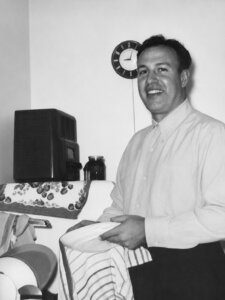
At the conclusion of every marital spat he’d have with my mother I used to hear him say, “Ok, Bevy, you’re right and I’m wrong.” I never knew what that meant. Was he folding, caving in? Where was his spine? His balls? I was never quite sure if there was just a trace of contempt or anger in that statement of his, or was it, as I’d learned much later, really a pure recognition that he’d seen things her way and that her way was just better?
It strikes me now that the essence of his strength, his manliness if you will, was a sense of self-effacement and humor that bordered on genius.
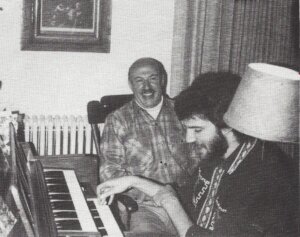
At 17, I took the liberty of hosting my girlfriend in my parents’ bed while they were away on a trip to Chicago. They’d come home a day earlier than expected and caught the two of us, just moments… afterwards. My dad was standing behind my mom, trying to bottle up his laughter. It was especially difficult for him to keep from laughing after my mother said in her serious voice, “Peter, I would hope that in the future you’d entertain your guests in your own room.” In my defense, my own room did not have a color TV set.
All of my cousins, even the ones that weren’t my dad’s blood relatives, were crazy about him. They sought his counsel like he was a tribal sheik. I remember many nights where one cousin or another would be huddled around our kitchen table with him. He wasn’t doling out advice. Advice is overrated anyway. Any asshole can give good advice. It’s the way my dad made you feel that made him so special.
At the time, I was playing in a calypso and reggae band with five grown men, and one woman, Cheryl, who played the Hammond organ. She’d come from Jamaica, the others from Trinidad. But that’s for another story.
I was also writing pop songs with my band Sussman Lawrence, supposedly having the time of my life. But I was in deep emotional pain.
My dad discovered a lump in the back of his neck in the autumn of 1979. It took the doctors a week to determine that he had stage-four lymphoma. They figured he had six months, tops. They were wrong by almost three years.
At the time I barely reacted to the news. I told myself it was strength, composure. I understood later it was something else entirely — a tendency to go inside myself, to stay as far away from my feelings as possible. It was as if I’d been playing a sort of double role. In some moments I was hypersensitive and deeply connected to the grief. In others, I was completely divorced from it. Some four years later, toward the end of my dad’s life, those two halves would finally collide.
It was 1983 and our band was in Amery Wisconsin, finishing our last set at a bar called The Country Dam. It was late and the crowd was so drunk they were falling over one another, screaming for one more chorus of “I’m Your Fireman.” At four in the morning I pulled up to my parents’ house behind my dad’s white ’83 Chrysler LeBaron. He’d gone all the way to Mankato with my mother to buy it.
Tired as I was, I couldn’t stop looking at that car, wondering how I’d feel about it when he died.
It was Father’s Day, and my mom had planned a big brunch for him in just a few hours. Cousins, aunts, and uncles — everybody wanted to be there to cheer him up. Even though my dad had outlived the doctors’ dire predictions by four years, we knew that the disease had progressed to the point where this was very likely his last Father’s Day.
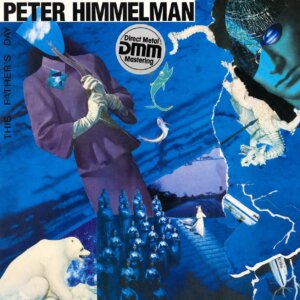
I was pretty wound up from the performance the night before and since the sun was coming up anyway, I couldn’t see any reason to try and sleep. I picked up a guitar. It was an old acoustic that hardly played in tune. I started picking through some chords in a half-trance and singing softly to myself, just thinking about that LeBaron and how my dad really liked that car. The words came fast and the melody started to take on a shape. Each new line generated more melody, and the melody inspired more words.
“When no one is forgotten and nothing goes to waste, when sadness turns to laughter, when anger is defaced, you’ll start to know the way I feel about you.”
When a song comes to you like that, it’s best to get out of your own way — to be as detached as possible — and yet I couldn’t help feeling excited that this was a song for my dad. I thought, “At least now I won’t be the only fool at the brunch without a Father’s Day present.”
“And if I could, I’d run out into the world and tell every boy and girl to love before love takes itself away… just like I’m loving you this Father’s Day.”
I made a quick recording of the song, and I was so tired and so emotional that I started crying in the last chorus. I didn’t want to let everyone hear me blubbering on tape, so I reached over to erase it and sing it again, but at the last second I decided to leave it as was, tears and all.
The next morning I brought the cassette upstairs. The brunch was in full swing: The lox and the smoked whitefish had been taken out of the refrigerator and arranged on platters. The scrambled eggs and onions were warming on the stove. The cinnamon rolls and the cartons of Minute Maid were on the table, and the brunch-goers were trying their best to slap on their happiest faces.
I put the cassette in the stereo, and I swear it took no more than ten seconds for everyone to break down in tears and exit the room.
Now it was just my dad and me — both of us staring out the big picture window of our den, listening as the song played.
As it ended, we held each other and cried. Whatever façade of normalcy we’d been putting up over the last few years washed away in the emotion of that song. I’d wanted to say so many things to him, and for so long. Somehow the song expressed everything so well.
From that morning on, my dad carried the cassette around with him in his breast pocket.
He died a few months later on Thanksgiving night. We got a call from the hospital as we were sitting at the table; the turkey had never even been carved.
As tragic and sad as his death was, I’ve never felt remiss for not expressing how I felt.
This, I think, is not only the utility of music (a harsh word, I know), but its spiritual power — to say what cannot otherwise be said, and to leave nothing essential unspoken.

Did you know that only 2% of Forward readers donate to support our nonprofit newsroom? That 2% make it possible for millions to read the Forward without a paywall or subscription — removing any barriers to the full and fair Jewish story.
But while the Forward is free to read, it isn’t free to produce. Big stories — like deep dives into the antisemitism data, political scoops or reporting trips to college campuses — take months of research and fact-checking. All while we keep you informed of what you need to know each day.
— Rachel Fishman Feddersen, Forward Publisher & CEO
Support our mission to tell the Jewish story fully and fairly.