Abdul El-Sayed is courting Jewish voters — without moderating his views on Israel
The Michigan Senate candidate, who has called the Israeli government “evil,” is finding a following among Jewish voters that includes some who identify as Zionist
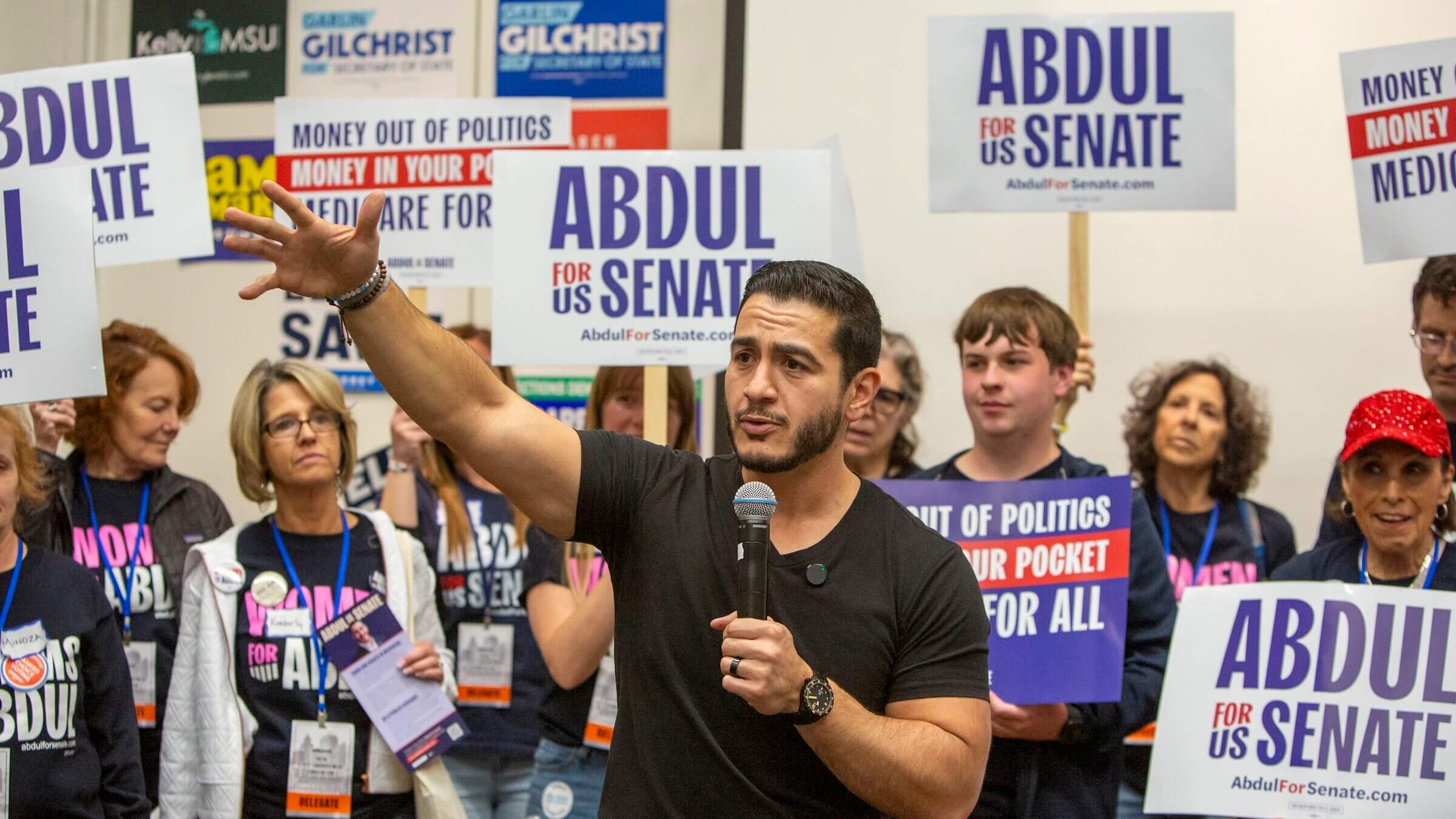
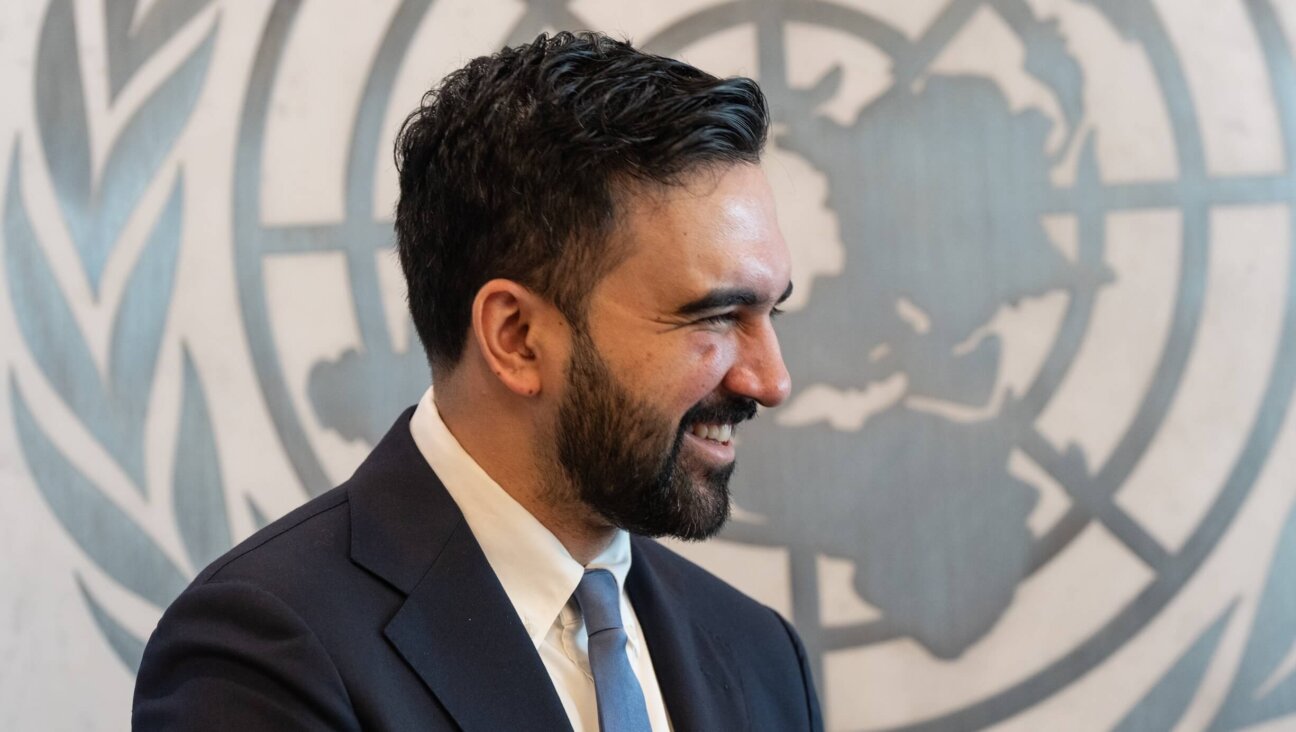
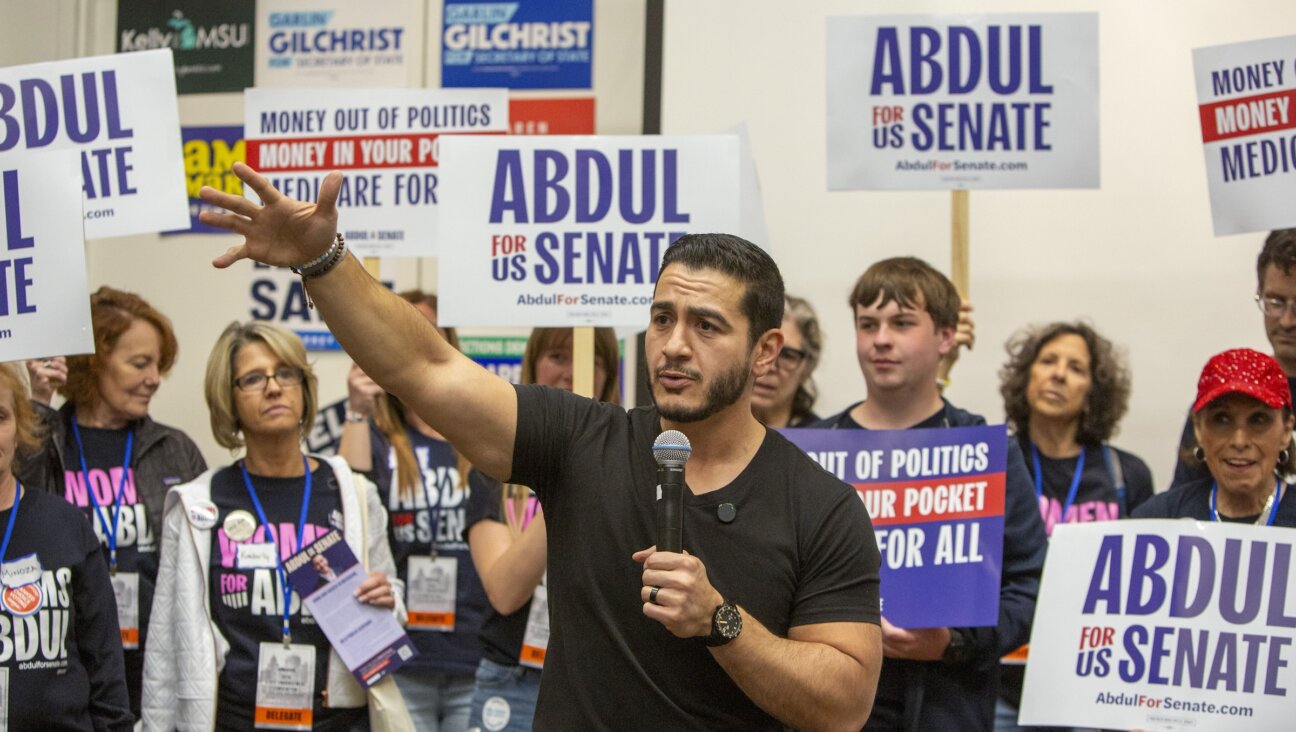
Michigan senate candidate Abdul El-Sayed campaigns for at the Michigan Democratic Nominating Convention in April. Photo by im West/UCG/Universal Images Group via Getty Images
By Hannah Feuer June 12, 2026
Michigan senate candidate Abdul El-Sayed isn’t toning down his rhetoric to win over Jewish voters.
He’s called Israel’s action in Gaza a genocide, wants to withdraw both offensive and defensive military aid to Israel, called the Israeli government “evil” like Hamas, has rebuffed questions about whether Israel has the right to exist as a Jewish state, and in an interview with the Forward, doubled down on his decision to campaign with controversial Twitch streamer Hasan Piker and his response to the attack on a Michigan syangogue in March: “Hurt people hurt people.”
Yet at a progressive synagogue and events hosted by Michigan’s Jewish Democratic caucus, El-Sayed, who is Muslim, is finding Jewish voters willing to hear him out — and a constituency of Jews who support his candidacy even when they disagree with him on Israel.
It’s a playbook New York City Mayor Zohran Mamdani employed to deflect allegations of antisemitism: Don’t soften on Israel or what rhetoric crosses a line, but speak with the Jewish press, meet with Jewish organizations and demonstrate a cultural fluency with Judaism beyond the politics of the Middle East.
The race, which could determine which party controls the Senate, is also a test of Israel politics in a swing state home to the nation’s highest concentration of Arab Americans.
The three leading candidates occupy distinct positions on the issue: El-Sayed has made criticism of Israel and AIPAC a central plank of his campaign. On the other end of the spectrum, Rep. Haley Stevens describes herself as “proud pro-Israel Democrat” and is backed by AIPAC. And in the middle, state Sen. Mallory McMorrow has won the endorsement of J Street, the liberal Zionist advocacy group that supports a two-state solution.
El-Sayed, who currently leads in the polls, maintains his candor has helped him build a Jewish coalition of his own.
“There’s going to be things that they disagree with, but at least they know I have the courage to say where I stand,” El-Sayed told the Forward. “I say it everywhere to everyone, and my positions are based in principle, not just political calculus.”
Jews for Abdul
While a number of Jewish organizations have expressed alarm at El-Sayed’s campaign, one synagogue welcomed him inside.
Congregation T’chiyah, a Reconstructionist synagogue outside Detroit that describes itself as progressive, hosted El-Sayed for a Passover Seder in April. Many of its congregants support El-Sayed’s campaign and are volunteering with a group dubbed “Jews for Abdul.”
One of those volunteers is Lex Eisenberg, a T’chiyah congregant who also organizes with the anti-Zionist group Jewish Voice for Peace.
“As progressive Jews, we’re all too familiar with the way that people who speak out for Palestinian freedom are smeared and attacked the way some are smearing Abdul right now,” Eisenberg said. “So the idea is that we want to be outwardly and publicly Jewish and supporting Abdul.”
El-Sayed’s campaign has also attracted some prominent progressive Jewish voices. Former Michigan congressman Andy Levin — who previously served as president of Congregation T’chiyah — endorsed El-Sayed alongside Bernie Sanders, the progressive Jewish senator from Vermont. (El-Sayed has called Sanders his “favorite Jewish uncle.”)
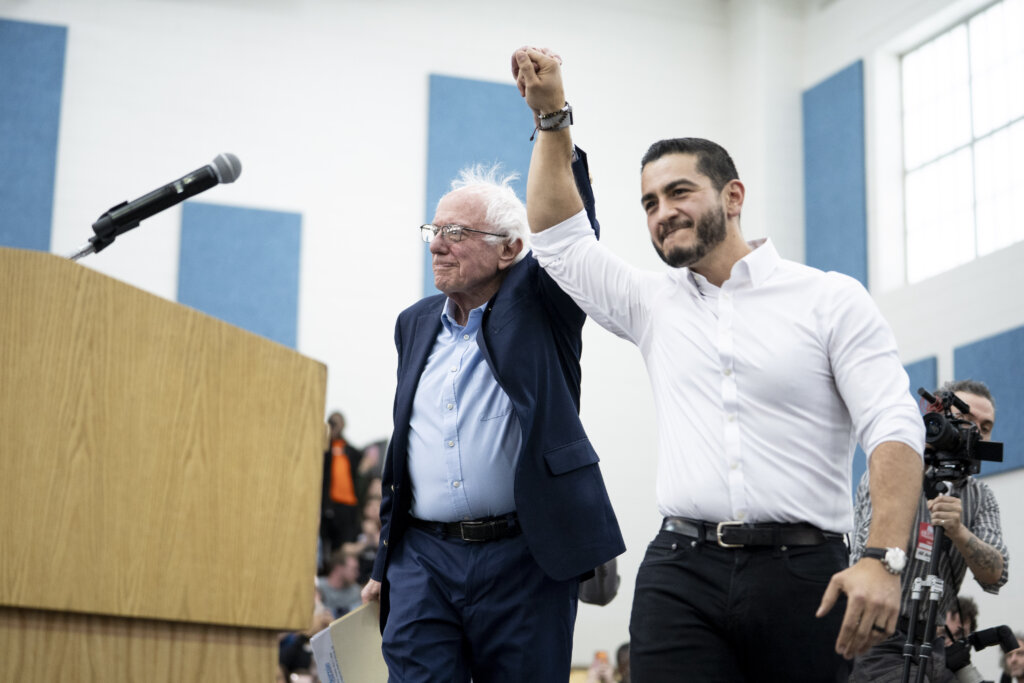
Levin, who identifies as Zionist, sees echoes of his own political battles in El-Sayed’s campaign. He lost his House election against Stevens in 2022 after AIPAC poured millions into defeating him, displeased with his support for a bill that backed a two-state solution and restricted use of U.S. taxpayer funds to expand settlements in the occupied West Bank.
“So many young Jewish people are active in Abdul’s campaign,” Levin told the Forward. “And it’s their Judaism that leads them to that position, because their Judaism teaches them that the way to fight antisemitism isn’t to circle the wagons and shut off the world, but to build alliances with other oppressed people.”
Welcoming leftist politicians is not unusual for Congregation T’chiyah: Its rabbi, Alana Alpert, was the founding director of the progressive political advocacy group Detroit Jews for Justice, and she has been honored by Rashida Tlaib, the Palestinian-American Michigan congresswoman censured by the House over her comments about Israel. (Alpert did not respond to the Forward’s request for an interview.)
“T’chiyah, of course, is a congregation that is focused on uplifting social justice around the idea of tikkun olam,” El-Sayed said.
Yet El-Sayed’s coalition also extends to those with complicated relationships to the Jewish state.
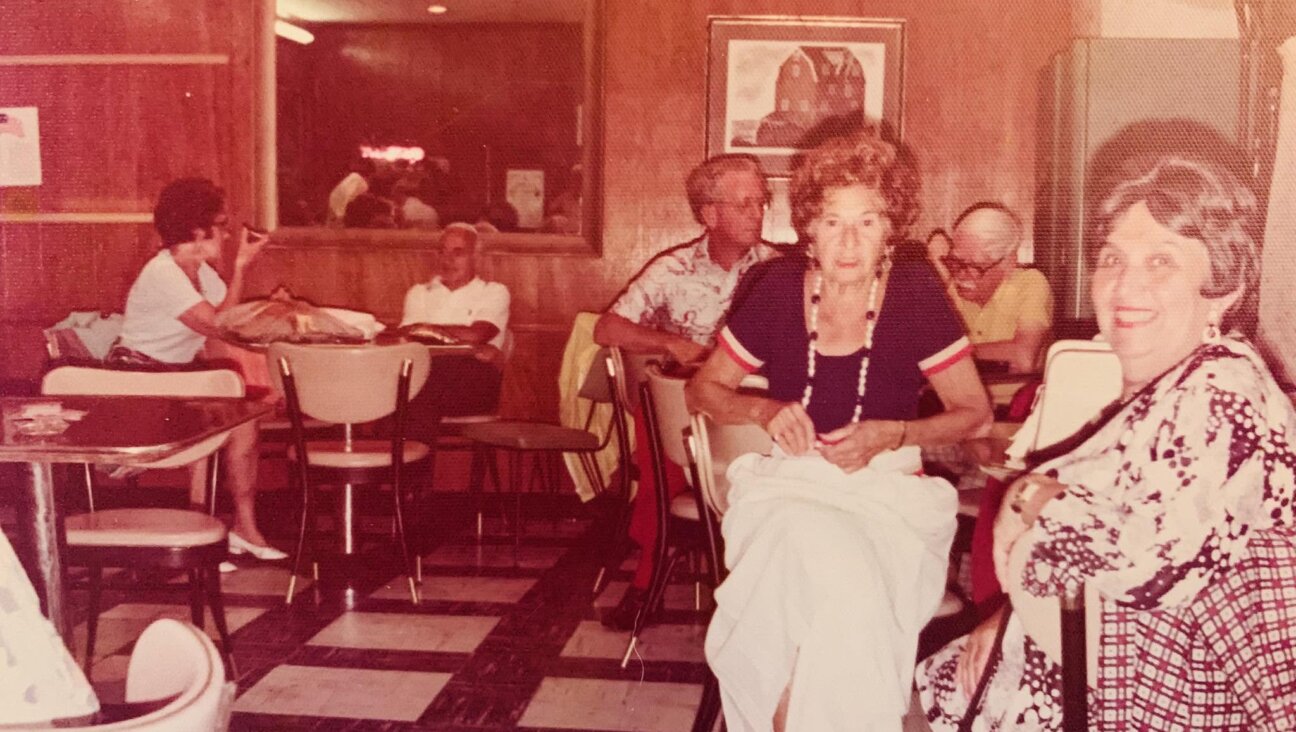
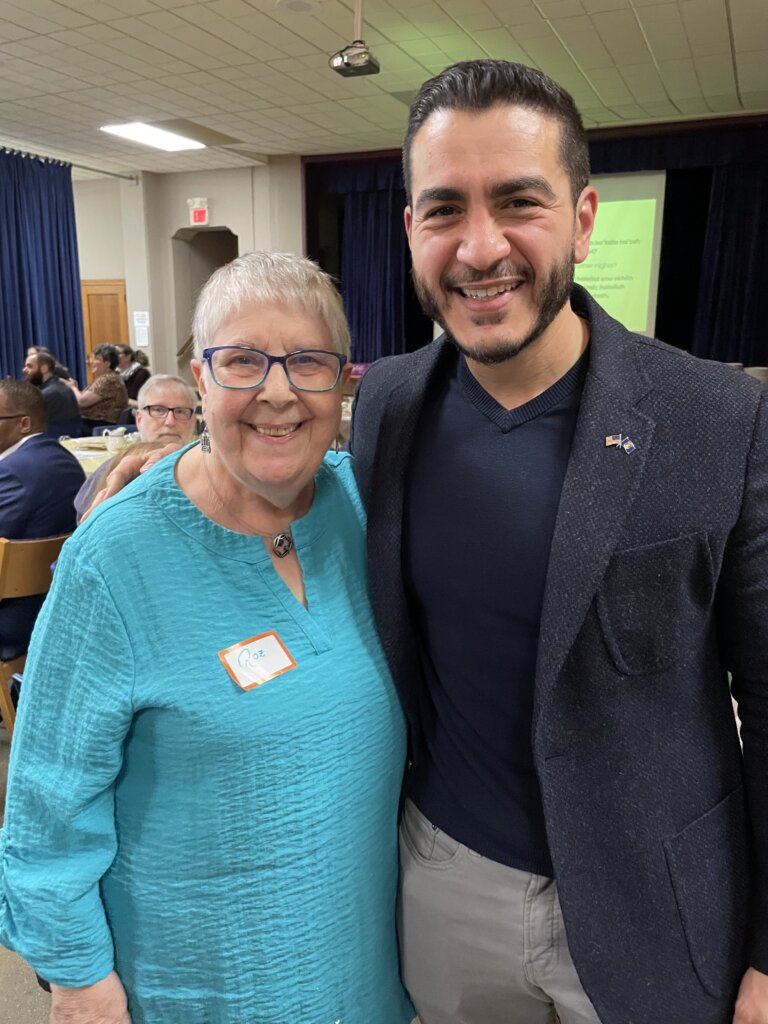
Roslyn Abt Schindler, a retired professor who taught Holocaust studies at Wayne State University, has been a member of Congregation T’chiyah for 48 of the synagogue’s 49 years. The daughter of Holocaust survivors, Schindler plans to vote for El-Sayed and agrees with his characterization of Israel’s actions in Gaza as genocide.
But she also supports a two-state solution — a position El-Sayed has not endorsed, and one she wishes he would.
-
-
Rosyln Abt Schindler and Abdul El-Sayed
Courtesy of Rosyln Abt Schindler
-
-
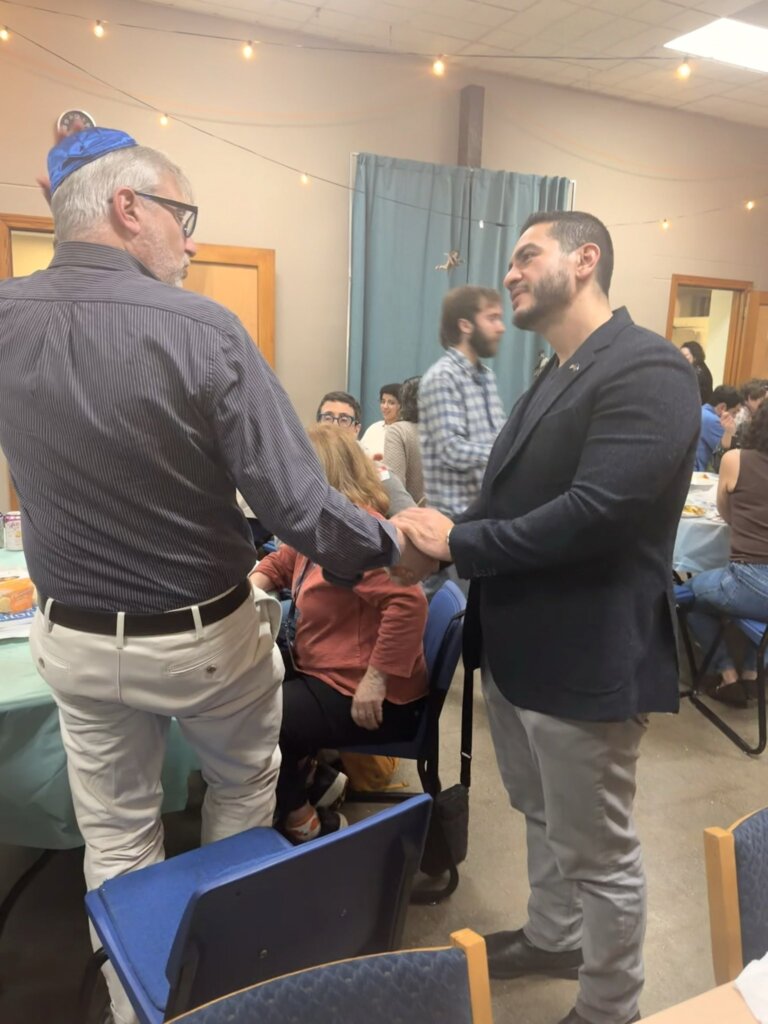
El-Sayed speaks with a Congregation T’chiyah member.
Screenshot of @AbdulElSayed
Schindler said the issues that matter most to her are affordability, campaign finance reform, environmental protection and Medicare for All. El-Sayed’s visit to her synagogue and Levin’s endorsement of him, she said, sealed the deal.
“His outreach to Jewish voters has been genuine and thoughtful,” Schindler said.
Decky Alexander, chair of the Michigan Democratic Jewish Caucus — which endorsed Stevens last week — agreed that El-Sayed has engaged Michigan’s Jewish community. He participated in a candidate forum co-hosted by the Jewish caucus, and he attended the organization’s “Summer Simcha,” the caucus’ annual fundraiser that draws Jewish leaders from across the political spectrum.
Alexander said she doesn’t personally support El-Sayed, but she believes the Jewish caucus could work with him and trusts that he takes antisemitism seriously. After the recent attack on Temple Israel, El-Sayed was the first politician to text her with a message of support.
“He’s present and showing up,” Alexander said. “And not just showing up to really left-leaning communities that are Jewish, but across the board.”
‘Hurt people hurt people’
Other Jews say that outreach has done little to quell concerns about El-Sayed.
“When a public figure is struggling to affirm Israel’s right to exist, many Jews are going to see that as a challenge to Jewish self-determination, not simply a policy disagreement,” said Amy Sapeika, community director of American Jewish Committee Detroit.
The other candidates, meanwhile, have for the most part only hinted at their differences with El-Sayed when it comes to Israel and antisemitism — a polite tenor Alexander partly chalked up to a culture of “Midwest nice.”
Stevens, seen as the Democratic establishment pick, has touted her record of speaking up against antisemitism “in all its forms” and described herself as a lawmaker who is “leading on combating antisemitism in a bipartisan way.”
McMorrow has walked a middle ground, saying that Israel’s military offensive in Gaza meets the critera for genocide while also dismissing definitional debates as semantic. She has also said the Democratic Party has an antisemitism problem, citing an antisemitic slur yelled at her Jewish husband during this year’s Democratic Party convention in Detroit.
The National Jewish Democratic Council of America issued a rare dual endorsement of Stevens and McMorrow — explicitly drawing contrast with El-Sayed.
“There are two candidates who stand with our community on issues of importance to Jewish voters, and there is one who does not,” CEO Halie Soifer said in a statement.
Those tensions came to a head after a man rammed a truck into Temple Israel in West Bloomfield in March with the stated intent of killing as many people as possible. El-Sayed issued a four-minute video condemning the attack, while also noting that the perpetrator had four family members killed in an Israeli airstrike in Lebanon, including two children.
“Hurt people hurt people,” he said.
The response drew a public rebuke from Temple Israel’s Rabbi Jen Lader, who wrote in a Free Press op-ed that El-Sayed was “suggesting that violence against a synagogue in suburban Detroit could be understood through the lens of Israeli actions,” which she deemed “offensive.”
El-Sayed rejected the premise that linking the two events amounted to excusing violence.
“It’s unserious when you want to decontextualize violence, and then say you want to stand against violence,” he told the Forward. “I will never be the kind of policymaker who doesn’t want to understand why things happened if I’m serious about stopping them from happening.”
About a month after that attack, El-Sayed hosted a campaign event with Hasan Piker — a Twitch streamer often called the “Joe Rogan of the left” who has likened liberal Zionists to “liberal Nazis,” said he doesn’t have an issue with Hezbollah, and also said that “Hamas is 1,000 times better” than Israel, among a slew of other controversial statements.
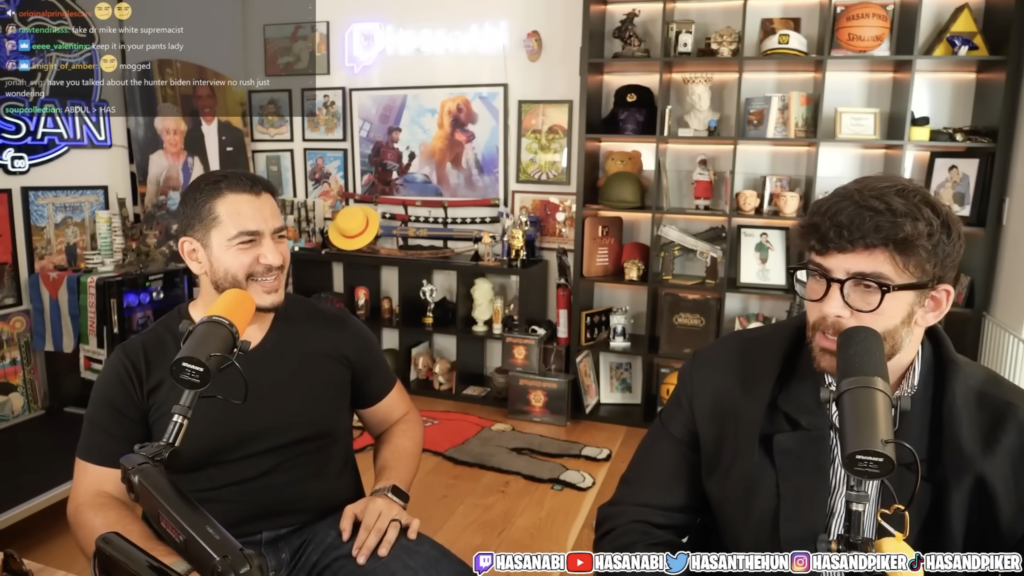
The event drew condemnation from Michigan State Hillel and the Anti-Defamation League, which called the decision to campaign with Piker “absolutely shocking.”
It also drew the most direct rebukes to date from both opposing campaigns. Stevens told Jewish Insider Piker is “the exact opposite of someone I’d be campaigning with,” and McMorrow critiqued El-Sayed for hosting the event “at a moment when there is clearly a lot of pain and trauma across our state.”
“How do you bring everybody together, especially when there are difficult conversations, where there aren’t easy answers? You don’t fan the flames and stoke division just to get attention,” McMorrow said.
El-Sayed told the Forward that he would not defend Piker’s most extreme remarks but argued that politicians should engage with a broad range of people, adding that he wanted to “reach out to the 3 million people who follow him, many of whom feel locked out of our politics.”
More broadly, El-Sayed argues that his critics conflate the Israeli government with the Jewish people. He often points to his experience as a Muslim in helping him understand the experience of a religious minority, framing antisemitism and Islamophobia as related threats.
“I know intimately what it’s like to be discriminated against for how I pray, and I don’t want anybody to experience that, be it because they are Jewish or because they are Muslim, or because they don’t pray at all,” he said.
It’s difficult to gauge how El-Sayed’s messaging is landing with Jewish voters; unlike in New York City, Michigan races do not have polling by religious affiliation. In any case, he may not need Jews’ support to take office: Jewish voters make up just 1.4% percent of the electorate in the state.
Still, El-Sayed said he is looking to connect.
“I’m open to engage with any and all communities,” El-Sayed said. “As I’ve always said, if you invite me, I’m going to come.”

Hello, fellow Forward reader! I’m Joel Brown, a Forward reader and supporter for more than 15 years, and currently the chair of the board of directors.
I’m an avid Forward reader because it ticks so many of my essential boxes: excellent journalism, Jewish focus and diverse viewpoints. In today’s political climate, what I most appreciate is the Forward’s independence — made possible by the generosity of its membership.
The Forward is committed to bringing you unbiased, nuanced Jewish news. From my position as board chair, I see an exciting future as we expand our position as the definitive independent voice of contemporary American Judaism.
That’s why I’m paying it Forward, by matching $36,000 of reader gifts. It’s an investment in the Forward’s newsroom, to continue telling the American Jewish story with truth and independence.
— Joel Brown, Forward board chair
Support our mission to tell the Jewish story fully and fairly.