The latest victim of the culture war over Israel is a leftwing, lapsed Catholic Bible scholar
Erri De Luca is being shunned for his views on genocide and Zionism
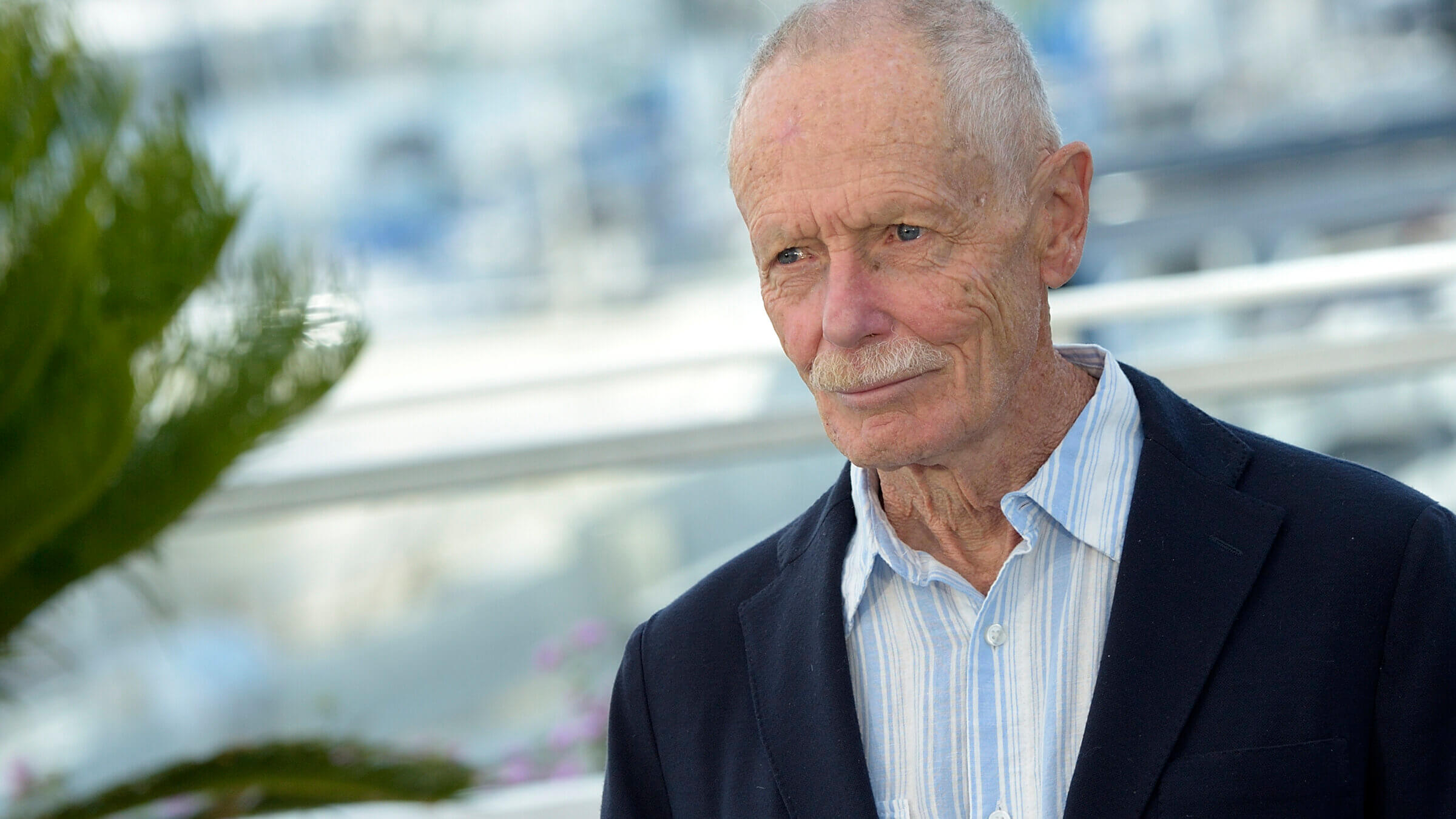
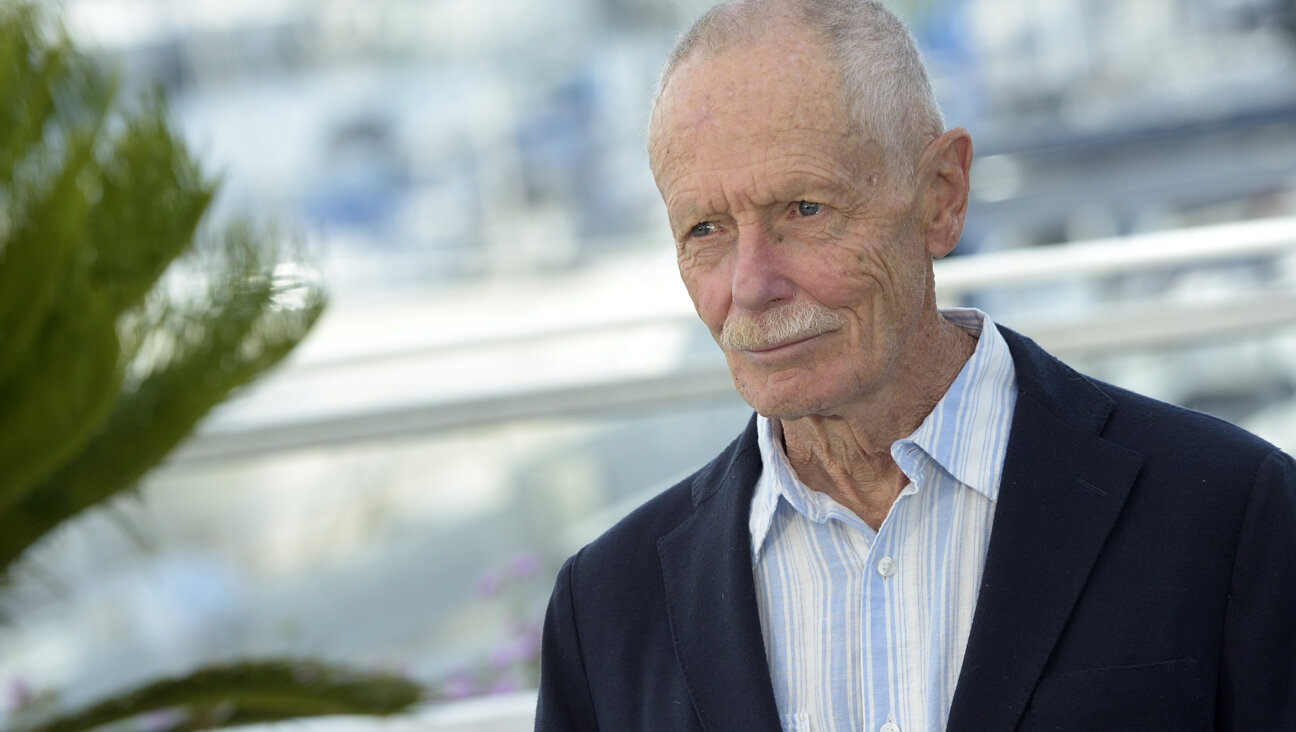
Erri De Luca at the 2026 Cannes Film Festival. Photo by l Rocco Spaziani/Archivio Spaziani/Mondadori Portfolio via Getty Images
Robert Zaretsky June 18, 2026
The flames of cultural boycott of all things Israeli, Zionist and/or Jewish continue to spread across the European continent.
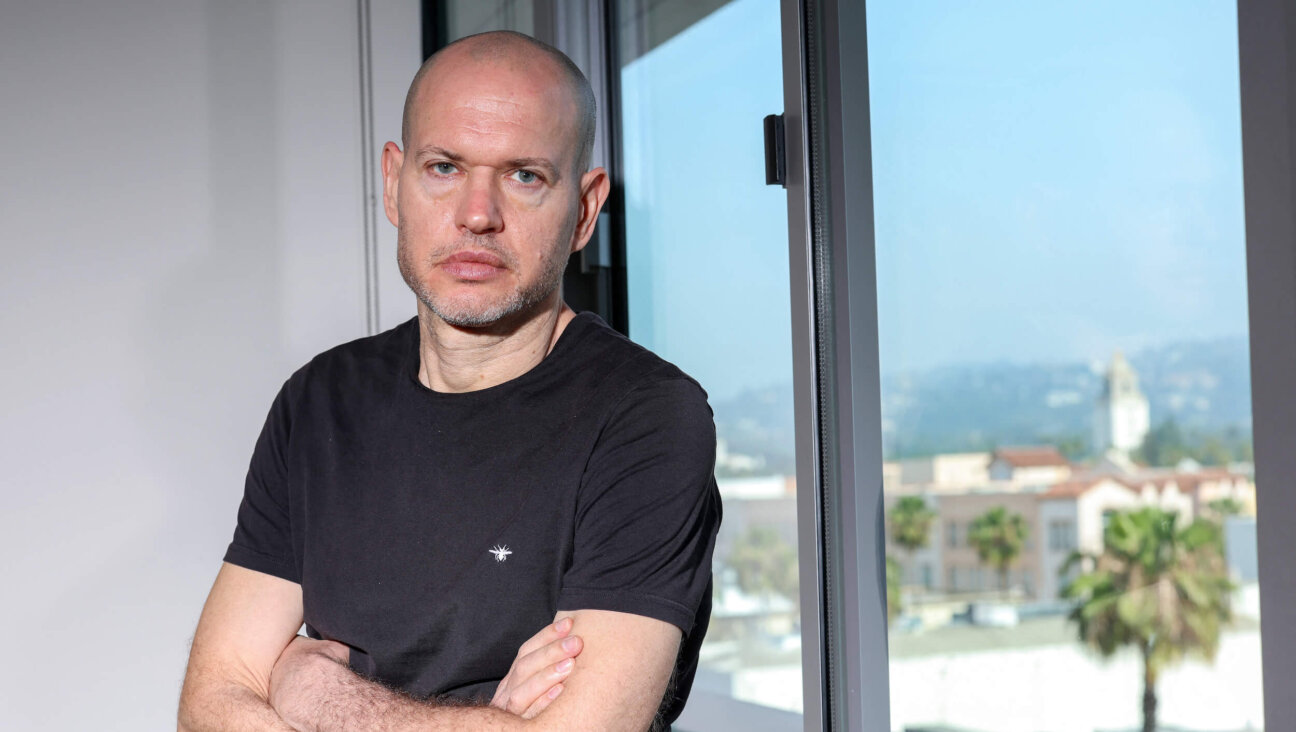
Yesterday, leftwing Israeli filmmaker Nadav Lapid was prevented from serving on the jury at next month’s international film festival in Marseilles. Though Lapid has loudly denounced the “genocide” in Gaza, his crime — apart from being an Israeli who nevertheless lives and works in France — was that 10% of his most recent film Oui was financed by an Israeli source. (The irony is that the European Union, which Lapid first approached for the financing, refused on the grounds that the film was too anti-Israeli.)
Today, though, the latest victim is neither Israeli nor Jewish. Instead, he is a 76-year-old lapsed Catholic and equally lapsed leftwing extremist who also happens to be one of Italy’s most revered novelists, columnists and translators: Erri De Luca. Once again, it is not just hypocrisy that abounds in this affair, but also irony.
As a student during the anni di piombo, or “years of lead” — the grim period, stretching from the mid-1960s to late-1970s, when Italy was convulsed by political and social turmoil — De Luca became a leading figure in Lotta Continua, one of the militant ultra-leftwing groups. Upon quitting the movement, De Luca also quit the public scene, taking a series of blue-collar jobs, whether as plasterer or construction worker.
By the time De Luca reached his 40s, he also took to writing and has amassed an oeuvre of several dozen books that range across genres and have been translated into several languages; remarkably, he also taught himself ancient Hebrew in the 1980s, while working with a Catholic charity in Africa. It was there that De Luca began to read the one book he found in his room, a copy of the Bible. Fascinated, he acquired three different Hebrew-Italian dictionaries and began to translate the texts on his own. Forty years later, he continues this labor of love, recently publishing his own interpretation of Genesis.
Alessandro Carrera — a friend and colleague who is also a wildly prolific and prominent writer in Italy — told me that De Luca’s approach to the Hebrew Bible “follows Walter Benjamin’s suggestion to translate the Bible as literally as possible, yet without De Luca knowing Benjamin’s essay on translation.” (When I asked Alessandro how he knew this, he replied “I know that because I asked him.”) But why his fascination with the Bible? De Luca told an interviewer for the French newspaper Libération that he wanted to grasp “this language which had taken upon itself the weight of the first monotheistic religion.”
This attachment to the Bible, as unwavering as it is unideological, has had perverse and predictable consequences in our current era of sheer thoughtlessness. Last month, De Luca gave a long interview in Rome to Omer Lachmanovtich, the editor-in-chief of the Israeli daily Israel Hayom. The occasion was his upcoming appearance at the International Writers’ Festival in Jerusalem. Over the course of the conversation, De Luca addressed the war in Gaza and the wasteland wrought by the Israeli military. Yet he refused to describe it as genocide. “Applying it to the war in Gaza is a historical and verbal distortion,” De Luca insisted. “What took place in Gaza is a brutal, modern war, in which the number of civilian casualties is enormous and horrifying because when fighting takes place inside a dense urban space, among schools and hospitals, the population will always pay the highest price.”
Of course, genocide scholars like Omer Bartov disagree, insisting the term is historically, semantically, and legally appropriate. Other critics take issue with De Luca’s understanding of the term “Zionist.” It is difficult to argue with his observation that “in Italy, and in large parts of the West today, ‘Zionist’ is a curse and an insult thrown at you to mark the boundaries of what is beyond the pale.” But it is far easier to take exception to De Luca’s definition of Zionism as “the simplest and most basic recognition of the Jews’ right to a national home, to existential and necessary defense.” This claim, the Italian writer Cinzia Sciuto remarked, suggests that De Luca is referring “to a reality, a Zionism of the kibbutz, that disappeared decades ago.”
Nevertheless, De Luca holds fast to his conviction, declaring that “I will say it out loud, and I do not care about the price.” The price appears to be a creeping banishment from Italy’s cultural scene. Earlier this month, De Luca’s invitation to speak at a literary festival in Salerno this summer was withdrawn by its directors. My friend Alessandro, who criticized this decision, suggested the festival directors feared a boycott by other writers or disturbances in the audience. “I am quite sure that a lot of people were ready to boo him and maybe force him to leave the stage,” he added, “but I don’t think that anything worse was going to happen.”
No doubt. But perhaps something worse in a different register is happening — namely, losing sight of what De Luca insists upon seeing: the humanity of our fellow men and women. Reflecting on a recent two-week experience on a Médecins Sans Frontières ship darting from one raft to another, all sagging under the weight of refugees desperate for new lives, De Luca writes that the experience had branded him with a single image: “a rope ladder trolling in the void.”
It was on the final step of this ladder that, “one by one, I saw faces pop up, the people climbing from the edge of the abyss to their salvation. Those hundreds of faces: I don’t have the force to hold them back. I’ve simply had the absurd privilege of seeing them. From them I have left only the rope ladder they climbed, half-naked and shoeless, up its wooden rungs.” This experience taught De Luca, who is also a mountain climber, a deeper meaning of the verb “to climb,” one that no peak had ever taught him. It is this way of seeing the world that is paying an even steeper price than a writer’s banishment from a literary conference.

Did you know that only 2% of Forward readers donate to support our nonprofit newsroom? That 2% make it possible for millions to read the Forward without a paywall or subscription — removing any barriers to the full and fair Jewish story.
But while the Forward is free to read, it isn’t free to produce. Big stories — like deep dives into the antisemitism data, political scoops or reporting trips to college campuses — take months of research and fact-checking. All while we keep you informed of what you need to know each day.
— Rachel Fishman Feddersen, Forward Publisher & CEO
Support our mission to tell the Jewish story fully and fairly.