A klezmer virtuoso, Joseph Moskowitz was a cymbalist of Jewish progress in America
The Moskowitz Archive at the Library of Congress chronicles the triumphs and travails of a musical pioneer
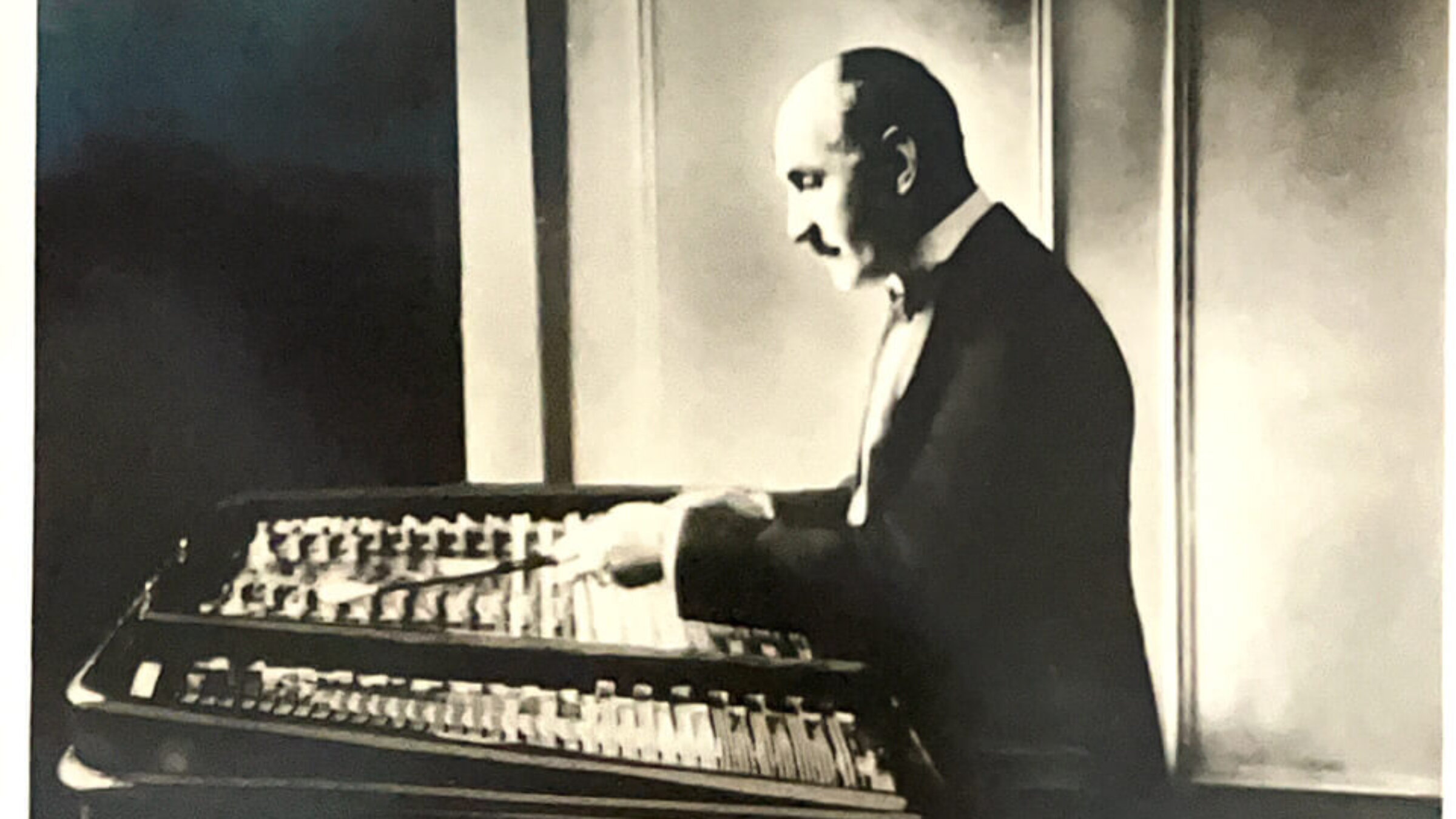
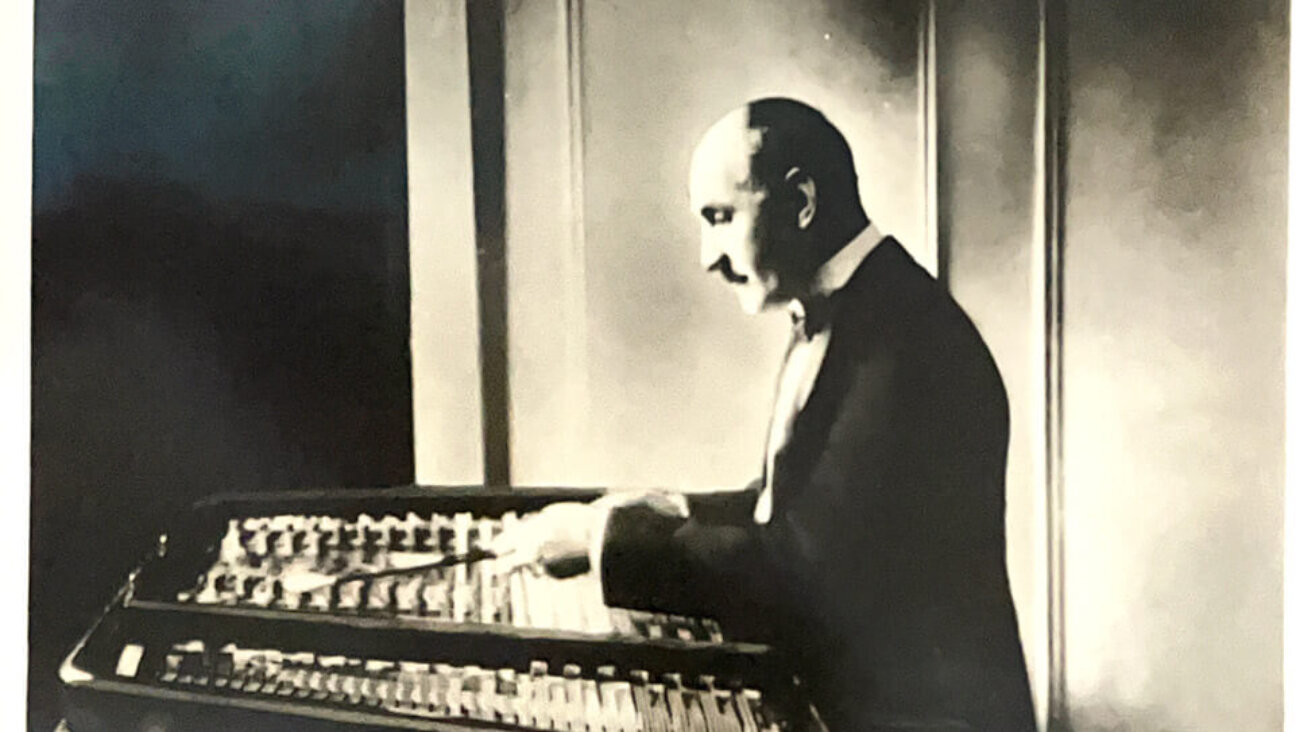
Joseph Moskowitz at the instrument that brought him fame. Courtesy of Joseph Moskowitz Archive

By Jon Kalish June 24, 2026
The restaurant occupies a long narrow basement on the Lower East Side. It is packed with a hundred Jews who fill the air with a fog of blue tobacco smoke as steak and lamb grills over charcoal. Everyone, it seems, has a glass of red Romanian wine, including the cymbalom player who is banging out a sad peasant ballad. The whole room sings along.
The scene is from the early 1900’s in Jews Without Money, Michael Gold’s 1930 novel about the poor of the Jewish Lower East Side. The mustachioed man at the cymbalom is not a fictional character, though. He is Joseph Moskowitz, a Romanian-born Jew who ran the restaurant with his wife.
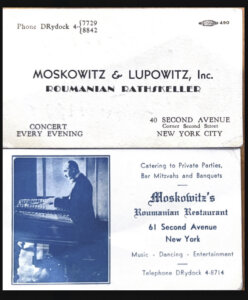
One of the first klezmer virtuosos in America, Moskowitz had a hand in several of the city’s restaurants, including a wildly successful Second Avenue establishment frequented by underworld figures, politicians and showbiz royalty. The Kardashians would envy his shrewdness in garnering publicity for his multifaceted career.
In April 1908, just four months after Moskowitz came to Amerike, he landed on to the front-page of The New York Times in a review headlined “CHAMPION CYMBALIST IS PLAYING HERE NOW.” The story noted his strange instrument, a hammered dulcimer popular in Eastern Europe, looked like “a baby grand piano with the top off.” The newspaper reported that Moskowitz’s performance was greeted with cries of “Bravo!”
Nixon was here
Moskowitz’s career as a musician met with great success but his life as a restaurateur had its ups and downs. He ran a number of eateries in New York, including one in the Bronx and another in what is now referred to as the East Village with three waiters as partners. Then, after a performance in Akron, Ohio, he ran a restaurant there called The Romany.
The Moskowitz family lived above the joint. Its clientele included members of the Firestone and Goodrich families but the patronage of the rubber barons was not enough to sustain the restaurant, so Moskowitz moved to Washington, D.C. There, he performed at Michel’s, a restaurant started by a violinist he played with. Legend has it that among the regulars at Michel’s was congressman Richard Nixon who would bring in a brown paper bag concealing a fermented beverage.
“I would like to point out that one of Nixon’s first foreign trips as president was actually to Romania, where he was photographed dancing the hora at the Museum of the Romanian Peasant with Nikolai Ceausescu, the Romanian dictator,” said Pete Rushefsky, a widely esteemed cymbalist who is also executive director of the Center for Traditional Music and Dance in New York.
The triumphs and travails of Moskowitz’s life are recounted in his unpublished and untitled memoir, which is now part of the Joseph Moskowitz Archive, acquired earlier this year by the Music Division at the Library of Congress. The archive was established after a box of artifacts was discovered in the home of one of Moskowitz’s descendants in Cleveland.
An affair to remember
In the early 1900’s there were dozens of Romanian Jewish restaurants on the Lower East Side, which was home to so many Romanian Jews it was known as Little Romania. The neighborhood was also distinguished by a large number of dance halls and libraries.
The Moskowitz memoir, which was written in Romanian, makes clear that his restaurants did not always attract the cream of the crop. One became the headquarters for some Russians gangsters, most of them pickpockets.
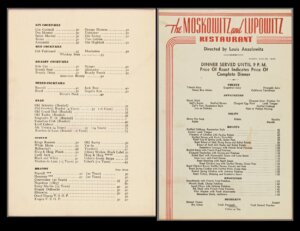
At Lupowitz & Moskowitz, which moved from its original location to Second Avenue and 2nd Street, dinners started at 85 cents. In Moskowitz’s telling, business was going great until his partner Sam Lupowitz, stole money with the assistance of Moskowitz’s wife Rebecca with whom he was having an affair.
According to Moskowitz, the affair went on for nine years. It all started, he writes, when Lupowitz took Mrs. Moskowitz to a party and got her “totally drunk,” after which they proceeded to the kitchen to burn off some calories. Mr. Moskowitz put an end to the affair when he came home one night and caught his partner leaving Mrs. Moskowitz’s bedroom.
In the old country, Moskowitz himself had not been exactly celibate. He recounts an affair with a Romanian widow he describes as a grifter. For nine months, he wrote, they made love every day. This feat was apparently an exhausting endeavor because Moskowitz decided to depart abruptly, leaving a letter informing the widow that he could no longer “carry on in this manner.” The widow had other ideas and asked a local magistrate to arrest Moskowitz who managed to avoid incarceration by hiding.
A heavy lift
Joseph Moskowitz’s real superpower was performing on the cymbalom, which he started playing at the age of eight, taught by his father on a small folk version of the instrument. One of his first gigs was playing on the ferries that travelled the Danube. Eventually he learned how to play the large concert version of the cymbalom, which was developed in the late 19th Century and became a major orchestral instrument in Eastern Europe.
“He was an absolute virtuoso,” said Rushefsky. “His technical competence on the instrument was just incredible.”
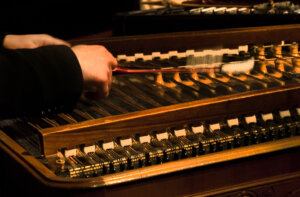
Moskowitz was recorded playing a wide range of music on the instrument, including ragtime, classical, as well as Turkish, Russian and Greek music.
His cymbalom weighed 150 pounds and was not an easy instrument to schlep around, which made performing at restaurants appealing, since he could just leave the instrument there, though he did perform from time to time in concert venues, including Town Hall.
Rushefsky told me he was impressed with Moskowitz’s savvy at drumming up publicity for both his performances and restaurants. Moskowitz deftly cultivated relationships with media figures and other bold-faced names of the day. His memoir notes that among the celebrities who came to hear him play were Theodore Dreiser, Chaim Weitzman and Jascha Heifetz.
“He had a meticulously curated scrapbook filled with articles about his restaurant and reviews of his performances. You can tell that was really important to him,” Rushefsky said.
In Around The World In New York, a book about the city’s ethnic neighborhoods published in 1924, the immigrant newspaperman Konrad Bercovici described Moskowitz’s restaurant as a place with “haunting melodies, tripping dances” and spicy food. “At Moskowitz’s on Houston Street the Rumanian Jews sing at the top of their voices the songs of the country they left,” Bercovici wrote.
A klezpirational figure
Many of the old scratchy 78 rpm vinyl disks that were vital to the first wave of the klezmer revival in the 1970’s and 80’s featured a clarinet-centric sound but the earliest recordings we have of klezmer, from circa 1908, the violin is the main instrument, often accompanied by cymbalom.
Moskowitz’s recordings are widely available on YouTube.
“His repertoire is performed by klezmer bands around the world,” Pete Rushefsky told me. “His recordings continue to be an inspiration for a small but dedicated group of musicians working to revitalize the cimbalom as an essential part of klezmer’s sound.”
Did you know that only 2% of Forward readers donate to support our nonprofit newsroom? That 2% make it possible for millions to read the Forward without a paywall or subscription — removing any barriers to the full and fair Jewish story.
But while the Forward is free to read, it isn’t free to produce. Big stories — like deep dives into the antisemitism data, political scoops or reporting trips to college campuses — take months of research and fact-checking. All while we keep you informed of what you need to know each day.
— Rachel Fishman Feddersen, Forward Publisher & CEO
Support our mission to tell the Jewish story fully and fairly.