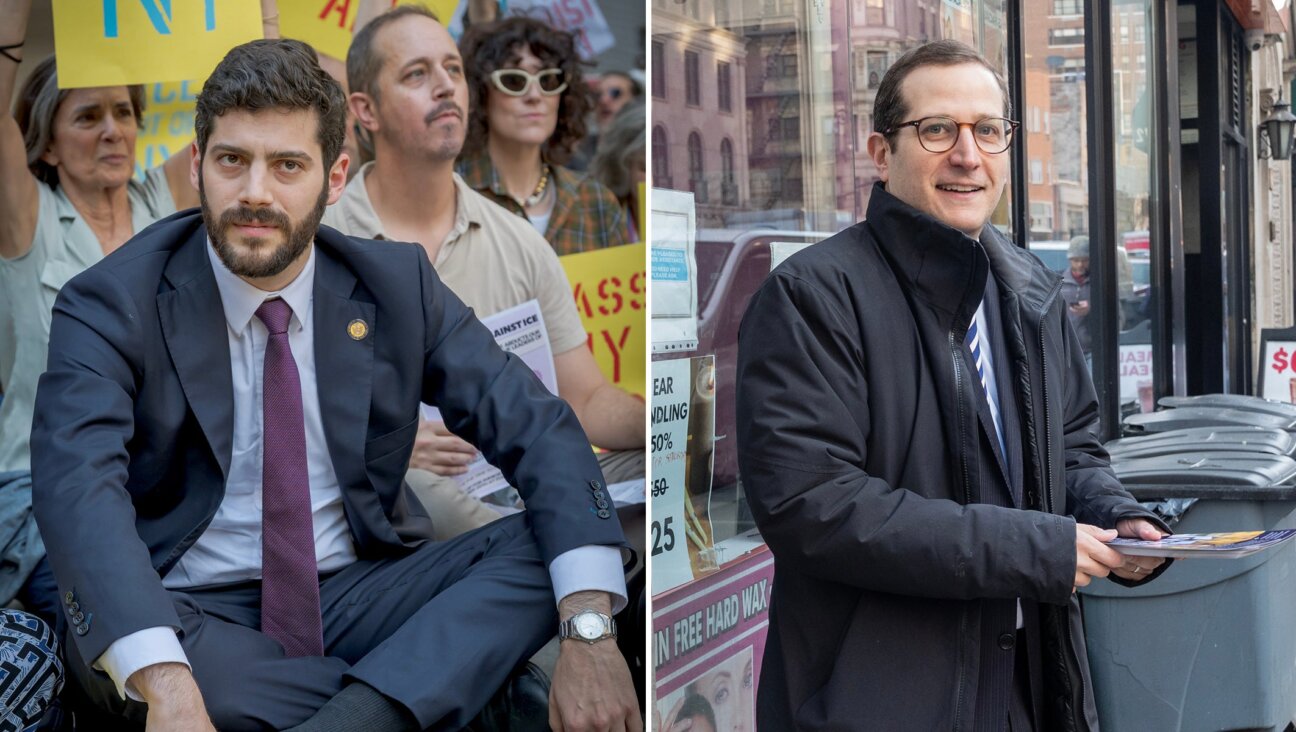
Primaries prove it: In New York, pro-Israel politics are now a liability
All of Mayor Zohran Mamdani’s congressional picks won in Tuesday’s primaries. And they all campaigned on cracking down on the Jewish state
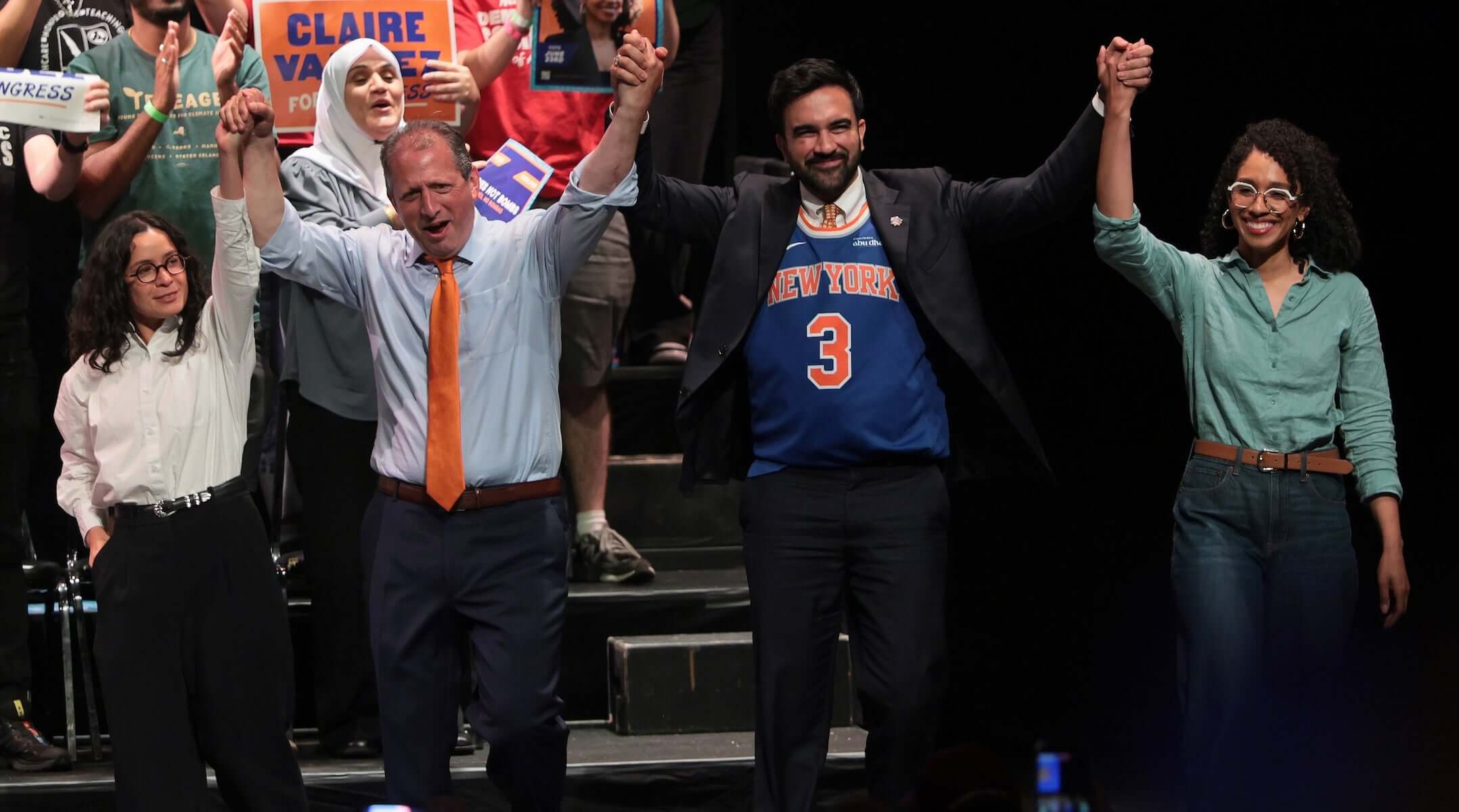
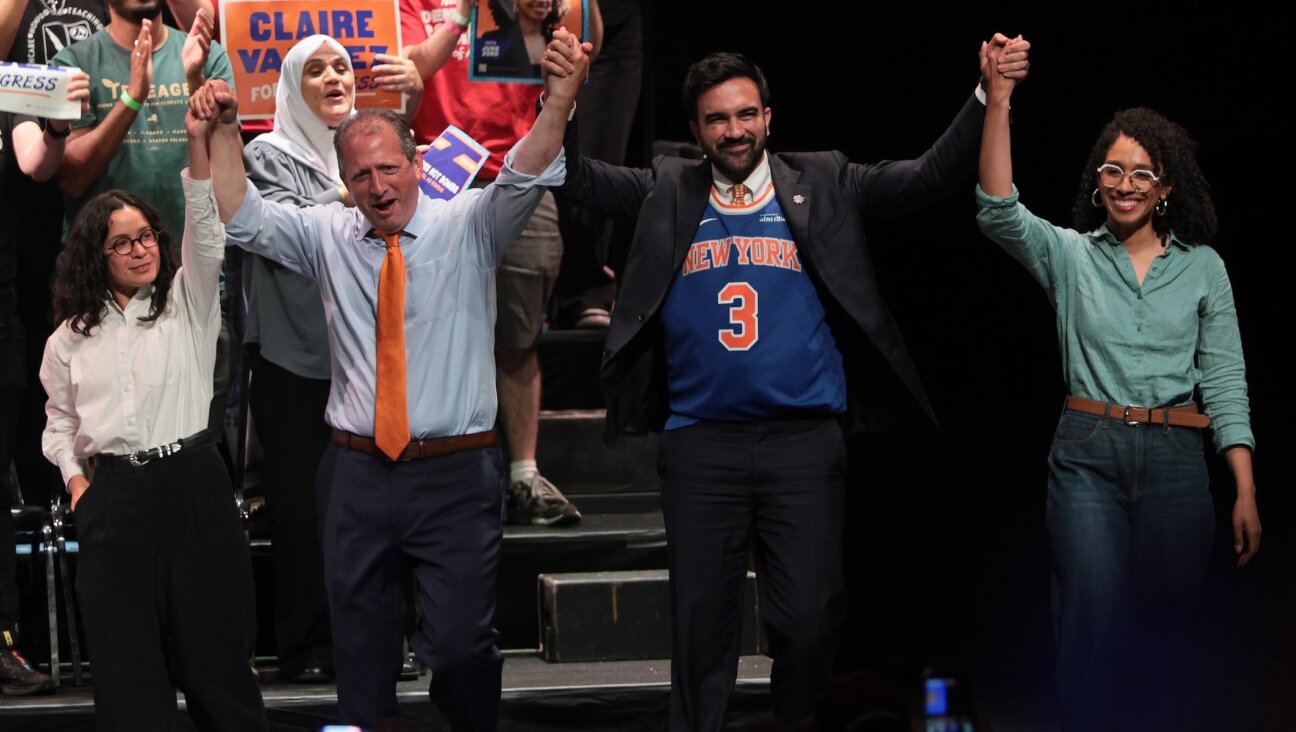
Candidate Claire Valdez, candidate Brad Lander, Mayor Zohran Mamdani and candidate Darializa Avila Chevalier raise their hands during a rally on June 18, 2026, in New York City. Photo by Michael M. Santiago/Getty Images
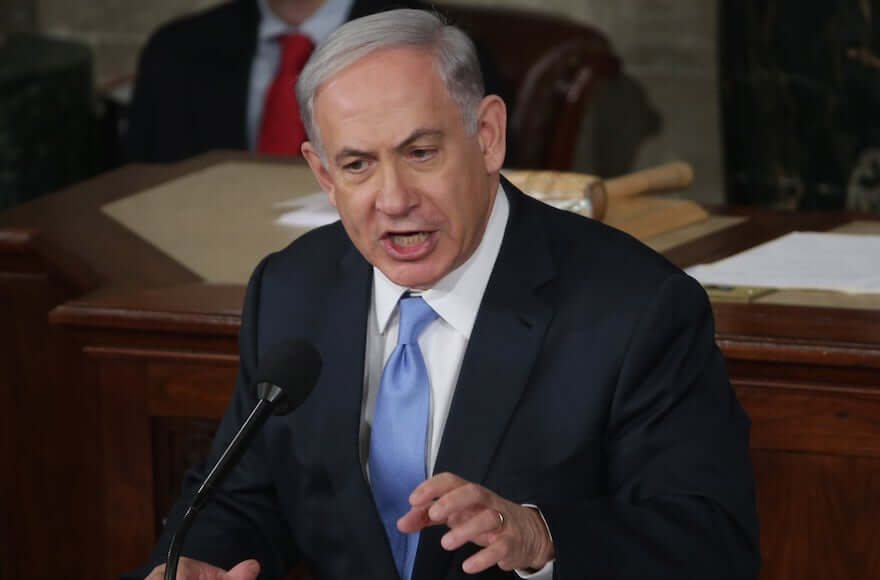
(JTA) — A little more than a year ago, thousands showed up for the annual Paul Feig z”l Tikkun Leil Shavuot at the Marlene Meyerson JCC Manhattan, an all-night bonanza of eclectic Jewish learning. The program featured dozens of rabbis, scholars, journalists and artists. Yet the unquestioned star of the night was Ritchie Torres, the congressman from the Bronx who has become a beloved figure in the pro-Israel community.
Hundreds packed the gym to hear from Torres, with many others turned away at the door. Eventually the discussion turned to the upcoming mayoral primary that was just weeks away. Many in the crowd were alarmed by the surging popularity of Zohran Mamdani, but still skeptical that a staunchly anti-Israel lawmaker could be elected in the city with the world’s largest Jewish community outside of Israel.
Instead of reassurance, Torres, who was backing former New York Gov. Andrew Cuomo in the mayoral primary, issued a warning: If Mamdani pulled off his improbable upset, it would quickly become open season on pro-Israel Democrats like himself.
As it turned out, Torres didn’t have to worry. He won his primary race Tuesday night in a landslide, securing around 70% of the vote in New York’s 15th Congressional District against an anti-Israel challenger. But his prediction was still spot on: The primaries were a Mamdani wave, with all three of the mayor’s endorsed congressional candidates winning their primaries – and knocking off two solidly pro-Israel incumbents, Dan Goldman and Adriano Espaillat, in the process.
In November, Mamdani’s ascension to City Hall felt like a political earthquake, putting an exclamation point on the reality that being staunchly anti-Israel was no longer a road block to success in Democratic politics. Yet Tuesday’s results feel more seismic – this is the first time that incumbent congressmen have lost their seats in campaigns in which they were repeatedly attacked for being too supportive of Israel. Whatever other issues were at play in the individual races, the success of candidates with an outsized focus on criticizing the Jewish state and groups that support it – in particular, the American Israel Public Affairs Committee – sends the message that their approach is a winning strategy.
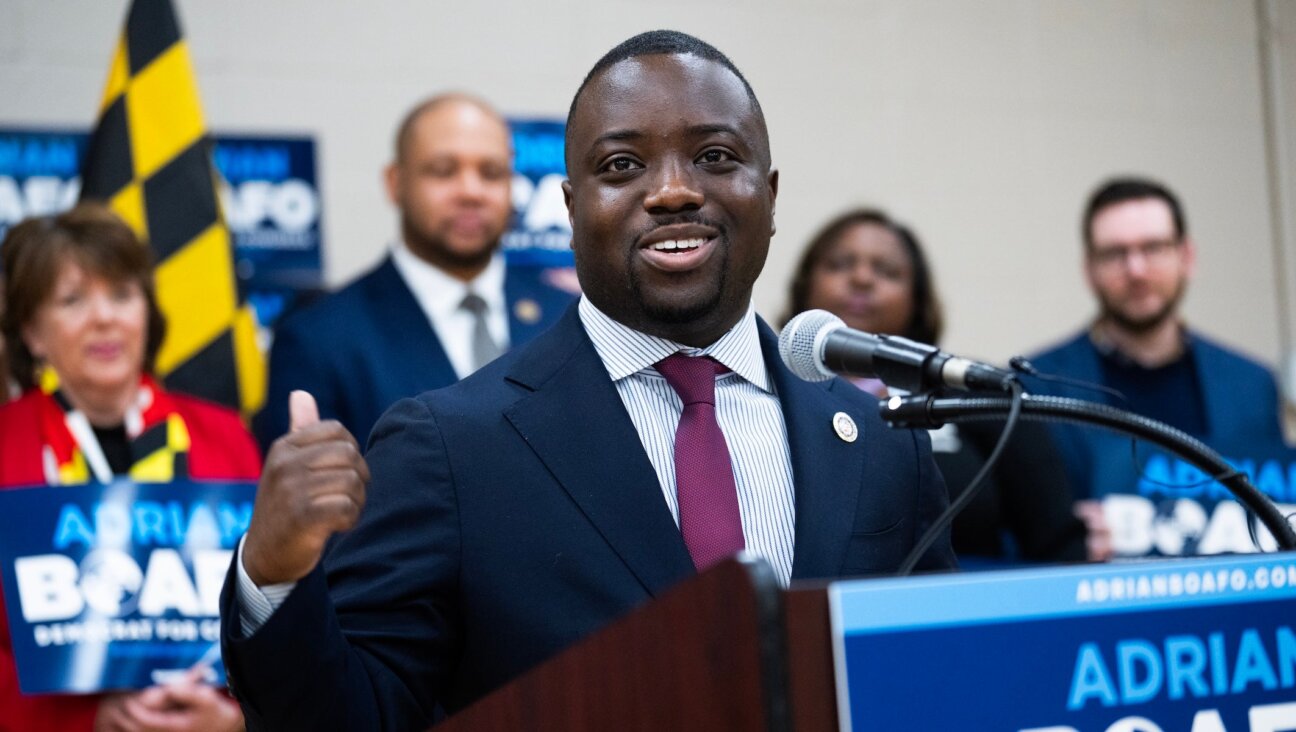
There are still plenty of districts where Democrats can win with pro-Israel positions and pro-Israel support, for example the congressional seat being vacated in Marylan by pro-Israel stalwart Steny Hoyer. Hoyer’s pick to succeed him, Adrian Boafo, won Tuesday in a crowded 24-candidate primary with major backing from AIPAC.
But suddenly, for a widening swath of the Democratic congressional caucus, backing Israel has gone from being the politically safe move to a potential career-ender.
Goldman, who won his first reelection primary with about 65% of the vote in 2024, ended up on the wrong side of a similar landslide this time around in his race against former City Comptroller Brad Lander. Espaillat, who has served in Congress for nearly a decade and is chair of the Congressional Hispanic Caucus, lost to Darializa Avila Chevalier in New York’s 13th Congressional District, which includes Upper Manhattan and parts of the Bronx.
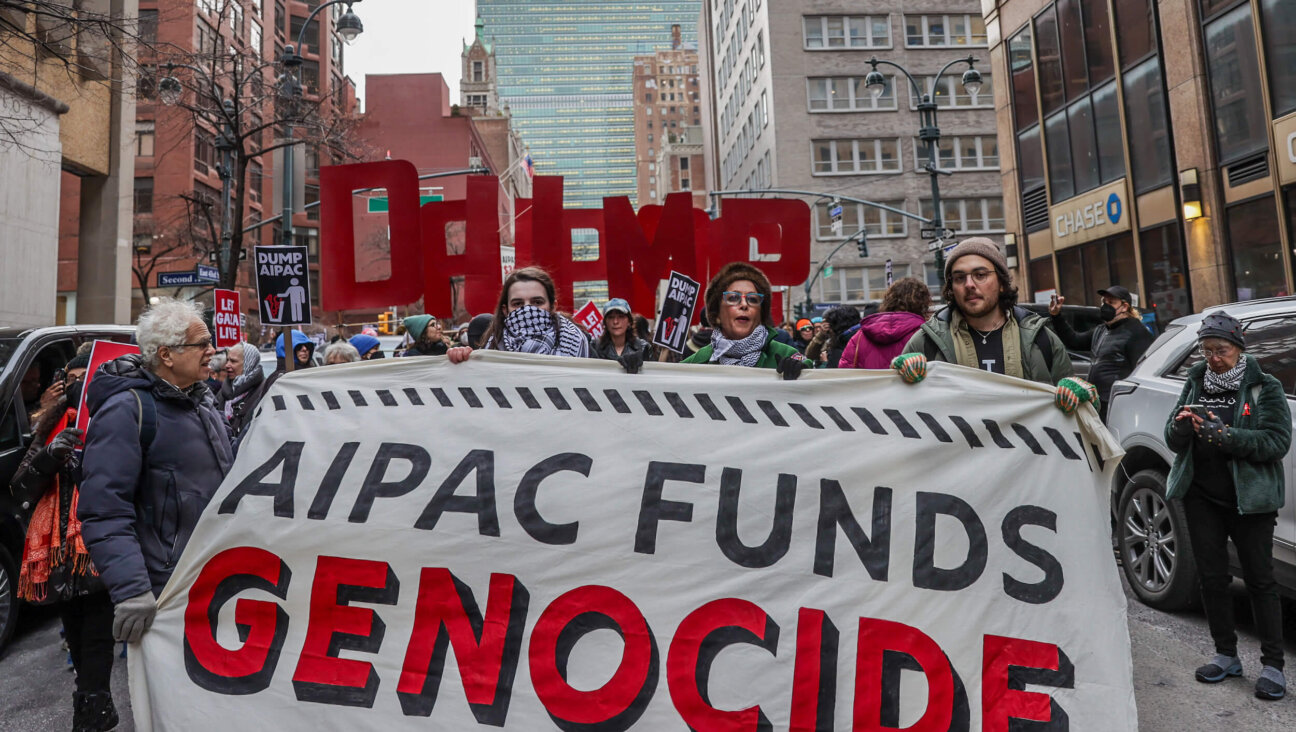
Following Mamdani’s lead, Lander and Avila Chevalier both sought to turn their opponent’s support for Israel into a defining moral failure and painted backing from AIPAC as the dictionary definition of being in the pocket of special interests.
Lander kicked off his campaign by making clear he wouldn’t be “doing AIPAC’s bidding” and made Goldman’s support from the pro-Israel lobby group a central issue throughout the campaign. Though Lander describes himself as a liberal Zionist, he repeatedly accused Israel of committing genocide in Gaza and promised to oppose U.S. weapons sales to Israel.
Just last year, Cuomo and then-Mayor Eric Adams thought Mamdani’s stance on the Jewish state was a major political liability, so they did all they could to play up his anti-Israel bona fides in their race against him. In a sign of how quickly the political winds have shifted in New York, Goldman this spring sought to minimize his differences with Lander on Israel, noting that they both received endorsements from J Street, the dovish group that advocates for more U.S. pressure on Israel to achieve a two-state solution. Goldman, in the final debate, even offered his own criticism of AIPAC, saying the pro-Israel group “has some real problems and is harmful in many ways.”
In contrast, Espaillat took aim at Avila Chevalier on Israel. “She went to celebrate the death of innocent people in Israel right after the attack,” Espaillat said during a recent televised debate, referencing her participation in an anti-Israel rally, which the Democratic Socialists of America had promoted, the day after Hamas’ Oct. 7, 2023, attack.
Like Mamdani, Avila Chevalier’s early anti-Israel activism was a key aspect of her political biography: She was part of the Students for Justice in Palestine group during her years as an undergraduate at Columbia Univeristy and later helped organize the school’s pro-Palestinian encampment as an alumna in 2024. During the campaign, she criticized Espaillat for his response to the detainment of Columbia University encampment leader Mahmoud Khalil, whose arrest last year became a rallying point for pro-Palestinian activists.
What should really alarm the pro-Israel community, however, is that this progressive playbook contributed to victories in two very different races. In the case of Lander versus Goldman, you had two Jewish self-described Zionists running in a very Jewish district. Avila Chevalier, on the other hand, was a non-Jewish anti-Israel challenger taking on a non-Jewish incumbent with strong pro-Israel credentials in a district with relatively few Jews (at least by New York’s standards).
As Mamdani’s handpicked squad heads to Washington, the pressure on other congressional Democrats to speak out strongly against Israel and back measures such as end to U.S. arms sales will only intensify. That was clear from the election night victory speeches.
During Avila Chevalier’s speech, the crowd erupted into cheers of “Free Palestine.” She couched her victory as a rejection of funding from AIPAC, crypto and other corporate interests.
Lander promised in his victory speech to be “one of the Jewish members of Congress most willing to stand up loud for Palestinian human rights.”
“We cannot keep paying for Netanyahu’s wars with our tax dollars,” he added. “Democratic voters across the country are saying this loud and clear.”
It’s possible that Lander’s wrong and that Mamdani’s rise and coattails are an only-in-New York thing. But based on several other results this election cycle and polling in upcoming races, that hope increasingly feels like betting against the Knicks.
For the pro-Israel community, there’s at least one bright spot: At least for now, they still have Ritchie Torres.
This article originally appeared on JTA.org.
Did you know that only 2% of Forward readers donate to support our nonprofit newsroom? That 2% make it possible for millions to read the Forward without a paywall or subscription — removing any barriers to the full and fair Jewish story.
But while the Forward is free to read, it isn’t free to produce. Big stories — like deep dives into the antisemitism data, political scoops or reporting trips to college campuses — take months of research and fact-checking. All while we keep you informed of what you need to know each day.
— Rachel Fishman Feddersen, Forward Publisher & CEO
Support our mission to tell the Jewish story fully and fairly.