Is AIPAC a ‘monster’ that decides Congressional races? The data shows otherwise
AIPAC is the most demonized lobby in the US — despite being far from the most effective one
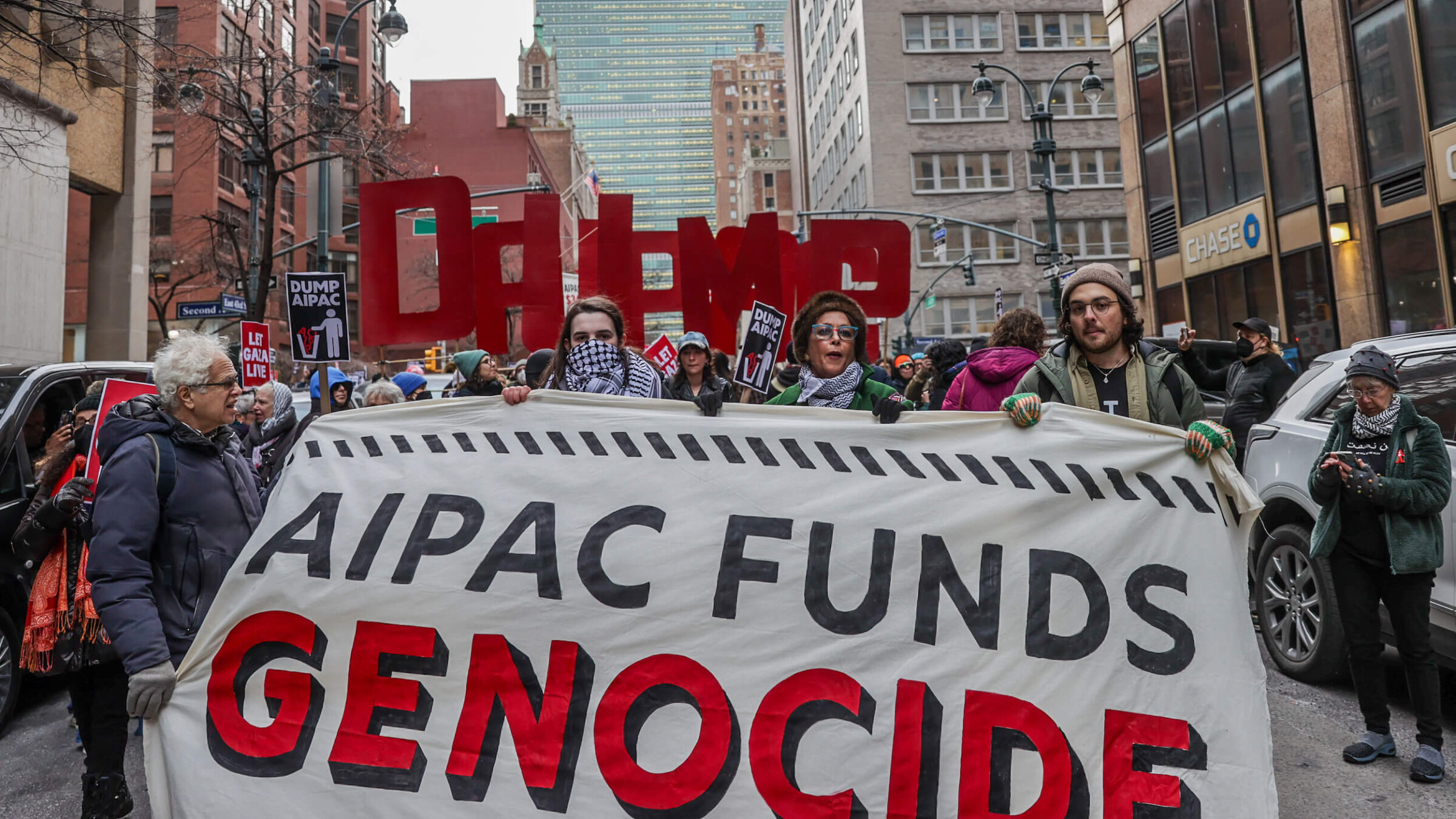
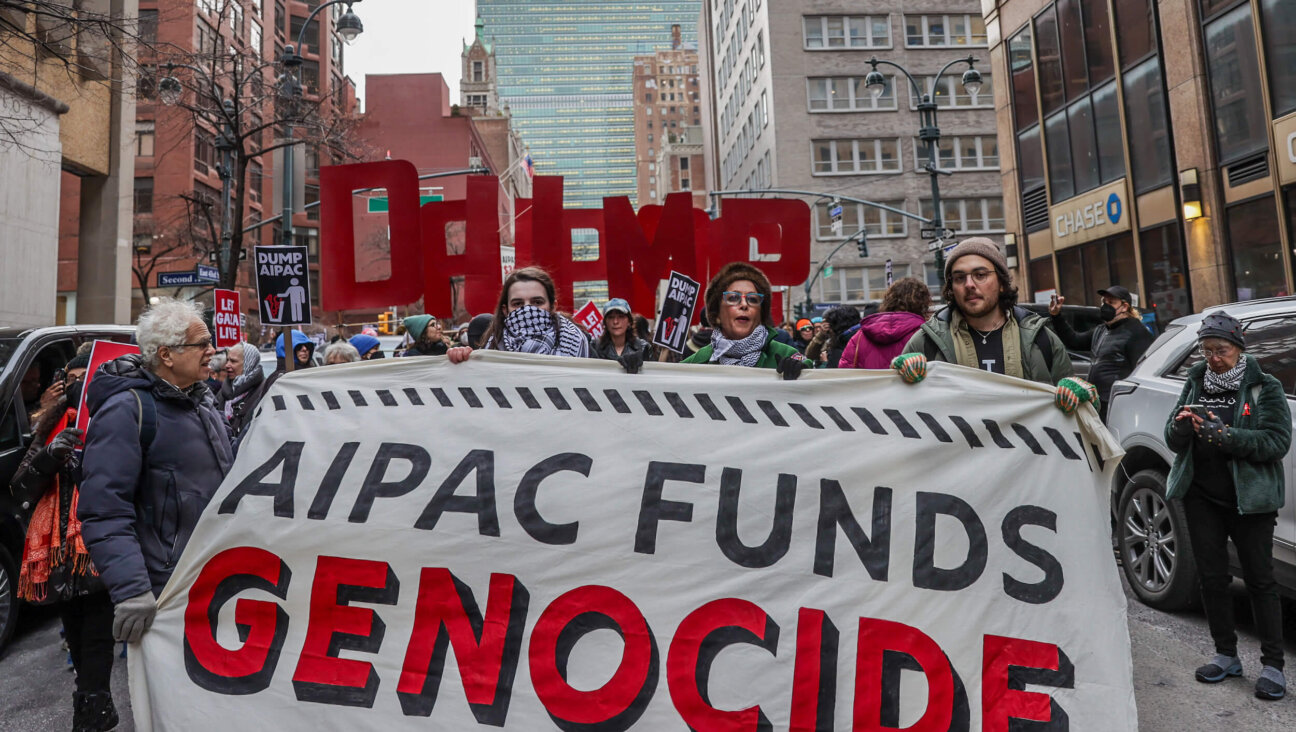
Pro-Palestinian demonstrators rally outside the Manhattan headquarters of Pro-Israel lobbying group American Israel Public Affairs Committee on Feb. 22, 2024. Photo by Selcuk Acar/Anadolu via Getty Images

Contributing Columnist Dany Bahar June 23, 2026
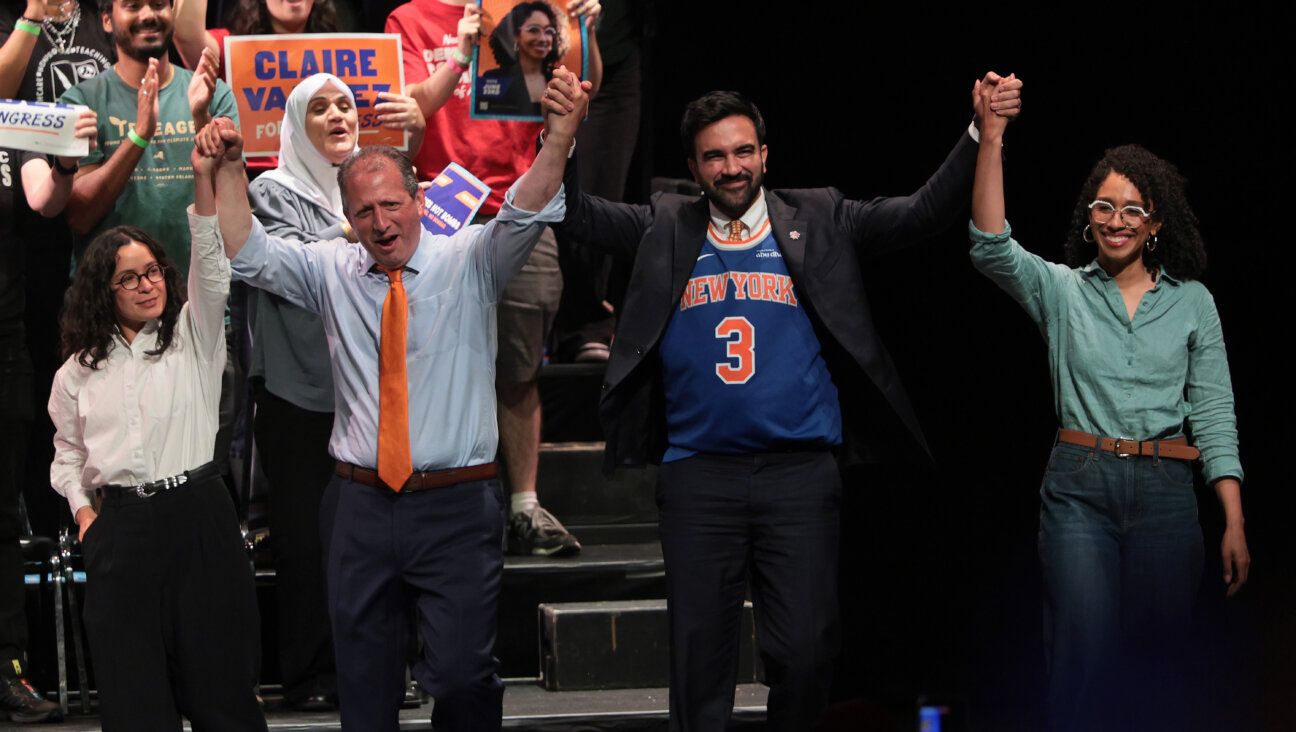
At a rally for progressive candidates last week, New York City Mayor Zohran Mamdani called AIPAC “monsters.” The pro-Israel lobby, he told the crowd, uses “millions in dark money to accomplish a single goal, to preserve their power so that they can turn us against one another.”
This is not an insulated idea. Graham Platner, Maine’s Democratic Senate nominee, was proud to stress that he was a candidate AIPAC would never endorse starting with one of his very first online ads.
On the left — and, more quietly, the right — versions of the “monster” narrative are spreading, suggesting that AIPAC is an electoral force with bottomless pockets that decides who serves in Congress.
The truth is quite different. To find it, I pulled both primary and general election outcomes for every Congressional candidate that AIPAC’s traditional PAC backed in 2022 and 2024 — 788 candidates across the two cycles — from the Federal Electoral Commission. I ran the same exercise for 17 peer single-issue PACs, including the NRA and Planned Parenthood.
The data shows that while AIPAC has an impressive operation, its electoral results do not outperform those of any other major single-issue lobby. AIPAC itself cites a 95% win rate on endorsed candidates as evidence of its political muscle, but that high level of success is partially attributable to the fact that, according to my sample, some 86% percent of AIPAC’s endorsements go to sitting members of Congress. And incumbents win about 95% of general elections — regardless of who funds them.
What’s more remarkable than the number of elections AIPAC wins is how often it gets credit or blame — depending on your politics — for deciding races.
When former Rep. Cori Bush lost her 2024 primary against an AIPAC-backed challenger, AIPAC was widely cited as influencing the race — even though even though Bush spent much of 2024 fighting a federal investigation into her campaign-fund spending, and lost to Wesley Bell, a former St. Louis County prosecutor with the kind of district-wide name recognition no PAC can buy. That same year, Rep. Summer Lee, who had been at least as outspoken on Israel’s conduct in Gaza as Bush, beat AIPAC’s preferred candidate in the Pittsburgh primary by more than 20 points.
Somehow, the narrative that AIPAC rather than voters decides Congressional races wasn’t overturned by Lee’s win. It’s almost like people who want to believe that Jews control politics in the United States have a bias toward seeing instances that on the surface may appear to confirm that belief — and toward ignoring those that contest it.
When the group’s main PAC supported candidates who were not yet sitting members of Congress, their picks won about 91% of primaries. This sounds high, indeed, but other major lobbies do even better. For instance, lobbies including the NRA, Sierra Club, and Planned Parenthood all boast success rates over the same period of more than 95%.
AIPAC is, in this context, indistinguishable in terms of its win rate than all other lobbies.
Perhaps an even more important test is tight races — primaries decided by 10 percentage points or fewer. Here, AIPAC wins about 79% of the time. This is comparable to the win rate of all other lobbies I saw, but not by far the largest. For instance, the NRA’s win rate in these tight races is 84%, the Sierra Club 88%, and Planned Parenthood 83%.
So it is true that AIPAC plays a real role in American politics. What gets missed amid the excess scrutiny on AIPAC: that role is, in effect, no different from that of any other lobby. In fact, AIPAC is in practice often slightly less effective than many of its peers.
That truth helps make clear how dangerous the disproportionate attention AIPAC receives from the media, and from candidates opposed to its priorities, can be. To single out a well-funded lobby with many Jewish members, and to cast it as the secret hand behind every contested race, isn’t just wrong on the data. It rhymes with the oldest antisemitic trope there is: that Jews quietly run the world.
Did you know that only 2% of Forward readers donate to support our nonprofit newsroom? That 2% make it possible for millions to read the Forward without a paywall or subscription — removing any barriers to the full and fair Jewish story.
But while the Forward is free to read, it isn’t free to produce. Big stories — like deep dives into the antisemitism data, political scoops or reporting trips to college campuses — take months of research and fact-checking. All while we keep you informed of what you need to know each day.
— Rachel Fishman Feddersen, Forward Publisher & CEO
Support our mission to tell the Jewish story fully and fairly.