In David Baerwald’s epic tale of espionage and wartime horrors, family history is stranger than fiction
Veteran musician and first-time novelist Baerwald tells his grandfather Ernst’s incredible story in ‘The Fire Agent’
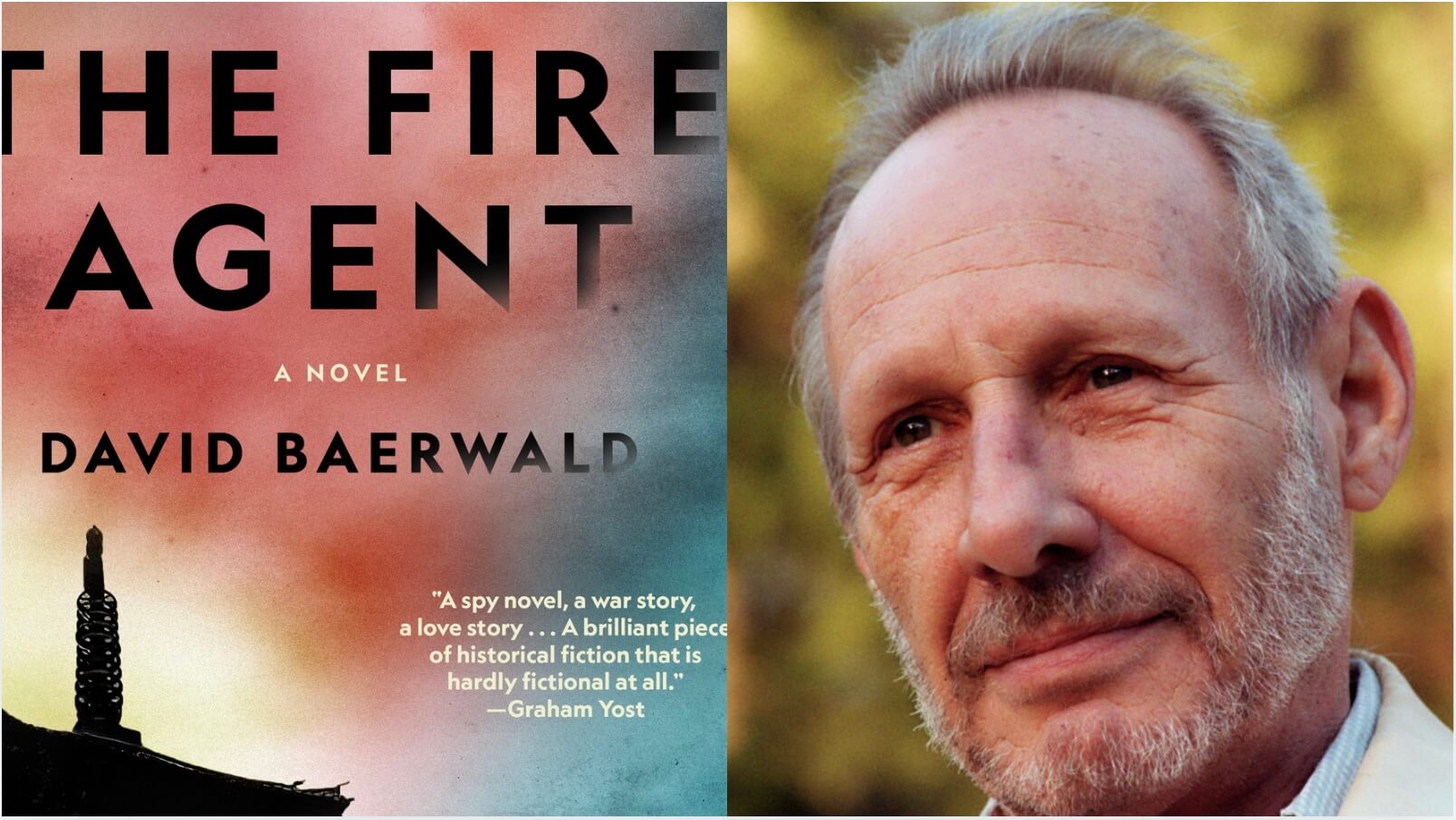
David Baerwald’s novel spans four continents, two world wars and countless collisions between heartfelt idealism and the harsh realities of human behavior. Photo by Brian Beker

By Dan Epstein June 4, 2026
“When I started out writing this book, my model wasn’t James Clavell,” David Baerwald said with a laugh, as he paused for a smoke break at a waterfront picnic table in his current hometown of Kingston, New York. “It was more like Bernard Malamud, or something; it was this kind of interior, depressing thing about a family coming to grips with its crimes — the hazards of epigenetic traumatic memory in a family, and what it does to people. It was a much more personal tale, you know? I wasn’t really thinking of this huge, swashbuckling thing.”
The Fire Agent, Baerwald’s debut novel, is indeed a huge, swashbuckling affair, an epic, massively entertaining and often gut-punchingly horrifying tale of international espionage spanning four continents, two world wars and countless collisions between heartfelt idealism and the harsh realities of human behavior over its 600 pages. Though some of its characters and most of its conversations are fictional, The Fire Agent is firmly grounded in actual historical events and figures both well-known and obscure — some of which are truly stranger than fiction.
“I would not have dared to make up most of this,” Baerwald said with a shrug. “Some of the characters are so over-the-top, they’re like super-villains from a Bruce Lee movie or Get Smart. The Black Dragon Society? Treasure hoards of Chinese gold? That all sounds ridiculous, like something out of Terry and the Pirates, or fucking Indiana Jones. But it all happened! I really wanted to provide people with clues, so that they could look into the actual history, because I found it so interesting.”
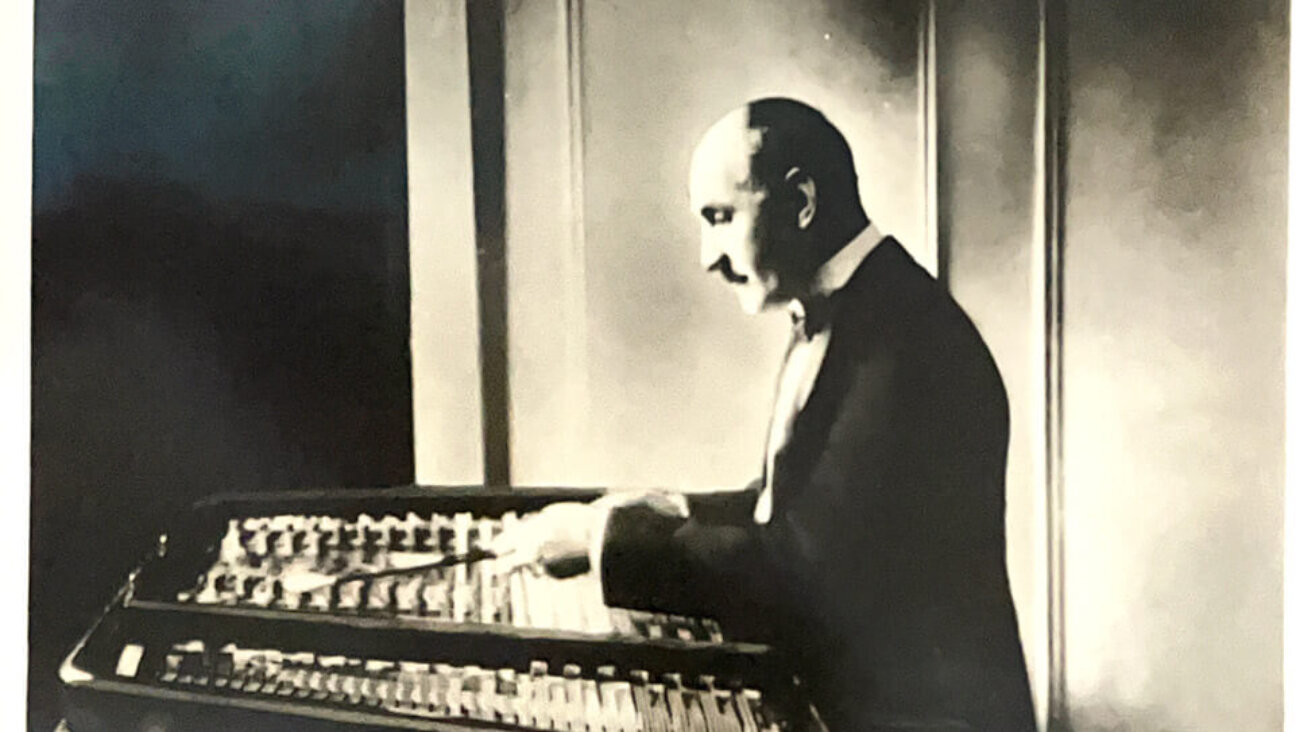
Much of The Fire Agent’s plot is based around the life and career of Ernst Baerwald, the author’s actual grandfather, a German Jew who spent several decades in Japan — ostensibly working as a liaison for the German chemical conglomerate IG Farben, though the position served as cover for his extensive and deeply impactful espionage activities on behalf of the German (and later the United States) government. Long dead by the time his grandson was born in 1960, Ernst rarely came up in family conversation. “He went largely unrecognized in his lifetime,” said Baerwald. “Nobody ever really talked about him, and from what people would tell me about my grandfather, I had the impression that he was this kind of bum that sold ink on the streets in Tokyo. I had no idea that he’d led this crazy life!”
It wasn’t until about eight years ago, when Baerwald was cleaning out his parents’ wildfire-threatened West Los Angeles home, that he got an initial glimpse at Ernst’s actual occupation. “There were two boxes with a bunch of his papers that were in his office when he died,” Baerwald said. “They’d just been packed up and put away and buried under, like, 1960s-era skis and gardening equipment. In fact, I was gonna throw them away without looking at them; I was like, ‘Well, I’ve lived long enough without them.’ But this woman that was working with me, archiving the things in the house, she was like, ‘Well, let’s have a look.’”
Along with Ernst’s diaries and letters, Baerwald found maps and photographs of Japan, a Samurai sword and a miniature spy camera from the 1930s, and a speech that his grandfather had given to a U.S. government-run spy school in San Francisco in 1943. “I realized that there was, in fact, a huge story here that I needed to uncover,” Baerwald recalled. “That speech to the spy school was really the map to a huge portion of what I was soon to be researching. I didn’t know where it would take me, I didn’t know what it was for; I just knew that that was what I had to do, and suddenly that became my only thing in life.”
Baerwald is singer-songwriter, multi-instrumentalist and film and TV composer best-known for Boomtown, his platinum-selling 1986 album by David & David, his duo with musician and producer David Ricketts, as well as his Golden Globe-nominated song “Come What May” from the Moulin Rouge! Soundtrack. His songs have been recorded by such disparate luminaries as Waylon Jennings, Sheryl Crow, Susanna Hoffs, Fishbone and Olivia Newton-John, but Baerwald said that writing a novel felt surprisingly natural for him.
“My first role was research, not writing,” he said. “But I did write some scenes just to see if I could do it, to see if I could actually write longform without meter or rhyme schemes, and it was like stepping into a warm, welcoming seat. You can get to feeling pretty claustrophobic as a songwriter; I’d accumulated a lot of rules for myself over God knows how many decades of doing that, just to survive — practices that I had acquired, mindsets — and I was happy to let them go, frankly. And I realized that there were a lot of things that I learned from not just lyric writing, but composition, that applied to writing a novel. When you’re composing for monophonic instruments like flutes or strings, they play the chords together as a group, but they’re each playing individual lines; and when you’re structuring complicated human interactions, that kind of muscle memory is really handy.
“To me, plots are like chord changes,” he continued. “They’re signifiers for change, but the real change is happening within the chord. It’s actually like a thousand minnows swimming in vaguely the same direction, rather than these monolithic events that proceed one after the other; there’s always a certain individuality in their movement. So if you think about characters like, ‘Here’s the cello section, and here’s the percussion,’ or whatever, it enables you to structure these sort of complicated scenes where everybody’s got some agenda, and everybody’s got their own melody that they’re singing.”
And as Ernst’s improbably cinematic life gradually unfolded for Baerwald through the diaries and correspondence of his grandfather and other family members (including Baerwald’s father Hans, who taught political science and Japanese studies at UCLA for 30 years), the plot of The Fire Agent fell into place. “I didn’t really need to outline the plot, because I already had the outline. It was his life — and it was like, ‘Wherever he goes, I go,’” he said with a laugh. “I just did research along the way to find out what he was doing and what was happening around him. Whether there’s a huge earthquake or whether there’s a plague or whether there’s a war, it kind of gives you the plot point, right there.”
Far more challenging for Baerwald was dealing with the “emotional rollercoaster” of researching the many soul-crushing horrors that his grandfather witnessed (and, in some cases, was directly involved in) as a soldier, citizen and spy. “I would find myself just weeping more than once,” he said. “You just find yourself coming across these artifacts that really take you into the historical moment, and it’s really powerful. I remember I was in the rare books library at Columbia, looking at my uncle’s papers, and there was a letter from one of the soon-to-be-dead fighters during the Lublin Massacre, and it’s 28 pages of just savagery. So I’m sitting there, reading the details of this doomed-yet-heroic effort, and I feel this little tap on my shoulder, and this girl says, “Excuse me, Sir, I’m sorry — there’s no crying on the manuscripts.’”
Indeed, one of the major themes running through The Fire Agent is mankind’s innate ability to solve a major problem while creating even worse ones with the solution. Early on in the story, Ernst is present at the unveiling of the Haber-Bosch process, the revolutionary industrial development which enabled man to produce synthetic ammonia on a grand scale — a discovery which then allowed the industrial synthesis of nitrogen fertilizers, which were desperately needed by farmers across the globe at the beginning of the 20th century. Unfortunately, while this discovery saved humanity from worldwide famine, the industrial-scale production of ammonia and ammonium nitrate also resulted in tremendous carnage on the battlefield and elsewhere.
“I knew that there was going to have to be some reference in the book to the transformation from life-giving fertilizers to life-taking gunpowder and phosgene gas,” said Baerwald. “The Haber-Bosch process has made the lives of the probably 7 billion people alive today possible, but it’s bleached the coral in the ocean, and the high-pressure tests that emerged from it ultimately fueled the Nazi air force and tanks and trucks…
“There are a lot of scientists in my family,” he said, “and one of them said something to me once that I put in Albert Einstein’s mouth in the book: ‘Look at us — we’re in the dreamiest of sciences, astrophysics, and what are we doing? We’re making missile trajectories and warheads.’ And that’s been a kind of a refrain in my family for my whole life, this awful feeling of being trapped in a sociopathic system that takes everything beautiful and turns it into a weapon somehow, that takes brotherhood and camaraderie and turns it into teams and armies, and takes love and turns it into prostitution.
“One of the reasons I chose the music business was that I didn’t want to be part of all that. I thought, ‘Even at its very worst, at least I’m not making weapons!’” Baerwald said. “But apparently, I am! Ultimately, the record companies started merging with multinational corporations who made fucking nuclear weapons, and now Spotify has gobbled up all my friends’ livelihoods and is investing in AI weapons. You can’t get away from this shit!”
Though he’s currently busy promoting The Fire Agent, Baerwald says that a sequel is already in the works, one which will include material cut from the first novel. “I’ve been like a guy chasing a piece of paper across a windy field for like seven years,” he said. “The full story was always just slightly out of reach — for the 600 pages that I ended up with, I wrote probably 1400. I wanted to take The Fire Agent up to 1980, but I realized that there was no way I’d physically able to do it; I honestly thought I was going blind by the end of it. But now I’m really looking forward to working on the next one.”

Did you know that only 2% of Forward readers donate to support our nonprofit newsroom? That 2% make it possible for millions to read the Forward without a paywall or subscription — removing any barriers to the full and fair Jewish story.
But while the Forward is free to read, it isn’t free to produce. Big stories — like deep dives into the antisemitism data, political scoops or reporting trips to college campuses — take months of research and fact-checking. All while we keep you informed of what you need to know each day.
— Rachel Fishman Feddersen, Forward Publisher & CEO
Support our mission to tell the Jewish story fully and fairly.