Israel’s cheerleaders lost big in the New York primary
Israel was an issue in Congressional primaries in part because supporters insisted on litmus tests that backfired
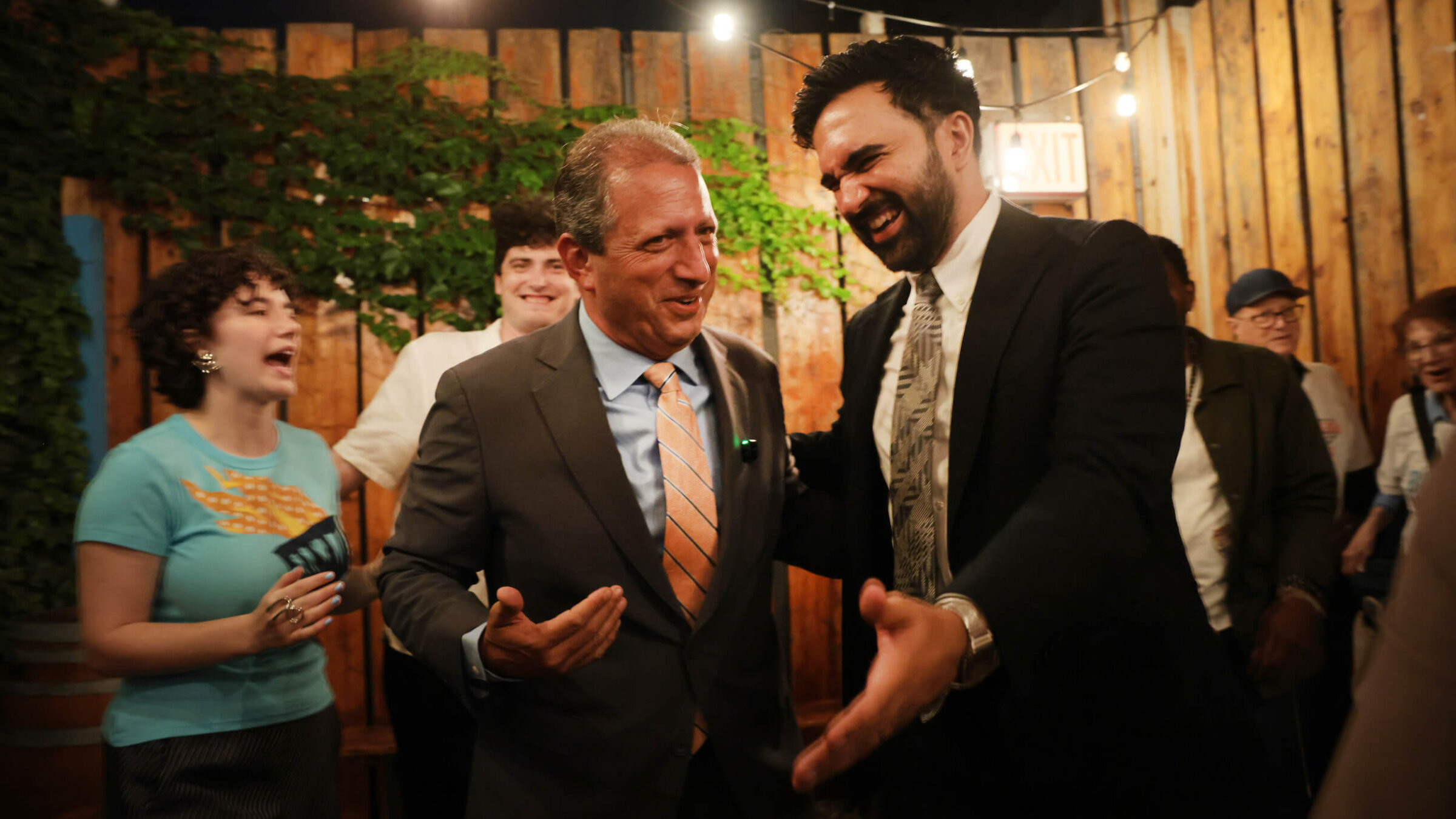
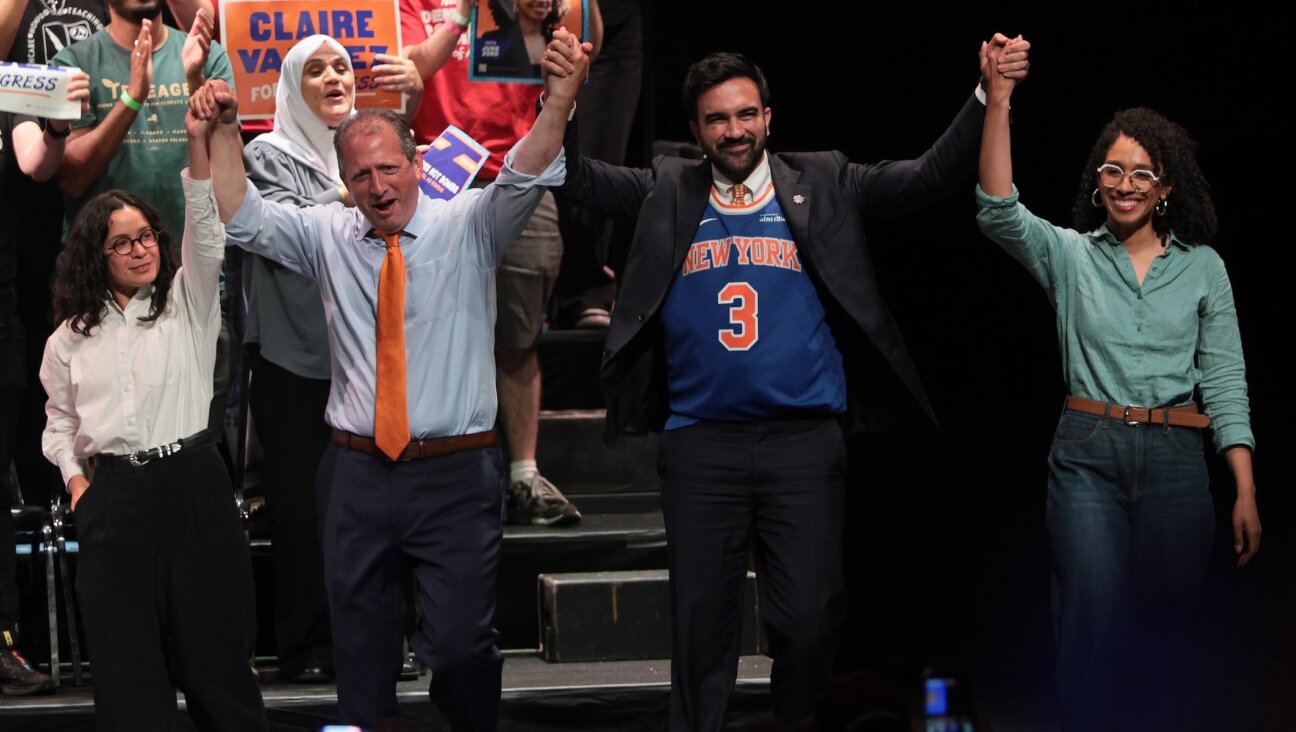
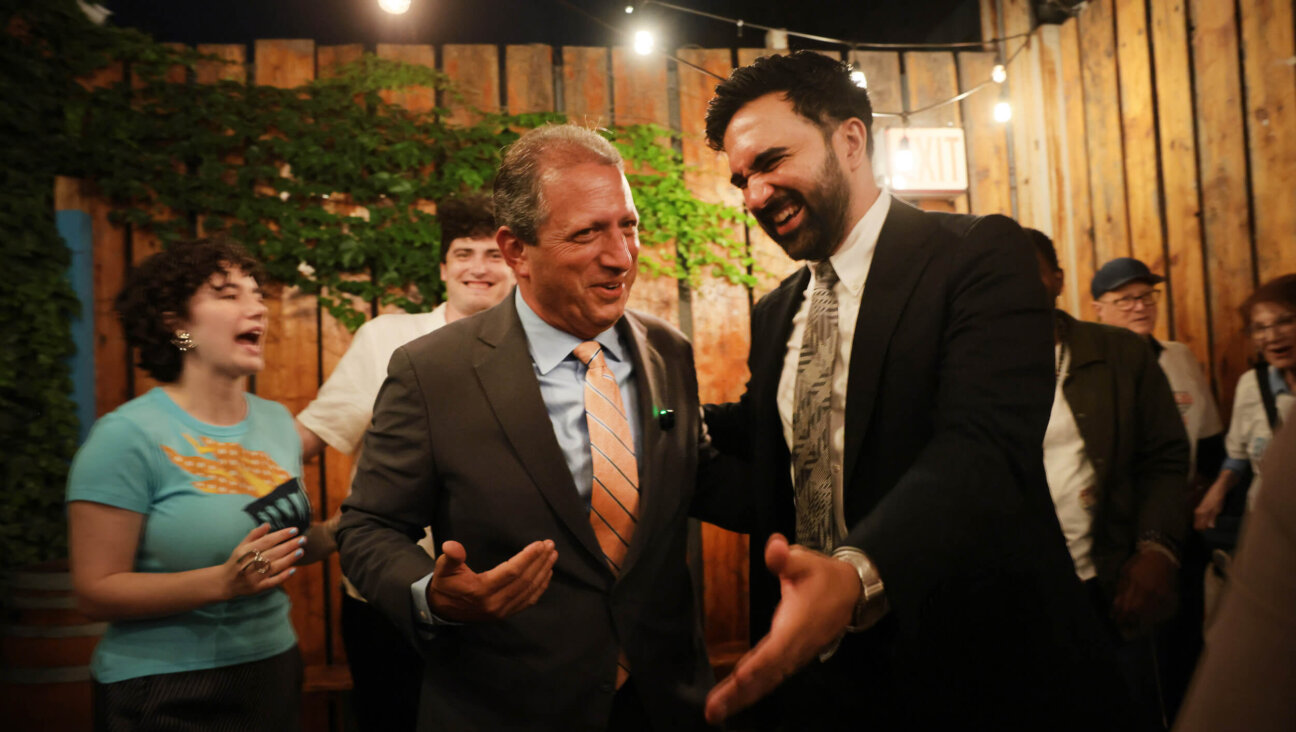
Congressional candidate Brad Lander stands with New York City Mayor Zohran Mamdani after declaring victory over his opponent, Rep. Dan Goldman (D-NY), in Brooklyn on June 23. Photo by Spencer Platt/Getty Images

Contributing Columnist Emily Tamkin June 24, 2026
To read the news Wednesday morning, the biggest loser in New York’s primary elections wasn’t a candidate in the race. It wasn’t even a person. It was Israel.
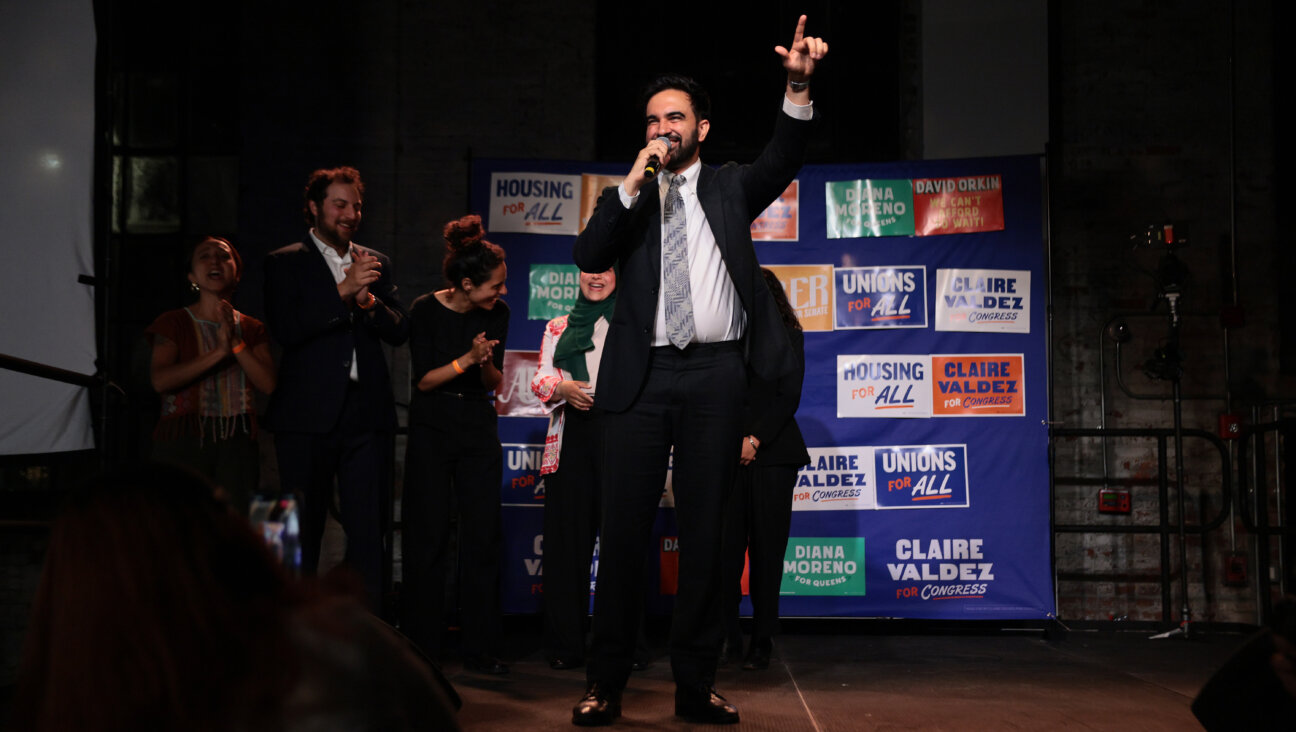
Three candidates who support ending or conditioning American military aid to Israel, all backed by Mayor Zohran Mamdani, won competitive primaries. The New York Times‘ assessment was blunt: “victories by pro-Palestinian Democrats show the party’s shift on Israel.” So was Politico‘s: “pro-Israel politics just took a huge hit in New York.” This very publication proclaimed the establishment of “a new political machine against Israel.”
Even outside those particularly charged races, the Israeli discourse was overwhelming. Micah Lasher, who won a crowded primary election to replace Rep. Jerry Nadler in New York’s 12th District, said during the campaign that he was “exhausted” by the focus on Israel.
Which makes it worth asking: Why did Israel become arguably the most prominent faultline in the Democratic primaries in the first place?
As the United States faces a cadre of alarming domestic issues — including the affordability (or lack thereof) of health insurance premiums, the future of abortion access and rising inflation — why should elections in New York be about Israel?
Foreign policy is an important issue for members of Congress, of course. And it’s not unreasonable that voters would want to know where candidates stand on, say, sending weapons to a country about whose wartime conduct many New Yorkers have grave concerns. But I think a lesson from this, which supporters of Israel may not want to learn, is that pro-Israel alarmism over progressive candidates has helped to boost those same candidates, rather than damage their chances.
In other words: the strategy of trying to write candidates out of viability by declaring them insufficiently supportive of Israel — or by suggesting that their positions on Israel mean they’re antisemitic, and shouldn’t hold elected office — hasn’t just not worked. It’s backfired disastrously, increasing the political salience of Israel in ways that hurt support for Israel in Congress.
Much of this is, I think, a downstream effect of last year’s election of Mamdani, during which hundreds of rabbis signed and circulated a letter declaring Mamdani’s politics — which center pro-Palestinian activism and skepticism about Israel’s existence as a Jewish state — a bridge too far. Mamdani’s campaign didn’t center Israel, at least at the start; it was actually about affordability. But the attention from pro-Israel groups and individuals increased the prominence of Israel in the election, so much so that by the time he won first the Democratic primary and then the general election, his victory was seen as being as much about Israel as much as it was affordability.
The same has become true of his endorsed candidates, too.
It’s not of course, that Israel was only important or prominent in these elections because of pro-Israel groups and individuals. There are political activists across the spectrum, including many in the progressive camp, to whom it is indeed the most important issue on the ballot. The same is true for voters. And multiple candidates, including Darializa Avila Chevalier and former Comptroller Brad Lander, were proactive about making their criticism of Israel a key point of their campaigns.
Still, we’re seeing an inversion of the longstanding norms by which staunch supporters of Israel have drawn a line beyond which someone’s politics on the Middle East make them unelectable. Such charges arguably played a role in Keith Ellison’s 2017 defeat in the race to be chair of the Democratic National Committee. As recently as 2022, the story of Andy Levin’s defeat in Michigan was that he, a J Street-aligned Democrat, had been bested by AIPAC.
For some of this week’s losing candidates and their supporters, that playbook backfired in real time.
Three weeks ago, the group Combat Antisemitism dinged Avila Chevalier for attending, in their words, an “October 8 rally celebrating Hamas massacre.” Avila Chevalier’s opponents made her attendance at that rally a talking point against her, which meant that just as her contest ended up being largely about Israel and antisemitism, her victory over Rep. Adriano Espaillat did, too.
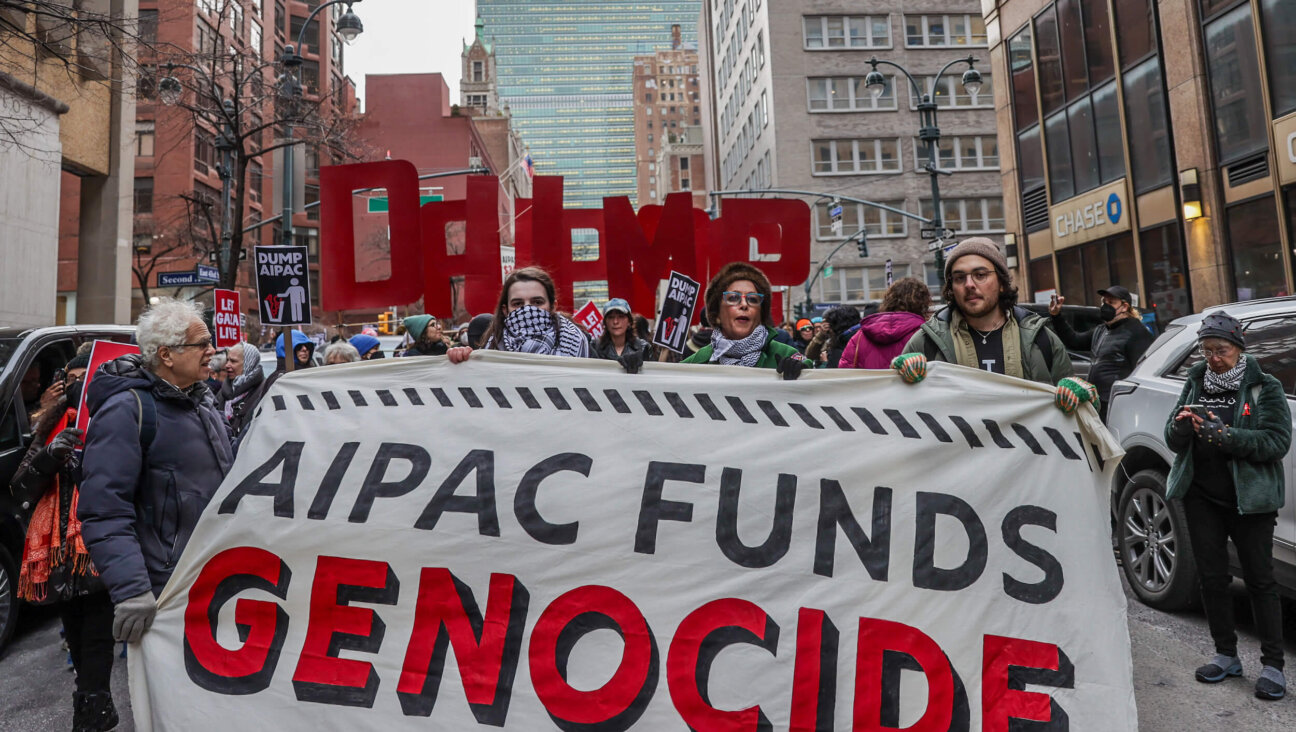
Rep. Dan Goldman accused Lander, who is also Jewish, of using “dangerous antisemitic tropes” in the election. Lander — who said he felt “queasy” in talking about AIPAC, given the reality that there are antisemitic tropes about the group, but still attacked Goldman for his affiliation with them — won in a landslide.
If the Mamdani-backed candidates had lost, it would have been seen as a confirmation that Mamdani was an aberration, and that the old protocol of demanding at least moderate support for Israel from candidates for office in the most Jewish city in the country was still applicable. Instead, their victories seem like confirmation of a new era in Democratic politics when it comes to Israel — potentially not just for New York City, but also for the whole country.
There are good reasons to wonder how widespread that change might be. The AIPAC-affiliated United Democracy Project, for instance, spent $5.7 million on supporting Adrian Boafo in a Maryland House race, albeit by pouring money into races via ads that didn’t focus on Israel. Boafo, who called for closer ties between Israel and the U.S., won his primary.
But when we consider why, exactly, Israel took up so much space in this week’s primary elections, part of the answer has to be that it was in part because strong supporters of Israel wanted it that way. That things have worked out differently than they might have hoped is a lesson not only about Israel and New Yorkers, but about democratic politics: you can force voters to think about something, but you can’t actually force them to think what you want.
Did you know that only 2% of Forward readers donate to support our nonprofit newsroom? That 2% make it possible for millions to read the Forward without a paywall or subscription — removing any barriers to the full and fair Jewish story.
But while the Forward is free to read, it isn’t free to produce. Big stories — like deep dives into the antisemitism data, political scoops or reporting trips to college campuses — take months of research and fact-checking. All while we keep you informed of what you need to know each day.
— Rachel Fishman Feddersen, Forward Publisher & CEO
Support our mission to tell the Jewish story fully and fairly.