Reading a Pakistani author’s 30-year-old novel helped me understand my parents’ views on intermarriage
In Bapsi Sidhwa’s ‘An American Brat,’ the distance between New York Jews and Lahore’s Parsi community is smaller than you’d think
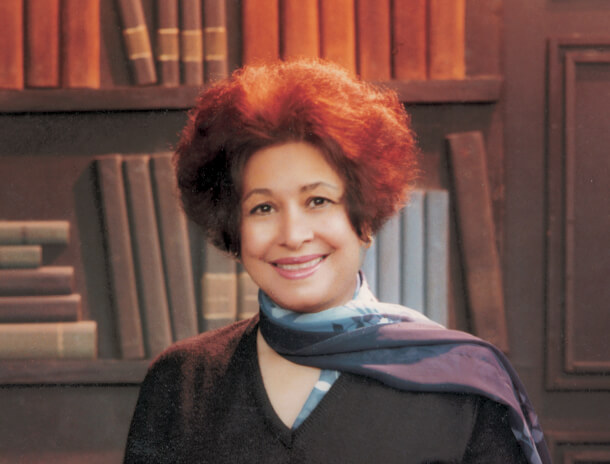
Bapsi Sidhwa, author of ‘An American Brat.’ Courtesy of Milkweed Editions
When I was a kid, I was haunted by the threat of my parents rejecting me if I married a non-Jew. Raised on Disney movies and song lyrics about soulmates, I spent almost every moment of high school anticipating the pain of falling in love with a non-Jew and having to choose between him and my family. If I chose him, the estrangement could bode poorly for married life. But if I married a Jewish man, I’d always worry that if he had not been Jewish, our love would not have overcome our religious differences, and therefore was not that strong to begin with.
The psychic burden began to lift only when I went to college at Hunter in New York City and made friends from other minority groups. I bonded with them over our parents’ desire that we marry someone from the same religion or ethnicity. I had always felt like my parents’ demand constituted bigotry against non-Jews, and I was surprised when my non-Jewish friends were more sympathetic to their stance than I was.
In college, I took a class on the history of modern India and learned about the Pakistani author Bapsi Sidhwa, but I didn’t read her until this year. Sidhwa, who died in 2024, grew up in Lahore’s Parsi community — a group of Zoroastrians who trace their roots to pre-Islamic Iran. Even though her books are mostly more than 30 years old, they still feel relevant, and they remind me of my own Iranian Jewish community.
Sidhwa’s 1993 coming-of-age novel An American Brat centers on Feroza, a Parsi girl from Lahore. Feroza’s parents send her to the U.S. to expand her horizons because they think the local culture is making her too conservative. But they wind up being disappointed when her horizons expand too much.
Feroza’s whole extended family goes into a tailspin when she sends word home that she wants to marry a Jewish man named David. She met him when she responded to an ad he placed in the college newspaper about selling his car. The two bond over their families’ shared emphases on religion and education. David’s family’s Shabbat candles recall the significance of fire within Zoroastrianism. But if Feroza marries a non-Zoroastrian, she will be excommunicated from the Parsi community. As Feroza’s mom Zareen prepares to fly to America to intervene, extended family members urge her to stand her ground no matter how nice David is and no matter how big a “tantrum” Feroza throws — but they also advise her not be too harsh either, so as not to push Feroza away.
The reader never learns what objections, if any, David’s Reform Jewish parents might have to his interfaith marriage; over Shabbat dinner, prior to the proposal, they are reserved but polite. Meanwhile, Zareen’s good-cop bad-cop routine is familiar, quaint and pathetic. She lists eligible Parsi bachelors (the Zoroastrian equivalent of ‘nice Jewish boys’) with promising careers and “worthy mothers.” She tries killing with kindness: “You’re too precious. We’re not going to throw you away on the first riffraff that comes your way.” She even tells Feroza cautionary tales about women who married “nons” (Zoroastrian equivalent of goyim) and wound up feeling disconnected from their heritage. These methods all fail, and the book comes to a sobering end when Zareen calls David’s bluff and demands the couple have a huge traditional wedding, scaring him off and exposing the limits of his supposedly liberal values.
Zoroastrians, like Jews, are a small group. In 2022, an Associated Press article estimated the worldwide Zoroastrian population, which at its peak numbered in the millions, was now around 125,000. Lahore’s Parsi community had all of 11 members as of a 2023 Facebook post.
Reading literature from other cultures, just like having friends from other cultures, can teach us about our own. As I read Zareen’s efforts to talk Feroza out of the engagement, it was somehow easier for me to understand than if they were Jewish like me. The author’s empathy makes Zareen’s mom an especially interesting character, like a Zoroastrian Tevye, torn between family pressures and the feminist values that inspired her to send Feroza to the U.S. in the first place.
Students at Hunter have a reputation for being super liberal, but they also have surprising points of departure from what most people would consider liberal. When I told classmates that I struggled with my parents’ insistence that I marry a Jew, I sensed bad energy in the room, as if they were judging me for disrespecting my parents in front of them. Some seemed to think it’s only natural for a person to marry someone who belongs to the same religion or ethnicity. Part of me was disturbed to see that this brand of separatism was so fashionable — but I also felt relieved, like they’d given me permission to appease my parents.
Feroza heals from her breakup with David partly by remembering that no matter the religion of the person she marries, her religion will always be part of her. As for myself, I don’t know what my future holds. But whatever does happen, it will be something that also happened to countless women before me — not only Jewish women but people of all different races and creeds. It is comforting to remember that as your life is playing out, there are people all over the world and across time living out much the same story as you are.

Did you know that only 2% of Forward readers donate to support our nonprofit newsroom? That 2% make it possible for millions to read the Forward without a paywall or subscription — removing any barriers to the full and fair Jewish story.
But while the Forward is free to read, it isn’t free to produce. Big stories — like deep dives into the antisemitism data, political scoops or reporting trips to college campuses — take months of research and fact-checking. All while we keep you informed of what you need to know each day.
— Rachel Fishman Feddersen, Forward Publisher & CEO
Support our mission to tell the Jewish story fully and fairly.