A pioneering Reform synagogue makes way for a booming Iranian Jewish community
I came home to Great Neck, N.Y., to get to know Temple Beth-El’s shrinking Ashkenazi congregation
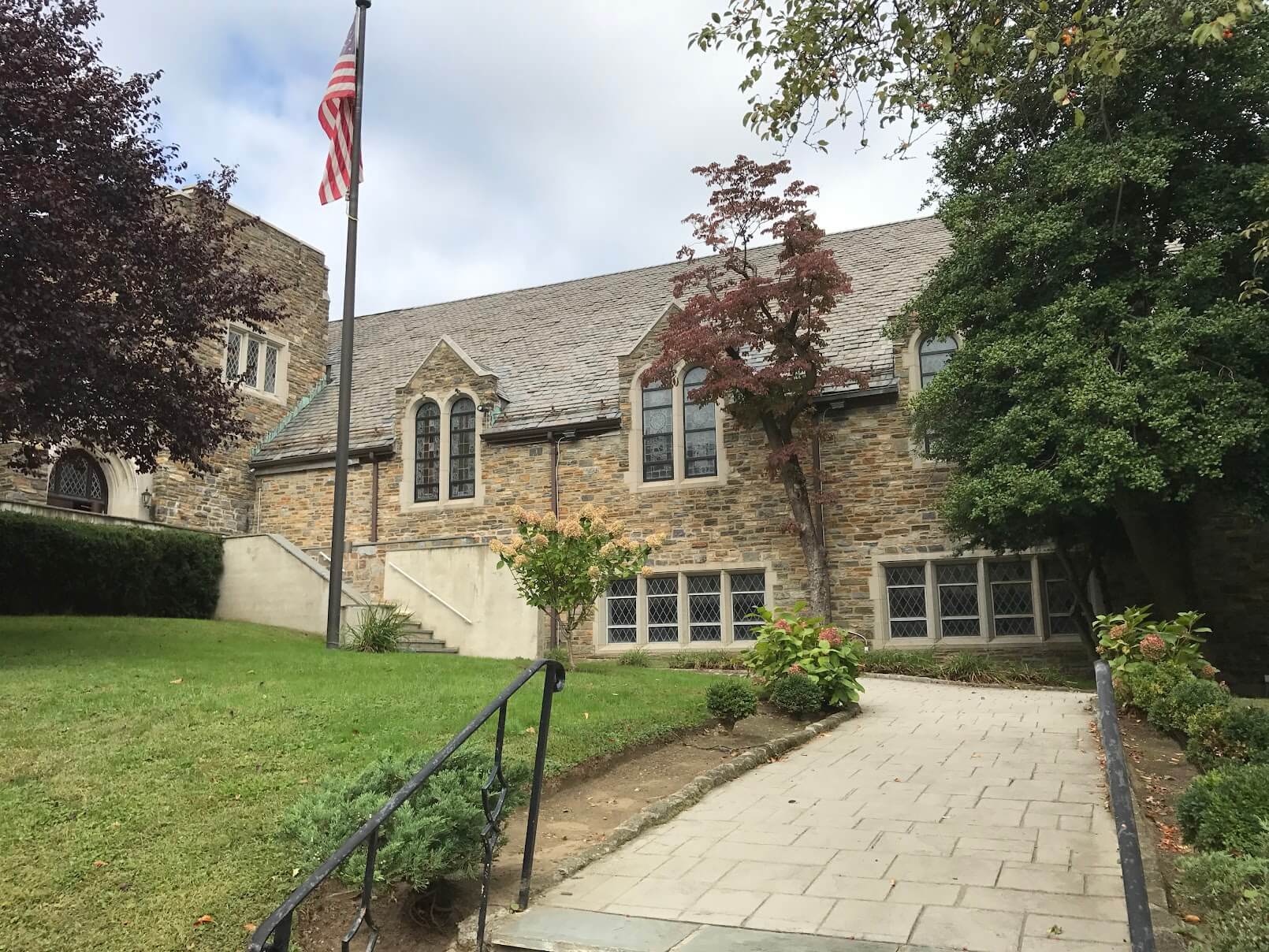
Temple Beth-El in Great Neck, N.Y. Courtesy of Temple Beth-El
Temple Beth-El is an island of Reform Judaism in the Iranian milieu of deep Great Neck, a suburb on the North Shore of Long Island 35 minutes away from Manhattan by train. There are around two dozen synagogues in Great Neck; three of them are Reform, and two of those are tucked away at the edges of the peninsula. Temple Beth-El stands bravely at the center, with frontage on Middle Neck Road, the main street, just steps away from multiple Orthodox synagogues and kosher restaurants serving a spectrum of cuisines.
As an Iranian-American Jew from Great Neck, I’ve been to Temple Beth-El twice before: once, in middle school, for a classmate’s bar mitzvah, and then, in 2021, to get the COVID vaccine. I called it, simply, “the Ashkenazi synagogue.” Tonight, as the oldest synagogue in Great Neck prepares to downsize, I am here for the third time ever, for Friday night services.
Temple Beth-El formed in 1928, when Great Neck was dominated by Protestants. The presence of the synagogue made even more Jews from the city want to move east. Its rabbis were outspoken civil rights activists and hosted Martin Luther King, Jr. in 1967. Now, as Great Neck’s demographics shift further toward more religious Jews, Temple Beth-El’s congregation is shrinking. The synagogue is selling its property to an Iranian Orthodox yeshiva and will be leasing back a portion of it.
In the mid 1980s, Temple Beth-El had around 1,500 families, with a 500-person waiting list, said Stuart Botwinick, the synagogue’s executive director. Now, as members have died off and younger ones aren’t joining as quickly, it has around 400, and can’t fill up its main sanctuary on Rosh Hashanah. Wielding cold economic calculus, I can envision someone arguing that if fewer people choose to attend a synagogue, then whatever happens to it must be natural, or deserved. I can even envision myself arguing that. It’s not guilt, because I did nothing wrong, but as a member of the majority group, some sense of duty makes me want to see with my own eyes what is being lost.
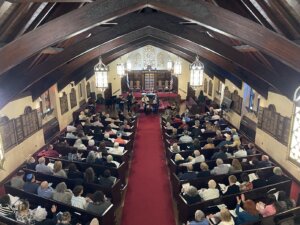
A man hands me a siddur and wishes me a Shabbat shalom. The chapel is beautiful, with a dark wood vaulted ceiling, stained glass and hanging lanterns. I find a seat in the gender-integrated pews among some 30 congregants. I try to follow the prayers, but I don’t know any of the tunes — my home synagogue is not nearly this musical. I am surprised to see some men not wearing kippahs. Rebelliously, I stray from the page everyone else is on and flip briefly to the back of the siddur. There are lyrics to “Hatikvah,” “America the Beautiful,” “God Bless America,” “The Star-Spangled Banner” and, maybe worst of all, “O Canada.” My inner Satmar rebbe shudders.
Fortunately, national hymns are not part of tonight’s repertoire. From the bimah, the rabbi, Brian Stoller, outs me as a Forward reporter. The moment the service ends, several excited Ashkenazi seniors approach me; clearly, the name of this news outlet carries much more clout here than in my typical Great Neck circles.
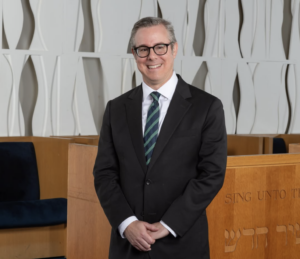
Stoller holds an optimistic vision of Temple Beth-El’s future that emphasizes adult education and cultural arts above physical space. In other words, “we’re not here to be landlords,” says Jennifer Still-Schiff, a co-president of the synagogue sisterhood. Still, losing ownership and part of their space must be somewhat traumatic. Once the service ends, Howard Herman, an honorary vice president of the board who’s been a member since the 1980s, gives me a tour and shows me all of the things the synagogue will need to sell.
“We have this beautiful Judaica museum, and we’re going to be selling it or giving a lot of it away,” he says. Then he shows me the large sanctuary. We can’t find the light switch, so we turn on our cell phone flashlights to inspect a 55-foot-long sculpture behind the bimah: “The White Flame of the Six Million” by Louise Nevelson. In the sculpture, which integrates the Torah ark, shapes carved out from white wood represent the uniqueness of every life lost in the genocide. “We’re going to have to sell this,” Herman says. “Who can buy this?”
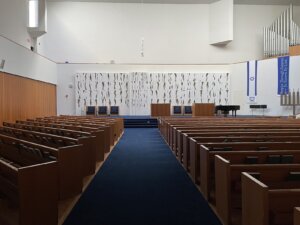
That sanctuary, where Temple Beth-El used to hold regular Shabbat services and now only holds High Holy Day services, seats almost 900 people. It will become part of the yeshiva’s space. Sisterhood co-president Rochelle Rosenbloom says the chapel, which seats about 250, will be enough to seat worshipers even on the High Holy Days. If it isn’t, she and Still-Shiff said, they can stagger two sets of services or have people watch the services on a TV in the lobby.
At a time when Great Neck was still mostly Christian, the existence of Temple Beth-El “was an essential sign that Jews could live in Great Neck and that there were enough of them, committed to religious participation through the Reform movement, to make it safe and desirable for others to try it out,” historian Judith Goldstein wrote in her book Inventing Great Neck. It was the peninsula’s only synagogue until 1941, when Temple Israel of Great Neck formed, said Brad Kolodny, an amateur historian of Long Island Jewish history. In the 1960s, Jews — particularly liberal, Reform Jews — began to outnumber Christians in Great Neck. Temple Beth-El had to build a bigger sanctuary. At times, even that sanctuary — the one with the Holocaust memorial sculpture — filled up, and administration had to set up overflow seating in other rooms.
Persian synagogues started cropping up in Great Neck after the Islamic Revolution in 1979. Great Neck has Iraqi and Syrian synagogues, too, plus several synagogues that are not officially Mizrahi but have Mizrahi congregants. Now, any car trying to drive on, say, Steamboat Road on a Saturday morning must use caution, as the sidewalks aren’t wide enough for the large groups of skipping children, bike-riding kippah-clad young men, and moms pushing double strollers in their Shabbat finest.
People in the Jewish world can get accused of being “Ashkenormative,” but since 1979, Great Neck has become Mizrahi-normative. When I was a child, a last name like “Weiss” or “Katz” connoted nothing to me, and for the longest time I assumed that my classmates whose hair was lighter than mine couldn’t possibly be Jewish. I used to watch The Nanny with my mom; one night, as Fran and Sylvia Fine peppered their speech with schleps, schvitzes, and other Yiddishisms, I asked my mom what language the characters were speaking. “I don’t know,” she said.
Fran was a prime example of what I eventually came to understand as the stereotype of the liberal American Jew, a character so familiar to American audiences that she could speak Yiddish and expect to be understood. But as the growth of the Orthodox community outpaces that of other denominations, I realize that stereotype is becoming less and less accurate. Forty-four percent of Jews ages 65 or older identify as Reform, but only 29% of Jews who are 18 to 30. And more concerningly: among people raised Reform, 12% of them are “no longer Jewish,” according to a 2020 Pew research study. When, in 1994, Fran Fine wished for “a husband and a house in Great Neck,” she was talking about a place already in flux, a place where a legacy of civil rights activism would soon give way to people who voted heavily for Donald Trump and helped elect George Santos.
When I told my mom I was writing about Temple Beth-El, she told me in an approving tone of voice that they lend out wheelchairs and other medical equipment for free, and collect donations from families of people who’ve died and no longer need theirs. Indeed, “social action” is an important value here: The synagogue also sends volunteers to an interfaith food pantry based at a local church, and some congregants volunteer to support undocumented immigrants, said Botwinick.
That willingness to look outward distinguishes Temple Beth-El from, say, my synagogue, and Botwinick argues many Iranian Jews benefit from it. “We believe that the Jewish community and the greater community actually falls in line with a lot of what we do and what we believe,” but doesn’t say so “because of cultural pressures,” Botwinick said. “Equal rights is important, health is important, caring for the immigrant community matters. It takes a strong voice — Temple Beth-El is that strong voice — to say these things matter.”
This is the most compelling thing anyone has told me for this story: that even Orthodox Jews benefit from having a Reform synagogue for a neighbor. If, for example, Temple Beth-El hadn’t opened as a vaccine hub, I struggle to see my synagogue, where many congregants are vaccine-skeptical, filling that gap.
Dr. Gary Zola, Temple Beth-El’s historian in residence, addressed the threats of decline facing Reform Judaism in a March 13 sermon, and said the synagogue’s long history should serve as a source of hope. “Let’s not forget that 98 years ago, a handful of Jewish scholars decided to create a Jewish community out of nothingness.”
“It is clear that the enervation of liberal Jewish life is a challenge,” he said, “but it’s a challenge that awaits our response.”

Hello, fellow Forward reader! I’m Joel Brown, a Forward reader and supporter for more than 15 years, and currently the chair of the board of directors.
I’m an avid Forward reader because it ticks so many of my essential boxes: excellent journalism, Jewish focus and diverse viewpoints. In today’s political climate, what I most appreciate is the Forward’s independence — made possible by the generosity of its membership.
The Forward is committed to bringing you unbiased, nuanced Jewish news. From my position as board chair, I see an exciting future as we expand our position as the definitive independent voice of contemporary American Judaism.
That’s why I’m paying it Forward, by matching $36,000 of reader gifts. It’s an investment in the Forward’s newsroom, to continue telling the American Jewish story with truth and independence.
— Joel Brown, Forward board chair
Support our mission to tell the Jewish story fully and fairly.