Mamdani’s first Jewish Heritage event reveals a narrowed circle
Many leaders shunned event at the NYC mayor’s residence, following synagogue protest clashes and a Nakba tribute
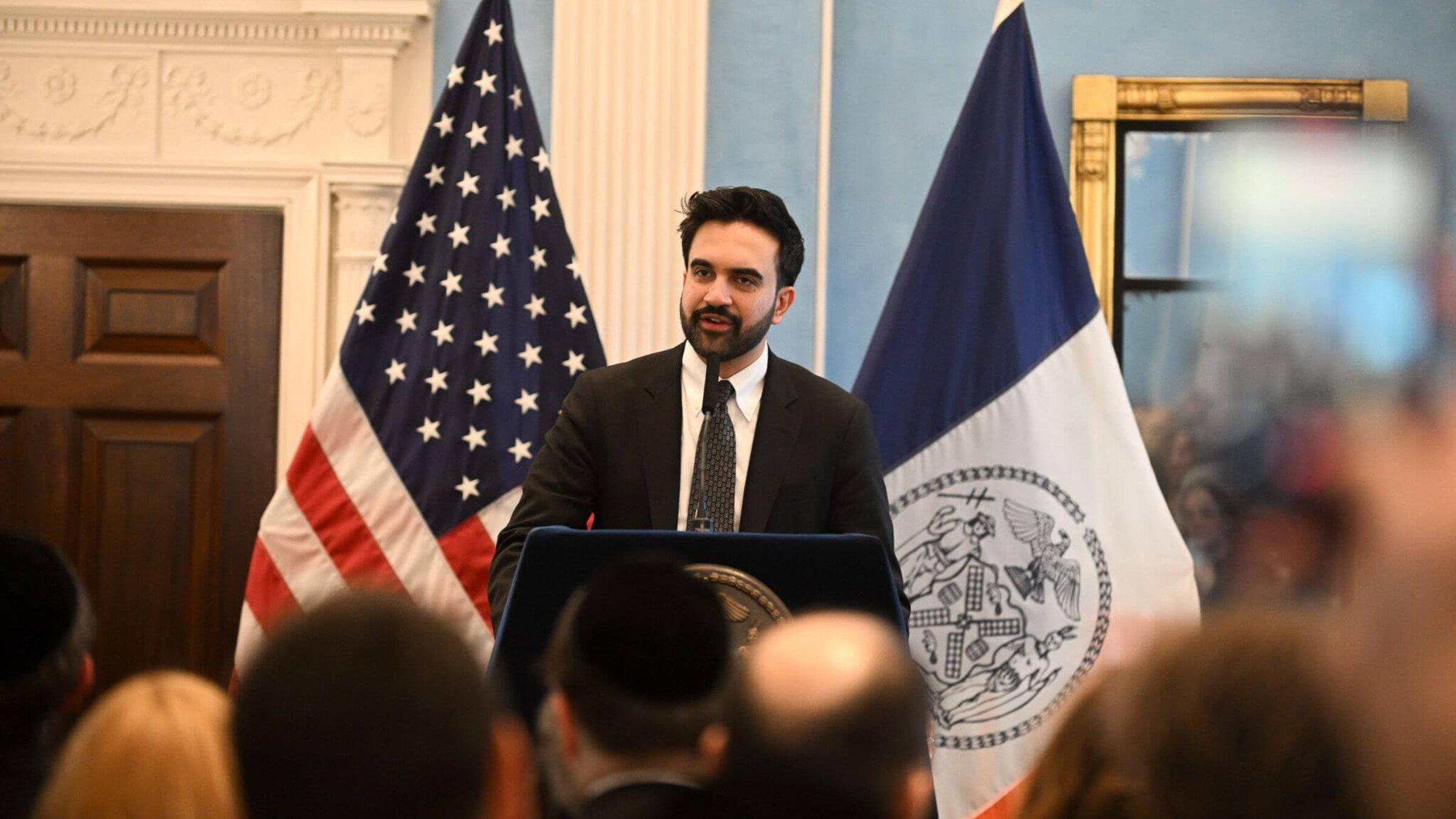
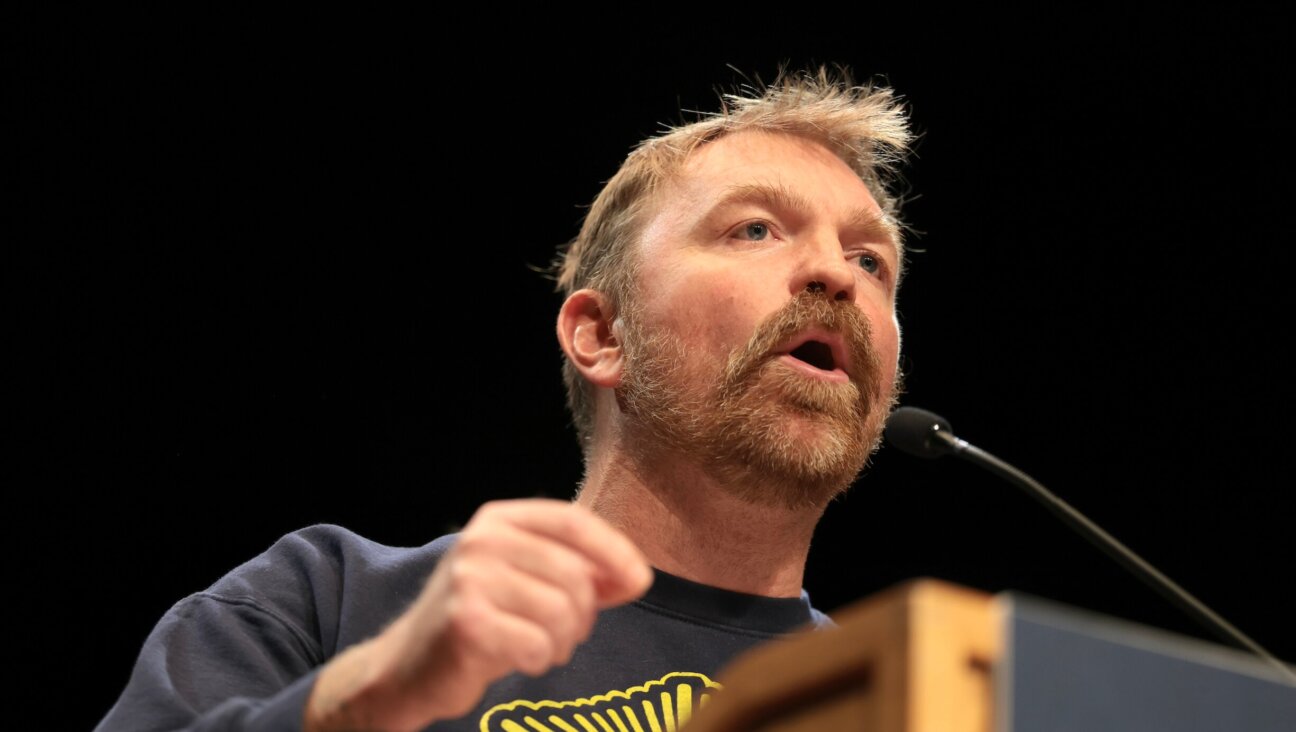
New York City Mayor Zohran Mamdani on May 18. Photo by Gili Getz

By Jacob Kornbluh May 18, 2026
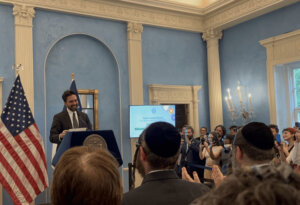
The Jewish American Heritage Month reception at Gracie Mansion, the mayor’s official residence on the Upper East Side, on Monday evening felt unlike any before it. It was not simply because the host, Zohran Mamdani, is New York City’s first Muslim mayor or because the Shavuot-themed menu was dairy. It was that the annual gathering came amid one of the most strained relationships between a mayor and much of New York’s Jewish establishment in recent memory.
Even the setting reflected the changed atmosphere. Previous receptions under former mayors had spilled into a large tent in the mansion’s garden overlooking the East River, with buffet tables lined with kosher food, bars stocked with liquor and wine, live music and packed crowds of rabbis, communal leaders, elected officials and supporters mingling late into the evening. The longstanding traditional events became demonstrations of the close alliance with mainstream Jewish organizations and pro-Israel activists, who formed a key part of their political base.
This year’s gathering was different. The event was moved indoors to Gracie Mansion’s smaller blue reception room. The crowd of 150 people was served by waiters quietly circulating through the room with small dairy dishes in honor of Shavuot: miniature cheesecakes, halved cheese blintzes, cheese bourekas served with a touch of charif on the side, potato knishes, chocolate mousse, salad cups and cheese-ball skewers. The drink selection was limited to Herzog wine from California and water.
There was no music at all — not even a cappella — despite the easing of traditional restrictions during the final days of the Omer before Shavuot.
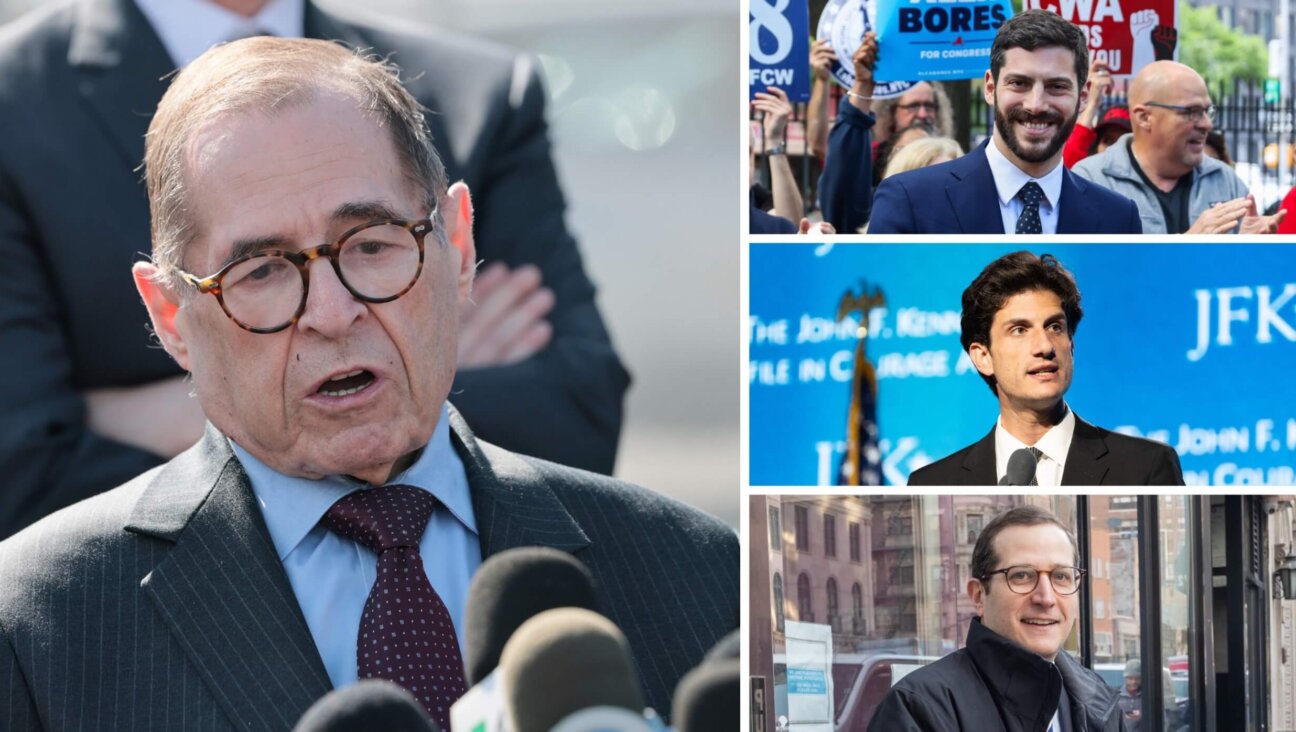
Mamdani’s Jewish commissioners, deputy mayors and aides circulated through the room, greeting attendees. But absent were prominent Jewish figures in city government and politics, including Police Commissioner Jessica Tisch, Comptroller Mark Levine, Manhattan Borough President Brad Hoylman-Sigal and most of the local elected officials. The only Jewish elected officials in attendance were Councilmembers Harvey Epstein and Lincoln Restler, and former comptroller and now congressional candidate Brad Lander.
The crowd itself reflected the Jewish coalition emerging around Mamdani’s mayoralty: anti-Zionist activists aligned with groups such as Jews For Racial & Economic Justice and Jewish Voice for Peace; liberal Jewish leaders affiliated with New York Jewish Agenda, who have sharply criticized Mamdani on Israel and antisemitism issues while continuing to engage with the administration, and those aligned with pro-peace organizations; and Hasidic leaders from the Satmar community in Williamsburg, who religiously oppose Zionism and have long shaped their relationship with municipal government around local priorities such as housing, education and nonprofit funding. Bend the Arc, a progressive Jewish social justice activist network, also co-sponsored the event with JFREJ and JVP.
Mamdani was introduced by Phylisa Wisdom, executive director of the Office to Combat Antisemitism, who also serves as the unofficial director for Jewish affairs. Rabbi Irwin Kula, president of the National Jewish Center for Learning and Leadership, delivered the invocation, and Jake Levin, manager of the Mayor’s Office of Mass Engagement, served as emcee.
The mayor offered some greetings, describing the preparations for Shavuot across the city, the teaching of Jewish values and his administration’s effort to combat rising antisemitism. “Jewish New Yorkers have worked to cultivate a city that is safe and open to all,” Mamdani said. “You should be accorded the same security and the same peace of mind.”
He then honored Ruth Messinger, the trailblazing Jewish political leader who in 1997 became the first and only woman to win the Democratic nomination for New York City mayor and went on to lead American Jewish World Service. Messinger backed Mamdani in the mayoral race last year. Guests were then privately ushered in to take photos with Mamdani.
Mamdani’s coalition
The reception came just days after Mamdani reignited tensions with many Jewish communities by posting a Nakba Day video produced by his City Hall media team commemorating the displacement of Palestinians during Israel’s founding in 1948. That was followed by what was perceived as a delayed and balanced response to pro-Palestinian protesters descending on a heavily Jewish Brooklyn neighborhood where a synagogue hosted a real estate sale that included West Bank properties.
The Nakba video angered many Jewish New Yorkers who already viewed Mamdani’s sharp criticism of Israel and embrace of Palestinian activism as dismissive of Jewish fears over rising antisemitism. Despite the backlash, there was little indication that Mamdani intends to moderate the political identity that brought him to power. Mamdani defended the video Monday morning when pressed about the civic purpose of using official city resources to mark Nakba Day, saying that acknowledging Palestinian suffering does not negate Jewish suffering or Israel’s history. He also declared that his “door is always open” to Jewish leaders despite the backlash.
But on Monday, a notable array of prominent Jewish leaders did not walk in — or were not invited.
Among those absent were leaders of the Jewish Community Relations Council, the Conference of Presidents, UJA Federation of New York, Board of Rabbis, Anti-Defamation League, American Jewish Committee, the Reform movement, Met Council, Orthodox Union, and Agudath Israel of America.
Some Jewish communal leaders absent from the Gracie Mansion reception have embraced a strategy of total opposition to Mamdani, viewing engagement with him as legitimizing a mayor they see as hostile to Zionism. Other organizations that are dependent on city grants or ongoing access to the municipal government have continued engaging with City Hall even while publicly criticizing the mayor’s rhetoric on Israel and antisemitism.
But that has become increasingly harder for them. The UJA Federation of New York, which hosted Mamdani for a mayoral candidate forum last year, said its leadership did not attend because it was “being hosted by a mayor who denies a core pillar of our heritage — the State of Israel as the homeland of the Jewish people.”
Rabbi Joseph Potasnik, executive vice president of the New York Board of Rabbis, who was among 19 Jewish leaders on Mamdani’s transition team, told the New York Post he declined an invitation to join.
The reception suggested that Mamdani is continuing to cultivate a smaller alternative Jewish coalition, separate from the traditional pro-Israel communal establishment and rooted more in progressive activism and pragmatic community relationships. Mamdani recently appointed Rabbi Miriam Grossman, a JVP activist, as his faith liaison. To his critics, however, the evening underscored how narrow that coalition remains within the broader Jewish community of New York City.
I’m personally matching all gifts to the Forward, up to $36,000. Can I match your gift now?

Hello, fellow Forward reader! I’m Joel Brown, a Forward reader and supporter for more than 15 years, and currently the chair of the board of directors.
I’m an avid Forward reader because it ticks so many of my essential boxes: excellent journalism, Jewish focus and diverse viewpoints. In today’s political climate, what I most appreciate is the Forward’s independence — made possible by the generosity of its membership.
The Forward is committed to bringing you unbiased, nuanced Jewish news. From my position as board chair, I see an exciting future as we expand our position as the definitive independent voice of contemporary American Judaism.
— Joel Brown, Forward board chair
Support our mission to tell the Jewish story fully and fairly.