Mamdani supersizes NYC hate crimes office, as tensions simmer over synagogue protests
The mayor stresses prevention and condemns antisemitic acts — but defends demonstrations following Brooklyn clashes
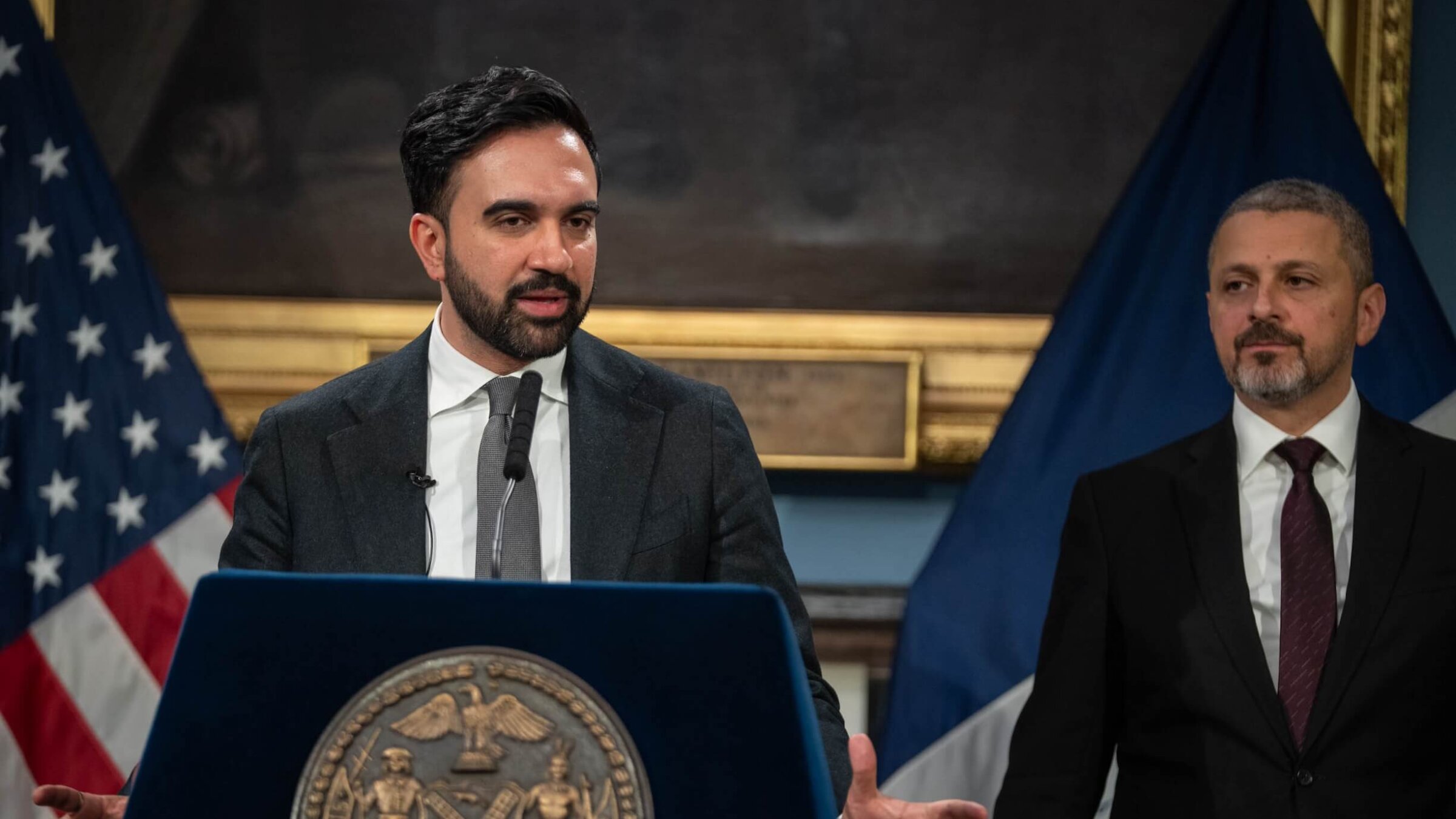
New York City Mayor Zohran Mamdani on May 12. Photo by Ed Reed/Mayoral Photography Office

By Jacob Kornbluh May 12, 2026
New York City Mayor Zohran Mamdani announced a nearly ninefold increase in New York City’s budget for preventing hate crimes as part of his budget proposal announced Tuesday, fulfilling a campaign promise that was central to his outreach to Jewish voters amid concerns about his stance against Israel.
The Jewish community overwhelmingly did not support his election, and his proposal comes amid rising tensions stoked by anti-Israel protests — most recently on Monday night, when dozens descended on a heavily Jewish Brooklyn neighborhood where a synagogue hosted a real estate sale that included West Bank properties.
Mamdani’s $26 million for the Office for the Prevention of Hate Crimes would significantly expand an agency created in 2019 to combat rising antisemitism and other forms of hate, which currently has a $3 million annual budget
The office is tasked with addressing all hate crimes, and Mamdani did not specify how much of the $26 million would be directed specifically toward combating antisemitism. According to the New York City Police Department, antisemitic incidents accounted for 57% of all reported hate crimes in 2025. The Anti-Defamation League’s 2025 annual audit found that while antisemitic incidents in New York declined by 19%, last year was still the third-highest year on record.
“Too often, the only response offered to a hate crime is exactly that, it’s a response,” Mamdani said. “Today we want to also do the work of preventing those hate crimes.” The mayor said most of the funding would go toward expanding existing city programs that have proven effective, alongside the rollout of the city’s first comprehensive municipal strategy to combat antisemitism, which is expected this fall.
Most of the office’s current funding goes towards a program called the Partners Against the Hate FORWARD initiative — in partnership with the NYC Commission on Human Rights — that offers grants up to $10,000 for community-based initiatives. A City Hall spokesperson said the specific allocation of the additional funding is still being assessed.
The proposal resembles a plan authored by Jews For Racial & Economic Justice, a progressive organization that supported Mamdani during the election. The JFREJ proposal called for between $26 million and $30 million in hate violence prevention initiatives, including expanded reporting systems, proactive relationship-building and anti-bias education.
In a statement Tuesday, the group hailed the investment as a “huge win” for advocates of a broader approach. “The Mamdani administration has significantly raised the bar for what it looks like to seriously address antisemitism and hate violence,” said Audrey Sasson, JFREJ’s executive director.
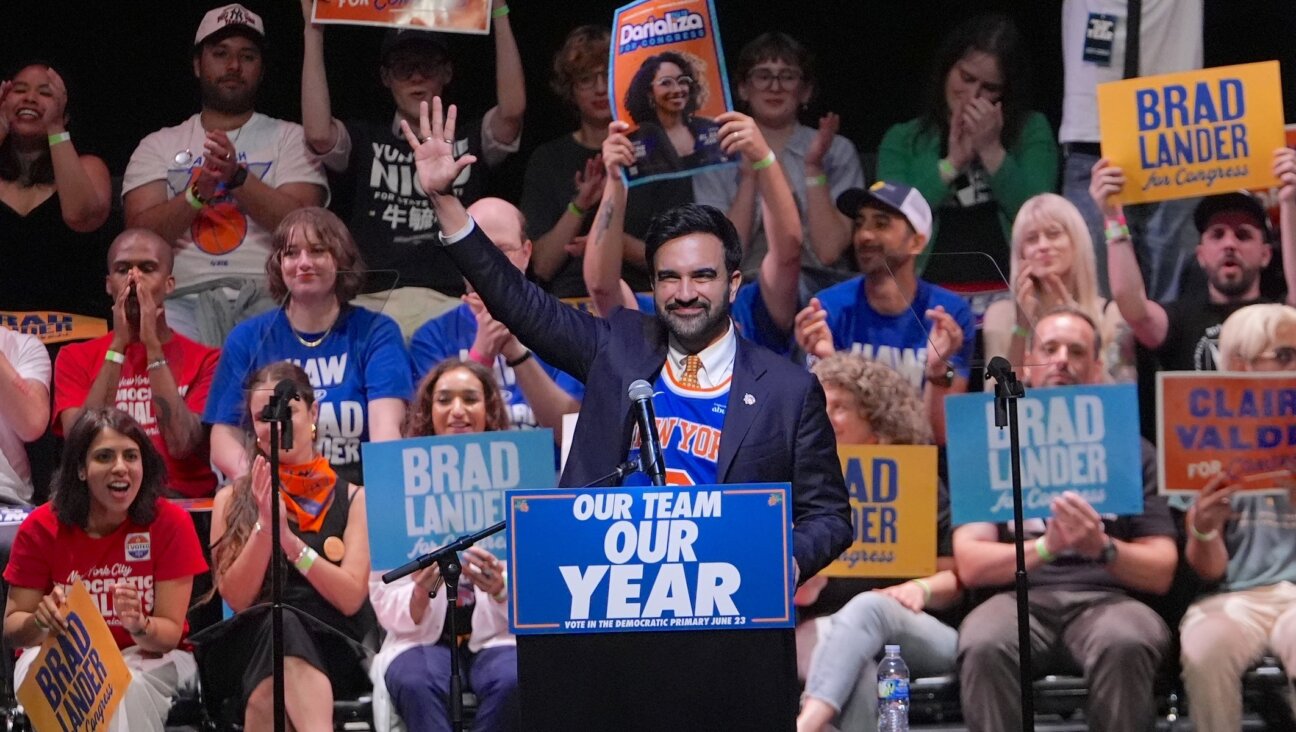
The hate crimes office expansion drew swift praise from Jewish elected officials, including some who have distanced themselves from Mamdani in their support for Israel. “Promises made, promises kept,” Manhattan Borough President Brad Hoylman-Sigal posted on X. Rep. Dan Goldman — whose primary challenger, Brad Lander, is backed by Mamdani — said the funding is a worthy tool to combat hate: “It is vital that we all work together to ensure we do everything possible to keep New Yorkers safe.”
Praise from Jewish organizations was also unanimous. Hasidic leaders of both Satmar sects also applauded the mayor, with one organization calling the investment a “massive increase of resources to stop the rising tide of antisemitism in NYC.” The Anti-Defamation League, which had launched the Mamdani Monitor to scrutinize the administration, and the New York Jewish Agenda, a progressive Zionist group, also welcomed the initiative.
Still, Mamdani’s prevention strategy does not include measures in response to protests outside synagogues, which have included antisemitic displays and slogans.
On Monday night, pro-Palestinian protesters marched through the heavily Orthodox neighborhood of Midwood in Brooklyn, chanting slogans including calls for “intifada revolution” during a demonstration outside a synagogue hosting an event marketing real estate in Israel and West Bank settlements. The protest also drew a crowd of pro-Israel counterprotesters, many of them teenage boys, as police intervened to keep the groups apart. The NYPD reported four arrests, including two Jewish teens.
Under a new law recently passed in the City Council by a veto-proof majority, the NYPD is currently devising a synagogue protection plan that it must make public. But meanwhile, police officers accompanied the protesters as they circled residential blocks chanting anti-Israel slogans.
Many Jewish residents have said such protests leave them feeling intimidated or unsafe. The administration has yet to outline a more robust enforcement or public safety approach to demonstrations, and Mamdani recently defended a similar protest of a real estate sale held on Manhattan’s Upper East Side.
In a statement shared with the Forward, Mamdani condemned the violence at the protest and counter-protests on Monday night “alongside antisemitic, anti-Muslim and racist rhetoric, as well as racial slurs, displays of support for terrorist organizations, and calls for the death of others” as “despicable.”
“New Yorkers have the constitutional right to protest and to counter-protest, but no one should face violence, intimidation, or hatred because of who they are or what they believe,” the mayor added. “We can simultaneously protect both public safety and civil liberties, and our city remains committed to doing exactly that by upholding the right to peaceful protest while keeping every New Yorker safe.”
Additional reporting by Alyssa Katz.