At the edge of America, six Jewish graves endure
Long before Alaska had synagogues or an organized Jewish community, a small cemetery in Fairbanks preserved traces of frontier Jewish life one burial at a time
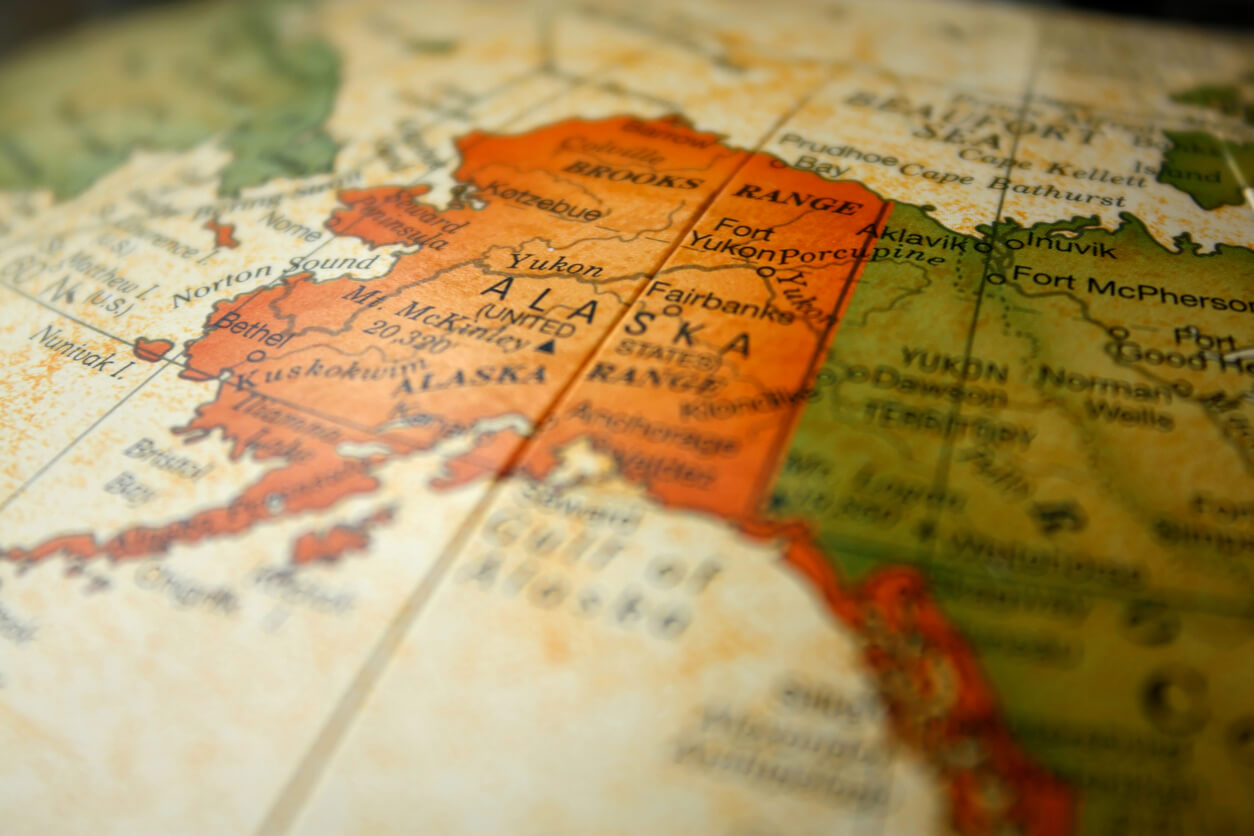
Photo by Jean Ursula/iStock
By Austin Albanese May 25, 2026
A July 1954 funeral in Fairbanks, Alaska, drew unexpected attention from Jewish newspapers across the country. The woman being buried, Lena Ferguson, was laid to rest in what the Fairbanks Daily News-Miner described simply as the “Jewish plot” inside the city’s Clay Street Cemetery — a small, largely forgotten burial ground that many outside Alaska did not even know existed.
Reports in papers from Florida to Chicago described the “discovery” of what was believed to be the only known Jewish cemetery in the Last Frontier. Some emphasized the unusual circumstances of a Jewish burial in the remote Alaskan interior. Others noted that Ferguson had been married to a non-Jew.
Long before Alaska had a purpose-built synagogue, the Jewish plot at Clay Street had already begun preserving the names of Jews who lived and died in the territory.
The six graves within the plot preserve fragments of a largely forgotten Jewish world built around mining camps, frontier trade, military outposts and isolated immigrant lives. Together, they show how Jewish life appeared in one of the most remote corners of the United States, often before the institutions that sustained it elsewhere.
Ferguson’s funeral itself reflected that improvisational frontier Judaism. According to accounts published at the time, her Jewish identity only became widely known after her brother, Joseph Wishengrad of Catskill, New York, contacted a Fairbanks funeral chapel and requested that she be buried according to Jewish law.
Alaska’s only rabbi, military chaplain Jacob Rubenstein, happened to be away visiting Jewish servicemen stationed at remote military installations. In his absence, Jack Frankel — a former Biloxi, Mississippi, resident working for the United Service Organizations-Jewish Welfare Board — helped officiate the service alongside Robert Bloom, a former Klondike Gold Rush miner who later opened a hardware and general merchandise store in Fairbanks.
Jewish newspapers reported that the cemetery plot had not been used for more than 25 years because many Jews who died in Alaska were sent “to the states” for burial instead.
Before Ferguson, the most recent burial there had been Gussie Beckman in 1939. Born in New York in 1882, Beckman operated the Palace Baths and the Palace Liquor Store on Fourth Avenue in Fairbanks. Her obituary noted that “nothing is known in this city of any surviving relatives.”
Her funeral demonstrated how tenuous Jewish communal life in Alaska could be: a Christian minister, Rev. Rudolph G. Fitz, conducted the service, while Leonard Newman, a University of Alaska mining engineering student from New York City, read the burial prayers. Her pallbearers included future state senator John B. Hall, Deputy Marshal Pat O’Connor and other Fairbanks civic figures.
Other graves preserve similar fragments of frontier life.
Thomas Robin, a Romanian-born immigrant who arrived in Alaska in 1893, was buried in 1923 under the auspices of the Pioneers of Alaska, a fraternal organization founded by early settlers in the territory. His obituary identified him as a member of the Iditarod Igloo chapter.
Julia Warren, buried in 1929, lived near the Mason Creek gold mine and died in an automobile accident alongside three others. Her husband worked as a miner.
Anna Marks, who died in 1915, received a public funeral in Moose Hall, reflecting how civic lodges and fraternal organizations often doubled as gathering places in frontier towns where formal Jewish institutions scarcely existed.
Little survives about David Hurvitz, who died in 1920, beyond a brief bankruptcy notice published years earlier.
And that absence itself forms part of the story. The record preserves only fragments: names, occupations, scattered newspaper clippings and weathered gravestones. Yet together they reveal that Jewish life in Alaska did not begin with synagogues or other organized institutions. It began with individuals — merchants, miners, and immigrants — carrying pieces of Jewish identity into an isolated region where religious infrastructure barely existed.
Alaska’s first purpose-built synagogue, Congregation Beth Sholom in Anchorage, would not be dedicated until 1965, more than a decade after Lena Ferguson’s burial and nearly 360 miles south of Fairbanks.
Clay Street Cemetery eventually closed to new burials as Fairbanks shifted to Birch Hill Cemetery after 1938. In 1982, the historic cemetery was added to the National Register of Historic Places.
Today, Jewish life in Alaska is more visible than it once was. Congregation Or HaTzafon was founded in Fairbanks in 1980, and Chabad established a center there in 2024. The closest active Jewish cemetery is now in Anchorage.
The six graves at Clay Street remain among the earliest surviving records of Jewish life at the edge of America.

Hello, fellow Forward reader! I’m Joel Brown, a Forward reader and supporter for more than 15 years, and currently the chair of the board of directors.
I’m an avid Forward reader because it ticks so many of my essential boxes: excellent journalism, Jewish focus and diverse viewpoints. In today’s political climate, what I most appreciate is the Forward’s independence — made possible by the generosity of its membership.
The Forward is committed to bringing you unbiased, nuanced Jewish news. From my position as board chair, I see an exciting future as we expand our position as the definitive independent voice of contemporary American Judaism.
That’s why I’m paying it Forward, by matching $36,000 of reader gifts. It’s an investment in the Forward’s newsroom, to continue telling the American Jewish story with truth and independence.
— Joel Brown, Forward board chair
Support our mission to tell the Jewish story fully and fairly.