Why I’m vibing with the pope’s first big statement
‘Magnifica Humanitas’ is Pope Leo’s response to AI and a testament to humanity
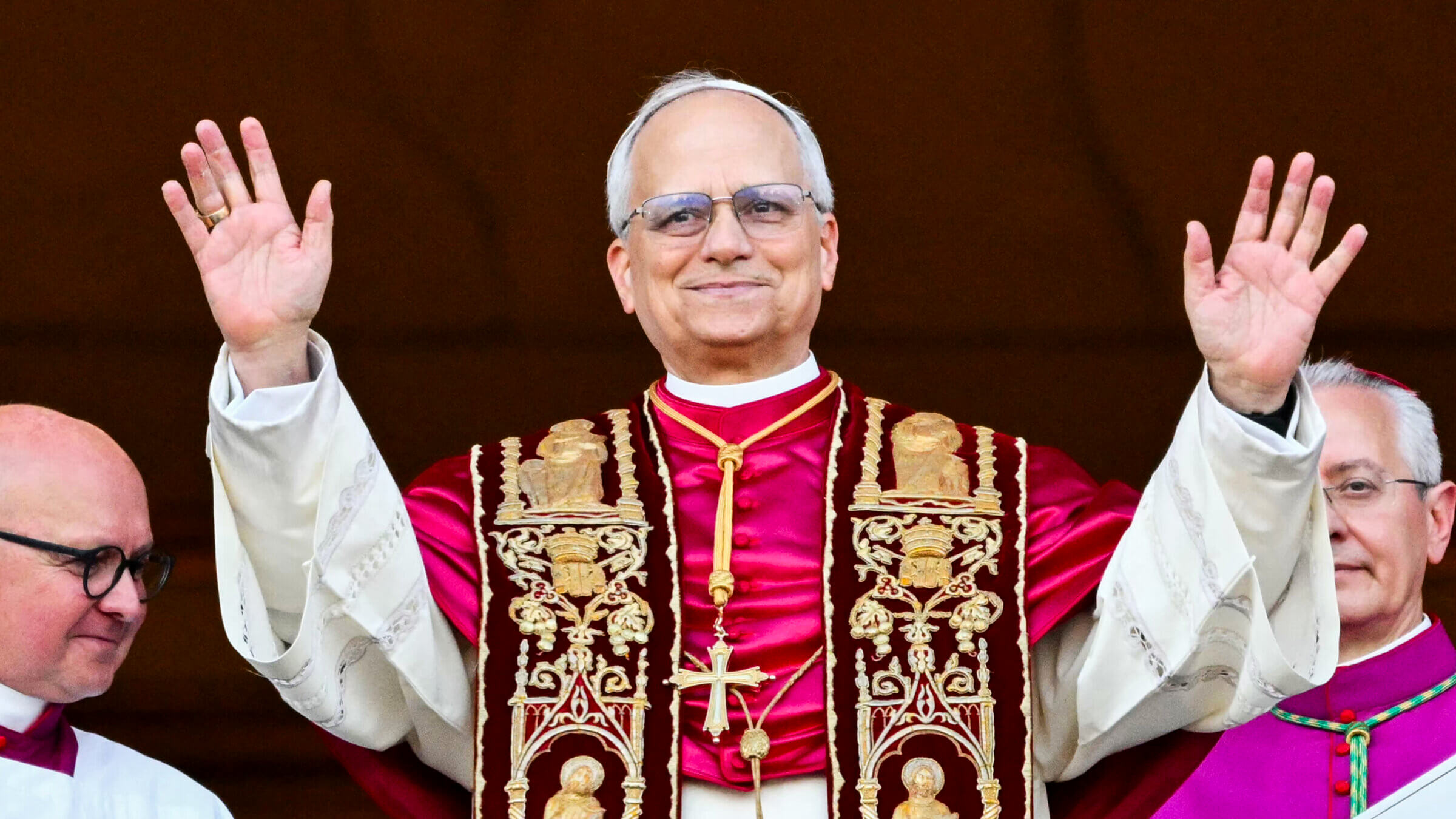
Pope Leo XIV. Photo by Getty Images

By Mira Fox May 29, 2026
I have long been obsessed with the Vatican and the inner workings of the papacy. (I majored and did my Master’s in religious studies.) But usually other people are not as tickled as I am by analyzing the newest theological statements from the Holy See.
Not this week. Pope Leo XIV just put out his first encyclical — the term used to refer to official statements outlining the church’s stance on a topic — and it has gone viral. “Spitting fire right out the gate,” said one of many similar trending posts, as though the encyclical was a rap song.
The topic is buzzy: AI, which the pope casts as one of the greatest threats to human flourishing and morality. (The encyclical is titled “Magnifica Humanitas,” or “Magnificent Humanity” in English, if that gives you the gist.) “Humanity, created by God in all its grandeur,” it opens, “ is today facing a pivotal choice: either to construct a new Tower of Babel or to build the city in which God and humanity dwell together.”
The document notes many of the concrete risks of AI — sexual abuse, distortion of facts, job loss — and calls for pragmatic solutions. But it is, at its heart, a testament to what makes humans human, written with palpable adoration for the people of the world: our creativity, our empathy, even our weaknesses. It’s a declaration that machines can never have the ineffable qualities of God’s children.
Structuring our world around technology, Leo writes, reduces “creation to an object of exploitation and human beings to mere cogs in a system driven toward ever greater efficiency.”
Later, in a paean to the importance of deep thought over easy answers, he goes on: “The speed and ease with which answers or summaries can be obtained risk extinguishing the desire to ask questions,” he writes, calling on the world “to protect our young people from the promise of the perfect machine” and warning against rendering “human thought seemingly superfluous precisely when it is most needed.”
“Magnificatus Humanitas” is a major statement, both in length — more than 43,000 words — and in symbolism. A pope’s first encyclical indicates the issues they believe are most important to the church, and signals the likely direction of their papacy.
That direction, for Pope Leo, is to be a voice for moral leadership, writ large. He addressed the encyclical not only to Catholics or even Christians, but “to all men and women of goodwill,” and cited thinkers like Hannah Arendt and J.R.R. Tolkien alongside the Bible.
It’s a declaration of a new — or, arguably, very old — relevance for religious leaders. As people rush through our increasingly fast-paced, frantic world, striving to keep up with the newest technology or geopolitical shift affecting markets and jobs, the slow-moving, zoomed-out perspective of religious leaders seems to be more and more important.
The Vatican held massive authority both moral and military for much of Western history. But its sway faded in the modern age. As democracy rose, Christianity broke into factions and religion’s prominence weakened, leaving the Church without the same ability to bestow a divine mandate on nations and rulers.
So many modern popes have kept their sights more narrowly focused on the theological. Even Pope Francis, who was a liberal, modernizing force for the church, and spoke out strongly on topics like the environment and immigration, focused three of his four encyclicals on Christian theological concepts like the Sacred Heart and Christianity as the world’s guiding light.
Pope Leo, however, seems to have found his way to modern, secular relevance by speaking out clearly on major issues of the day. He notes that he drew inspiration for “Magnificatus Humanitas” from Pope Leo XIII, an influential pope in the late 1800s and the inspiration for the modern Leo’s own papal moniker, whose 1891 encyclical “Rerum Novarum,” on the economy and conditions of the working class, was criticized for insufficient focus on the Gospel. The current pope’s own document is remarkably concrete and political.
Making political statements isn’t new for Leo, but the encyclical canonizes his boldness into an official form. In the past few months I’ve written about the ways in which Pope Leo has used sermons and statements to directly counter those made by U.S. leaders. After Pete Hegseth made a speech implying the U.S. military is doing God’s will, the pope gave a homily saying that prayers for war cannot be heard by God. He has made strongly worded comments about the rights of immigrants as Trump announced increased ICE raids, and made a point of appointing foreign bishops in American parishes. He has refused to visit the U.S. despite the fact that he is American and has been invited numerous times, including for the nation’s 250th birthday; he is instead planning to visit an island that serves as a refugee landing point in the Mediterranean.
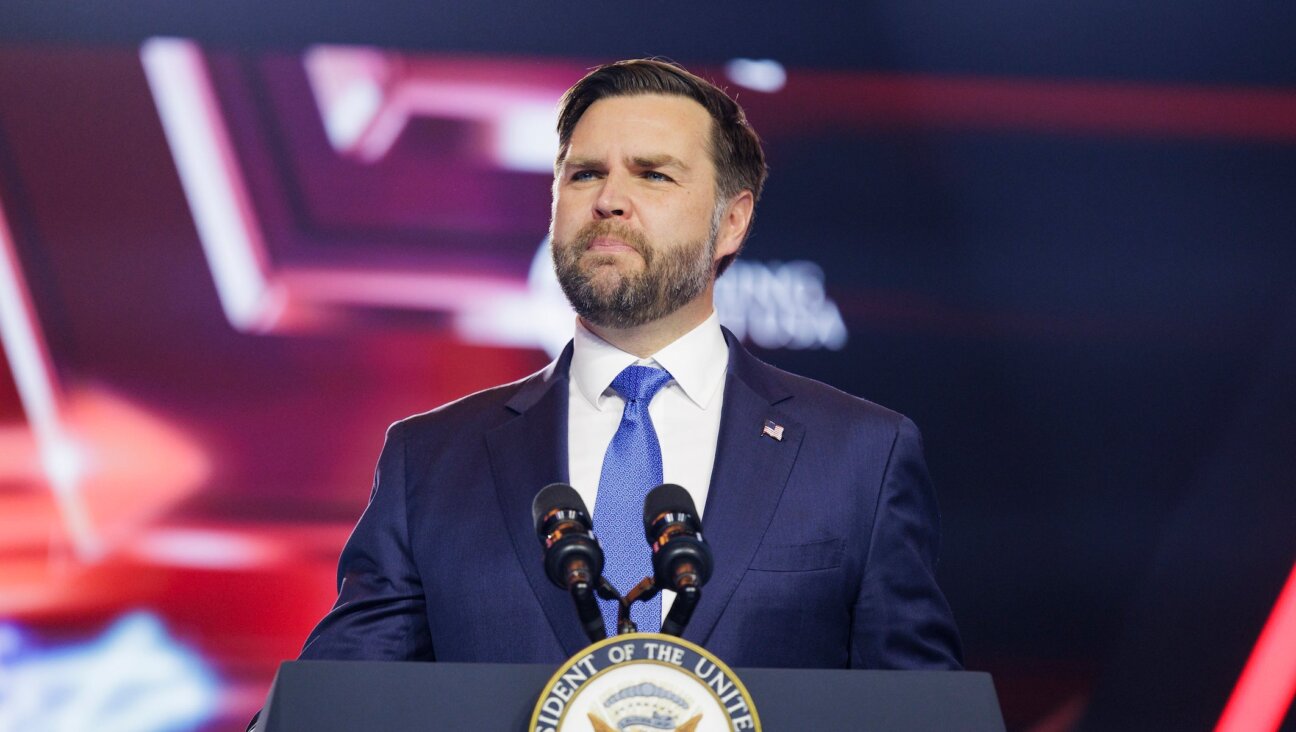
It’s not all that surprising that Leo is making pronouncements on the justness of wars; popes have always given commentary on the world, albeit often less pointedly. Of course, Catholics have always looked to the pope for moral leadership — though that is increasingly under question, as renegade Catholics doubt the pope. (Even J.D. Vance, a Catholic convert with a book coming out about his conversion, has warned the pope to be “careful” with his theological interpretations — a near heretical statement. That’s how Protestantism came about.) The difference today is that everybody is listening.
I think the reason is that there is a certain ineffable quality that can’t be accounted for in so much of modern-day discourse in our metrics-focused world. Everything needs to be provable with a statistical analysis or some quantifiable indicator, or it needs to be as profitable as possible to extract value. But so much of what is most valuable in the human experience is intuitive — experiences and emotions like love, joy, transcendence. Connection with each other. Religious leaders have been honing the language to talk about these qualities for centuries, and they guard one of the only arenas in which the intangible remains central.
Of course, there are also plenty of issues with religious institutions, and the Vatican in particular is famous as a site where abuses of power were hidden and protected. But “Magnifica Humanitas,” and its virality, points toward a new relationship with religion, and a newly important role for it to play.
Or maybe that’s just wishful thinking, a hope for my own increased importance as a religion reporter.

Did you know that only 2% of Forward readers donate to support our nonprofit newsroom? That 2% make it possible for millions to read the Forward without a paywall or subscription — removing any barriers to the full and fair Jewish story.
But while the Forward is free to read, it isn’t free to produce. Big stories — like deep dives into the antisemitism data, political scoops or reporting trips to college campuses — take months of research and fact-checking. All while we keep you informed of what you need to know each day.
— Rachel Fishman Feddersen, Forward Publisher & CEO
Support our mission to tell the Jewish story fully and fairly.