This Jewish activist was arrested and deported for her book ‘Lesbian Love.’ 100 years later, will NYC apologize?
Eve Adams, a Polish immigrant, died at Auschwitz after being targeted by the NYPD. Now Mayor Mamdani is weighing a request to deem her arrest unjust
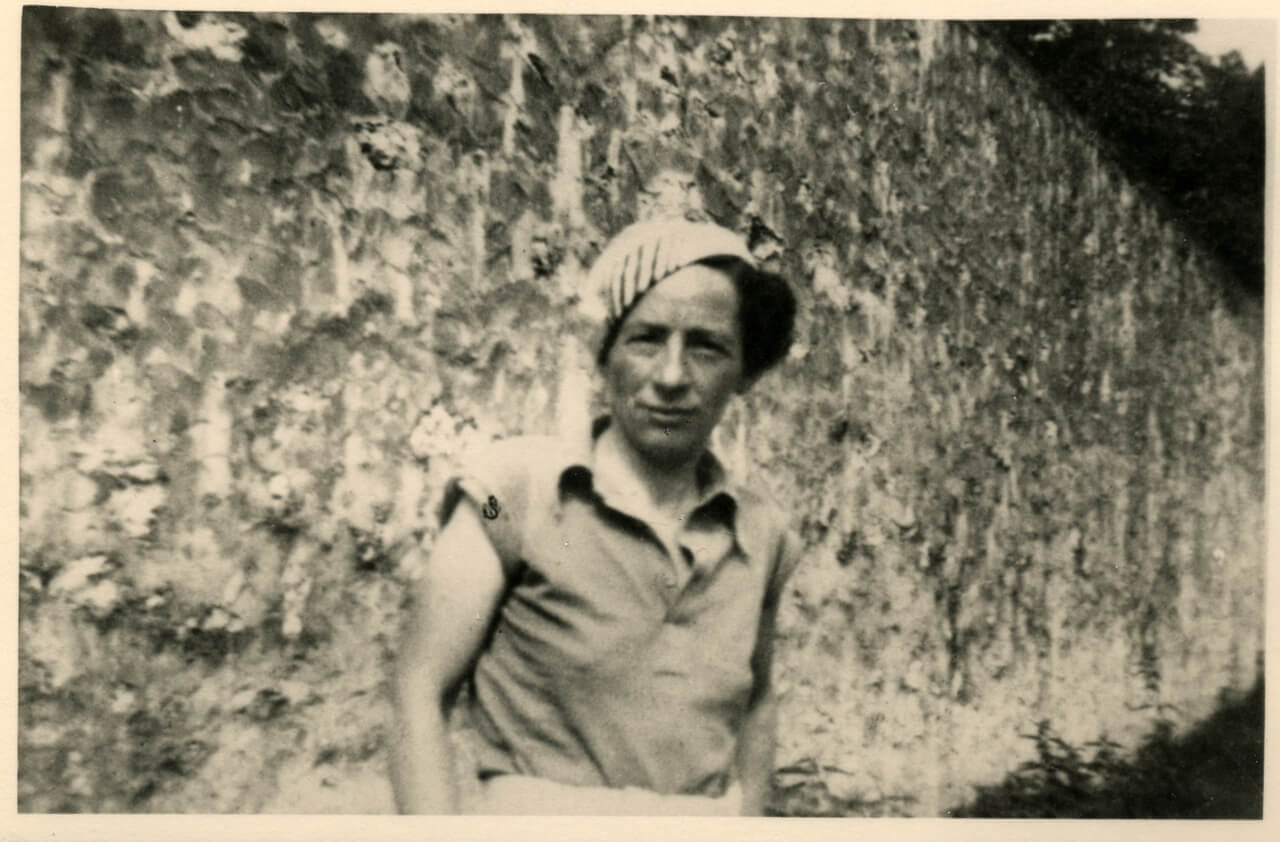
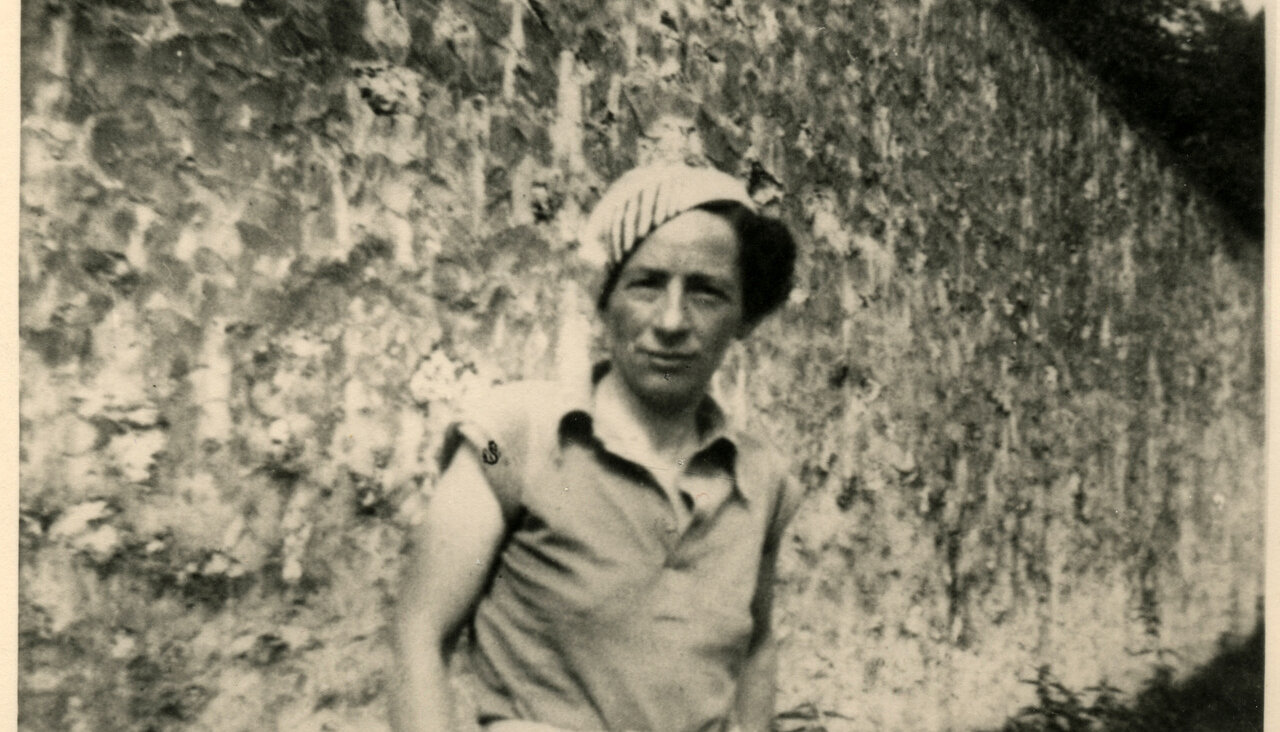
Eve Adams in Paris. Courtesy of Chicago Review Press

By Hannah Feuer June 16, 2026
In 1926, New York City police arrested Eve Adams, a Polish-Jewish immigrant who ran a lesbian bar in Greenwich Village, for the crime of being gay.
The formal charges were more euphemistic. Officially, Adams was charged with disorderly conduct — that is, flirting with an undercover police officer who had entrapped her, and obscenity, for writing and possessing the book Lesbian Love.
The following year, the U.S. government deported Adams to Poland, in what was effectively a death sentence: 16 years later, Adams would be murdered at Auschwitz.
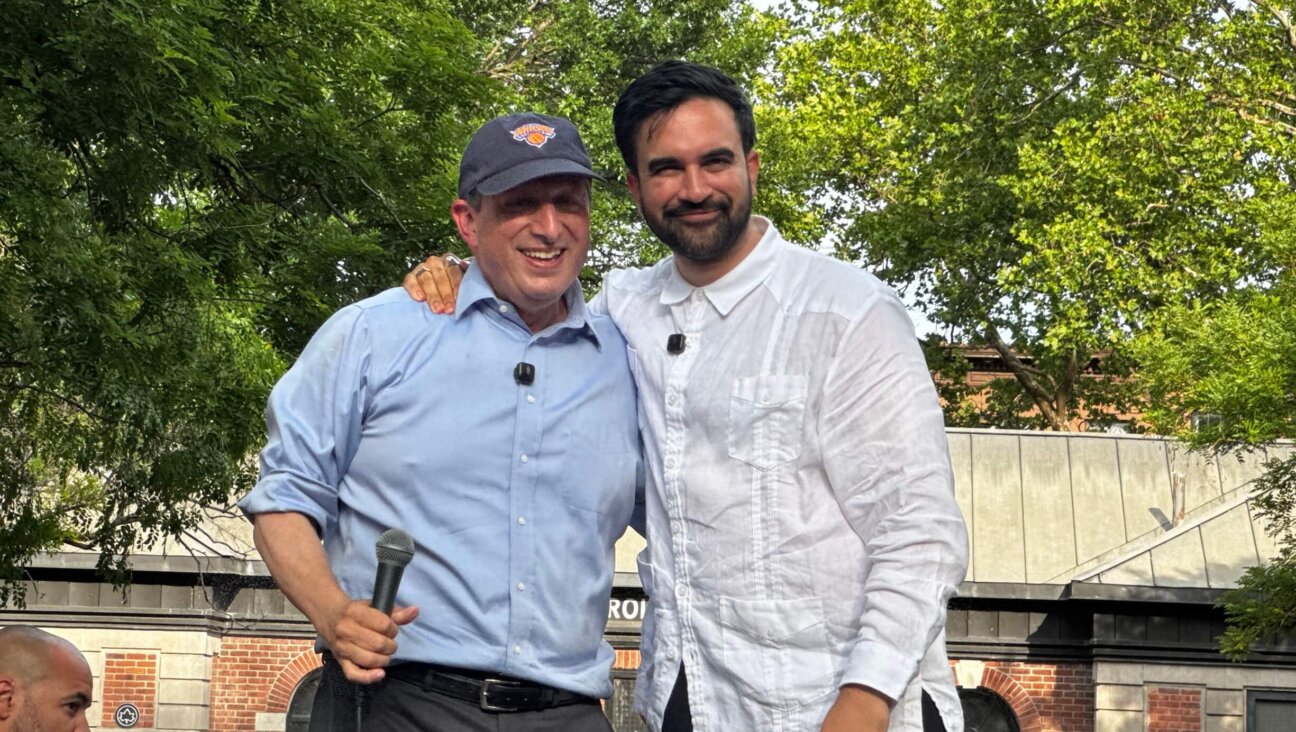
Now, a century after Adam’s arrest, Manhattan Borough President Brad Hoylman-Sigal — the first openly gay person to hold the elected position — is urging New York City Mayor Zohran Mamdani to formally recognize the city’s role in Adams’ persecution.
He sent a letter to Mamdani requesting that the city issue a formal declaration acknowledging Adams’ conviction in 1926 “was unjust and rooted in discriminatory law enforcement and affirming that New York City failed her as a pioneer of LGBTQ+ life, as an immigrant, and as a Jewish woman who was ultimately deported to her death.”
“Adams’s story is among the most unjust in our city’s history,” the letter reads. “One hundred years after her arrest, we have the obligation and the opportunity to say plainly that she deserved better.”
In a statement to the Forward, the Mayor’s office said they are reviewing the request.
“The Mamdani Administration is deeply committed to uplifting the stories of New Yorkers that have gone unheard throughout history,” deputy press secretary Sam Raskin said.
A pioneer
Born with the name Chawa Zloczower in Poland in 1891, Adams immigrated to the United States through Ellis Island at age 20.
In America, she adopted the name Eve Adams — a playful nod to her androgyny, invoking the biblical Adam and Eve — and wore men’s clothing.
“She was a vibrant activist, who was daring. She had an androgynous appearance, which immediately identified her as a lesbian,” said Jonathan Ned Katz, author of The Daring Life and Dangerous Times of Eve Adams. “Wearing pants for women was just unthinkable in the time period.”
Adams soon immersed herself in New York’s anarchist circles, befriending prominent Jewish anarchists Emma Goldman and Alexander Berkman. She worked as a traveling saleswoman for leftist publications including Mother Earth, activities that landed her on the Bureau of Investigation’s watch list during the First Red Scare.
In 1923, Adams published Lesbian Love, a collection of essays about the romantic lives of dozens of women in Greenwich Village. Katz described the book as far ahead of its time.
“The word “lesbian” was not used much. It was like a dirty word at the time, so you didn’t say it out loud,” Katz said. “Here she was, putting it on a book jacket.”
Two years later, Adams opened Eve’s Hangout in Greenwich Village. The underground tearoom became a rare refuge where lesbian women could socialize openly.
But the haven proved short-lived. In 1926, an undercover detective named Margaret Leonard visited Eve’s Hangout, where she met Adams. The following day, the two attended a play in Times Square together. Adams gave Leonard a copy of Lesbian Love — evidence of “obscenity” that prosecutors later used against her — and Leonard alleged Adams made sexual advances toward her during the taxi ride to the theater.
Adams was convicted and spent 18 months in jail before the United States deported her to Poland.
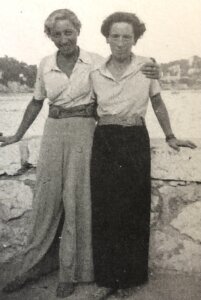
She settled in Paris, where she began a relationship with Jewish cabaret singer Hella Olstein Soldner. In 1943, the two women were arrested and sent to the Drancy internment camp. From there, they were deported to Auschwitz, where both were murdered.
Adams’ legacy
Over the years, Adams has come to be recognized as a Jewish LGBTQ icon. Her life inspired the play The Great Lesbian Love of Eve Adams, and she was the subject of a New York Times obituary published as part of the newspaper’s “Overlooked” series, which chronicles the lives of notable people throughout history whose deaths went unreported.
Hoylman-Sigal said he was inspired to commemorate Adams by the NYC LGBTQ Historic Sites Project, a nonprofit that documents local queer history, which asked him to send the letter to Mamdani. The Sites Project also offers historic walking tours of the city featuring Adams’ story.
“Their jaws drop when we tell them these stories, standing in front of the building where her tea room was,” said Ken Lustbader, co-founder of the NYC LGBT Historic Sites Project.
-
-
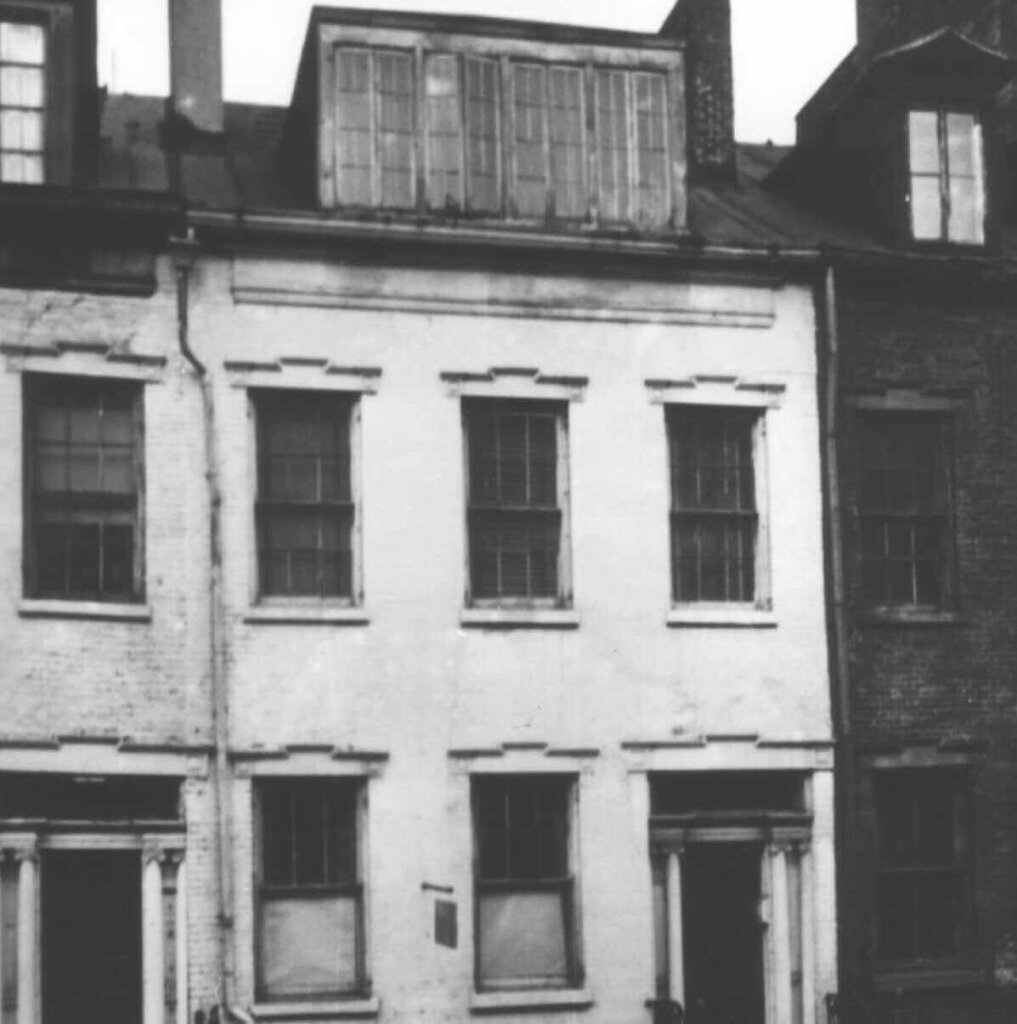
The site of Eve’s Hangout in Greenwich Village in 1939.
Courtesy of The NYC Municipal Archives.
-
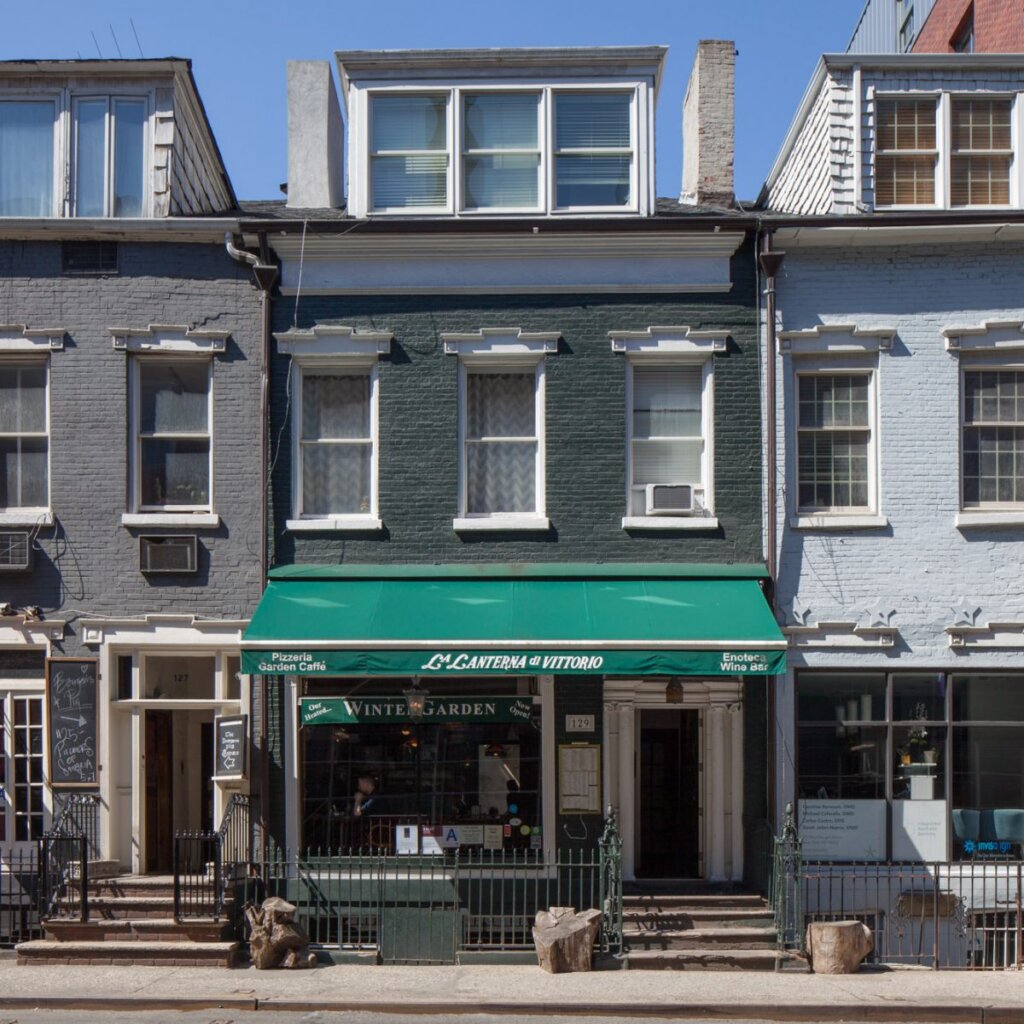
- La Lanterna, the Italian pizzeria now located there.
On Wednesday, the centennial of Adams arrest, the Sites Project is hosting a performance and vigil in Adams’ honor at the former site of Eve’s Hangout — today, home to La Lanterna, an Italian cafe and pizzeria.
The site of Eve’s Hangout has also been recognized by the National Park Service as part of a roundup of Greenwich Village landmarks significant to LGBTQ history.
New York City, however, has never formally acknowledged the injustice of Adams’ arrest, conviction and deportation.
A posthumous apology would be unusual, though not without precedent: In 2019, the NYPD formally apologized for its 1969 raid on the Stonewall Inn, describing the department’s actions as “discriminatory and oppressive.”
“I would love to see the mayor do it, but we could have one from the police department — an apology for sort of framing her,” Katz said. “They sent in a plainclothes policewoman to entrap her, and so that was really beyond a democratic process.”
The NYPD did not respond to the Forward‘s request for comment.
Whether or not the city issues an official acknowledgement, Hoylman-Sigal said he hopes the campaign will help keep Adams’ story alive.
“It’s an extremely poignant story, sorrowful, outrageous, sad — and one that most people don’t know about,” he said. “So I thought bringing attention to it was a righteous cause.”
Jacob Kornbluh contributed reporting.

Did you know that only 2% of Forward readers donate to support our nonprofit newsroom? That 2% make it possible for millions to read the Forward without a paywall or subscription — removing any barriers to the full and fair Jewish story.
But while the Forward is free to read, it isn’t free to produce. Big stories — like deep dives into the antisemitism data, political scoops or reporting trips to college campuses — take months of research and fact-checking. All while we keep you informed of what you need to know each day.
— Rachel Fishman Feddersen, Forward Publisher & CEO
Support our mission to tell the Jewish story fully and fairly.