For Iranian Jews who have been cheering Trump on, his new deal is hard to stomach
After celebrating a war they believed could be the beginning of the end of the Islamic Republic, many now fear the memorandum of understanding could leave the regime stronger than before
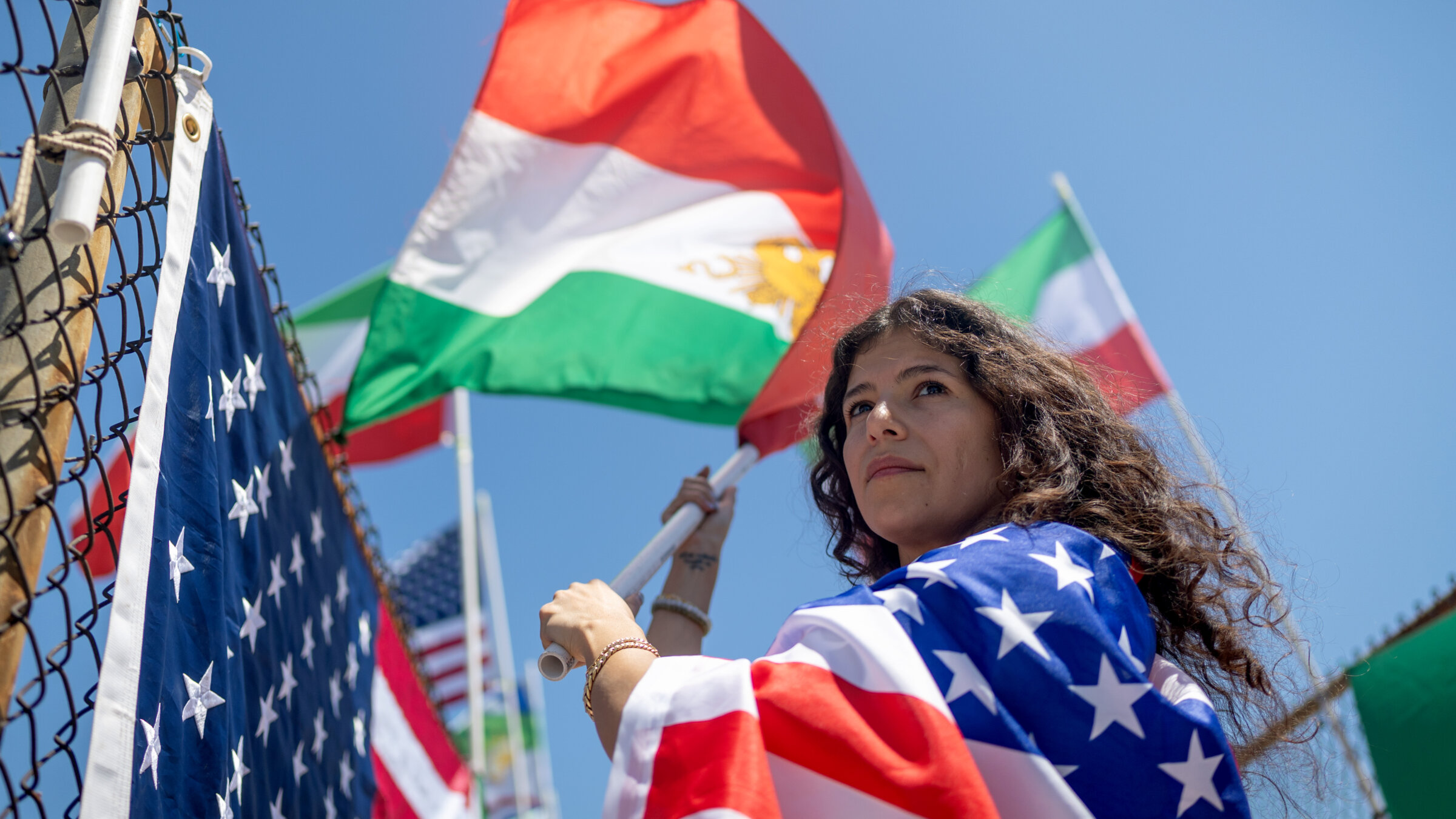
Mehrzad Mozhdekanloo protests FIFA restrictions while displaying the pre-1979 Iranian flag on Sunday, June 14, 2026 in Encino, CA. Photo by Eric Thayer/Los Angeles Times via Getty Images
By Simone Saidmehr June 15, 2026
When Iranian Jews woke up on Feb. 28 to news that the United States and Israel had killed Supreme Leader Ali Khamenei and were striking regime infrastructure across Iran, many felt something they had not experienced in decades: hope that they might see a free Iran in their lifetime.
Social media was filled with praise for President Donald Trump and Prime Minister Benjamin Netanyahu. Iranian Americans gathered in Los Angeles, Great Neck, N.Y., and Washington to celebrate what many believed could be the beginning of the end of the Islamic Republic.
Now, four months later, as the U.S. and Iran have signed a memorandum of understanding that appears to leave the Islamic Republic very much intact, Iranian Jews who spoke to the Forward say that sense of excitement has given way to disillusionment.
The new deal between the U.S. and Iran — notably, Israel, which was a major player in the war, has been left out — extends the current ceasefire by 60 days, during which the Strait of Hormuz will be reopened, and the two sides will work to establish a framework for future negotiations over Iran’s nuclear program and U.S. sanctions.
While the full text of the deal has not been released, critics worry the agreement could ultimately provide the regime with economic relief while leaving the Islamic Republic intact.
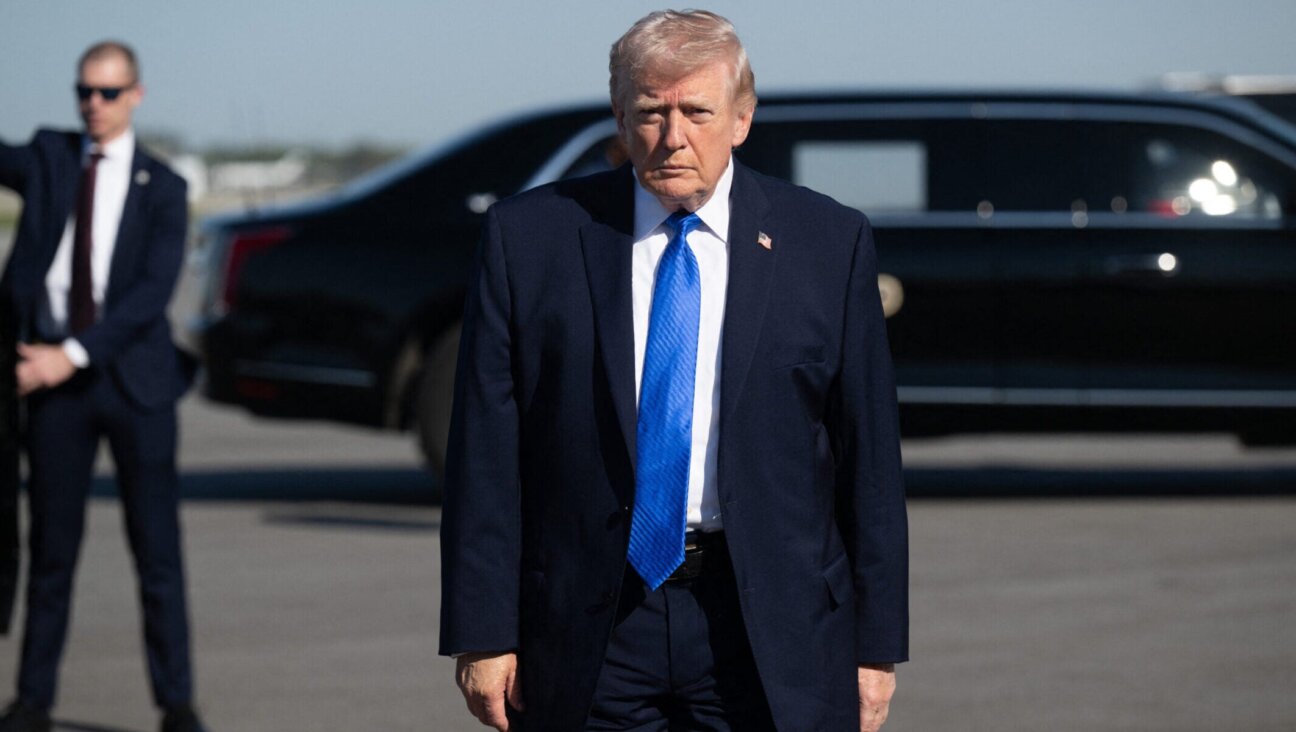
While many details remain elusive, it’s clear the current deal is at odds with Trump’s rhetoric at the beginning of the conflict, when he spoke of regime change. During the wave of anti-regime demonstrations in Iran in January, Trump encouraged Iranian protestors on social media, stating, “KEEP PROTESTING – TAKE OVER YOUR INSTITUTIONS!!!… HELP IS ON ITS WAY.” After the Supreme Leader was killed, Trump told the Iranian people that the moment to seize back their country was close at hand.
“I couldn’t believe the U.S. actually struck and took out Khamenei like that with Israel. It was surreal,” said Matthew Nouriel, a Los Angeles–based Iranian American Jewish activist, who works as community engagement director at JIMENA, an organization for Sephardic and Mizrahi Jews. “We poured into Westwood, into the federal building area. It was like a street party. There was this real feeling of hope.”
But as time went on, Trump’s rhetoric softened. He suggested that regime change had already taken place — apparently referring to the succession of Khamenei by his son Mojtaba, and said on Sunday that he “never cared about regime change.”
“We saw light at the end of this 50-year tunnel,” said Michelle Ahdoot, an Iranian Jew from Great Neck. “Everyone was saying, ‘Next year in Tehran.'”
“But then slowly it started falling out of reach,” she said. “You would hear at dinner tables, ‘Has this all been for nothing?'”
The new agreement, she said, has been “devastating” for many in the community.
“We’re confused with this, disappointed and incredibly disheartened,” Ahdoot said. “I just don’t see how any deal with a terrorist regime could be good for anybody.”
Many interviewees also expressed concerns that the deal could leave Israel vulnerable to Iranian aggression if the final agreement does not include provisions on Iran’s proxy network and missile arsenal.
Most Iranian Jews fled the country during and after the Islamic Revolution that swept the country in 1979 and changed life fundamentally for minorities. Sharia became the law of the land, and chants of “death to America” and “death to Israel” became fixtures at schools and public events. Once numbering around 100,000, today Iran’s Jewish population is somewhere between 8,000 and 10,000. Many of Iran’s Jews fled to Israel and the United States, where they have wished to one day return to the place they once called home, perhaps not to live, but certainly to visit on their own terms.
While there is little polling on the political views of Iranian Americans or Iranian American Jews, several interviewees said Iranian Jews have generally been among Trump’s strongest supporters because of his policies toward both Israel and the Islamic Republic. Several community members interviewed by the Forward said they viewed him as a break from decades of American policy that they believed had failed to challenge the Iranian regime and its proxy network that has terrorized the Middle East, especially Israel.
“Overwhelmingly, people have been pro-Trump the past couple of years,” Ahdoot said. “People joke that he’s our Moshiach.”
Elizabeth Shirian, a member of the Iranian Jewish community in Great Neck, agreed, stating many remain supportive of Trump even as they question the agreement.
“The Iranian Jewish population is pro-Israel, and so that’s a big reason why they’re supporting him,” she said. “Everyone wants to stay pro-Trump, but obviously they’re very confused by him trying to make a deal with Iran.”
Nouriel said that for many, a Trump presidency felt like a rare opportunity to take down the regime.
“We’ve seen where the Democratic Party lies. It’s all about keeping the status quo, and the Republican Party under Trump definitely felt like a huge break from that,” Nouriel said.
“I think the JD Vance-style isolationist mindset is growing within the Republican Party, so if this doesn’t happen under Trump, it feels kind of like a nail in the coffin,” they added.
Marjan Keypour, an Iranian Jewish human rights activist, said that now, many community members are struggling to reconcile their faith in Trump with a deal they fear could strengthen the Iranian regime.
Keypour said she has been struck by how many community members assume the administration has a broader strategy that has yet to become public.
“Members of the Iranian Jewish community that are generally very supportive of Trump are still hoping that there is a bigger master plan that we don’t know of,” she said.
She worries that this trust has also discouraged some from speaking openly about their concerns.
“The people who raised questions or expressed anxiety were dismissed as liberals, as anti-Trump, as anti-Israel,” she said. “They’re just willing to sit down and just watch what happens, rather than speaking out about their concerns, sharing the vivid experience they have about their regime, and how they can not be trusted.”
Whether the new agreement ultimately weakens the Islamic Republic or helps preserve it remains to be seen. But for many Iranian Jews who celebrated in the streets just weeks ago, the dream of a free Iran suddenly feels much further away.
“I genuinely pray and hope that all of these feelings that I have, and that so many of us have, are wrong,” said Nouriel. “I hope Trump is playing 4D chess. I hope the regime will topple. I would love nothing more than for those people to be right.”
Did you know that only 2% of Forward readers donate to support our nonprofit newsroom? That 2% make it possible for millions to read the Forward without a paywall or subscription — removing any barriers to the full and fair Jewish story.
But while the Forward is free to read, it isn’t free to produce. Big stories — like deep dives into the antisemitism data, political scoops or reporting trips to college campuses — take months of research and fact-checking. All while we keep you informed of what you need to know each day.
— Rachel Fishman Feddersen, Forward Publisher & CEO
Support our mission to tell the Jewish story fully and fairly.