At Chabad Hanukkah party in California, hours after Bondi Beach massacre, joy defied grief’s shadow
Many attended who were still displaced by January’s fire, and some remain unsure whether they will rebuild
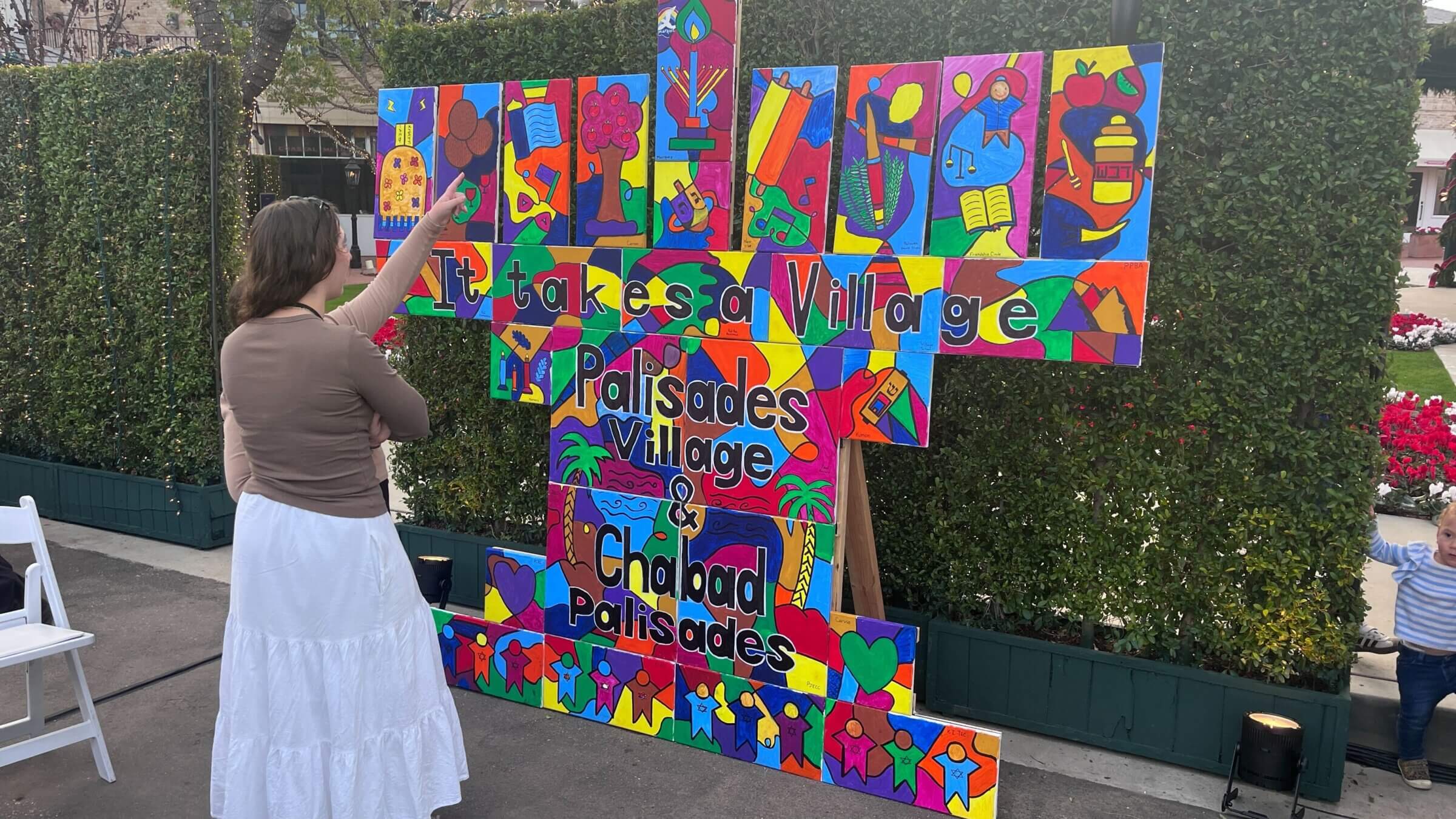
The Chabad event featured the Palisades Commemorative Art Menorah. Photo by Louis Keene
By Louis Keene December 15, 2025
PACIFIC PALISADES, CALIFORNIA – A familiar sight at public gatherings, especially Jewish ones — young men in Hasidic garb wrapping black leather tefillin straps around the arms of strangers — felt different here Sunday evening as Rabbi Shimon Goldberg helped Rick Entin fulfill the commandment. Laying tefillin and lighting candles had become acts of defiance after 15 people were killed at a Chabad Hanukkah event in Sydney.
The attack cut deeply in the close-knit Chabad community, whose brand — and vulnerability — lies in the proud public practicing of Jewish rituals. Some at Sunday night’s event, a block party outside a popular Palisades shopping mall, were personally connected to Rabbi Eli Schlanger, the Chabad emissary who died in the attack; those who didn’t saw their own outreach work reflected in his.
Yet they were celebrating Hanukkah on Sunday with a group that knew something about resilience: 11 months earlier, the Palisades fire tore through this area, destroying thousands of homes, including Entin’s just up the street. For many, the Hanukkah event was the first time they had been in Jewish community in the Palisades since the inferno. This was the occasion the Palisades Chabad had planned to commemorate, and from which its leaders would not be deterred.
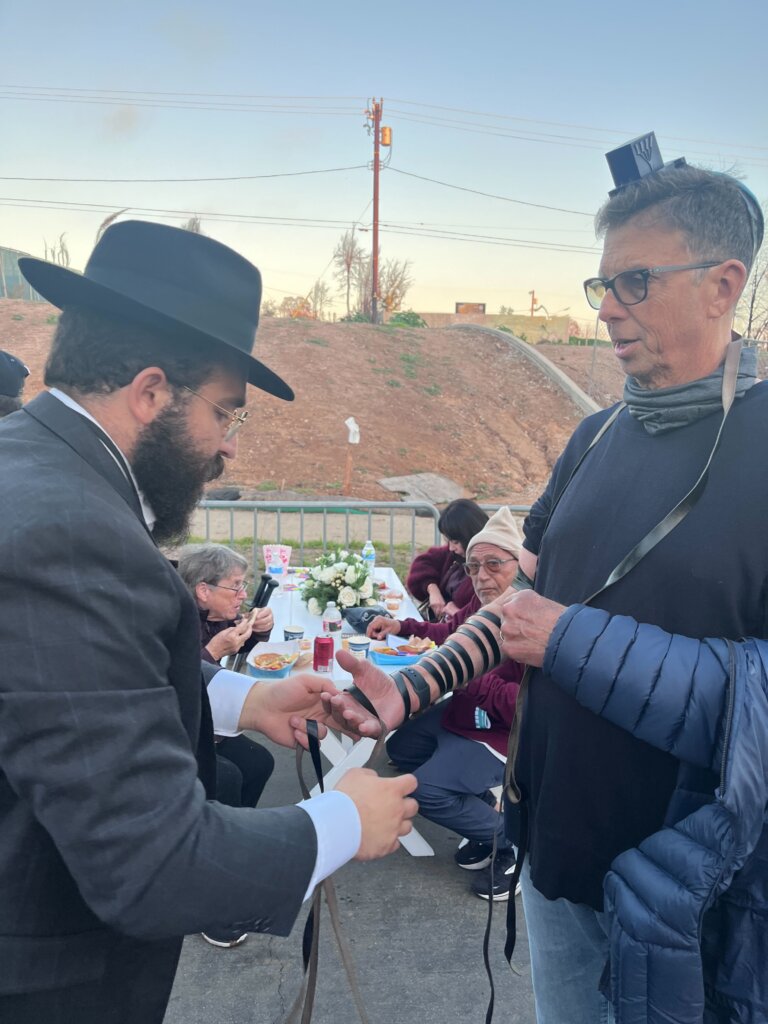
“Whoever was strategizing this terrorist attack, they want the Jews not just in Sydney, but even in Los Angeles to fear showing up for a Hanukkah event,” said Goldberg, head of a local Chabad-affiliated nonprofit, as he placed a tefillin box atop Entin’s forehead. “This we won’t allow them to do.”
The 38th annual Palisades candlelighting was always going to be bittersweet; many there remained displaced by the fire, and some remain unsure whether they will rebuild. Jewish leaders who planned the event said they did not need to change the program due to the terrorist attack — it was already about celebration in the face of loss.
So, too, is Hanukkah, a holiday that tells of a miraculous jug of oil found amid great ruin. And both Chabad and Kehillat Israel, a Reconstructionist synagogue in the Pacific Palisades that co-sponsored the event, had, miraculously, found the spark on an otherwise gloomy day.
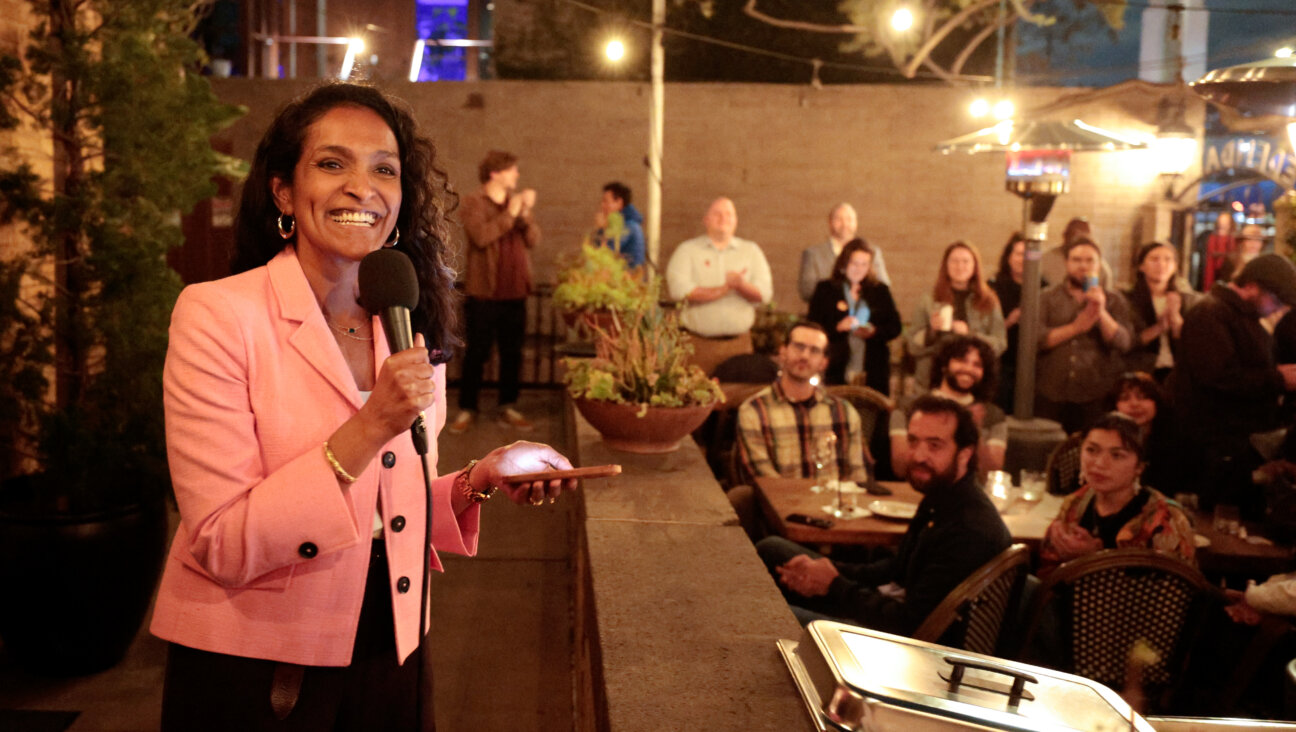
Overlooking the street that had been blocked off for the event were vacant lots where homes had stood a year earlier. But melancholy was hard to come by as one walked through the teeming masses at the event. Kids sat for glitter tattoos and balloon animals; lines snaked for latkes and jelly donuts and hot chocolate, all free. Old friends exchanging long-overdue hugs could be heard saying I’m so sorry about your house. On stage before the candlelighting, a gaggle of youngsters delivered a spirited rendition of “I’m a little latke.”
“It’s almost like the Maccabees,” said Chayim Frenkel, Kehillat Israel’s longtime cantor. “They went into the Temple, cleaned it up, found the menorah, found the oil. And surrounded by the rubble of what the Greeks did, we brought light and hope.”
The Palisades Chabad members in attendance were putting on a doubly brave face: The fire had damaged part of the school on the campus of Chabad of Pacific Palisades, according to Rabbi Zushe Cunin, its director. Classes have still not returned to the building.
“It’s been hard,” Cunin said. “So much trauma, a lot of people have not resolved things, their house, their insurance, their struggles. But Hanukkah is a time to rise above that. Tonight is about strengthening our resolve.”
Cunin’s son, Mordechai, was among the group channeling that resolve through tefillin. The mitzvah — which is required only of Jewish men — was one the late Rabbi Menachem Mendel Schneerson, the last Lubavitcher Rebbe, had implored his followers to promote in order to hasten the arrival of the Messiah. Mordechai and his yeshiva buddies reported having wrapped at least 10 men that day, including three first-time wearers.
It was not lost on the tefillin crew that Schlanger — whose nephew is Mordechai’s classmate — died doing what they were doing now — helping Jewish people from all walks of life connect to Judaism. But Goldberg only saw that as reason to lean in.
“When someone leaves this physical world, their soul is still there, but they can’t do mitzvos,” he said. “When we think of Rabbi Eli, we are his hands and feet. He can’t put on tefillin today — but we can put on tefillin for him.”