Greenland’s only Jew hears a familiar pattern in Trump’s annexation talk
At the edge of the Jewish diaspora, Paul Cohen hears echoes of Europe’s darkest moments in Trump’s annexation ambitions
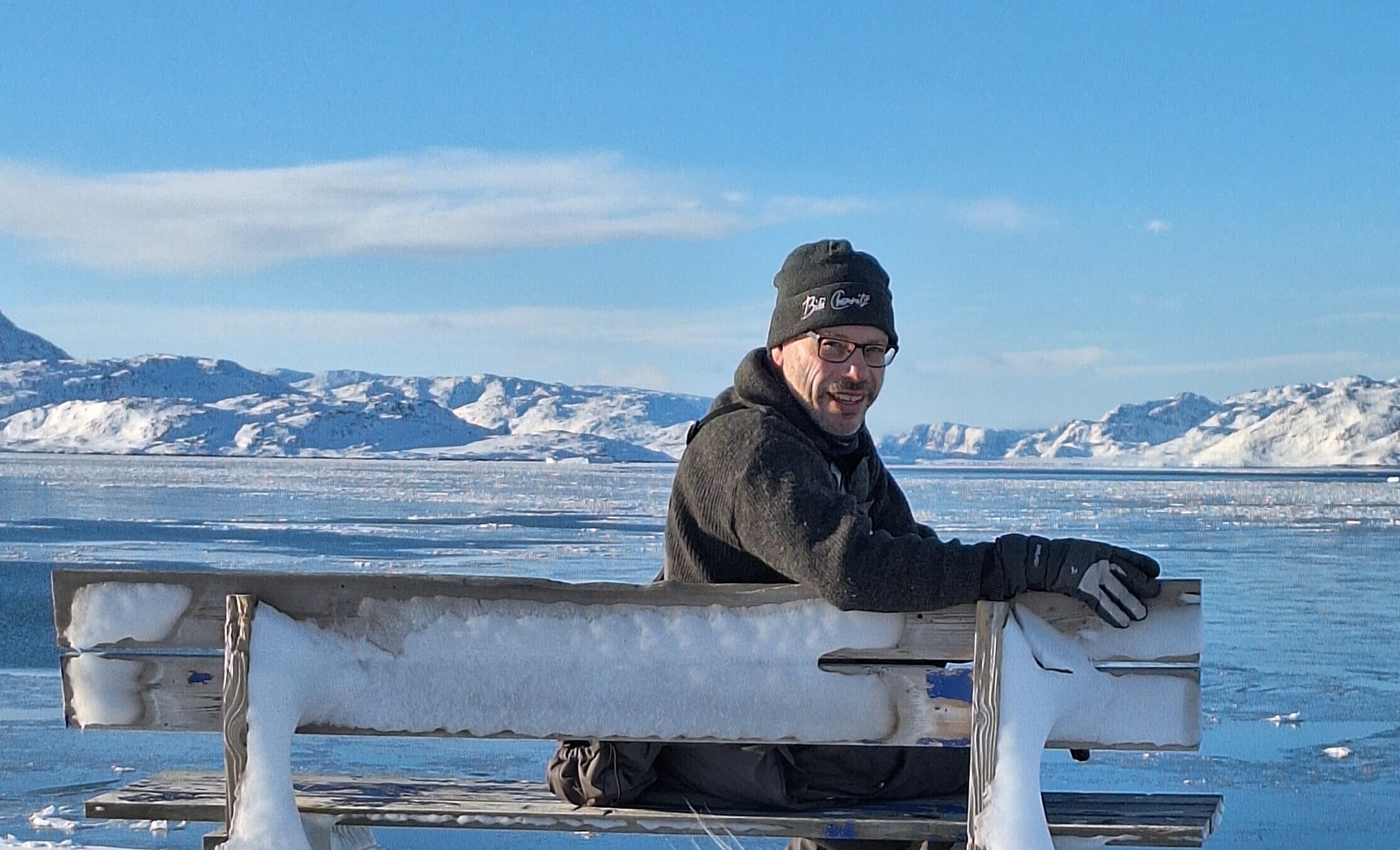
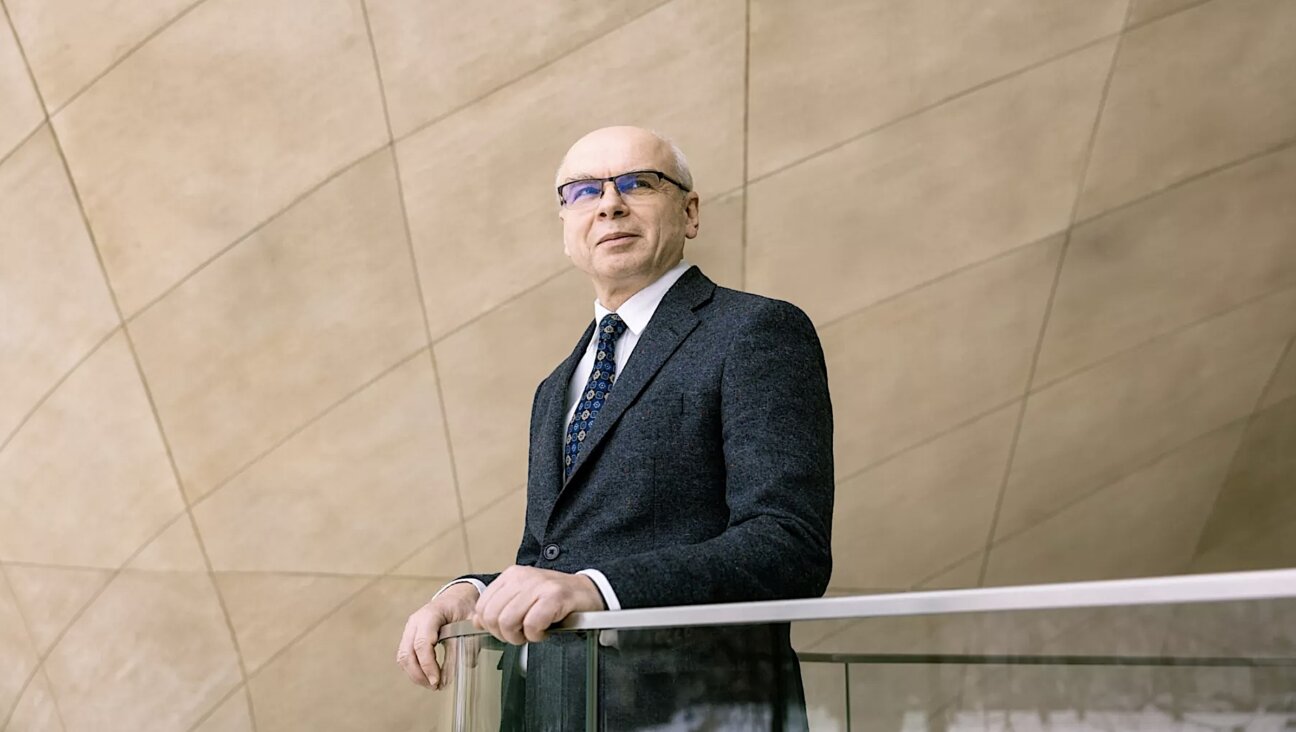
Paul Cohen near his town of Narsaq, Greenland. Courtesy of Paul Cohen
By Simone Saidmehr January 8, 2026
Paul Cohen is, as far as he knows, the only Jew in Greenland. There is no synagogue, no minyan, and the island’s latitude itself seems to reject the natural rhythms of Jewish life, with long days and nights refusing to demarcate the Jewish Sabbath in any familiar way. When Cohen tells Greenlanders that he is Jewish, the reaction is indifference. “It’s as if I were telling them that I brush my teeth twice a day. It’s like, OK — tell me something interesting,” he told the Forward.
Cohen, who moved to the southern town of Narsaq with his wife, Monika, 25 years ago and works as a translator, describes himself as culturally Jewish. Still, he feels he is “standing on the shoulders, perhaps intellectually and culturally, of all the generations of Jews who’ve come before me.”
Now, Cohen’s identity has taken on new weight as President Donald Trump has revived talk of the United States annexing Greenland, a move that Cohen hears through his knowledge of Europe’s darkest chapters of the 20th century.
During his first term, Trump floated the idea of purchasing the island, which is an autonomous territory of Denmark. Despite the fact that 85% of Greenlanders oppose the idea of annexation, Trump again raised the idea this week, framing it as a matter of national security and citing Russian and Chinese activity in the Arctic. To Cohen, however, Trump’s rhetoric sounds less like a national security strategy than something older and more dangerous.
Trump’s talk, heard through Jewish history
“Being a Jew — the way I think, what makes me tick — that certainly puts me in a unique position here in this country,” Cohen said. His knowledge of Jewish history makes Trump’s renewed talk of annexing Greenland feel like a familiar pattern, one he knows how to read.
“When I read about the history of World War II in Germany and how countries just fell like dominoes,” Cohen said, “it’s definitely given me a foundation for understanding some of the forces that are at play here.” He said this perspective is not necessarily shared by his compatriots, whom he describes as generally “apolitical.”
“You talk about the weather, and you talk about what the fishing is like, and it seems like the world around us is sort of going up in flames or something” he said. What he experiences as a widening gap between local life and global reality he traces back to a habit of thinking he associates with Jewish tradition.
“You dig, and you ask questions. We can’t help ourselves — it’s part of our DNA,” he said. That instinct, he added, includes a “global view of world events,” one that places even remote places like Greenland on a larger historical stage.
Cohen points to the United States’ longstanding Cold War-era defense agreements with Denmark as evidence that Washington already wields extraordinary power over Greenland. The 1951 agreement — updated in 2004 to formally include Greenland’s government — allows the U.S. to “construct, install, maintain, and operate” military bases on the island and to house personnel there. In practice, Cohen said, it enables the United States to do “whatever is necessary” to protect its national security interests. If Trump wanted to increase the number of U.S. service members in Greenland from roughly 150 to 30,000, Cohen believes Denmark and Greenland might raise concerns, but not refuse.
Until recently, Cohen believed Greenland was the place he would remain for the rest of his life. Now, he finds himself grappling with the possibility of a different future. “I could become a minority of one again in another kind of country,” he said. “It’s all in the realm of the possible.”
Cohen lives in what he calls “the extreme version of the diaspora,” where Jewishness is almost imperceptible. And yet, as Greenland’s political future feels less stable, it is precisely that inherited sense of contingency that leaves him unsettled.
“At some deep level,” he said, “our history has shown us that you shouldn’t get too comfortable with the status quo. You’re always building your house, in some sense, on shifting sands.”